
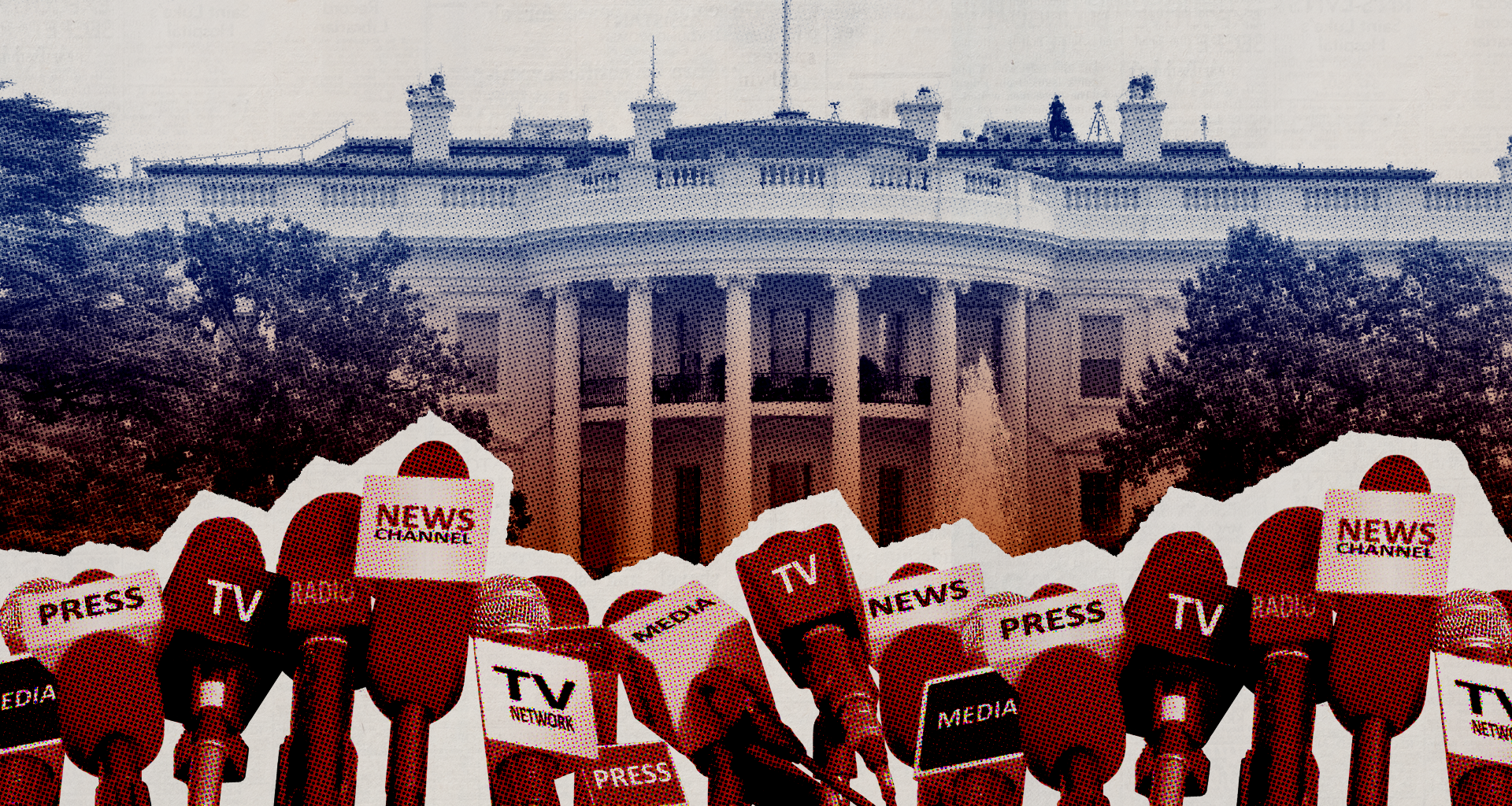
Following the Trump administration’s recent ban of major news outlets CNN, Politico and MSNOW from covering White House activities, SDSU students voice concerns regarding media censorship and First Amendment rights.
President Trump announced via Truth Social on Sept. 18 that the organizations would be prohibited from reporting on White House grounds, claiming that their coverage is “fake news” and lacks credibility. He also threatened that there would be more bans of “Fake News Media Outlets to follow.”
U.S. District Judge Tim Kelly reinstated temporary White House access to the previously barred reporters until Oct. 8 while the organizations sought legal action to ensure permanent access.
Students commented on the implications of the press restrictions and its consequences in regards to access to critical news.
“It not only infringes on the press’s right to free speech, but also our right to get information,” Amel Tesfaye, a second-year journalism student and Daily Aztec contributor, said. “Especially nowadays when information is so valuable, blocking certain news sources stops us from being informed and being knowledgeable about the workings of our government.”
Constitutional experts say the White House cannot legally place a permanent ban on the press according to the First Amendment. However, even amid legal negotiations, these outlets continue to be restricted from events such as President Trump’s recent welcome dinner for Chinese President Xi Jinping on Sept. 24.
Students at SDSU emphasized the role of the press in democracy and discussed the risks of infringing upon the rights of journalists.
“It allows us to get a story that isn’t directly from the government or from any people that already have any preconceived notions as to what the story is about,” third-year Joshua Davis said. “It allows a public voice that is more relatable. I feel that taking it away or trying to hinder it makes it easier to manipulate what comes out.”
Some students felt that the ban on the three outlets exemplified a common theme of censorship of the news and their social media platforms.
“It represents how society more recently has turned to wanting to censor opinions that don’t represent the majority or whoever’s currently in office,” first-year Molly Clixby said. “I feel like it just also in general that we’re losing connection with the Constitution and the amendments that we swear define us as a nation.”
Others recognized how censorship has seeped into their everyday activities, such as scrolling on TikTok.
“There’s been lots more censorship on the platform, especially when videos are talking about subjects such as the Trump administration or Palestine,” Kass Lott, a first-year theater student, said. “We will get a feature that’s just like, check your sources before sharing, but it’s sources that are more conservative-oriented that don’t get that kind of thing.”
While national press outlets continue to seek full, reinstated access to the White House, SDSU students are concerned it represents the start of something greater.
“I’m kind of worried that it might keep continuing the process of ‘oh it’s okay’ and might get taken too far eventually,” Taylor Cambell, a fourth-year psychology and neuroscience major, said. “People shouldn’t be able to do whatever they want to do, especially in politics.”
The Trump administration maintained in a court order on Oct. 2 that its actions were lawful under the First Amendment, citing that they did give due process to reporters at CNN, MSNOW and Politico, prior to their ban on Sept. 18.
On Thursday, Kelly extended the organizations’ temporary access to the White House while considering President Trump’s ban on the outlets. He is expected to make a third and final ruling in the coming weeks, without a set date for the decision.