
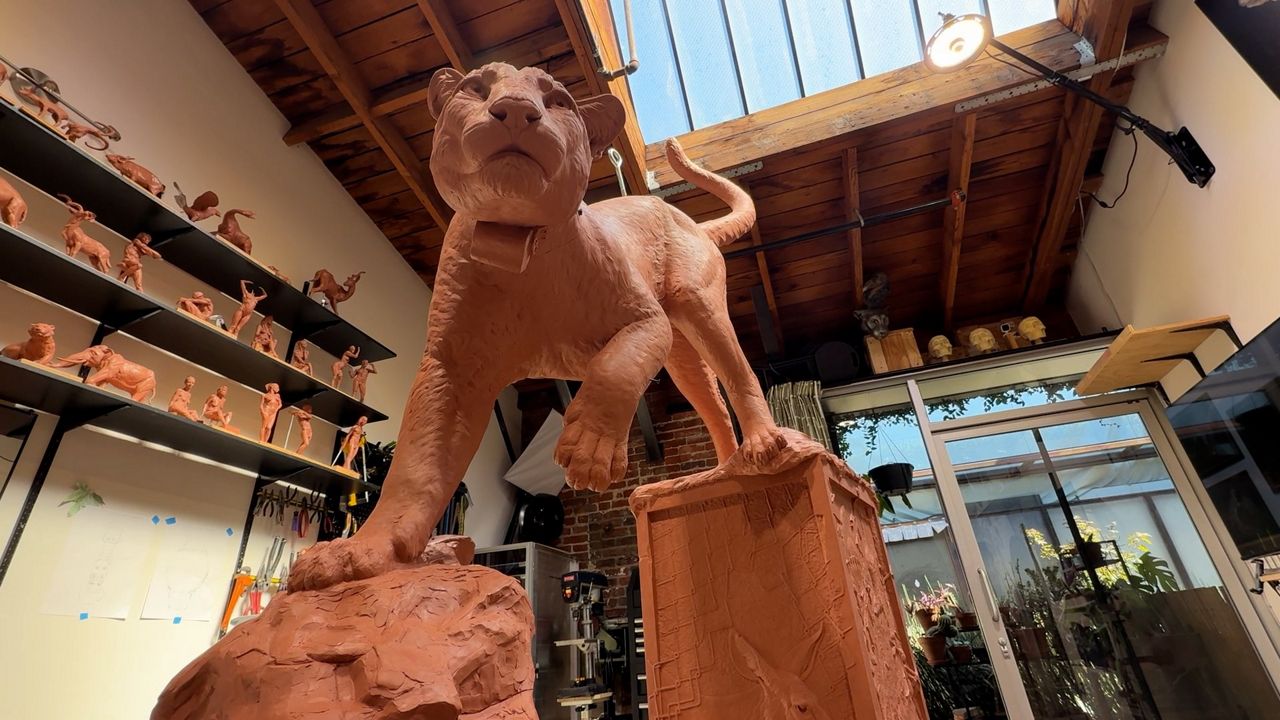
LOS ANGELES — It’s the feline face that launched a movement. The world’s most famous mountain lion meticulously rendered in clay, from the twinkle in his eyes to the pads of his paws.
“I wanted to give everybody some toe beans,” Los Angeles-based artist Adam Matano explained, pointing out the detail on one of the exposed feet visible in his work called “Earth to City: Rhapsody of the Wild King.”
He’s spent his career sculpting people and animals, so when a call was put out to create a statue of P-22, he pounced.
“P-22 was a big inspiration for me because I’ve always been interested in nature and man,” he said. “And when I saw that picture of P-22 with the Hollywood sign, it was like the ultimate version of that.”
That photo taken by Steve Winter for National Geographic served as has initial inspiration which over time and several small models, evolved into the final pose showing a graceful puma positioned with a foot in two worlds — bridging the divide between a man-made pillar and the natural rock of Griffith Park.
“He kind of like sparked people’s interest in nature again in LA,” Matano said. “So much so it helped fund this wildlife crossing. So I thought like a little nod to that.”
It also gave him an opportunity to not just tell the story of P-22, but of the park the big cat called home for over a decade. Each side of the pillar illustrates some of the denizens of what is touted as the largest municipal park with urban wilderness in the US, shown against the backdrop of cityscapes and highways or ducking through fencing.
“Downtown LA is well represented, but it’s in the background,” Gerry Hans said.
Hans is the president of Friends of Griffith Park, which worked with the National Wildlife Federation’s #SaveLACougars campaign to sponsor the statue project. He says the group received submissions from artists around the world, but Matano’s presentation stood out, in part because it depicts the park’s diversity of flora and fauna, including black sage and prickly pear.
The sculpture will ultimately be placed at the visitor center where he says it will serve as a reminder of all P-22 taught Angelinos and the world about coexistence.
“He taught people the vocabulary of connectivity and habitat fragmentation,” Hans said. “And people are doing something about that now.”
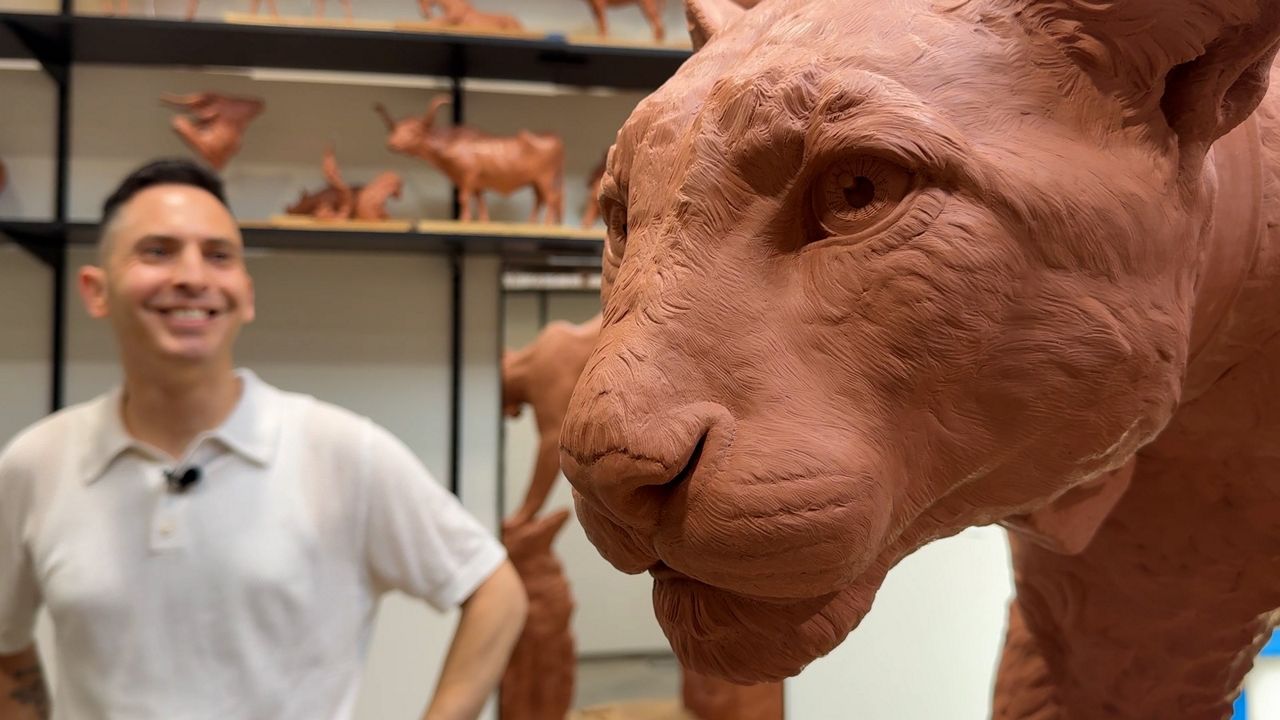
Matano has been working on the sculpture for some time, under the watchful eye of Phineas, his much smaller cat.
“I adopted him right before I started this, so I think he thinks it’s him,” he said.
There are still a number of steps in the process of getting the piece from clay to bronze before the roughly 2,000-pound statue is installed by crane in the park next year.
P-22 may no longer be roaming the hills, but Matano hopes his sculpture will remind people that he was here — living among us along with the racoons, deer and lizards that call this wild place home.
“All these animals could be like P-22 if we if we’re open to it,” Matano said. “So maybe stop and kind of look at them differently.”