
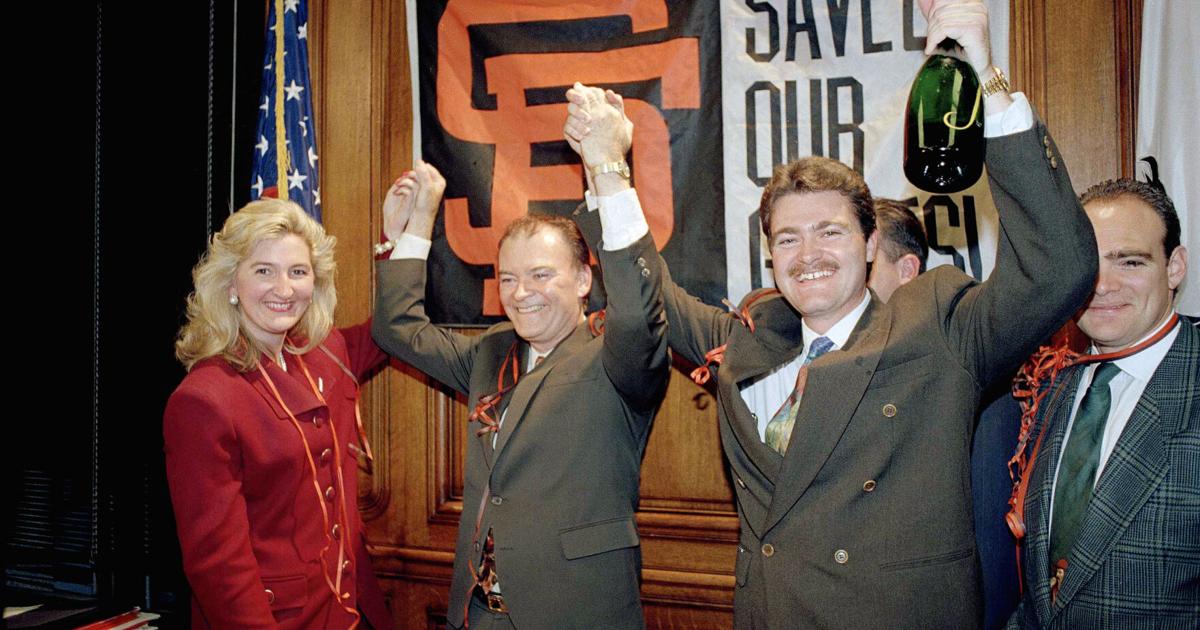
When a demonstration went sideways during his years as San Francisco police chief, Frank Jordan would be called before the Board of Supervisors to answer for it. Speakers lined up for hours: a broken arm, belongings seized, an assault by officers.
Then, it was the chief’s turn.
He didn’t raise his voice. He brought exhibits: police uniforms soaked in urine, a helmet with a face shield that had been split by a stick. He presented the facts as he saw them.
“If you do that calm, deliberately, without yelling, screaming, or swearing, like they did, pretty soon the audience starts to get on your side,” Jordan said.
He would need that patience in Room 200. Jordan, now 91, spent 33 years in the San Francisco Police Department before serving one term as mayor, from 1992 to 1996. He has watched The City cycle itself again and again — insurance, medical, high tech and now AI.
“We seem to rejuvenate ourselves every decade or so,” he said of San Francisco’s capacity for swinging back.
We met at San Francisco International Airport, where he described a city in which he won over the neighborhoods but rarely the Board of Supervisors, how his real power came straight from voters, and the battles he fought behind the scenes that left a lasting legacy in San Francisco.
The citizen mayor
Jordan said he never planned to run. The push came from the Chamber of Commerce, the Council of District Merchants, and lawyers and businessmen who wanted “to change the dynamic of San Francisco.”
Their symbol of what had gone wrong was Camp Agnos, the post-Loma Prieta encampment on the Civic Center lawn that emerged under his predecessor.
Jordan credits Art Agnos with caring about homeless people.
“But you’ve got to find a middle ground,” he said. “There is a level of conduct you don’t go below, and if you do, you’ve got to pay a penalty somehow.”
It’s a tension that would surface again in 2024 when current Mayor Daniel Lurie ran on a campaign of cleaning up the streets.
Like Lurie, Jordan ran on public safety and quality of life, and he took office facing a deficit he puts at $250 million. He calls himself a “citizen mayor” — no political career behind him, and no next office in mind.
The map in 1992
Jordan said those who held power when he took office were “labor unions…the chamber of commerce, the Council of District Merchants.”
The merchants spoke for 35 commercial districts and, he recalls, some 35,000 small businesses. They were “the lifeblood of San Francisco,” he said.
The board held the other half of City Hall. Its progressive members — including Terence Hallinan, Angela Alioto and Roberta Achtenberg — “just didn’t see me as the right candidate for their point of view,” Jordan said.
Other constituencies carried their own weight. The gay community “was very powerful,” he said, and its distrust of police often came from the East Coast and Midwest cities many residents had fled.
“I had two strikes against me every time I would go to a meeting there,” Jordan said.
Even the Irish Catholic establishment had a stake: two Catholic hospitals, St. Mary’s and St. Francis, held The City’s disability contracts until he moved them in-house.
“Now, you got the Irish Catholics against me too,” he said.
Going around City Hall
With the board against him, the swing vote was the electorate.
“Everything I did, I had to do by putting a ballot measure,” Jordan said.
In 1992, voters approved his ban on aggressive panhandling.

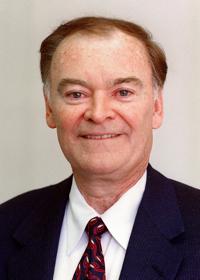
Frank Jordan is seen at his campaign office on 19th Avenue during his 1999 mayoral run. He came in third, behind winner Willie Brown and Tom Ammiano.
Wikipedia Commons
Homelessness showed how the map split. Jordan’s Matrix program, launched in August 1993, sent police into neighborhoods with large homeless populations to issue citations for offenses such as sleeping in doorways. Social workers were added that fall, following criticism.
The backers of Matrix came from the coalition that drafted him: the chamber, the merchants, the neighborhood associations. The American Civil Liberties Union and advocates for the homeless, which sued, lined up with the board.
Colleagues back Supervisor Shamann Walton’s call for 45-day moratorium on facilities to study effects, particularly on areas historically burdened with industry

Applications open for first site in a growing network that will offer artists spaces to live and work in their communities
Funding for Children’s Fairyland in Oakland will cover upgrades and operating costs for the 76-year-old attraction
Jordan said he believes Matrix would still work today.
Some power sat beyond City Hall entirely. Judges wouldn’t mandate treatment, and state law allowed only short holds, so “police were just handcuffed,” he said.
Sacramento was another wall. Jordan said that when AIDS was ravaging the community, Gov. Pete Wilson declined to back the statewide needle-exchange program that health experts believed would sharply reduce the transmission of the virus.
On March 15, 1993, Jordan declared a local emergency to run such a program anyway — and he renewed it every two weeks. His successors kept renewing it for more than 10 years.
He made the same case in Washington, D.C., seeking federal AIDS money before Sen. Ted Kennedy alongside New York Mayor Rudy Giuliani and Chicago Mayor Richard M. Daley.
At one hearing, Elizabeth Taylor testified first, and the press departed with her. Kennedy, at least, was listening.
“There isn’t a mayor in the United States that would stand in front of me and make the statements you’ve just made and expect to get reelected,” he told Jordan. “But I commend you for it.”
The Giants home run
It’s hard to imagine San Francisco without the Giants, given the role they play in today’s civic life. But in 1992, team owner Bob Lurie agreed to sell the team to investors who would move them to St. Petersburg, Fla.
Jordan wasn’t having it. Fortunately, he had an important relationship to lean on.
After the 1989 earthquake interrupted the World Series, he had spent 10 days as police chief working with Commissioner Fay Vincent’s team on when play could resume.
“You needed my help a couple of years ago,” he said he told Vincent in New York. “This time, I need your help.”
Then he worked the phones downtown, reaching Walter Shorenstein, Charles Schwab and Don Fisher, who took his call halfway up a mountain in Germany. He didn’t pretend the team made money.
“If you want a world-class city, you got to have world-class entertainment,” he told them.
In November 1992, National League owners rejected the move 9-4. Local investors bought the team for $100 million, and Jordan promised them a $1-per-year lease at Candlestick Park.
Peter Magowan and Larry Baer, who led the group, are the names San Francisco remembers. Jordan said that what bothers him isn’t his own credit but that of the investors.
“They were willing to take the loss in order to keep The City a first-class city,” he said.
Where the power went
The coalition that drafted Jordan couldn’t keep him. In 1995, he lost to Willie Brown, the consummate insider, stepping off the path to victory with an ill-advised shower stunt with LA-based radio shock jocks — a misstep that persists in San Francisco’s political memory.
But that’s merely a side note to his story.
“Frank Jordan was determined to make things better in San Francisco’s neighborhoods and he succeeded at doing just that,” said Jim Wunderman (Editor’s note: Jim is the author’s father), who served as Jordan’s chief of staff from 1993 to 1995 and as field-operations director in Jordan’s winning campaign.
Wunderman says the fact that people focus on that unforced error undermines what Jordan contributed to The City.
More than 30 years after the backlash that put Jordan in Room 200, voters turned to another outsider promising cleaner streets. Jordan — an early endorser — said he sees himself in Daniel Lurie and thinks voters chose well.
Lurie was “the right guy at the right time to get it back on track again,” he said.
Jordan’s first piece of advice to Lurie as a fellow outsider came at a sparsely attended press conference.
“You got to bring in a crowd, but have them stand behind you when they’re taking pictures,” he said.
Jordan said that what worries him today is what replaced The City’s civic glue. Parishes, social halls and the Kiwanis and Lions clubs gave way to “the computer, the cell phone, and the television.”
But the neighborhoods endure, and Jordan knows them as few mayors could. After his mother died when he was 10, he was boarded with about seven families across San Francisco before he turned 16.
“We are a mini United Nations, and we’re proving it can work,” he said.