
Cranberry farmers savor tart harvest
Published 10:50 am Monday, October 12, 2026
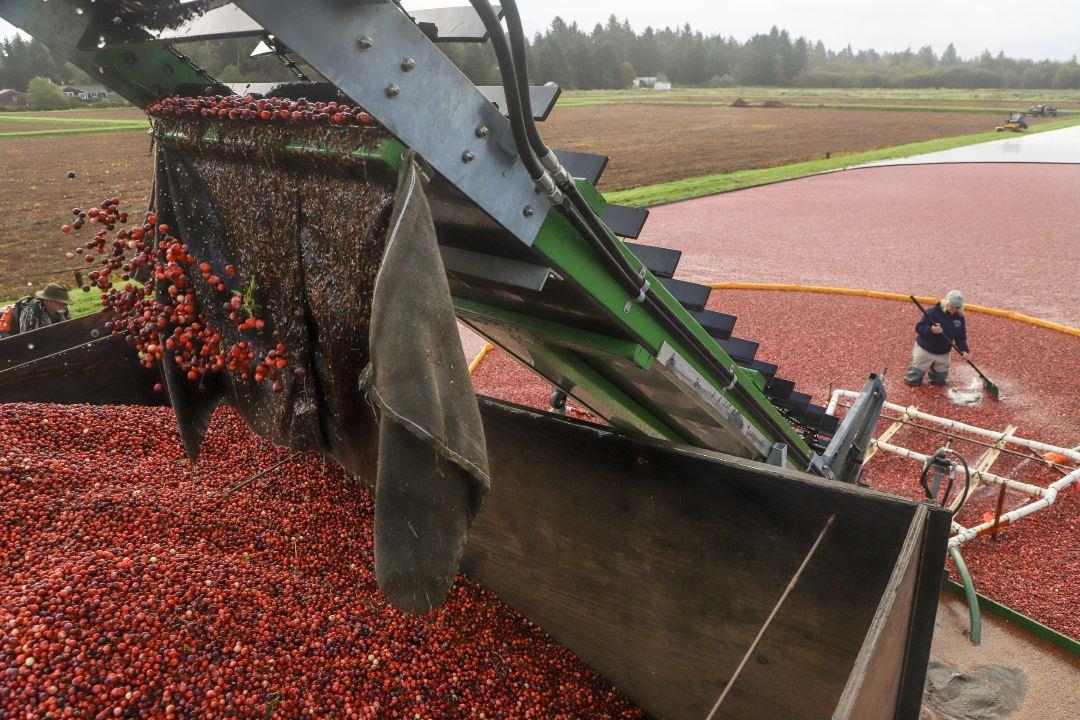
LONG BEACH PENINSULA — The bright, crimson berries fell like rain, rising up the conveyor belt before cascading into the hopper below.
The cranberry harvest season is in full swing along the Long Beach Peninsula, with tart fruit of fall taking center stage as local farmers rejoice in another sweet season.
Cranberries in Pacific County
Today, more than 140 years after the first commercial cranberry bogs took root in Pacific County, the industry continues to bear fruit for a new generation of intrepid farmers willing to toil in the sandy soil.
Entrepreneur Anthony Chabot is credited as the first to grow cranberries commercially on the Long Beach Peninsula, after planting imported vines from New Jersey in 1883, according to the Pacific Coast Cranberry Research Foundation. Today, cranberries are the second-highest crop in terms of acreage in Pacific County, accounting for 1,579 acres and generating more than $10 million in annual sales, according to the U.S. Census of Agriculture.
CranBear Bogs, a six-acre cranberry farm including four one-acre bogs along 40th Street in Seaview owned and operated by Tammy and Tim Conklin since 2023, is among more than 20 cranberry farms on the peninsula, producing approximately 75,000 barrels total — more than 7.5 million pounds.
Washington State University reports that the state has more than 100 growers and more than 1,500 acres in cranberry production. Growers produced about 15 million pounds — equivalent to roughly 150,000 100-pound barrels — in 2025. About half of Washington’s crop is sold to the fresh-fruit market. A statewide production forecast for 2026 is not available.
‘Craneberries’ to cranberries
On Friday, Oct. 9, Tammy and Tim Conklin were busy with crew harvesting their ‘Craneberry’ bog along Pioneer Road, in Long Beach.
“The pilgrims used to call them Craneberries,” Tammy said regarding the inspiration of the bog, the first of three purchased by the family over the past few years that also includes CranBear Bogs and TreeHouse Bogs, both in Seaview. Early European settlers initially called cranberries ‘craneberries’ because the pink spring blossoms resembled the head and neck of a crane.
The Conklins were harvesting their ninth bog of the season, a one-and-a-half-acre bog of the ‘Pilgrim’ variety of cranberries, renown for their exceptionally large berries and used primarily for juicing and Craisins, a trademark dehydrated cranberry snack marketed by Ocean Spray.
This season didn’t produce the bumper crop of years past, but the Conklins were satisfied with the harvest so far, with just a few bogs remaining on their Seaview field.
“On this farm, this season, we’re down quite a bit,” Tammy said, leaning on a rake covered in cranberry leaves and debris as she overlooked the bogs. “But that’s farming.”
Spray bars help ease burden
Wet harvesting — the primary method for the majority of local cranberry growers — is often arduous and tiresome work, but the burden is being eased with the introduction of ingenious tools created specifically for harvesting cranberries.
New this year, the Conklins are using a ‘spray bar’ created from PVC pipe and powered by a portable generator to help ease the wet harvesting work.
“We love it,” said Tammy, who was introduced to the tool by another local cranberry grower. “It saves your arms, you don’t have to push too hard to feed the conveyor belt. It agitates the berries, and cleans off the leaf debris while providing momentum to get it up the conveyor belt, so we don’t have to work so hard.”
Colorful fun
Ocean Park resident Segen Gates drives by the cranberry bogs frequently. “It’s so much fun seeing all the color explode out of the bogs as we drive by here regularly noticing the changing of the season. Come harvest time it’s just such an intense color change.”
Gates said the Cranberry Harvest Festival, hosted by the Cranberry Museum, is one of the few festivals he attends — a community fall celebration honoring local cranberry culture, farming and wet-harvest traditions on Saturday Oct. 10 on the Long Beach Peninsula.
He stood gazing out over the unending sea of shimmering red berries being collected on the cranberry bog by workers with Hannah Phillips, also from Ocean Park, and Eric Boyer, visiting from Portland.
“We are here for the cranberries of course,” said Phillips. “I think learning about cranberries is super cool and honestly it’s a very unique way of harvesting. It’s fascinating and magical.”
For Gates and Phillips, it’s their third time at the festival and Boyer’s first time. Pointing to his friends, Boyer said “they told me about the cranberry festival and I’ve never seen this before. I’m super interested in farm work and how food goes from being grown to on our plates.”
Like Gates, Boyer said he was equally fascinated with the “machinery and how the work gets done.” The trio started their day at the festival eating cranberry biscuits and sausage gravy made by DuneSide Trading Co. from Klipsan. The bakery was on site at the festival with a number of cranberry goodies. “Shout out to DuneSide,” said Phillips. “So delicious.”
Gates elaborated on why he thinks the festival is so special. “We are psyched for the cranberry festival every year,” he said. “Often it’s hard to feel like you’re a participant in a festival and not just an observer.” He pointed to kids across the bog with an area set up with rakes and tools for kids to interact with the cranberry harvest. “It’s really nice that people are actually welcomed into the cranberry harvesting process.”
Boyer spoke about his first impressions. “I just love that. It’s such a beautiful community where people come together to learn about the cranberries and also eat them,” he said. “This area has such a wonderful local bounty.”