
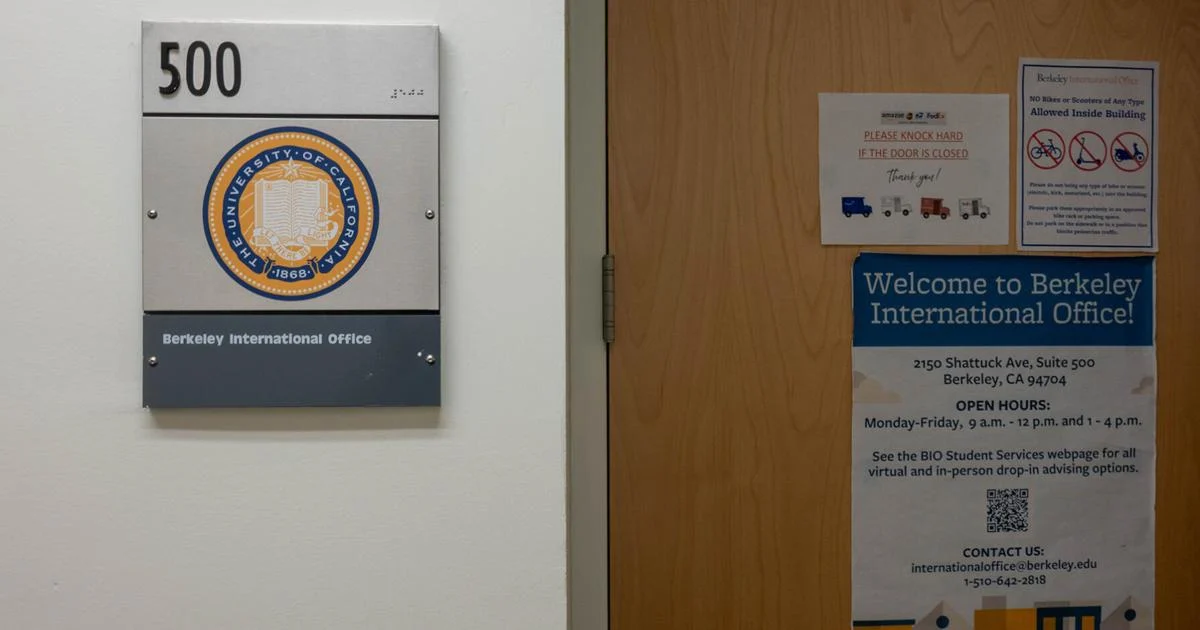
The UC Berkeley International Office plans to oppose a new U.S. Immigration and Customs Enforcement proposal that would require colleges and universities to pay a $70,000 fee before recommending an international student for work authorization.
Optional Practical Training, or OPT, allows international students to work in their field of study for up to one year after graduation. Graduates with eligible STEM degrees can apply for a two-year extension.
Under the proposal, universities would also pay $30,000 for individual students’ subsequent OPT recommendations, including STEM extensions, after paying the initial fee. ICE said schools could pass the costs on to students or employers.
BIO told students in an Oct. 7 email that the proposal has not taken effect and current OPT procedures remain unchanged.
ICE argues that the required fee could combat immigration fraud and protect U.S. jobs by incentivizing universities to scrutinize OPT applications more carefully.
Fanta Aw, CEO and executive director of NAFSA: Association of International Educators, questioned whether ICE had provided enough evidence to justify the fees.
“We need much more explanation and evidence supporting widespread fraud to justify such an exorbitant fee,” Aw said.
Aw warned that the fees could discourage international students from studying in the U.S., potentially hurting domestic research and innovation.
“International students will find other destinations. Let’s not make a mistake about that,” Aw said. “They have many choices. The U.S. is not their only option.”
NAFSA plans to submit public comments opposing the proposal and encourage universities to do the same. BIO also plans to work with campus leaders and higher education associations to oppose the proposed fees.
The UC would not say whether it would cover the costs. UC Office of the President spokesperson Rachel Zaentz said the university is still assessing the proposal.
Kessi Chen, a UC Berkeley graduate from China who works in marketing analysis with an OPT visa, plans to apply for the STEM extension next year. But recent immigration policy changes have made her reconsider staying in the U.S.
“If there are so many policies against international students working in the U.S., then why should we still be in a country that isn’t welcoming enough?” Chen said.
Jessica Xu, another UC Berkeley graduate working under an OPT visa, was less concerned. She said she has no plans to change jobs unless her employer raises concerns about her work authorization.
East Asian and International Students’ Community-endorsed ASUC Senator Sandra Ding called on the UC Regents to challenge the proposed rule in court.
“This ridiculous fee should not be placed on anyone under any hypothetical circumstance,” Ding said in an email.
Ding is also working with the University of California Student Association to seek support from UCOP’s Federal Government Relations team.
The public comment period closes Nov. 9. If finalized, the rule would take effect 60 days after publication of a final rule.
ICE did not respond to requests for comment.