
BAKERSFIELD, Calif. (KGET) — It’s a good week to be in the oil business, and a bad one for environmental advocates.
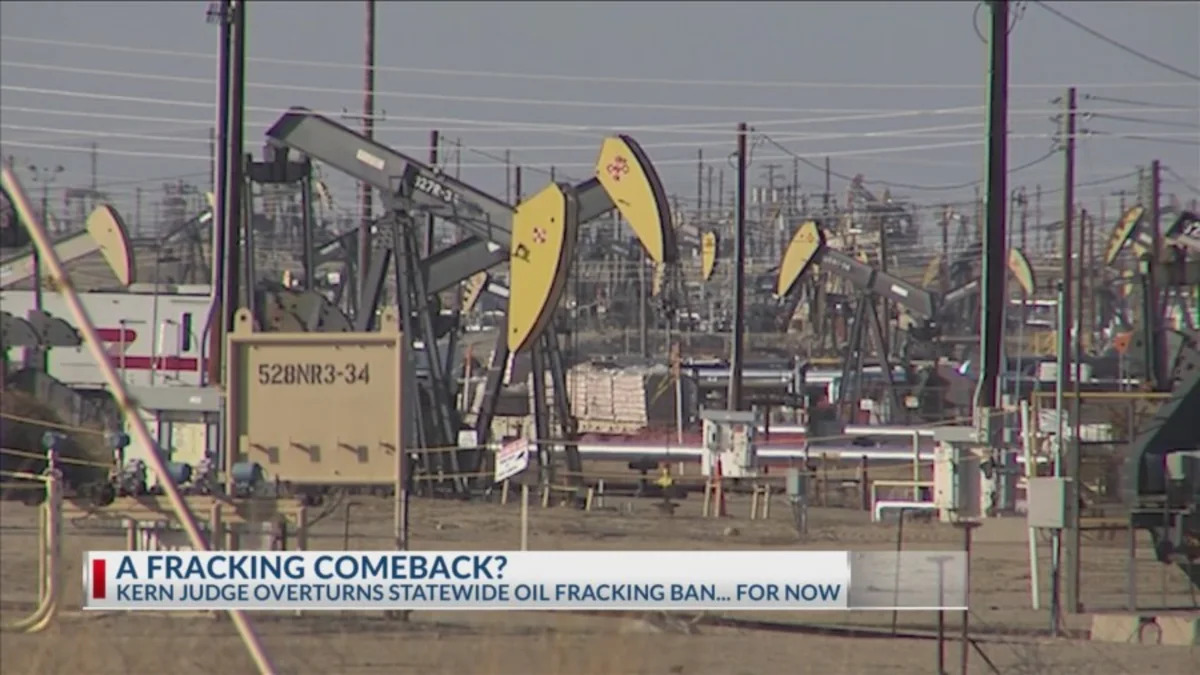
Just two years after oil fracking was formally banned in California, and five years after fracking approvals ended, Kern County Superior Court Judge Bernard C. Barmann Jr is backing fracking.
“There’s about eight up to about a billion barrels of oil still in the diatomite formation, which needs to be hydraulically fractured in order to produce. It’s just too tight. The rock is too tight. So maybe we unlock a lot of production in California, actually, in Kern County, specifically, not necessarily California,” said Chad Hathaway, CEO of Hathaway Oil.
Fracking is a process of injecting high-pressure liquid underground to crack rock and release trapped oil and gas. Scientifically, a large swath of oil here in Kern County requires fracking to extract due to its depth and pressure, according to Hathaway Oil CEO Chad Hathaway.
The Western States Petroleum Association agrees, saying hydraulic fracturing’s benefits should come before politics.
“We were extremely pleased to see the ruling. We felt it was an incredibly common sense decision and recognized that hydraulic fracturing applications should be evaluated on their merits and really not blocked with a blanket denial that’s truly based on politics,” said Jodie Mueller, President of the Western States Petroleum Association.
Environmental advocates argue that the new drilling permits allowed in last year’s senate legislation negate the need to upend the ban.
“We already have things like the current oil and gas ordinance which admit that each well does damage to the environment and invest around $10,000 per well, and they can already approve up to 2,000 new permits. So we don’t need to remove a ban on fracking to increase production. There’s already something that exists because of SB 237. And so to me this looks like something that’s short sighted and that is only going to benefit corporations, usually fracking wells or wells that are almost exhausted and have a short lived life,” said Cesar Aguirre of the Central California Environmental Justice Network.
The tentative ruling kicks off a review process before a final court decision is issued — typically within 50 days. However, the decision is almost certain to be appealed, which could take years in court.
Copyright 2026 Nexstar Media, Inc. All rights reserved. This material may not be published, broadcast, rewritten, or redistributed.For the latest news, weather, sports, and streaming video, head to KGET 17 News.