
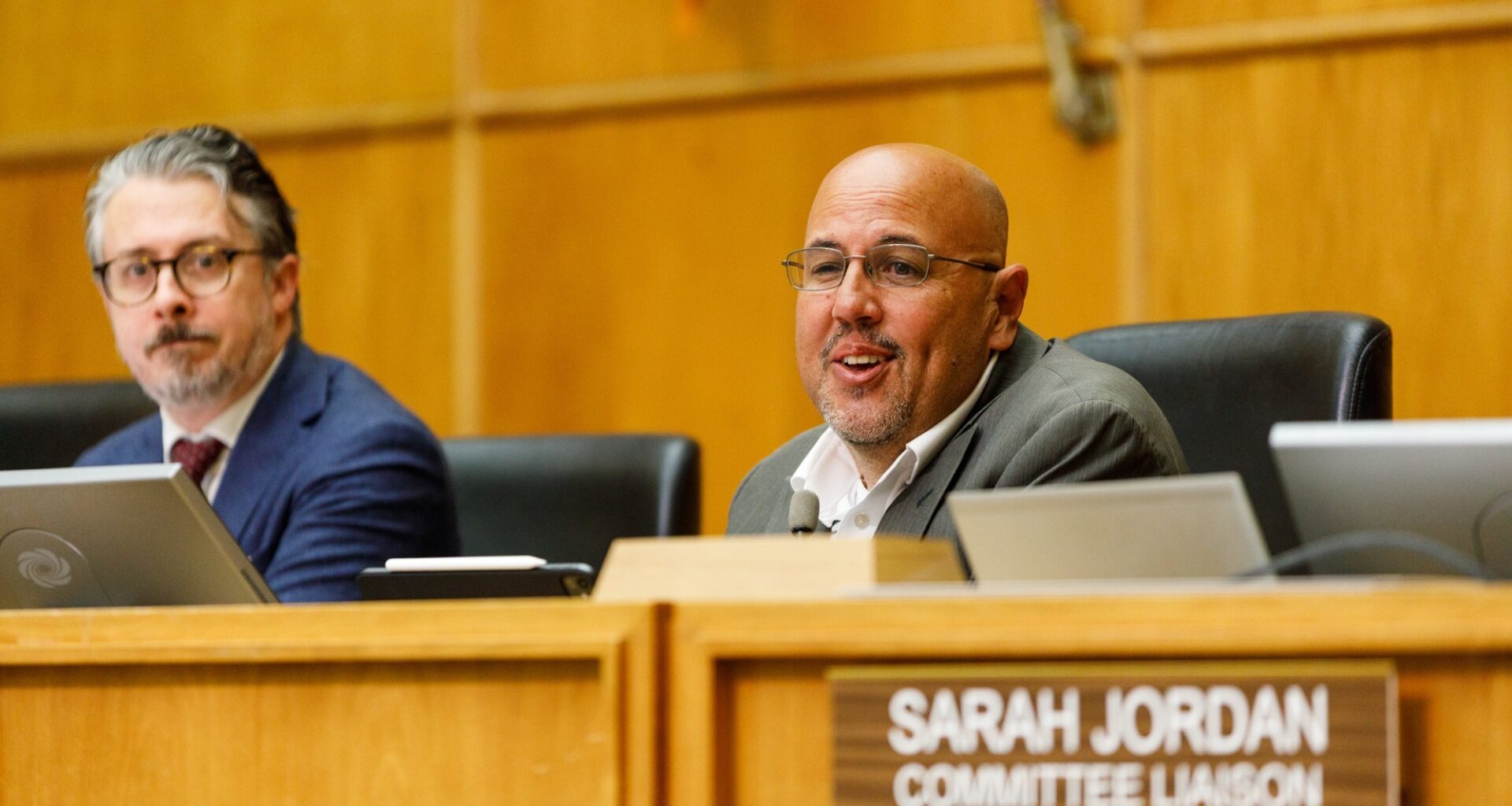
The San Diego City Council is retreating from a four-year-old policy it created to shift some power over the city’s $6 billion annual budget away from the mayor and into the hands of the council.
The council is eliminating an early wave of budget priority requests it has submitted to the mayor each October since 2022, shrinking the number of annual priority memos each council member submits from three to two.
The goal of the early wave was to amplify council input into the initial steps the mayor’s finance team and policy aides take in crafting the proposed spending plan before it’s released each April 15.
Prior to the new policy, council members didn’t have any impact on the budget until they submitted their requests to the mayor each February — just two months before the comprehensive and complex budget gets released.
But council members say the city’s budget crisis and the volatility of city finances have diminished the impact of the early request memos in recent years, contending October is too early to know where things will stand.
Councilmember Henry Foster said a key motive for eliminating the early requests is that city finance officials haven’t had time in October to fully analyze tax revenues and possible upward or downward revenue trends.
“This was done just because of how volatile our finances have been and to make sure we allowed staff some greater opportunity to really hone in,” said Foster, who chairs the council’s budget committee.
In 2024, the impact of the October memos was further diminished by a proposed city sales tax increase on that November’s ballot that could have significantly boosted annual city revenue by $400 million.
In addition, the city’s finance team releases each November a five-year financial outlook that estimates deficits and surpluses for the next five years and outlines key spending decisions the council will face.
While the early requests have been submitted to the mayor in October, council members must complete them in September to give the city’s independent budget analyst time to compile and summarize them.
The notable divergence in how the council approached the October memos last fall sheds some light on how the city’s financial volatility has impacted them.
Councilmembers Foster and Vivian Moreno followed the typical blueprint of submitting request memos of more than 30 pages, with long wish lists for priority policies and infrastructure projects in their districts.
But Councilmember Kent Lee, a former budget committee chair, submitted only four paragraphs.
“In light of the many unknowns from economic impacts on revenues, more time is necessary in order to identify our budget priorities and mitigation strategies to achieve a balanced budget,” Lee wrote.
Those October 2025 budget memos also created a mild political headache for Council President Joe LaCava, who prioritized charging for parking at city beaches in his request to the mayor.
That was before the city’s chaotic and harshly criticized rollout in December of paid parking in Balboa Park, which prompted LaCava to back away from paid beach parking and propose an ordinance prohibiting it.
Former Councilmember Chris Cate, who spearheaded the October memos as chair of the budget committee in spring 2022, said Monday that the main goal was giving the council earlier input.
Former Councilmember Monica Montgomery Steppe, another previous budget committee chair who is now a county supervisor, told her constituents in fall 2022 that the new October memos were important.
“We want to make sure our priorities are highlighted during the budget-crafting process,” she said in a constituent email newsletter back then.
Last month, the IBA endorsed the change with minimal comment.
“This streamlines the process while still giving council members an important opportunity to share their priorities for the fiscal year 2028 proposed and adopted budgets,” the IBA said.
The IBA noted that council members still have their winter request memos, which are submitted in January and then compiled and summarized by the IBA before being submitted to the mayor in February.
And the council also submits budget priorities to the IBA in late May that the IBA uses in early June to propose a compromise budget, which typically plays a key role in the budget that the mayor and council eventually adopt.