
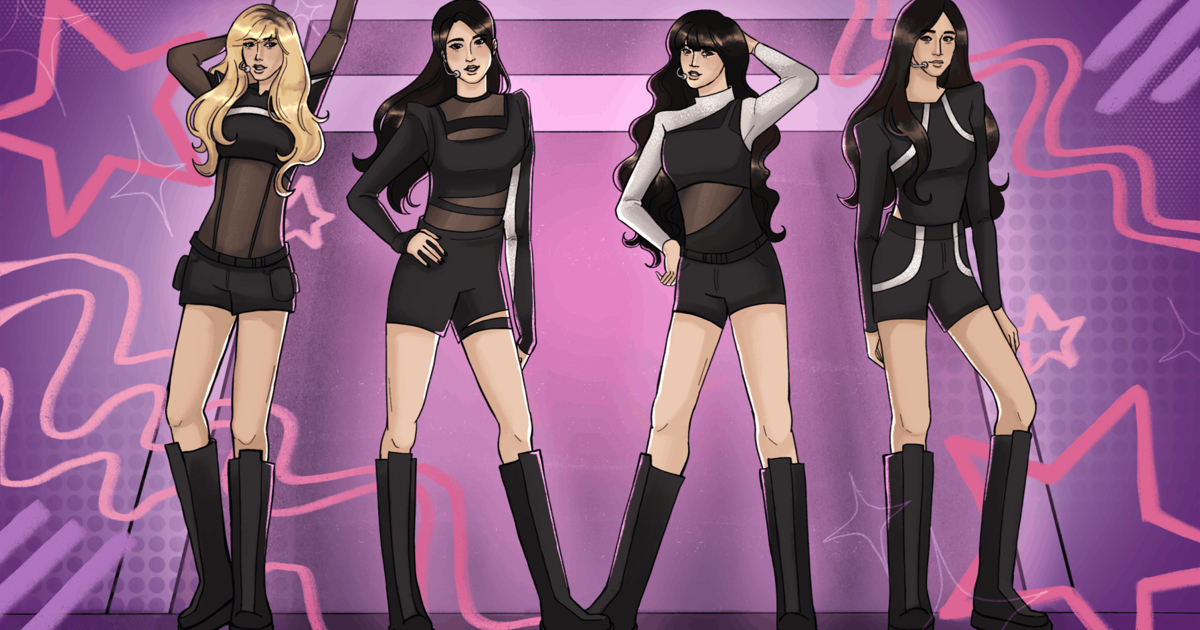
On Oct. 6, Seoul girl group Aespa stopped at the Oakland Arena for their “Synk: Complæxity” tour in a flashy demonstration of K-pop perfection.
Aespa debuted in 2020 as SM Entertainment’s first girl group since Red Velvet, consisting of four human members — Winter, Ningning, Karina and Giselle — and their digital AI avatars — æ-Karina, æ-Giselle, æ-Winter and æ-Ningning. In all, it makes for a concept so difficult to grasp that the idols themselves took classes in order to understand it.
Needlessly convoluted branding aside, Aespa’s hyperpop sound and glossy, high-tech aesthetic helped them amass a dedicated fanbase known simply as “MY.”
The arena was illuminated in part by the collective glow of lightsticks, a staple of K-pop concert culture. Fans waited for Aespa, who were unaccompanied by openers, to appear, but were met instead by a projection of their music video for “Welcome to MY World,” a 2023 single featuring nævis, the group’s AI-synthesized idol.
Then, a prologue played, beginning a series of video snippets that continued throughout the concert as interlude segments. The script featured as much nonsensical techy jargon as those “hacking into the mainframe” memes, but none of that mattered when the idols walked on stage, beginning their latest hit “Lemonade.”
“Lemoade” is an average K-Pop number, which is to say that it involved intricate choreography for each member, who performed with precision and unfaltering energy. Aespa’s militant accuracy makes Western acts look weak by comparison; even Tate McRae, arguably American pop’s strongest dancer of the current moment, switches between singing and dancing rather than doing both simultaneously.
Between songs, the audience barked in anticipation of the next number, a common practice at K-pop concerts.
Aespa played several new hits, including “Whiplash,” during which main vocalist Winter belted an impressive high note while confetti went off, hyping up the crowd and underscoring her talent. The group also played its debut single, fan favorite “Black Mamba,” which features challenging choreography and fierce bass.
The storyline continued with the digital fabric of Aespa’s fictional universe being seemingly hacked, leaving the group’s members to save the world. The idols said weird, dystopian things such as, “I couldn’t believe whether what was in front of my eyes was real or corrupted” — things that felt eerily reminiscent of real-life AI apocalypse concerns. Before anyone could digest anything, though, Aespa came out again in new, all-white outfits to sing gentler songs, namely “Count on Me,” during which members abandoned choreography in favor of sitting on a set of bleachers.
Then, the idols took a break from music to introduce themselves, a redundancy in front of an audience that is likely already parasocially obsessed with the members, but adorable nonetheless. They played “Kiss N Tell,” a song much cutesier than other recent hits such as “WDA (Whole Different Animal)” and “Dirty Work,” which moved the show through the group’s eras and created a delightfully varied discography.
After another interlude with the same unsettling qualities as a yassified “Backrooms,” Aespa showcased the individual talent of their members with duets such as “Lollipop” by Giselle and Ningning and “Serenade” by Karina and Winter, as well as solo songs. Seeing each member isolated made their individual talents and branding clearer, elevating each of them from being cogs in the well-oiled Aespa machine to standalone stars. Winter’s solo, “Saddle Up,” stood out due to her sassy stage presence and flawless riffs, but each member thrived in the spotlight.
The group reunited for powerful performances of “Armageddon,” and its breakout hit “Next Level,” which highlighted Ningning and Winter’s vocals in breathtaking high notes.
Aespa, similar to its audience, cannot be pigeonholed. Aespa’s music isn’t just K-Pop or hyperpop or hip-hop, as its members don’t subscribe to any one aesthetic; rather, they encompass it all. This reflects in their fanbase, who aren’t wholly composed of stereotypical Korean fangirls, but people of all ages from all over the world who share a singular love for Aespa.
As the idols went backstage for the last time, an audience participation segment ensued, allowing audience members ranging from tween girls to elderly men to copy Aespa’s choreography. More than just music, Aespa’s work is motivational and unifying. Aespa may not be equipped to write sci-fi, but they left Oakland, and the many kinds of fans of the Bay Area, with a next-level performance.