
That multiplex is still around (it’s now a Cinemark), but the mall has lost its Sears, Macy’s and all but one of its anchor tenants, and, like most retail, is struggling mightily. The old open-air Santa Barbara shopping center across the street generated much discussion and proposals, including one from Johnson, but it stood fallow for 25 years before a Kaiser Permanente complex opened there in 2017.
Michael Anderson, an architect and developer who’s proposed several economic development plans in the Crenshaw District, said elected officials have repeatedly missed — or ignored — opportunities to make meaningful improvements, in part because there are so few precedents for them. Not that he sees that as an excuse.
“Black folks just don’t know economic development, they know hope,” said Anderson. “Crenshaw still doesn’t have new sidewalks, alleys, all that basic stuff that makes a place livable. It’s still Black, but because it isn’t modernizing it’s a dying Black space like all Black spaces, like Central Avenue. It’s gone.”
Others aren’t quite that pessimistic, including many of the “Keep the Promise” critics. Hope is indeed ingrained in many Black people’s outlook, economically and otherwise, sometimes without much evidence to justify it. But sometimes there is.
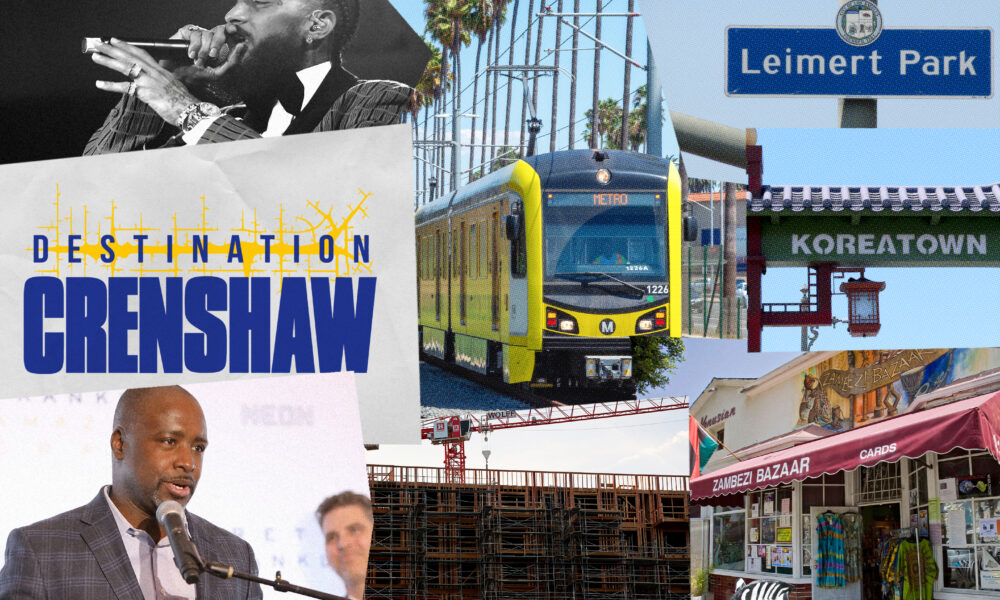
“On the plus side, Vision Theater finally opened after being dark for more than 30 years,” said Ryan of Zambezi Bazaar, referring to the city-owned Art Deco theater in the middle of Leimert Park that had been undergoing renovations for decades.
Once owned by television star Marla Gibbs, it’s now operated by WACO Theater Center, an arts organization co-founded by Tina Knowles, mother of pop icon Beyoncé and a Black arts advocate in her own right. While the reopening certainly took far too long, it’s also true that, given the woes of Destination Crenshaw, the timing couldn’t be better.
“I’m still skeptical about Destination Crenshaw,” said Ryan. “But let’s see what happens.”