
Fresno leaders are proposing new regulations for group homes that cater to registered sex offenders, arguing the city needs greater oversight as inmates granted parole are flocking to the community.
The proposed Sex Offender Housing Inspection, Enforcement, Licensing and Disclosure Act — known as the SHIELD Act — would require operators to obtain a city license and limit the number of sex offenders who may live in a single-family home.
The big picture: The proposal would extend regulations similar to those adopted by Fresno County into the city limits.
The measure would:
Limit group homes to six registered sex offenders.
Cap the number of licensed facilities permitted within each City Council district.
Require operators to disclose where the homes are located.
Allow city inspections and enforcement against unlicensed or noncompliant operators.
Establish penalties that could include the suspension or revocation of a license.
Fresno officials said nearly 1,300 registered sex offenders currently live within the city.
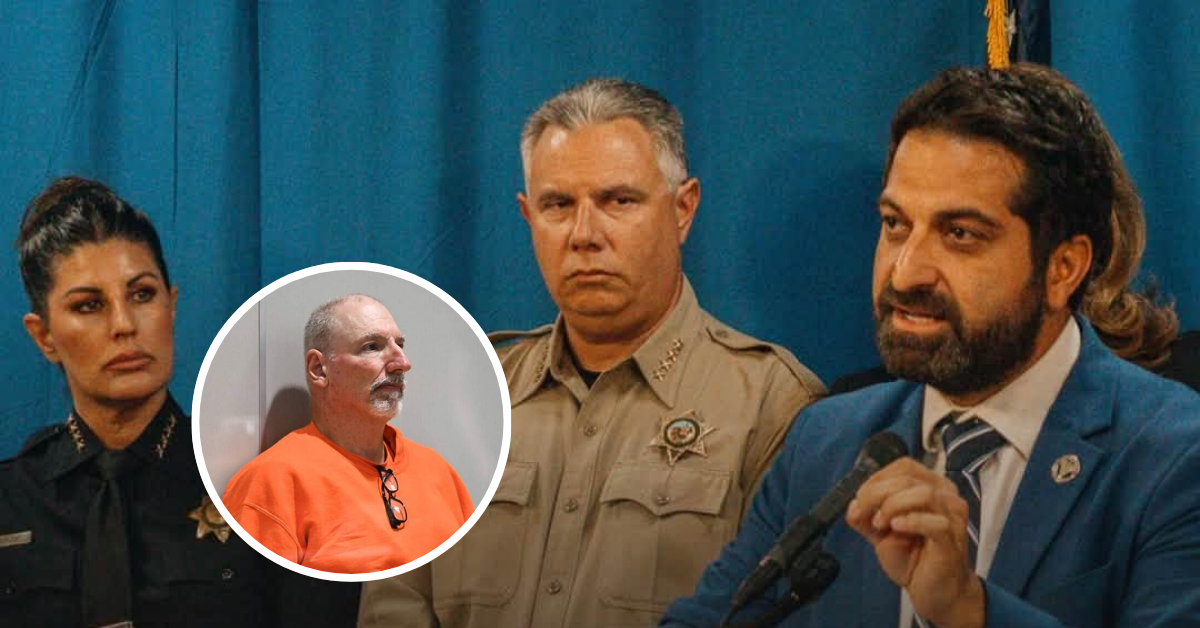
Driving the news: Councilman Mike Karbassi unveiled the proposal Tuesday alongside Fresno County District Attorney Lisa Smittcamp, Sheriff John Zanoni and other public-safety officials.
Local officials said they do not know how many transitional homes currently house sex offenders in Fresno or who operates all of them.
Zanoni said the lack of information causes fear for families, particularly when multiple high-risk offenders could be placed in residential neighborhoods without residents receiving advance notice.
The backstory: The proposal follows the attempted release of David Allen Funston, a convicted child kidnapper and serial molester who had planned to live at a Fresno transitional home.
Funston was sentenced in 1999 to three consecutive terms of 25 years to life for 16 counts involving child molestation, sexual assault and kidnapping. His youngest victim was 3-years-old.
The Board of Parole Hearings found him suitable for release in September 2025 under California’s Elderly Parole Program. The program allows qualifying inmates to receive parole consideration after reaching age 50 and serving at least 20 years.
Gov. Gavin Newsom requested that the full parole board reconsider the decision, but commissioners reaffirmed Funston’s parole in February.
Funston was scheduled to leave prison Feb. 26 and had sought placement at Centers for Living in Fresno. Instead, the California Department of Corrections and Rehabilitation transferred him to Placer County authorities after prosecutors obtained a warrant in a separate child sexual abuse case dating to 1996.
Funston has pleaded not guilty to the new charge and remains in custody.
What they’re saying: Karbassi blamed changes to California’s parole laws for making Funston eligible for release despite receiving multiple life sentences.
“If you’re a violent sexual predator and the state of California wants to let you out early, all we’re saying is we can’t control where you go, but you sure as hell aren’t going to call Fresno your home,” Karbassi said. “That’s the point of the SHIELD Act.”
Smittcamp argued that the parole process has weakened the influence of victims, prosecutors and judges while giving violent offenders greater control over where they may live after release.
Zoom out: Fresno County adopted a similar ordinance in January covering unincorporated communities.
The county law limits a single-family home containing at least one registered sex offender to six occupants or beds. It allows misdemeanor prosecution, administrative citations, injunctions and business-license revocation for violations.
Supervisors Garry Bredefeld and Brian Pacheco sponsored the county ordinance with Zanoni.
The legal fight: The Alliance for Constitutional Sex Offense Laws and three registered offenders sued Fresno County shortly after the ordinance passed.
The lawsuit argues that state law already controls restrictions placed on registered sex offenders and preempts local governments from imposing additional housing rules.
The plaintiffs also argue that the county ordinance could force residents out of transitional housing and leave them homeless.
County officials maintain that the law is a legally defensible public-safety measure. Fresno leaders acknowledged that the proposed city ordinance could face a similar court challenge.
What’s next: City officials are expected to begin discussing the proposal’s legal and enforcement details this week.
The final ordinance would have to return to the City Council for public hearings and approval. Supporters hope to have the SHIELD Act adopted by the end of the year.