

Get buses to run on time, and run them often in the cleanest way possible. That’s what Oakland residents told The Oaklandside when asked at bus stops what AC Transit’s directors should focus on in the near term.
On November 3, with five of the transit agency’s seven board seats up for grabs, along with a generation-defining $14 billion transit measure, voters will decide the future of public transit in the East Bay.
AC Transit, the East Bay transit agency whose buses provide around 40 million trips a year, has undergone massive changes over the past decade.
In 2016, voters renewed the agency’s parcel tax, creating a 20-year financial base by charging county property owners, on average, about $100 a year. The agency released a major study that year identifying its highest-ridership corridors, which would go on to influence line design and schedule choices. One of those corridors transformed with the launch in 2020 of the first bus-rapid-transit service: the Tempo line, which runs along International Boulevard and connects San Leandro to Oakland. It quickly became the agency’s most popular line, though its dedicated lane also inadvertently encouraged illegal speeding, leading to collisions, deaths, and recriminations until infrastructure improvements improved safety. Then the pandemic hit, and ridership collapsed, creating a $200 million structural deficit the agency is still trying to dig itself out of.
Most recently, despite an ambitious effort to “right-size” its bus routes and schedules called Realign, the agency has struggled to deliver basic services, with riders experiencing frequent canceled and late trips. Some agency directors are pushing staff to fix those problems, including by providing more frequent reliability reports.
The directors who win the election will play an important role at a critical time in the agency’s history. They may be in charge of deciding how to spend billions of dollars of transit measure revenue, or they may be forced, if the Regional Transit Measure fails, to pare down service or cut routes serving thousands of people.
After recent redistricting, Oakland is represented on the AC Transit board by Wards 2, 3, and 4, and two of those seats are up for election this year. In Ward 3, Joel Young, a longtime director who currently holds an at-large seat, faces a challenger in Adriana Valencia, a product manager and community activist. In Ward 4, one-term incumbent Sarah Syed faces off against school teacher Gabriel Morales.
Ward 3: Joel Young, the incumbent
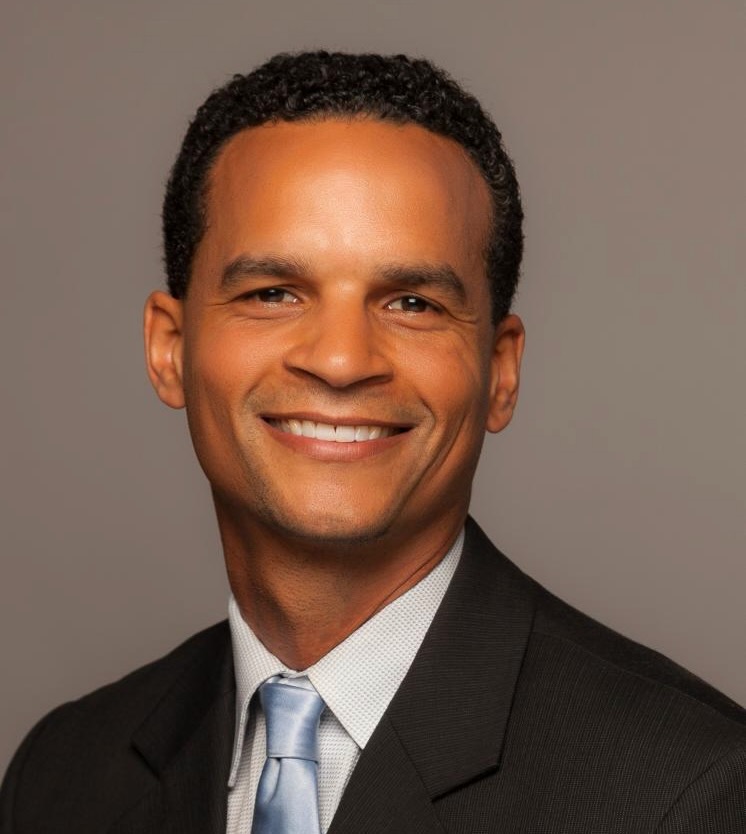 Longtime AC Transit board director Joel Young is running, after redistricting, for a Ward 3 seat. Credit: Courtesy of the campaign
Attorney Joel Young has held one of the agency’s at-large seats since 2009. In the wake of a 2022 redistricting effort that eliminated these at-large seats, Young will run for the redrawn Ward 3 seat this year, which will now cover North Oakland, Montclair, Piedmont, most of the neighborhoods surrounding Lake Merritt, and Alameda.
Young has been a consistent presence at the agency for nearly two decades, where he has led major projects and, according to AC Transit, helped secure millions of dollars in funding that has helped keep the agency afloat. He has also twice been found to have violated board policies, once over its ethics code and recently over a policy barring gender-based harassment.
A graduate of St. Mary’s High School and UC Berkeley, where he earned both his undergraduate and law school degrees, Young said after his last election to the board that he would focus on “deficits and how to improve funding for our invaluable service.”
Young’s record of helping bring in major agency funding may be best represented by his role as chair of the campaign for Measure C1, the parcel tax renewal campaign, where he partnered with the Democratic Party, AFL-CIO, AFSCME, and more. Voters approved the measure by a wide margin in 2016. The agency has said the parcel tax provides about $30 million a year.
The attorney’s tenure has included a commitment to zero-emission hydrogen and electric buses, an issue where he often worked in collaboration with the late director Christian Peeples, a green-energy champion. In 2022, when then-federal transportation Secretary Pete Buttigieg toured Oakland, Young said in an agency press release that the agency needed billions more from the federal government to acquire more zero-emission buses to make a real difference in Bay Area emissions.
Young has said he is proud to support programs that provide more equitable opportunities for agency staff and riders. He worked with county arts and education offices to commemorate the anniversary of Rosa Parks’ bus segregation protest in Montgomery, Alabama. That work led to the creation of the Freedom Bus, an AC Transit bus redesigned to educate young people about the Civil Rights Movement, which travels to schools.
In 2025, Young took on a national leadership role when he was elected vice chair of the American Public Transportation Association. In that capacity, he participated in several national association events, including interviewing a current Trump administration official, Transportation Security Administration assistant administrator Sonya Proctor.
This year, the director faced an independent investigation, which found that he made “unwanted physical contact” with a fellow director, Sarah Syed, in violation of AC Transit’s policy prohibiting gender-based harassment. Director Jean Walsh, who witnessed the incident, told The Oaklandside that Young approached Syed from behind, “wrapping both his arms around her and squeezing her in a big embrace.”
“She bristled and stiffened and looked very uncomfortable,” Walsh said. “Other people raised their eyebrows and looked at each other with concern.”
The Oaklandside reached out to Young over a period of weeks seeking an interview for this article. He said that he’s been busy dealing with the public fallout from the investigative finding, and so he declined to give an interview for this story and did not answer questions sent by email. If Young sends us answers after publication, we’ll update this story.
In a statement to The Oaklandside in September, Young said of the incident that he was trying to offer “comfort and support” during a remembrance of Peeples, who had died several weeks earlier. “I respect that her experience was different from my intent,” Young said.
In a public letter responding to the investigative findings, four of the agency’s seven directors supported Young, including board President Diane Shaw, who has voted with Young on many issues in recent years. The letter said, in part, that Young had secured “more than $600 million for AC Transit, advancing workforce development and transit technology, expanding the District’s zero-emission fleet, and [representing] AC Transit nationally, including at the White House Roundtable on Clean Bus Manufacturing.”
More recently, 33 current and former East Bay elected officials, including three Oakland city council members, called for his censure.
Ward 3: Adriana Valencia, product manager and neighborhood activist
 Adriana Valencia, a product manager, activist and bus rider is challenging for the Ward 3 seat. Credit: Courtesy of the campaign
A product manager by trade who has worked at big tech companies including Airbnb and Twitter, Adriana Valencia is a self-described “high-energy” person involved in hyperlocal issues in the Temescal neighborhood, where she lives with her family. As a board member of the Temescal Telegraph Business Improvement District and the YIMBY group East Bay for Everyone, she said she’s also become familiar with key local economic and environmental issues people care about.
The UC Berkeley graduate told The Oaklandside that she’s always appreciated living in cities like Oakland for the benefits they provide, even with their challenges. And one of those benefits is readily available public transportation. She said she’s never driven a car because she lacks depth perception — she mostly sees out of one eye — which has forced her to depend heavily on public transit.
She said she didn’t pay much attention to local politics until 2016, when a neighborhood group tried to halt the construction of a 260-foot-tall residential tower at the MacArthur Transit Village next to the MacArthur BART station, which she supported. Valencia said it was obvious to her then that housing needed to be built next to major transit hubs to provide more places to live and easy access to jobs. She also said she supported Senate Bill 79, passed in 2025 by the state legislature, which sought to facilitate more transit-oriented housing in the state.
Her conversion to bus advocacy happened a little more recently.
Valencia said she and her son were among those affected by a 2024 decision by AC Transit’s then general manager, Michael Hursh, to cut night service to parts of Broadway due to concerns over crime and crowded streets. “The service was poor as the bus never came,” she said. “We waited for an hour.”
Valencia said she didn’t appreciate the lack of notice of that change to riders. She became even more upset when she learned that Hursh received a half-million-dollar payment between 2024 and 2025 to serve as a consultant while on his way out to a new job in Oregon, a decision the board did not initially discuss in a public forum before greenlighting. “I was super incensed because half a million dollars of public money — that’s a lot of bus operator money,” she said.
In the last two years, transit advocates that she met through her housing advocacy encouraged her to run for the Ward 3 seat. If she wins, Valencia said, she’d bring a sharp focus on bus reliability. She said it’s particularly egregious that the agency canceled buses at the last minute this summer, producing long, frustrating waits, even though staff and board members promised the Realign project would increase reliability. She said a failure of transparency by the agency’s executive leadership has left bus riders literally and figuratively stranded.
“There’s a big disconnect in communication between the board on the executive side and how it’s operationalized,” she said.
She said she would expect a standing agenda item at every board meeting with the latest reliability stats alongside explanations and root-cause analysis of missed service. She said she’s had conversations with bus drivers who told them that they, too, get frustrated by reliability breakdowns.
She said she also wants to fix the disconnects between AC Transit and other mass transit providers. When BART suffered electrical outages in mid-September, forcing riders to take other forms of transit, AC Transit did not respond quickly enough to send buses to BART stations, Valencia said.
“In a moment when there should be some sort of cross-agency coordination, it’s just not there,” she said.
A long career in product management, she said, has given her the kind of background she would need for working with a public agency with tens of thousands of customers.
“Product management is really about balancing a lot of competing priorities and understanding the different points of view of different people across complex organizations,” she said. “Putting products out the door. But it’s also about an interest in learning new things, a desire to do research, and the acknowledgment that progress happens iteratively.”
Ward 4: Sarah Syed, the incumbent
 Sarah Syed, now redestricted to Ward 4, is running for a second term. Credit: Courtesy of the campaign
Sarah Syed has had a busy four years representing the old Ward 3. Like the other directors, she has had to contend with the significant financial challenges the agency faced coming out of the pandemic, when ridership plummeted and the agency was forced to seek federal and state emergency funding. A bus rider herself, who uses the 57 and NL bus lines, she has emerged as a leading board critic of some of the agency’s more controversial decisions.
Syed, a UC Berkeley graduate and transportation planner who once worked for the city of Oakland as a bicycle and pedestrian analyst, said she is especially proud of the work she’s done to surface more actionable data on bus reliability and scheduling. She says her time on the board has taught her that directors can make a real difference in peoples’ lives.
“This role has taught me how much of daily life in our district turns on decisions made at the board table: where a stop goes, how often a line runs, whether a schedule gives an operator time to use the bathroom, and whether new rider benefits quietly shut out riders who pay cash,” she said. “These sound like technical questions, but they carry real equity stakes.”
She criticized a decision by Michael Hursh, then the agency’s CEO, to curtail nighttime bus service on Broadway downtown. Hursh did not publicly announce the change, and the board did not debate it, leaving some riders stranded and confused. Syed pushed to restore service and to change the process so the public gets notice of big changes before they’re implemented, she said.
She also sharply criticized her fellow directors for approving what she called a “golden parachute” for Hursh when he departed as CEO, asking for details about what exactly the agency was getting for that investment. She said she instead received firm pushback from her colleagues.
At times, she has told The Oaklandside, seeking answers on these and other issues has led to conflict with fellow AC Transit leaders. At one point, Hursh accused her of bullying and intimidation, though an investigation did not uphold that claim. The investigation did find that Syed had “reached out to staff in such a way that her communications may have been interpreted as directing their work”; directors are supposed to communicate with employees only through senior figures such as the general manager or general counsel, to preserve the independence of agency staff.
Syed has spoken out at AC Transit board meetings about what she views as the Realign project’s shortcomings. She voted against the final plan and said the promised tradeoff of more reliability for less service hasn’t panned out. Syed noted that in the week ending August 22, only 89.4% of scheduled trips actually ran, against a goal of 99.5%, while the agency’s competitor across the Bay, Muni, ran at about 99%. Realign, she said, has made operator availability worse.
“An earlier version promised operators realistic run times and time for bathroom breaks, and the final plan took much of that back,” she said. “Unrealistic schedules contribute to burnout and absenteeism, and when AC Transit does not have enough available operators, missed trips follow. You can’t schedule your way to reliability without the workforce to deliver it.”
Getting timely, accurate information on bus service, such as on-time figures, has been the biggest unexpected challenge she’s faced as a director, Syed said. She also pointed out that AC Transit’s own consultant identified “underlying distrust” among directors and the need to create “a culture of open communication and trust that encourages diverse perspectives and collaboration while minimizing conflict.”
“Changing that culture is the work I want to finish: clear standards, honest data and decisions made in public,” she said.
Syed has sometimes shown up to advocate with street safety volunteers on the ground. As red-light running and speeding events became frequent on the AC Transit bus-rapid transit lane, Syed was seen by The Oaklandside speaking with families affected by the resulting collisions.
She has been working to convince people to vote yes on the Regional Transit Measure, which would provide Bay Area transit agencies with an estimated $14 billion over 14 years to staunch their deficits. Syed said if the measure doesn’t pass, she would work to protect service over discretionary spending. She said she’s done this before, by supporting the deferral of spending on hydrogen fueling infrastructure until grant funding was secured and by pushing the Metropolitan Transportation Commission to reimburse the agency for cost overruns connected to the launch of Clipper 2.0.
“Every dollar we recover helps protect service,” she said.
Ward 4: Gabriel Morales, school teacher
 Gabriel Morales, a longteam East Bay school teacher, is challenging Sarah Syed in Ward 4. Credit: Courtesy of the campaign
A long-time East Bay school teacher and principal at schools including Bret Harte Middle School in Oakland and the Faith Ringgold School of Arts & Science in Hayward, Gabriel Morales seeks to live out the democratic values that he tries to instill in his students. He tells them that getting involved in issues and serving in public office is a worthwhile use of their time, especially when the work benefits a large population of underserved folks. And he says he’s now ready to model that himself.
“I think I’ve come to a point in my life where I believe I have skills, leadership, and experiences that would make me a very reflective and responsible leader,” he said. “And I really do believe that everybody should run for office.”
Morales, currently a multiple-subject teacher at the Hayward Adult School, told The Oaklandside that he wants to see AC Transit be as effective and efficient as the transit systems he experienced while living in Germany in the early 2000s. He said he appreciated that bus and train systems there supported each other in a way that never left riders stranded, and that no matter where you were, there was always a transit pathway to get home quickly.
“AC Transit, BART and Muni all operate independently and don’t work together,” he said. “In Germany, schedules feed into each other so it makes things more efficient.”
Morales, who grew up in San Leandro and Hayward, said the agency urgently needs staff to produce more and faster reliability data for the board so it can be publicly debated. He said directors need to talk with bus riders to stay on top of the worst outcomes and fix them as soon as possible.
“Perhaps the board is not honing in on or focusing on the demands and the needs of the public,” he said, noting that unreliability has reached the point where people are being forced to wait twice as long for a bus on some popular lines. He said policy and data need to be aligned with the “needs of the consumer,” and if the agency’s systems aren’t aligned with those needs, they need to change. On his campaign website, he said he would seek to “correct harmful Realign changes,” including restoring the Line 33 bus, which served Piedmont and Oakland until last year.
Asked if he had solutions to propose for AC Transit’s bus driver shortage, which the agency has said is the main cause of its reliability issues, Morales said that it’s important to listen to what the bus drivers’ union is saying about why they aren’t showing up. He said his nearly 30 years of membership in teachers’ unions will help him communicate with the union members who work for AC Transit and that good outcomes usually come when a public agency negotiates with labor, seeking consensus on important issues.
“ Unions negotiate salaries and working conditions, as we do in school systems, so there has to be more collaboration,” he told The Oaklandside.
The veteran teacher, who said he’s taught every grade level, also said he wants AC Transit to be more transparent about how it spends money. He said that transparency would serve both bus riders and residents who don’t ride the bus but send money to the agency through their property taxes. He said he’s prepared to review and analyze budgets because he’s served on fiscal committees in the schools where he’s worked, where the “bottom line is the same as AC Transit — to be fiscally solvent.”
Asked if he would support the agency’s continued transition to zero-emission vehicles, Morales said he did, but only if it made fiscal sense. He also noted that some electric buses still don’t travel as far as those with internal combustion engines.
“ There are pros and cons to both sides,” he said. “So you gotta look at it and, ‘Okay, which one, at the time that we’re in, we’re not in 1985 anymore, we’re in 2027, what’s more efficient right now?’ That’s the bottom line.”
“*” indicates required fields