
For nearly two years, Berkeley engineer Rong Yuan, 50, had been getting sicker and sicker. The dry heaving and hair loss that began in 2017 had turned into regular vomiting and a persistent sour taste in her mouth. She was in and out of the emergency room, saw specialists, underwent tests, and even flew to China for treatment. She feared stomach cancer, but a gastroscopy found nothing. It felt like she was dying.
Desperate for answers and suspecting something unspeakable, she bought a spy camera off Amazon and hid it around her office desk.
The footage it captured would finally lead to a diagnosis — and to the shocking arrest in March 2019 of her coworker David Xu on charges of attempted murder and poisoning. According to a Berkeley Police Department report, Xu had put cadmium — a toxic heavy metal — into Yuan’s “food and water on multiple occasions for over a year.”
Samples taken from Yuan’s water bottle tested positive for cadmium at levels up to 3.5 million times the federal limit for drinking water, according to a lab report reviewed by The Standard.
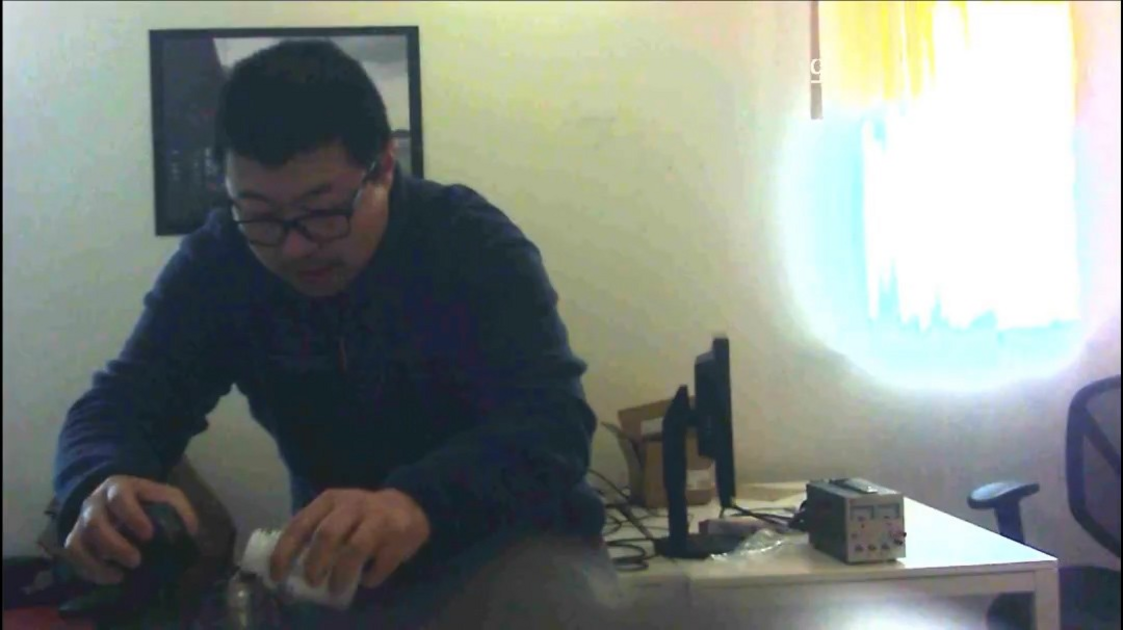
 “My blood was frozen,” Rong Yuan said of the first time she watched the footage of Xu pouring a substance into her watter bottle. | Source: Courtesy Rong Yuan
For four years, Xu, 41, remained out of custody while the case stalled in court. In 2023, Pamela Price became Alameda County’s district attorney, elected on a platform of reducing incarceration. She was later recalled by voters, in part because of her lenient plea deals.
Xu faced up to life in state prison, but Price offered him a plea deal of one count of poisoning and one year of probation. The deal shocked even the judge, who remarked at Xu’s 2024 sentencing hearing that it was “extremely generous, considering everything in this case” and doubled his probation to two years.
Xu completed his probation in March. On Monday, he will ask an Alameda County judge to dismiss his felony conviction — a process commonly referred to as “expungement.”
Xu did not respond to requests for comment, both directly and through his attorney. The district attorney’s office has objected to the request for dismissal, but California law says the judge must grant the dismissal if Xu completed every condition of his probation. His petition will be heard Monday at 9 a.m. in Department 109 of Alameda County Superior Court.
Yuan said she suffers long-term health impacts of the poisoning and is unable to work full time. She doesn’t feel Xu faced adequate consequences. Her biggest concern is that if the expungement is granted, Xu’s conviction will not show up on a background check from a future employer.
Yuan, who has never spoken publicly about the case, is ready to talk — and to share the surveillance videos, which she says show Xu tampering with her water. “This legal system already failed me,” she said. “This is my last resort.”
‘I began to feel like I was dying’
Though her life would become inextricably linked to Xu’s, Yuan never considered him a rival. They were both metallurgists — highly trained scientists who study the physical and chemical behavior of metallic elements — who, at different times, earned doctorate degrees in the UC Berkeley lab of materials scientist Robert Ritchie.
In January 2017, Yuan was hired by Berkeley Engineering and Research, a forensic engineering firm where Xu worked as the sole materials characterization expert. Yuan said her first encounter with Xu at BEAR was tense: He told her she wasn’t allowed to use the firm’s material characterization lab. She remembers thinking maybe he was worried that she would break the equipment. “I know how to use all these tools,” she said she told him. “I’ve even repaired them.”
The interaction didn’t sit right with Yuan. “I just decided I will never overlap with him,” she said. “I’ll just simply do my work, and he can do whatever he wants.”
A few weeks later, Yuan said, her symptoms began. At first, it was dry heaving and hair loss. Then, in July 2017, she woke up and took a few sips from her water bottle. “I began to feel like I was dying,” she recalled. A neighbor rushed her to the emergency room. She said it happened again, twice, in October.
By late 2018, she had been to the hospital repeatedly. Her health was deteriorating — she was vomiting all the time, often having to miss work. Her parents came from China to stay with her, worried Yuan’s sickness could be terminal. On Nov. 27, 2018, she sent an email to the team that she was throwing up again and wouldn’t be coming into the office.
“You should work from home until you feel better. No reason to rush in,” Xu replied, adding a hypothesis about Yuan’s symptoms: “I think BEAR is moldy.”
In January 2019, Yuan was at the office and took a sip from the water bottle at her desk and “had that familiar feeling,” she said. “I’m going to die.”
That evening, Yuan’s mother drank from the water bottle and noticed a strange sour taste. It was then that Yuan began to suspect someone was tampering with her water.
She ordered a spy camera from Amazon.
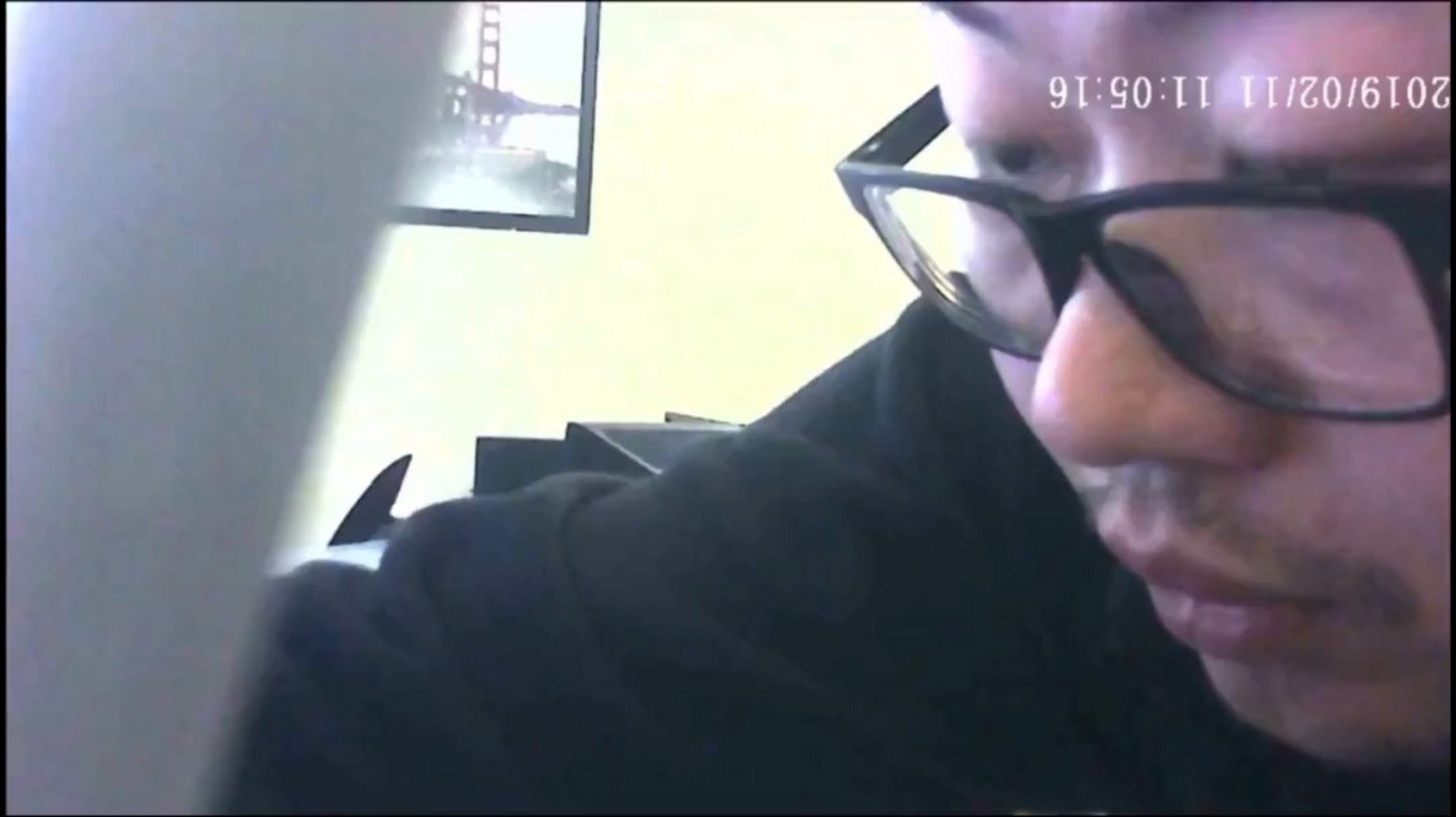 Samples taken from Yuan’s water bottle tested positive for cadmium at levels up to 3.5 million times the federal limit for drinking water. | Source: Courtesy Rong Yuan
On Feb. 11, 2019, Yuan positioned the camera on the wall next to her desk. Her water bottle sat next to her monitor, out of frame. At 11:04 a.m., Xu appears at her desk, the camera catching a close-up of his face and his arm reaching toward where her bottle was placed.
A second video, dated March 4, shows Xu pouring a substance from a small white container into Yuan’s water bottle. Around 30 seconds later, he returns, rotates Yuan’s bottle, and leaves the frame.
“My blood was frozen,” Yuan said of the first time she watched it. “I almost died. I experienced death so, so close so many times. I cannot let him go.”
She turned the evidence over to the police that day.
‘Unusually sophisticated criminal defendant’
The case was assigned to Sergeant Jennifer Wilson of Berkeley Police Department’s homicide unit.
“It was shocking,” said Wilson, on seeing the video for the first time. “No one would have believed her in the world that this was happening if she didn’t have proof of it. … It really launched this case immediately.”
Berkeley Police tested water samples from Yuan’s bottles, as well as her blood and that of her parents — her mother had used water from Yuan’s bottle to cook for the family. All tested positive for cadmium. On March 28, 2019, the Alameda County district attorney’s office charged Xu with premeditated attempted murder and two felony counts of poisoning.
Xu hired a prominent criminal defense attorney, Julia Jayne, who referred to the allegations as “an isolated work-related incident” in a motion to release Xu on bail after his arrest. Jayne included 11 letters from her client’s wife, friends, and former classmates, some of which read like reference letters for a job application: “It is my pleasure to write this letter of recommendation for David Xu,” wrote one. “I highly recommend David and truly believed he is qualified for any challenges upcoming,” wrote another.
A judge set bail at $2 million, and Xu was released on GPS monitoring. In April, Attorney General Xavier Becerra filed a motion on behalf of the state engineering board, calling Xu “a highly trained and unusually sophisticated criminal defendant” who “used a number of chemicals in his work.” A judge agreed with the AG’s order and barred Xu from practicing under his state engineering licenses during the case.
In the ensuing months, the court granted Xu more and more leniency. By July, he was allowed six hours out of the house each week to take his daughter to ballet and gymnastics classes. In October, he received six more hours out of the house on Sundays. In June 2021, he was granted “an additional day with kids.” By September, he was allowed an additional two hours every day of the week. In November, his request to end house arrest was granted. By April 2022, he was allowed to travel within the U.S.
In September 2023, Xu pleaded no contest to a single count of poisoning under a deal offered by prosecutors under Price, with one year of felony probation and one day of credit for time served. A no-contest plea carries the same weight as a conviction but is not an admission of the underlying facts.
Worn down, Yuan eventually stopped fighting the plea. At sentencing in March 2024, Judge Kimberly Colwell ordered Xu to stay away from Yuan and her parents, adding a polite admonishment: “Please do not touch any poison at all. Ever. Ever.”
Yuan had sought nearly $500,000 in restitution, according to the transcript. A judge ordered her paid $7,058, citing a report Xu’s attorney had submitted by a toxicologist who concluded that cadmium poisoning would not cause long-term health effects.
Yuan said the report relied on flawed science. She considered suing Xu in civil court for damages but was dissuaded after speaking to attorneys who said it would be a long, costly fight that may never result in a payout.
Xu finished his two years of probation in March. Under state law, a person who completes every condition of probation is entitled to expungement, and California appeals courts have held that judges cannot deny those petitions unless the crime is on a short list of exclusions — poisoning not being one of them. A dismissal would not erase the case; Xu’s record would still show an arrest and conviction to law enforcement, and the conviction could be used against him if he is charged with a new crime. He would also have to disclose it on applications for state licenses.
The DA’s office did not respond to a request for comment, but court records indicate it is contesting the dismissal. Under Marsy’s Law, Yuan has a right to be heard at next week’s hearing, which she plans to attend.
Yuan recently published a research paper (opens in new tab) on the long-term health consequences she and her parents suffered due to cadmium poisoning.
She dedicated the study to the memory of her father, who died last year at 78 from heart failure. “Before poisoning, my father had only well-controlled hypertension, walked 6 miles daily, and could carry a 50-lb bag of rice to the second floor,” she wrote. By late last year, he was “bedbound, unable to eat.”
She hopes her study will lead to doctors understanding the signs of cadmium poisoning before it gets too late. “So this doesn’t happen again,” she said.
Wilson, who worked with victims as a homicide detective for over 20 years, said Rong left a lasting impression on her.
“ [Xu] never weakened her — even when she was so sick, she just kept fighting back,” said Wilson. “And here she is.”