
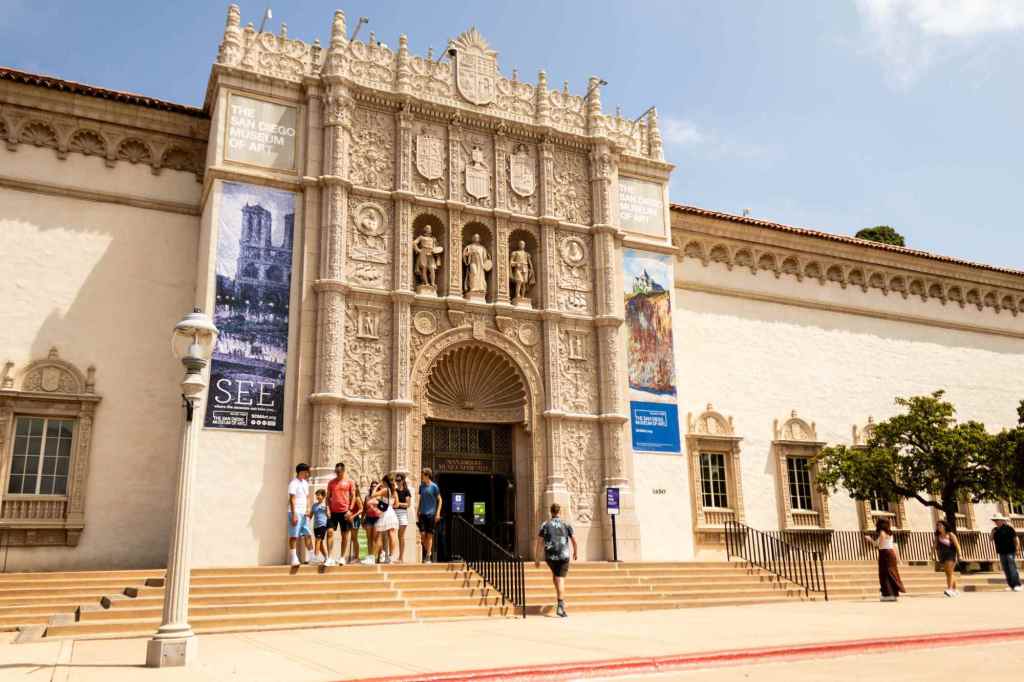
San Diego City Council members have declared city arts funding off limits for budget cuts next spring, even as they face a projected $111 million deficit that is expected to require significant cuts.
While the move falls far short of a long-unfulfilled council pledge known as “penny for the arts,” council members said it’s a strong message to demand arts funding remain steady while other programs may get cut.
Council members say arts funding boosts tourism and exposes low-income residents in particular to life-changing experiences. A 2019 study found that local arts organizations generate $1.1 billion in annual economic activity.
Council members also stress that grants to arts organizations have a multiplier effect, because private philanthropy and state and federal arts funding often require a local match.
The council’s budget committee last week voted unanimously to tell Mayor Todd Gloria that arts funding must remain the same percentage of hotel tax revenue as during the ongoing fiscal year — 4.28%.
Based on the latest city projections for hotel tax revenue released last week as part of a five-year budget outlook, that would actually raise arts funding from $13.9 million in the ongoing fiscal year to about $14.1 million in the new fiscal year that begins next July.
“That’s a way for us to really put a foot down this year — to say that the council wants to see no less than 4.28%,” Councilmember Kent Lee said.
Councilmember Raul Campillo, who helped create a new policy for arts funding two years ago with Councilmember Vivian Moreno, said the move is crucial with arts organizations facing cuts in federal and state funding.
“It insists that the fiscal year 2026 funding levels for arts and culture not be reduced in the coming year, to ensure our creative community continues to survive in what is currently a highly volatile and uncertain funding environment,” Campillo said.
The commitment still leaves the council far short of a 2012 pledge called “penny for the arts,” which requires the city to spend 1% — a penny — of all hotel room revenue on grants to arts and culture organizations.
Because the city’s hotel tax rate is 10.5%, the pledge amounts to 9.52% of collected hotel tax — formally called transient-occupancy tax.
That 9.52% is more than double the new 4.28% pledge. So if the city were to honor the penny for the arts pledge in the new budget next spring, annual arts funding would be about $32 million.
Local arts organizations said they understand the financial challenges facing the city and expressed appreciation for the commitment to no cuts next year.
They noted that keeping funding steady actually amounts to a cut because of inflation, which is boosting their costs for labor, supplies, rent and other expenses.
“Remaining flat, while it does really reflect us having to do more with less, is a show of good faith,” said Christine Martinez, who leads a group of 150 local arts organizations called Arts+Culture: San Diego.
Martinez said it remains disappointing that the city is far short of the penny-for-the-arts goal. But she characterized the new council pledge as a commitment to keep arts a priority and to hopefully get back to penny-for-the-arts conversation when city finances are in better shape.
Bob Lehman, executive director of San Diego Museum Council, said arts organizations are central to San Diego’s civic identity and freedom of expression.
And he said they may never have faced greater funding challenges.
“We are being hit with cuts from every direction — city, state and federal — and inflation makes remaining flat actually a cut,” he said.
While the city faces a projected $111 million deficit for the upcoming fiscal year, that’s dramatically smaller than the deficit of more than $300 million the city faced last year.
Still, city department heads will soon be asked to suggest proposed cuts, finance officials said last week.
The new policy created in 2023 by Campillo and Moreno makes arts funding a more conspicuous part of budget deliberations each year. It requires the city’s independent budget analyst to determine each year how close the city is to the penny-for-the-arts pledge and to prioritize the pledge when suggesting budget changes to the mayor.