
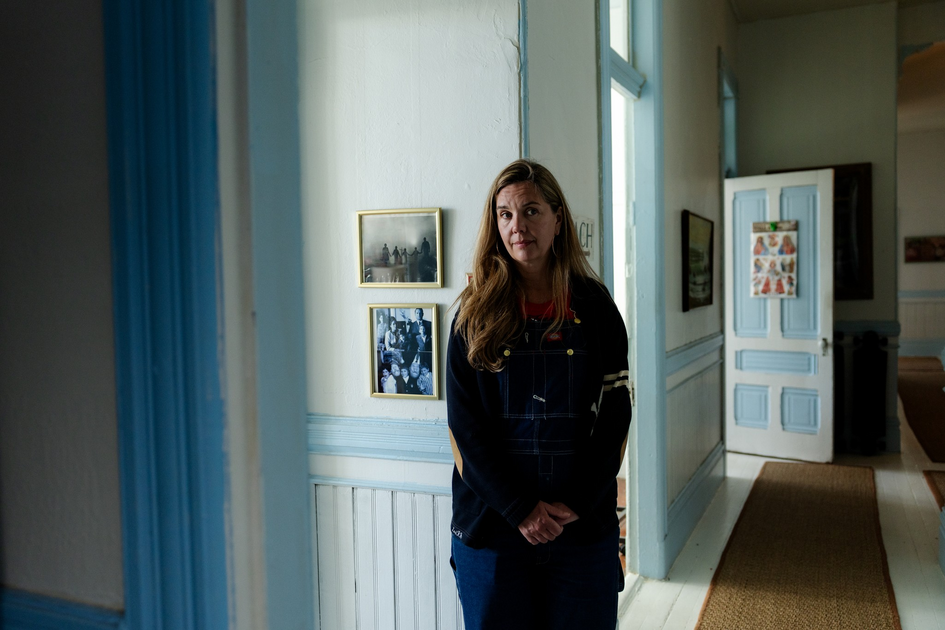
Hannah Green grew up attending a dozen schools as her family bounced between England and America. And as an adult, she had never lived anywhere for more than a few years.
Until she moved to San Francisco.
She arrived in 2009 to study psychology at the California Institute of Integral Studies. Two years later, she met Lord Relentless Ha in a recovery meeting. He’d been sober for decades and had helped hundreds battle substance abuse. He was an artist and — with his distinct face tattoos and sailor cap — a neighborhood fixture who’d lived in the same apartment at 23rd and Capp streets since 1987.
They dated, fell in love, and she moved in. Five years later, they married.
The flat — on the second-floor of a Victorian that survived the 1906 earthquake and subsequent fires — was spacious, with 15-foot ceilings and bay windows overlooking a church across the street. Green opened a therapy practice two blocks away. For most of the past 16 years, barring housemates who sublet for some of the time, it was just the two of them.
“Given how much I moved around for most of my life,” she said, “this felt like the only home I’d ever really known.”
It was where she cared for Ha through two years of cancer and where he died Aug. 28, in their bedroom, with Green, her sisters, and her mother by his side. He was 64.
Four days later, Green bought a money order — as Ha always had — and walked the rent to the property manager’s office at Church and 24th streets. About a week after Ha’s death, a letter arrived from Makras Real Estate — the property management company whose founder, Victor Makras, was convicted of federal bank fraud in 2022 in a case tied to a City Hall corruption probe — addressed to the “Estate of Lord R. Ha.”
The Sept. 4 missive offered condolences and advised that the tenancy was terminated.
“We understand this is a difficult time,” the letter continued, “and we would like to work with you to make arrangements for the return of the apartment.”
The letter made no mention of Green, who was never on the lease. It also failed to mention what tenant attorneys say she’s entitled to: the right to stay, even if it costs more.
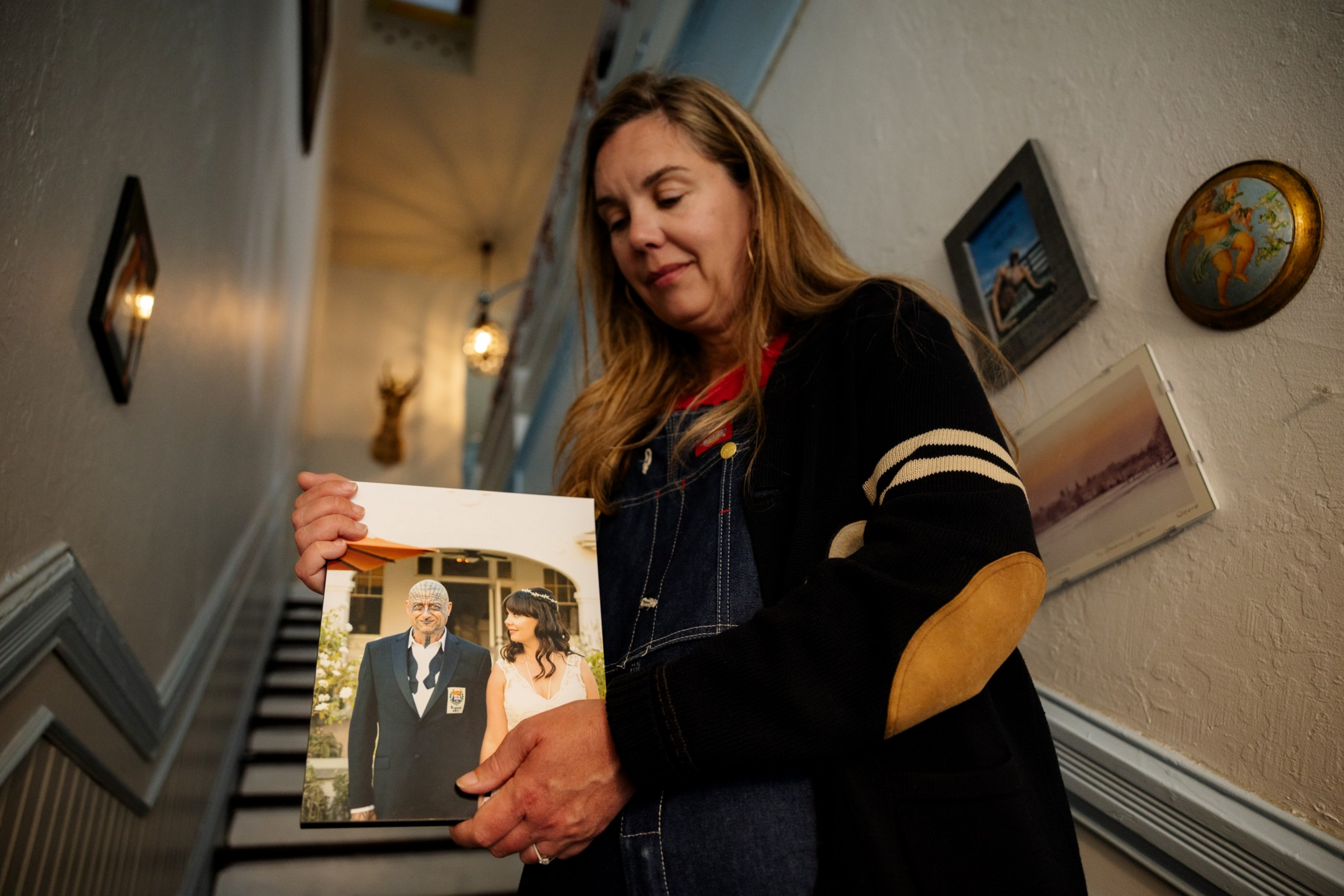 Hannah Green shares at a photo from her wedding to Lord Relentless Ha.A ‘scare tactic’
Rent resets are routine in San Francisco when tenants turn over. Under the Costa-Hawkins Rental Housing Act, the 1995 law that governs rent control in California, there’s no more protection for a widow or grieving child than for a random Craigslist subtenant.
Once the person on the lease is gone, the rent-control protection goes with them. Tenant advocates have tried to change that, without success. In today’s market, with rents up roughly 18% in the Mission since last year, the stakes have never been higher.
Green’s landlord has a choice. “She wasn’t on the lease, so they can raise her rent, but they can’t just force her out,” said Rahman Popal, a tenant attorney who has advised Green. The landlord is typically allowed to send a notice upping the rent; in Green’s case, it could be three times the $2,450 she pays now.
The Makras letter had no offer to stay.
To Green, it read as a test of whether she knew her rights.
“I don’t know if characterizing it as a scare tactic is fair or what,” she said, “but it definitely seemed like it was just a shot at convincing me to say, ‘Oh, OK, I better go.’”
Makras Real Estate and the building’s owners, Daggett H. Howard Jr. and Sara G. Howard, didn’t respond to requests for comment.
Under state law, Green has little to stand on. “A subsequent occupant doesn’t have the same rights of a tenant,” Popal said, “and the landlord isn’t required to recognize a subsequent occupant’s tenancy.”
Landlord attorneys go further, arguing that when a tenant dies, the lease legally ends with them. “If they die any time, the tenancy is automatically terminated as a matter of law,” said Mark Chernev, a landlord attorney at Zacks, Freedman & Chernev who’s not involved in Green’s case but said he encounters similar situations a few times a year.
However, Chernev acknowledged that whoever remains has some protections, such as a requirement for landlords to cite specific causes to get a tenant to leave. “You can raise the rent to market rate,” he said, “but they still enjoy eviction controls.”
In practice, Chernev said, many such disputes never reach a legal ruling. A surviving spouse can challenge a price hike at the Rent Board by arguing that the landlord has effectively recognized them as a tenant. Green believes her landlord understood that and made sure it never happened.
Over the years, Green and Ha tried several times to add her to the lease as a co-tenant. Each time, the answer was no.
The landlord had offered to list her as an occupant, a designation that wouldn’t give her the same rights. Whenever she paid the rent with a check from her own account, it was sent back. When she called about the apartment for maintenance or other issues, she was asked to put Ha on the phone.
All the while, Green said, she covered most of the rent and was the household’s main breadwinner.
The outcome is often uncertain for both sides in such situations, so the parties tend to settle, agreeing to a new rent somewhere between the old one and the market rate.
Or the landlord simply ponies up and pays to get the tenant to leave. That’s how it ended for another San Francisco woman who lost a parent and, soon after, the apartment where she grew up.
A grieving daughter, a lost childhood home
Less than two months after Ebere Emenike’s mother Adrienne Owens died, the rent on the apartment where she grew up more than doubled.
Emenike was born in 1994, five years after her mom moved into the third-floor unit at 700 Presidio Ave. It’s where she lived until she went to college and traveled across Europe and Indonesia while in her 20s. In 2021, she returned to the apartment to take care of her mom.
On Nov. 1, 2022, Owens collapsed in her bedroom. She died at the hospital days later. She was 62.
The first word from the building’s management came two weeks after that, Emenike said, and wasn’t a condolence but a notice to vacate. Then her rent check was returned because it didn’t come from a “current tenant.”
On Dec. 9, she wrote to the owners explaining that the leaseholder had died and asking to put the apartment in her name. Nine days later, she got a two-line email from the management company, Gaetani Real Estate. “I am sorry for your loss,” it said. “We received your letter and are looking into your request.”
Emenike was stunned: “My mom just died, and now I have to deal with this?”
With no money for a lawyer, she availed herself of a free consultation with a tenant attorney, who gave her some hope. The lawyer told her that Costa-Hawkins has an exception (opens in new tab): People who were living in a unit before Jan. 1, 1996, when the law took effect, generally keep their rent-controlled rate, even if they’re not on the lease. Emenike had lived there from birth.
Then, nearly two months after her mom died, the building owner sent a notice that her rent would rise from $1,362.70 a month to $3,195, effective in 90 days.
Emenike was determined not to go quietly.
 Ebere Emenike holds a childhood photo of herself, right, and her mother, Adrienne Owens. | Source: Courtesy Ebere Emenike
In March 2023, she filed a petition with the Rent Board challenging the increase. A hearing was scheduled for that spring. But there was a complication. Emenike had spent most of her 20s away from the apartment. That gap stood to weaken her claim to the lease.
The hearing never happened. Emenike withdrew the Rent Board petition.
She was grieving, out of work, and exhausted after months of uncertainty. When the owners offered her money to leave, she took it.
In 2023, she accepted a $42,780 buyout, according to city records. The rest of the deal’s terms are confidential, and Chernev — who represented the owners — declined to discuss it. Emenike shared her story on condition that it not veer into what she legally agreed to keep private: the terms of the deal and the condition of the apartment.
That summer, Emenike packed up her childhood home to move to Los Angeles.
“The trauma was just so heavy,” she said. “I was like, ‘I don’t think I can be anywhere around this at the moment.”
She’s 32, working toward a career as a singer, songwriter, and producer. But she wishes she had stayed in the city that raised her.
Taking the money came at a hidden cost (opens in new tab) that makes it harder to move back. San Francisco gives some displaced tenants priority in its affordable housing lotteries — but only if they were evicted. Tenants who leave under a buyout don’t qualify (opens in new tab).
 Green surveys the room where her husband kept many of his possessions.Moving on and moving out
Green doesn’t want to leave.
After a few weeks of grieving her husband, she went looking for answers. First, to the San Francisco Tenants Union, then to the Rent Board, where she learned that surviving spouses haven’t won the right to keep their rent-controlled leases in San Francisco. “Not yet,” a staffer told her.
She called five or six tenant attorneys. The two who gave her real advice said the same thing: There was nothing to fight until the landlord made a move.
There are signs that the law could be shifting. In April, a Los Angeles County appeals panel published a decision (opens in new tab) in a case much like Green’s (opens in new tab). Vilma Reyes had moved in with Milton Reyes as his caregiver, and eventually married him.
When he died in 2023, the landlord tried to raise the rent from $666 a month to $3,500. But the court blocked the increase (opens in new tab), ruling that because the landlord knew she lived there and never objected, the widow had become a tenant in her own right.
 Green wears her wedding ring and her late husband’s jacket.
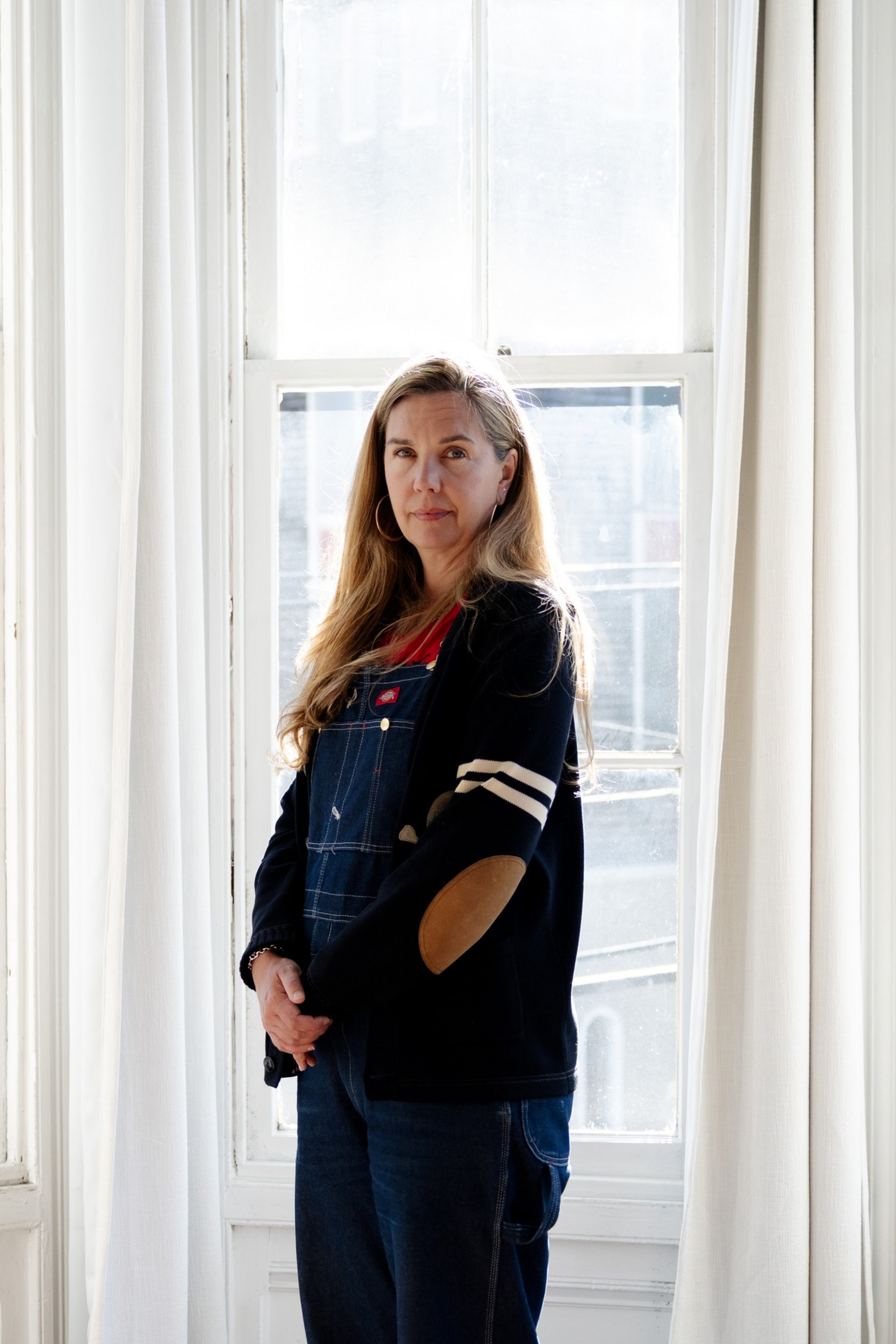 The bay window looks over 23rd and Capp streets.
She had institutional help. Santa Monica law expressly protects surviving spouses. And the city sued the landlord for harassment.
San Francisco landlords are already pushing back. At a Rent Board meeting in May (opens in new tab), Justin Goodman, speaking on behalf of a landlord group called the San Francisco Coalition for Better Housing, urged commissioners not to treat the L.A. ruling as binding, saying that would basically allow people to marry into rent control. He noted that it isn’t settled law, even in Los Angeles County.
Other cities offer more safeguards. In New York City, family members who have lived with a rent-stabilized tenant for at least two years, or one year if they’re seniors or disabled, generally have the right to take over the lease when the tenant dies or moves.
But without a change in state law, tenant advocates say, San Francisco can’t do much to protect families like Green’s.
Green knows she has more to fall back on than many others in her situation. She’s 48, with relatives who can help if she has to move. But she thinks about elderly widows and widowers, and how limited their options might be. They’re not a small group. Nearly 42,000 San Francisco renter households — almost 20% — are headed by someone 65 or older, according to the U.S. Census Bureau (opens in new tab).
For now, she’s still in the unit at 23rd and Capp, seeing therapy clients virtually from home, where she’s worked full-time after closing her office during the pandemic. No letter has arrived from the landlord since the one in September.
“We’ll see what happens,” she said. “What’s meant to be is meant to be.”
But leaving the apartment would feel like leaving Ha behind.
“He’s a part of this house,” she said. “He cared for this place for so long, and we had the happiest time of our lives here. Letting go is a really hard thing to do.”