

Long before reality television gave us table-flipping housewives and explosive reunions, Hollywood had Joan Crawford, Norma Shearer and a cast of glamorous women who knew a thing or two about feuds, ambition and getting what they wanted.
According to actress and film historian Illeana Douglas, the drama behind MGM’s 1939 classic The Women was every bit as entertaining as what audiences saw on screen.
Douglas, known for her roles in Goodfellas, Cape Fear, Ghost World and Grace of My Heart, is revisiting Hollywood’s golden age in her new book, Jungle Red! The Making of MGM’s The Women, which has climbed Amazon’s bestseller rankings.
 Credit: Deraney PR
The granddaughter of Hollywood legend Melvyn Douglas, she spoke with Los Angeles Magazine about the extraordinary women who dominated Hollywood, the rivalries they carefully cultivated and why their stories matter nearly 90 years later.
Directed by George Cukor, The Women featured an entirely female cast of 135, including Crawford, Shearer, Rosalind Russell, Paulette Goddard and Joan Fontaine. Not a single man appeared on screen. But behind the cameras, Hollywood’s leading ladies were navigating a complicated world of powerful studio executives, fierce competition, public image and personal relationships.
For Douglas, the film offered something more interesting than a collection of Hollywood gossip.
Have questions? Get answers.
Scroll to continue reading
“What did female empowerment in the ’30s look like in Hollywood?” she asked.
Despite working within what Douglas described as a deeply sexist society, she was struck by how successfully the actresses established their careers and controlled their public identities.
“Each woman found a way in their society to carve out not just a career, but a fabulous career and a persona,” Douglas said. One of the book’s most fascinating storylines involves the legendary rivalry between Crawford and Shearer.
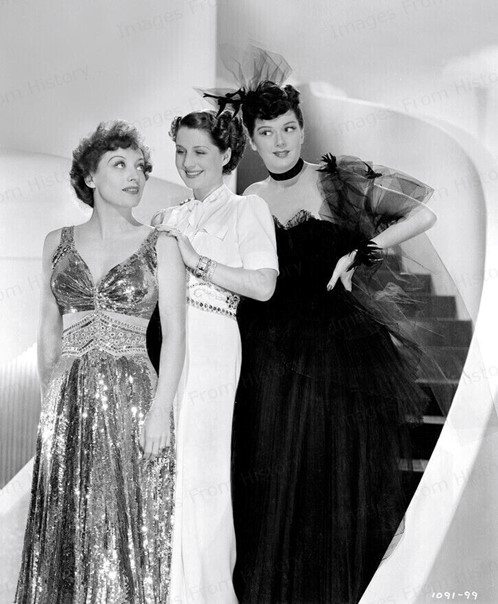 Credit: Deraney PR
According to Douglas, the two actresses weren’t simply competing for roles or attention. They understood the value of publicity and used their carefully crafted images to their advantage. Unlike today’s celebrities, whose interviews are frequently managed by teams of publicists, Crawford and Shearer often spoke directly with entertainment columnists visiting the set.
Shearer preferred to receive reporters in her private dressing room, creating an atmosphere of elegance and sophistication. And Crawford took the opposite approach. She presented herself as the relatable underdog, a working-class woman who had somehow made it big in Hollywood.
“She just stepped off the street, the shop girl who just happened to be making it in show business,” Douglas explained.
It was a carefully maintained image, even though Crawford was already a major star. Douglas believes Crawford may have gained an advantage in the public relations battle because audiences found her more approachable. Shearer, however, demonstrated her own impressive business instincts.
Following the death of her husband, MGM production chief Irving Thalberg, Shearer used public sympathy to strengthen her position while negotiating with studio executives.
Douglas was particularly impressed that Shearer handled her own contract negotiations. “It’s like they were terrified of these women in some way,” she said.
The actresses were also masters of personal branding decades before the term became fashionable. Douglas recalled how Shearer’s glamorous costumes, designed by Adrian, inspired clothing that could be adapted and sold at Macy’s.
“So you could dress like Norma Shearer,” she said. “We think of branding today and actresses and actress branding, but they were doing all of that in the 1930s.”
Douglas also reflected on her own experiences navigating the film industry, particularly her creative collaborations with former partner Martin Scorsese. She said their relationship allowed her to contribute ideas during the making of Goodfellas and Cape Fear, at a time when Scorsese had not yet reached his current legendary status.
But her experience working on the 1996 film Grace of My Heart offered a more complicated lesson about creative control and recognition. Douglas starred in the film, directed by Allison Anders, with Scorsese serving as executive producer.
She recalled making contributions as a producer, but never received a producing credit.
“I was the actress, although I was also a producer, I didn’t get any credit as a producer, and that was something I had to accept,” she recalled. Creative disagreements also emerged over the film’s final version, including Douglas’ desire to perform more of her own singing. She said she lost those arguments.
The experience helped her relate to the women she researched for Jungle Red!, particularly those whose contributions were overlooked or credited to more powerful men.
“Women are so pragmatic,” Douglas explained. “They want to get the thing done.”
Only later, she noted, do they sometimes realize how much recognition they surrendered. And Douglas couldn’t resist pointing out an irony about her famous former partner.
“I always get asked about Marty, but he never gets asked about me,” she said with a laugh.
Although The Women was released in 1939, the same year as Gone with the Wind and The Wizard of Oz, Douglas believes its cultural significance has often been overlooked. She hopes her book encourages readers to appreciate the actresses, writers and other creative women who helped shape Hollywood.
For her, the story is about more than glamorous costumes and backstage rivalries. It’s about individuality, confidence and women taking control of their own careers.
“I’m hoping on the horizon that there’ll be a return to glamour, individuality of women too,” Douglas said.
“We don’t all have to look the same and dress the same.” And Douglas isn’t finished exploring Hollywood history.
She also revealed to Los Angeles that her next project will focus on Los Angeles in the 1990s, including her move from New York to California in 1998. For now, she’s enjoying the renewed interest in the extraordinary women who helped define Hollywood’s golden age.
Jungle Red! The Making of MGM’s The Women is available now through Amazon and other booksellers.