
On a remote island in the Salish Sea, five writers compete against each other for a million-dollar publishing contract. The rule is simple: write the best manuscript and come out on top. All they have to do is beat each other—and one AI bot.
This is the premise of the psychological thriller House of Liars. After having spent over eight years at Google and Microsoft working on the ethics and accessibility of AI, author Jenny Williams ’04 decided to use her insider perspective to write the novel. Initially, she conceived it as speculative fiction. “But it feels less and less like speculative fiction now…. It feels more like very imminent fiction,” she told California.
Before she found herself in the tech world,Williams got a degree in English with a minor in creative writing from Berkeley. Later, she added an MFA in fiction from Brooklyn College. Literature and creative writing, she says, stirred her soul. They “are ways of making sense of the world and accessing how other people think about what it means to be human.”
Williams stumbled into tech. She got a contract with Google as a user experience writer for people with disabilities. Her job was to make products work better for people with hearing, visual, or cognitive impairments by considering what the company needed “to bake into our code and designs to be as inclusive as possible.” Later, Williams worked on an AI ethics team at Microsoft. That’s when discovered that her debut novel, Atlas of Forgotten Places, had been used, without her consent, to train AI.
With years of experience on both sides, Williams has watched the relationship between technology and the humanities evolve from an unusual vantage point. California spoke with Williams about the writing of House of Liars, AI ethics, and artistic integrity.
This interview has been edited for length and clarity.
“I was benefiting from AI development, [but] I was harmed. They used my voice and they took it as just another commodity.”
Tell us about your role at Microsoft.
I worked as a writer on a dedicated AI ethics team. We were internal ethics consultants for product teams working with novel AI technologies or scenarios where the risks might be higher or there were a lot of unknowns. We did research, prototyping, testing, and investigation, with a team that included a moral philosopher, designers, researchers, and program managers. Our focus was mapping out potential impacts and offering guidance to mitigate negative outcomes.
How much of your experience in tech went into House of Liars?
I worked under a non-disclosure agreement, so I wasn’t going to expose any specific projects that I worked on while I was at Microsoft. But there’s a moment when [the protagonist], Anna, first encounters an open AI playground [a web interface for testing GPT-3, which predated ChatGPT] and she’s watching a product manager put prompts in and they’re watching these results come back in real time. That was the first time that Anna ever encountered a large language model and instant text generation. That scene was definitely modeled on my own experience. I remember very distinctly the first few times that I watched this technology in action, and it just blew my mind.
We’re surrounded by it now. It’s become an everyday part of our lives that is not miraculous in the way that I think it was for some of us at the very beginning. So I wanted to capture that because it did feel like a miracle. It felt like science fiction happening right in front of me.
Why did you decide on fiction, rather than nonfiction, to write about AI?
I originally envisioned writing a memoir. But I’m a novelist at heart. I really like reading novels. I like the kind of fiction where there’s something true that you’re feeling, but it’s within a fictional setting, and you also think the fictional setting could actually happen. I think that’s one of the most interesting things about speculative fiction.
I don’t want to lecture people. For me, fiction is a place to go when I have questions and when I want to be entertained. We have so much darkness in the real world and so much darkness in our lives already. I liked the idea of being able to give people something that was a little bit tantalizing but that also has these deeper, more philosophical or more reflective questions that are burning for me in my own life.
You learned that your first book, Atlas of Forgotten Places, was used without your permission for AI training. How did you react?
This is one of those funny moments where the two parts of my life—being a creative writer and working in tech—collided.
Working as a content writer in tech is about how making your own voice disappear. You’re trying to make the product speak clearly through the voice of the brand. But the other part of me, the one that was writing stories, was about my voice.
I was working on the AI ethics team when The Atlantic put together a database of books that Meta had used in its training dataset. I searched and found that my first novel was in there.
It was a very surreal moment. On one hand, I was benefiting from AI development because my career was built on trying to better understand these technologies and their beneficial applications. But on the other hand, I was harmed. They used my voice. It took me ten years to write that book, and they took it as just another commodity.
We weren’t asked for permission. Nobody came to me and said, “We’re building this technology. Can we use your book in our training data?” That opportunity wasn’t given to me.
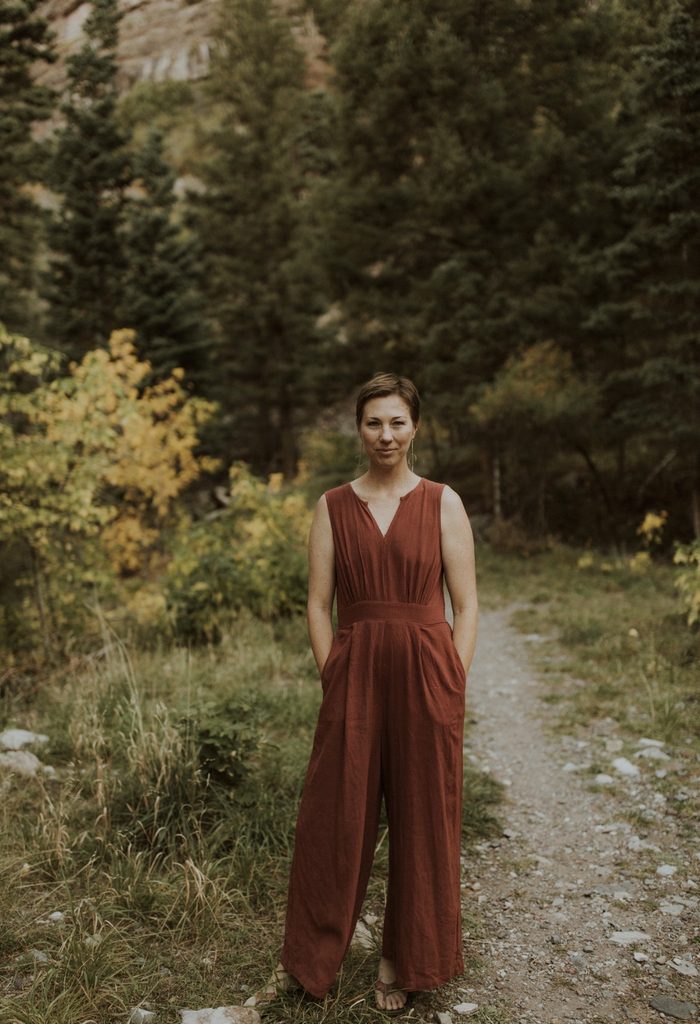 Photo by Katie Denton
“Earlier models like GPT-3 were more interesting to me. You could put in a prompt and something super bizarre would come out.”
Did you ever reach out for compensation?
I didn’t reach out to Meta because I didn’t find any avenue through which to do so. But I am part of the class-action settlement with Anthropic. I haven’t seen any money yet.
My understanding is that a handful of authors brought a class action over copyright and whether it was fair use to use books for training data. Anthropic settled.
The copyrighted books are getting around a $3,000 payout for each book, which would be split 50-50 between the publisher and the author. [Before the settlement, the judge ruled] it’s actually fair use to use these materials as training data. The issue was how they acquired the material.
Tech companies are also buying up copies of physical books, scanning them, and then destroying them. It just hurts me. This is a crazy dystopia that we live in.
Your novel asks questions about creativity and artistic integrity. Do you think that AI can ever truly be creative?
For me, what it comes down to is: how do you define art? Is it an aesthetic object that exists separately from culture and intent?
Art is about human communication. It is a thing through which humans communicate meaning with each other. With that definition in mind, I don’t view AI as being capable of creating art because it’s missing the element of humans attempting to communicate with other humans through an expression of lived experience.
There’s a long history of artists using machine learning to create art, so this isn’t a new thing. What is different about the current wave of generative AI is that many of these tools have stripped away the granular controls that could make engaging with the technology meaningful. Essentially, it’s an input and an output.
Earlier models like GPT-3 were more interesting to me because they were weird and unpredictable. They were raw. You could put in a prompt and something super bizarre would come out. There was a lot more randomness and that itself was more interesting from an artistic perspective.
I don’t find generative AI tools useful to my creative practice. I also don’t have a blanket moral judgment on people who use AI creatively. But I would encourage them to ask: you might feel like you’re gaining something in this moment, but what are you losing? You might get a draft faster, but what if the slowness is necessary? You haven’t called a friend or you haven’t engaged in your writing community or you haven’t sat with it a little bit longer.
Anna grapples with desire throughout the novel and describes temptation as primal. Where did this tension between nature and tech come from?
As I was working in tech, I became pregnant through IVF and I began to notice the ways in which the terms “natural” and “artificial” were being used outside of the tech world.
In vitro fertilization is also called artificial insemination. So I’m working in artificial technology and also going through a procedure that’s called artificial insemination. But this is something physically happening to my body. It’s a very embodied experience.
Even with labor and birth, people talk about having a “natural birth.” But what’s the opposite of a natural birth? What are we actually trying to say when we say artificial?
I think there is something natural about desire and temptation and lust being a primal or animal impulse. But AI often manufactures temptation. It creates a false sense of seduction. Chatbots promise to end your loneliness or make you a better writer or a better person. They seduce you into thinking you can optimize your life or become a better version of yourself through these tools. AI accesses genuine human vulnerabilities and insecurities through a sort of false promise of what these technologies can actually do.
How was it to write a fictional AI model, Kaydee, who is imitating a human, while you, the author, are imitating an AI model?
When I was writing the novel, I momentarily considered whether I should actually use an LLM to produce Kaydee’s responses. But ultimately, I felt like the whole idea of fiction is that you’re creating a narrative in order to communicate an emotional truth.
Playing the part of Kaydee, the chatbot, gave me an opportunity to make fun of some of the early chatbots that were maybe a little too enthusiastic or supportive, but also make it just weird enough that we have a sense of the uncanny. I hope that when people read Kaydee, there’s both a sense of, “Oh, yeah, I recognize this is a chatbot,” but also, “I recognize that there’s something a little weird there.”
People do develop a sense that there’s something on the other side of a chatbot, that there’s intent or purpose. I think that’s very natural. It’s actually really difficult to engage in conversation with a chatbot and think, “Oh, there’s absolutely nothing on the other side.” That’s not our human instinct.
How do you envision AI education for the general public?
We need a much more standardized understanding of AI and to have it baked into regulation and tech development. For individual people who use AI in their own lives, we should work toward creating more awareness.
There are people I know who consult ChatGPT for advice on family or relationship problems. I don’t judge people for that. We’re all just trying to do our best with what we have. But people haven’t fully recognized what using AI might cost them. They don’t fully understand how those responses are being formed or the values embedded into different models.
As a society, we should have some regulation around who has access, for what purpose, and how these things are developed, in the same way that we regulate so many other things that could be dangerous to society. And then we need to help everyday people understand what these models are and aren’t capable of, and what it might cost to use them.