
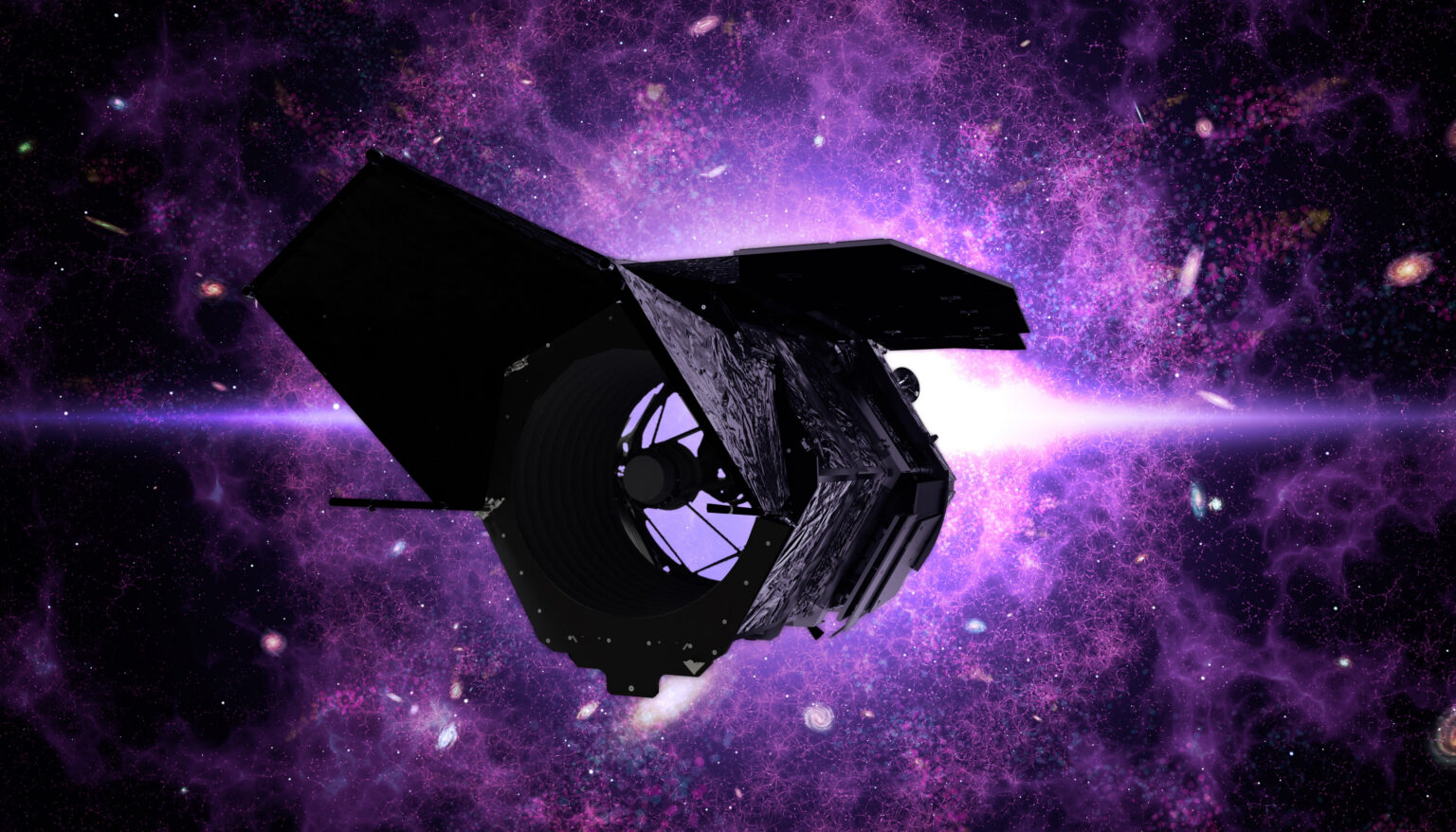
“Roman is very different from all of our previous space telescopes,” said Lu, a Berkeley associate professor of astronomy. “The telescope takes the data, and within 48 hours it’s available to the entire world. As a result, we’re planning to do science differently as well. The Roman Science Collaboration is a group of 900 astronomers that are interested in working together collectively to get out the highest-impact discoveries from the survey data.”
Roman, named for NASA’s first chief astronomer, is designed to survey the sky regularly in search of subtle and not-so-subtle changes: a supernova explosion, the weird dance of a star when it passes behind a massive object like a black hole, or a brief flash of light that quickly fades away. “Things that go bump in the night,” Lu said.
Though the telescope has a long-term plan for different types of surveys — to map galaxies, explore the mystery of dark energy, image dim planets around stars — everyone ultimately gets the same firehose of data.