
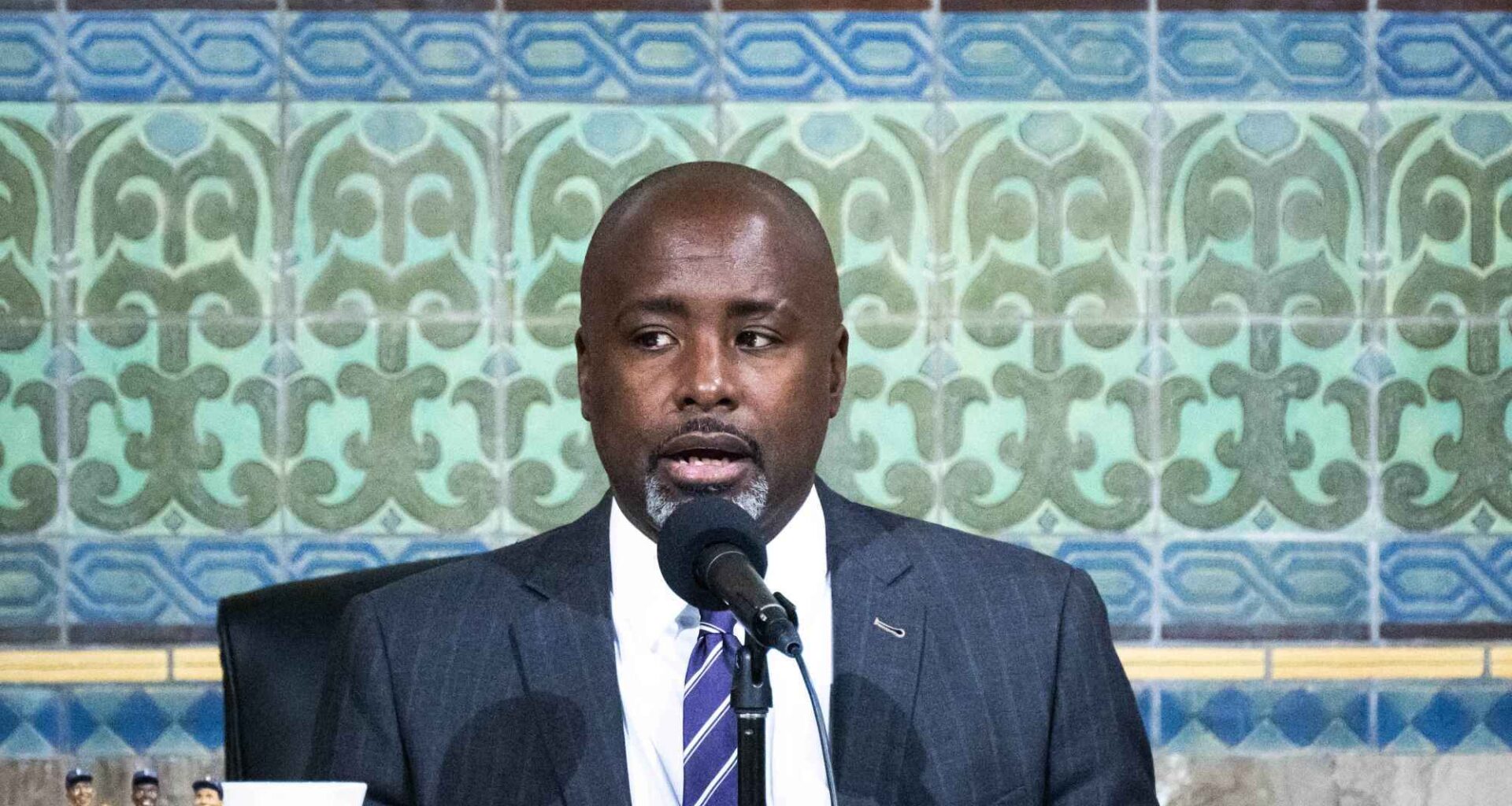
The Los Angeles City Council on Thursday instructed top city advisors to pursue potential legal action amid ongoing discussions about who will take on critical administrative roles for the entity overseeing the region’s homelessness response.
On Wednesday, the City Council conducted a special meeting in which they received an update about a process to select a new agency that would handle four major roles for the Los Angeles Continuum of Care.
The L.A. Continuum of Care — a collaborative body consisting of LAHSA, cities, the county, service providers and other entities — is responsible for coordinating regional homelessness programs and federal funding. It excludes Long Beach, Glendale and Pasadena, which have their own distinct CoCs.
Following a closed session, the City Council instructed attorneys to develop options for litigation to protect the city and constituents, both housed and unhoused, and to do so in advance of a court hearing scheduled on Oct. 27.
Council President Marqueece Harris-Dawson said the potential legal action could be used as a strategy to have a different outcome. He further stated the city administrative officer will continue negotiations with L.A. County with the goal of coming to an agreement over having shared-responsibilities on those roles.
The City Council, lastly, instructed the city administrative officer and city legislative analyst to revisit past motions with the goal of establishing the city’s very own CoC or health department — which means Los Angeles could separate from the regional CoC.
Los Angeles is seeking more control over at least two of the four administrative roles: Homeless Management Information System and Coordinated Entry System. The other two roles consist of the collaborative applicant and the lead for the annual point-in-time homeless count.
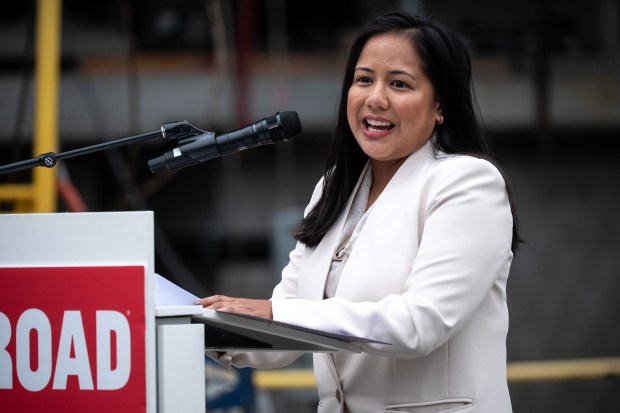 LA City Councilmember Ysabel Jurado (File photo by David Crane, Los Angeles Daily News/SCNG)
City Councilmember Ysabel Jurado, who chairs the Homelessness and Health Committee, noted top city advisors have been in negotiations with the county trying to figure out an arrangement that works best for city residents.
City Administrative Officer Matt Szabo said they are working with the county to try to achieve co-leadership agreements for each role, or taking steps to take control over what they can.
“We can take control over portions of some of those programs. It could also include, as we’ve discussed at this body previously, fully separating from the county by forming a city-only CoC, and those options also include litigation. Litigation on the process that is ongoing at the CoC Board, and litigation on a broader sense,” Szabo said.
The city’s direction comes amid a brewing battle with the county over who should take on critical roles for the L.A. CoC in the aftermath of the Los Angeles Homeless Services Authority stepping down.
On Tuesday, the L.A. CoC general membership voted 310-9 to designate L.A. County as the collaborative applicant and homeless count lead. In this role, the county would submit a single application for the region to receive federal funding for homelessness programs and initiatives.
General membership is broadly defined as anyone who works for the county, municipalities, service providers, unhoused people, and others who are working to reduce homelessness across the L.A. region. Ben Kay, co-chair of the L.A. CoC, emphasized that county-affiliated members were not allowed to vote and were asked to recuse if they were present.
While the county has been designated as the collaborative applicant, a final determination is expected to be made on Oct. 27 during a federal court status conference — the same day a preliminary injunction is set to expire over LAHSA’s suspension of access to federal dollars.
“The court is going to hold a status conference to determine the next steps regarding LAHSA, the (L.A.) CoC, as well as transition plans,” Kay said.
Sarah Mahin, the director of the county’s DHSH, emphasized the vote came during a tumultuous time for the L.A. region, where the CoC’s actions could impact the ability to accept hundreds of millions of federal dollars and support more than 11,000 people with housing services.
“HSH applied because we have the capacity and the expertise to do the job, and we are committed to a collaborative, transparent, accountable and fully regionable homeless response system,” Mahin said.
“There are many who would like to divide us. Today’s decision is an opportunity to affirm our CoC right to self-determination and our shared commitment to a unified region. We are stronger together.”
General membership of the L.A. CoC has the authority to designate entities to oversee administrative functions for the region, which includes managing homelessness data, coordinating housing placements and overseeing applications for federal grants.
Kay emphasized that a “yes” vote to designate the county as the collaborative applicant would protect the L.A. CoC from a “management vacuum” when the federal funding suspension lifts on Oct. 27. He added it would protect the CoC’s fiscal year 2026 application for federal funding.
“A yes vote today would put us in the L.A. Continuum of Care in a strong negotiating position with the court, having recommended a clear successor to LAHSA and responsible transition timelines that would ensure stability of the region,” Kay said.
The vote was originally scheduled last week, but it was delayed because organizers were unprepared to accommodate a large crowd of people who wanted to weigh in on the issue.
Mayor Karen Bass and four City Council members criticized the CoC general membership for rescheduling the meeting, arguing that Angelenos were silenced by the delay.
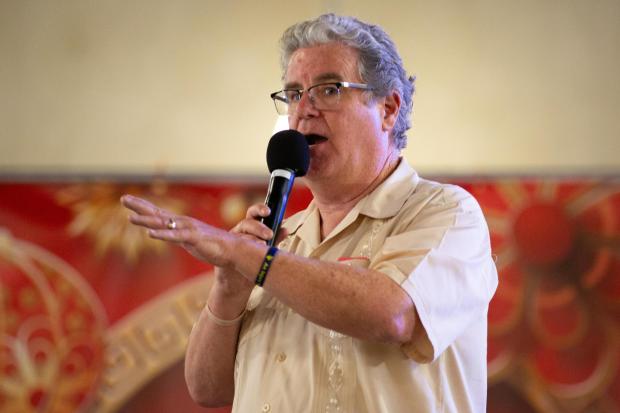 Los Angeles City Councilmember Tim McOsker (File photo by Raphael Richardson, Contributing Photographer)
Bass, council President Harris-Dawson and Councilmembers Jurado, Tim McOsker and Imelda Padilla said the city should retain a role in decisions about homelessness programs and housing placements.
They said Los Angeles spends hundreds of millions of dollars on housing but does not have sufficient authority to determine who occupies those units.
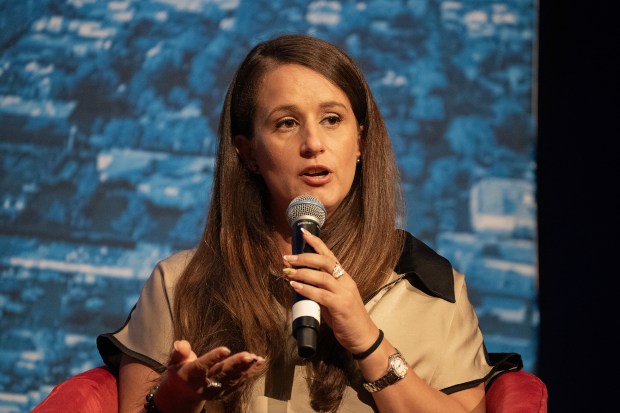 Los Angeles City Councilmember Imelda Padilla (File photo by Mark Savage, Contributing Photographer)
Kay emphasized that Tuesday’s vote was just to select a collaborative applicant. The L.A. CoC is expected to select an entity or entities to oversee the Homeless Management Information System and handling the Coordinated Entry System.
Historically, the responsibility has fallen onto LAHSA, the joint city-county agency established in 1993. However, LAHSA announced it would step down as region’s lead agency overseeing the homelessness response after the federal government suspended them from accessing funds in June.
LAHSA has agreements with the city to manage programs and contracts through June 30, 2027.
In August, a Los Angeles federal judge blocked HUD’s suspension, finding that the sudden loss of cash would jeopardize housing and services for more than 11,000 people across the region. U.S. District Judge David Carter’s partial preliminary injunction against HUD allowed LAHSA access to federal homelessness funding for fiscal year 2026.
On Sept. 24, the 9th U.S. Circuit Court of Appeals ruled to largely deny an appeal filed by the Trump administration over the preliminary injunction.
A panel of 9th Circuit judges held that the U.S. Department of Housing and Urban Development failed to show a likelihood of success on the merits regarding its suspension of LAHSA, noting that the timing of HUD’s action threatened to severely cripple the region’s ability to apply for critical federal resources.
“HUD stands by the lawfulness of its suspension. The department will comply with the 9th Circuit’s temporary order, which was made in part due to the quickly approaching deadline for CoC applications. HUD looks forward to seeing the 9th Circuit’s full resolution on the merits,” according to a statement from HUD.