
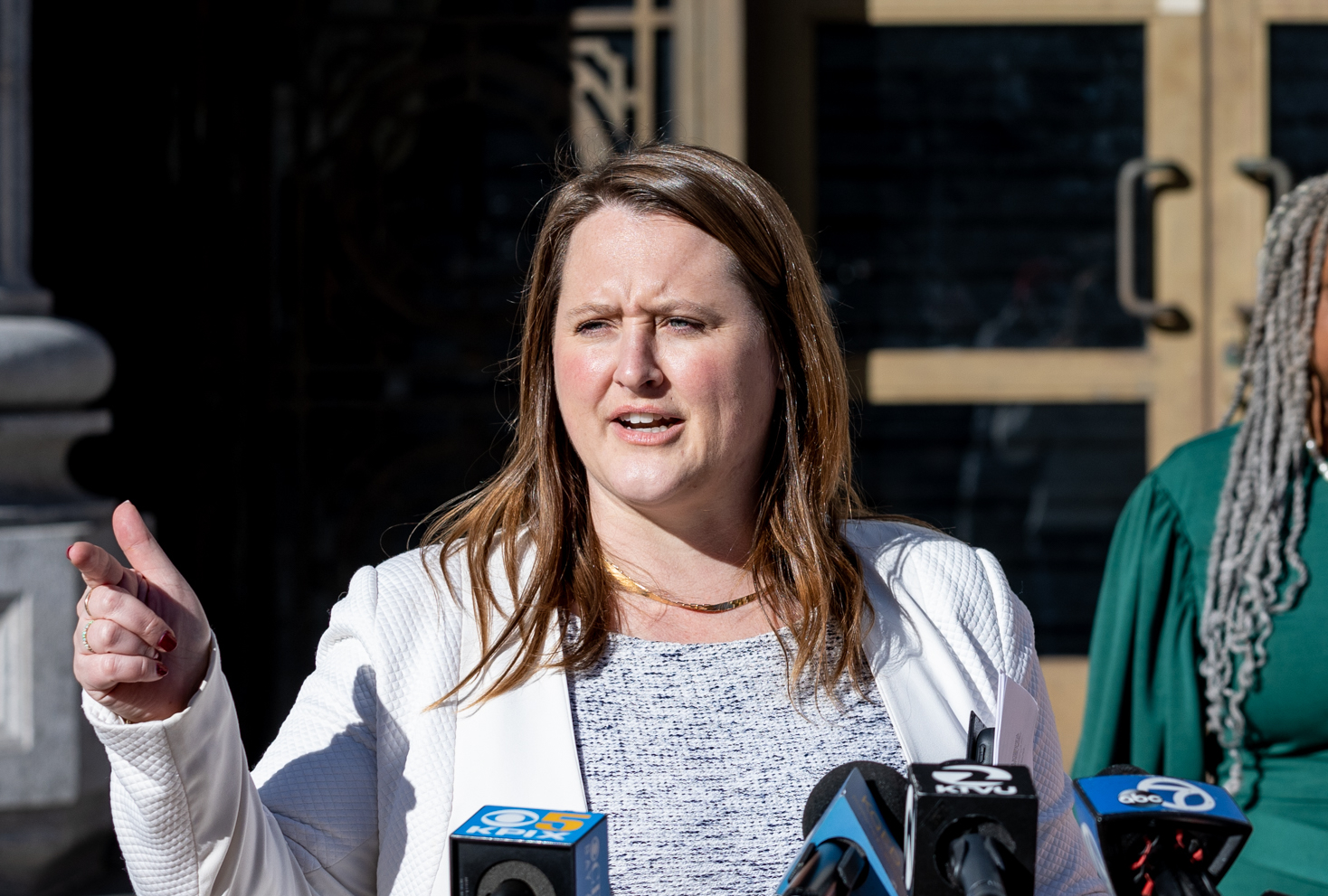
Sheng Thao’s former chief of staff, Leigh Hanson, was questioned for several hours on the stand today about what she saw inside the former Oakland mayor’s administration the year and a half before the FBI raided Thao’s home.
Hanson generally kept her cool throughout the hearing — the third day of trial — sharing concerns and praise for Thao’s style of leadership. Thao looked on with a neutral expression from the defense table.
“I was very impressed,” said Hanson about her early evaluation of her boss. “I thought she was very accomplished given the stage in her career…She was very values-driven, and made a lot of decisions based on her personal experience. And I thought she was a good leader.”
But some of the mayor’s actions didn’t sit well with her, Hanson said. Most focused on the role of other defendants in the federal case, where Thao, her former partner Andre Jones, and David and Andy Duong are accused of participating in a pay-to-play bribery scheme.
Assistant U.S. Attorney Molly Priedeman asked Hanson about communication records and meeting schedules, suggesting Thao gave special treatment to Jones, as well as to companies owned by the Duongs and staff members favored by them.
During cross-examination, defense attorneys sought to show that Thao interacted with many advisors, potential contractors, and community members during her time in office. Those associated with the other defendants, their line of questioning implied, were not given special treatment.
In the audience, a throng of City Hall observers gathered to watch the proceedings. Among them was Loren Taylor, Thao’s main opponent in the 2022 election, who lost to her by nearly seven hundred votes.
Hanson will return to the stand Monday to finish cross-examination.
Andre Jones sat in on sensitive city meetings
 Sheng Thao’s former romantic partner, Andre Jones, center, leaving the Federal courthouse on Clay Street in Oakland on Feb. 6, 2025. Credit: Estefany Gonzalez for The Oaklandside.
Jones, Thao’s romantic partner at the time, didn’t have an official role in the mayor’s office but was occasionally included in the operations and decision-making, according to Hanson.
Three days into her tenure working for Thao, Hanson was interviewing a candidate for a housing policy role in the mayor’s office, on Zoom, when Jones, who wasn’t invited, logged in to listen. Hanson said she told Thao she was frustrated, and they weren’t able to hire the qualified candidate.
At another point, Hanson walked out of a sensitive meeting between the city attorney and the mayor about the implications of putting then Oakland Police Chief LeRonne Armstrong on leave while he was investigated for misconduct. She was concerned to see Jones there because the presence of a non-city employee meant the discussion wasn’t protected by attorney-client privilege.
After Hanson said that it was inappropriate for Jones to be in the meeting, he allegedly told her, “We’ll see which one of us is left at the end of the day.” Hanson said she interpreted this as a threat to her job.
The former chief of staff explained that Thao trusted Jones’ opinions and considered him a political advisor.
“She said he was experienced in City Hall,” she said.
Jones had worked years earlier as chief of staff for Rebecca Kaplan, when Kaplan held the at-large council seat. That’s where he met Thao, who was an intern at the time.
During cross-examination, Darryl Tarver, one of Thao’s defense attorneys, brought up a number of other people who provided informal advice to Thao, ranging from then-firefighter union president Zac Unger (who’s now a councilmember) to developer Michael Ghielmetti and local pastors. He said Unger helped interview or screen Hanson before she was hired.
The implication: Jones was just one of many trusted advisors who didn’t work for the city but had the mayor’s ear.
Did Thao push for Larry Gallegos’ appointment to a high-level position in Oakland’s housing department?
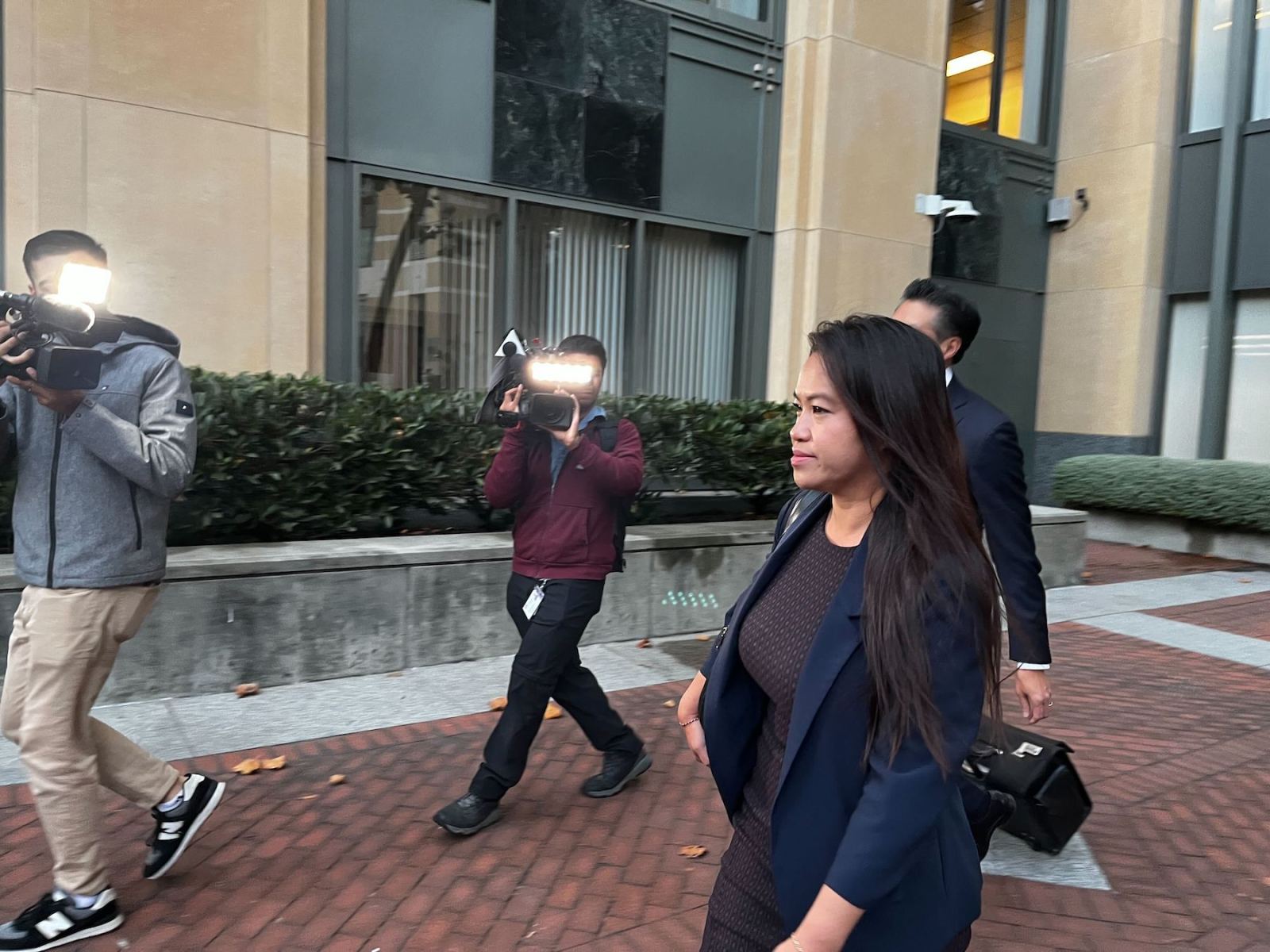 Sheng Thao arrives at the federal courthouse for the first day of the trial against her, Andre Jones, and David and Andy Duong. Credit: Eli Wolfe/The Oaklandside
Prosecutors focused many of their questions for Hanson on Larry Gallegos’ role in City Hall. The government alleges Thao appointed Gallegos to a high-up position in the housing department at the Duongs’ request.
Hanson recalled conversations with Thao about appointing Gallegos, then a staffer in Oakland’s Economic and Workforce Development Department, or EWDD, to a top position. Thao wanted more Spanish-speaking people in leadership, to better reflect Oakland’s diversity, Hanson said.
Thao floated the idea of a director role in the city’s housing department, according to Hanson. But the chief of staff suggested promoting him within EWDD instead, believing his skills were better suited for the department he already had experience in. Thao conceded, according to Hanson.
“I thought she and I had come to an agreement,” Hanson said. But shortly thereafter, Harold Duffey, then the interim city administrator, told Hanson that Thao still wanted him placed in the housing department. That’s where he ended up being hired, though as interim deputy director, not the head.
Prosecutors claim that Mario Juarez, the government’s key informant, secretly lobbied for Gallegos’ role in the department. One of the political favors that Thao allegedly promised the Duongs was that Oakland would buy housing units from Evolutionary Homes, the company that Juarez ran with the Duong family.
On cross-examination, Mark Goldrosen, one of Jones’ defense lawyers, had Hanson confirm that Gallegos later applied for the permanent deputy role, but wasn’t hired, returning to a job in EWD.
Gallegos ended up leaving his job with Oakland on Jan. 17, 2025, the same day the indictment against Thao and the other defendants was unsealed.
Judge Yvonne Gonzalez Rogers took a moment at the end of the hearing to correct Goldrosen’s pronunciation of Gallegos’ name, which he has been getting wrong since Wednesday. The judge looked to the defense table to confirm that the name is pronounced the standard way, not the attorney’s. Thao gave a rare reaction: a thumbs-up.
Hanson was worried about potential blowback from Vietnam trip
 Andy Duong walks towards the United States Federal Court House in Oakland on March 5, 2026. Credit: Richard H. Grant for The Oaklandside.
In the summer of 2023, all four defendants, along with a delegation of city and Port of Oakland officials and other local leaders, traveled to Vietnam to explore economic trade and partnership. Bryan Azevedo, the San Leandro councilmember who’s pleaded guilty to accepting bribes from the Duongs, was also present.
The idea for the Vietnam trip first came up when Thao, Jones, David Duong, and Hanson had lunch with a group of visiting Vietnamese dignitaries during the mayor’s first week in office. According to Hanson, a woman named Teresa Hoang told her she was eager to plan a trade delegation.
Hoang worked at the Vietnamese American Business Association, VABA, a business group run by the Duong family.
Hanson has misgivings about the trip. “The public is pretty unforgiving if mayors are not present, especially in the first year,” she explained.
Hanson believed that Thao understood her concerns, but said the mayor still moved forward with the trip because she wanted to get a start on developing the international economic relationship. The discussions got heated, and Hanson said that at one point Thao “shared that if I wasn’t able to execute as her chief of staff, that it might not be the right role for me.”
While VABA would pay for other city employees and attendees, the mayor’s trip was covered by the Port of Oakland. Thao invited Gallegos, Hanson said.
After the trip, Hanson recalled the mayor’s communications director, Francis Zamora, telling her a journalist had inquired about allegations that members of the delegation had possibly engaged in “sex trafficking of minors” while abroad.
Thao was extremely upset, Hanson said, because she had experienced something related in the past and had prioritized addressing sexual harm to young women while in office. She was particularly angry with Andy.
“She said, ‘I hate that fucking playboy. He’s always been trouble; he’s going to ruin my career,’” said Hanson.
The mayor’s team came up with a “crisis communications” plan, but the story never came out. This summer, reporter Steven Tavares of East Bay Insiders revealed in his publication that he’d looked into the rumors swirling around the Vietnam trip.
Around this time, the co-host of his podcast, Shawn Wilson, a staffer in county Supervisor David Haubert’s office, came to Tavares. He relayed a sponsorship offer from California Waste Solutions, the Duongs’ company, according to the reporter. Wilson was also a paid consultant for the Duongs. Tavares said it later became clear to him that the offer, which he didn’t accept, was meant to squash the story about the Vietnam misconduct.
Tavares was present in court today.
Thao had no power — or desire — to award a contract to Evolutionary Homes, defendants attempt to show
In response to questions, Hanson said Thao had wanted her team to look into options for temporary housing measures and land where the city could set up homeless services. Formerly unhoused herself, Thao had been passionate about identifying high-quality solutions for Oakland, Hanson said. Evolutionary Homes was one of the companies they looked at, Hanson said.
Prosecutors presented records today showing that Hanson and Thao met with a representative of Evolutionary Homes, Cesley Frost, in May 2023. Frost, who is also a staff member of county Supervisor Lena Tam’s office, gave them a presentation on their tiny homes.
Thao didn’t mention that Evolutionary Homes was a Duong company, Hanson said, or anything about Jones having a job there. One of the government’s central allegations is that Jones was paid $95,000 for a “no-show job” at the company.
Later, City Administrator Jestin Johnson also mentioned to Hanson that he’d toured the company’s tiny homes. In an email, she urged Johnson to be “thoughtful.”
In court, Hanson said Oakland’s lack of resources for new shelters concerned her, but she was worried about her boss engaging further with the Duong family given unflattering news about their campaign contributions. She was likely referring to an investigation by the city of Oakland into allegations that the Duongs illegally funneled cash to councilmembers’ reelection committees through straw donors.
Tarver asked Hanson if Thao “agreed to meet with several vendors offering homelessness solutions.” She acknowledged that she did. This included Amy King, the CEO of the company Pallet. According to Hanson, Thao was “very taken” with this company and thought it was worth considering.
Later, in response to questions from Andy’s lawyer, Goldrosen, Hanson said Thao and her team met with more than five companies. Thao never asked her to pursue anything with Evolutionary Homes or skirt the standard city process, Hanson said.
Also, said Hanson, Oakland didn’t have money to pay for temporary housing units.
“Was there going to be any specific carveout for Evolutionary Homes to remove them from the competitive process, so they wouldn’t have to go through it?” Goldrosen asked.
“No,” Hanson responded.
“You’re sure?”
“Very.”
“*” indicates required fields