
EQUITABLE BUILDING DECARBONIZATION Some local households may qualify for no-cost electric appliance installations, energy efficiency improvements and other upgrades through a program being overseen by the California Energy Commission. Single-family, multifamily, manufactured and mobile homes may be eligible to receive heat pump water heaters and other all-electric appliances, insulation, electric panel upgrades and other work. Qualified applicants must earn no more than 80% of the surrounding area’s median income. They also must live in one of the program’s initial focus areas: Bakersfield, Fresno, Los Banos and Modesto. The program is called the EBD (for Equitable Building Decarbonization) Statewide Direct Install Program. Information about how to begin the application process is available online at ebd.energycenter.org
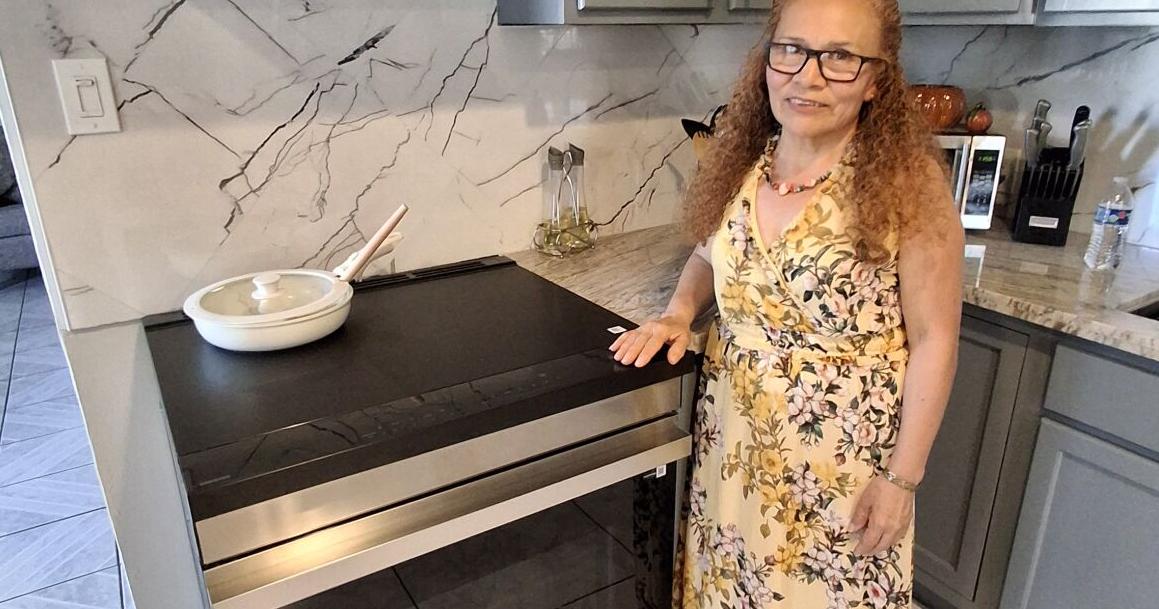
She hasn’t looked at the change in her energy bill yet, but east Bakersfield homeowner Maria Perez is already pleased with her new, no-cost electric appliances. Plus, she got new pots and pans.
The cookware came with her new induction range, which also came with a new electric clothes dryer and a new water heater. Those came with new solar panels to go with a new air-conditioning and heating unit on her roof, and a new Tesla home battery in her backyard.
None of it uses natural gas, which is part of why Perez qualified for the free retrofit. She has asthma, and by removing methane combustion from the interior of her home, she expects to breathe cleaner air while also contributing to climate action and, hopefully, cutting her energy costs.
“I like it all,” she said Thursday during a tour of her home in the 4500 block of Fillmore Avenue.
The tour was part of a small event on her lawn showcasing the efforts of a locally based organization called Kern CASA, short for Climate Action Solutions Access. Using an $844,000 California Jobs First grant awarded through the Kern Coalition, Kern CASA plans to do similar work at 18 other Central Valley homes in collaboration with groups including the Fresno-based Central California Asthma Collaborative.
Most of the homes will receive a partial conversion, such as a new water heater and dryer. But four of the houses, like hers, will get a full-home conversion, valued at about $35,000, complete with all-electric appliances, solar panels and a home battery. Some homeowners even qualify for a new roof, or an electric panel upgrade, to support the new equipment.
Kern CASA and CCAC haven’t done the work alone. Thursday’s event was attended by representatives of many organizations that have had a hand in the project, from preparing applications and community outreach to grant-writing, making of introductions and the provision of various resources.
There were also people from state agencies promoting home-electrification initiatives. A member of the California Public Utilities Commission, Karen Douglas, made the trip to Bakersfield, saying it has been encouraging to see the community come up with creative ways to leverage funding programs.
“It’s exciting to see this program,” she said.
Another positive aspect of the program is its workforce development benefits. Since its launch in February, about 20 people have received training in trades like plumbing and electrical work to help complete the home conversions. One speaker said a trainee was supposed to speak at the event but couldn’t because he started a new job Thursday.
Grid Alternatives, a national nonprofit that was instrumental in finding batteries and solar panels to support the project, connected Kern CASA and CCAC with the Golden State Energy Justice Alliance, which contributed home batteries.
Karina Gonzalez, co-executive director at Oakland-based Grid Alternatives, was one of several speakers at the event. She called the project a transformative effort the organization is proud to participate in.
“We are committed to see that clean energy works for everyone,” she said.
Grid Alternatives’ co-CEO and co-founder, Erica Mackie, noted homes with large batteries like Perez’s can be safer than others, such as during the public safety power shutoffs that have loomed locally in recent days because of fire-prone weather.
Her take was that carrying out projects like the one at Perez’s house takes contributions from the local community, nonprofits, government and the private sector.
Having worked on energy conversions in other states, she said California is a leader in such work. But that could change from one administration to the next.
“Just because California’s a leader doesn’t mean we always will be,” she said.
Plans call for completing the work in May.