
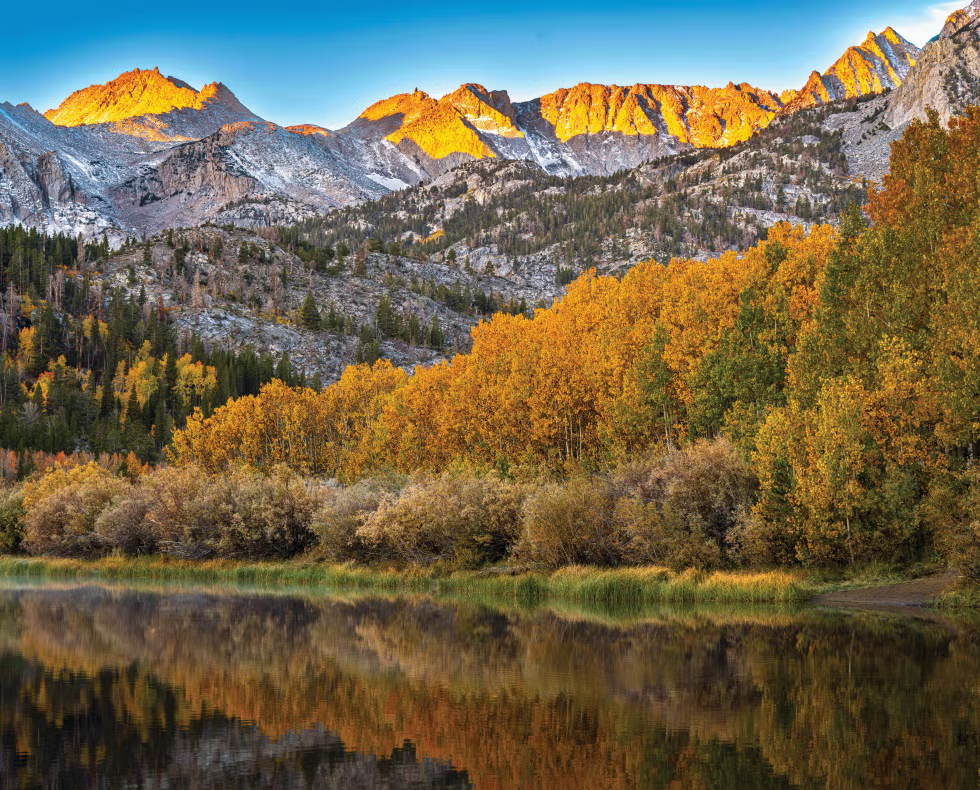
One of the great pleasures of living in Northern California is
watching seasons change multiple times as they move between the
higher and lower elevations. The turning fall leaves progress
down the mountains and into the valley, and the movement reverses
with the arrival of wildflowers in the spring.
Fall colors hit the upper elevations of the Eastern Sierra first
in late September and early October, then move down into the
foothills and Yosemite Valley in late October and early November
before appearing in the Sacramento Valley.
There’s always some variation, though. Peak season — when the
leaves are at their brightest — might last only a week or two,
and it is difficult to say in advance when it might start. If
you’re interested in a specific area, I recommend checking the
fall color reports on californiafallcolor.com, a website
maintained by a travel journalist that features reports from
around the state.
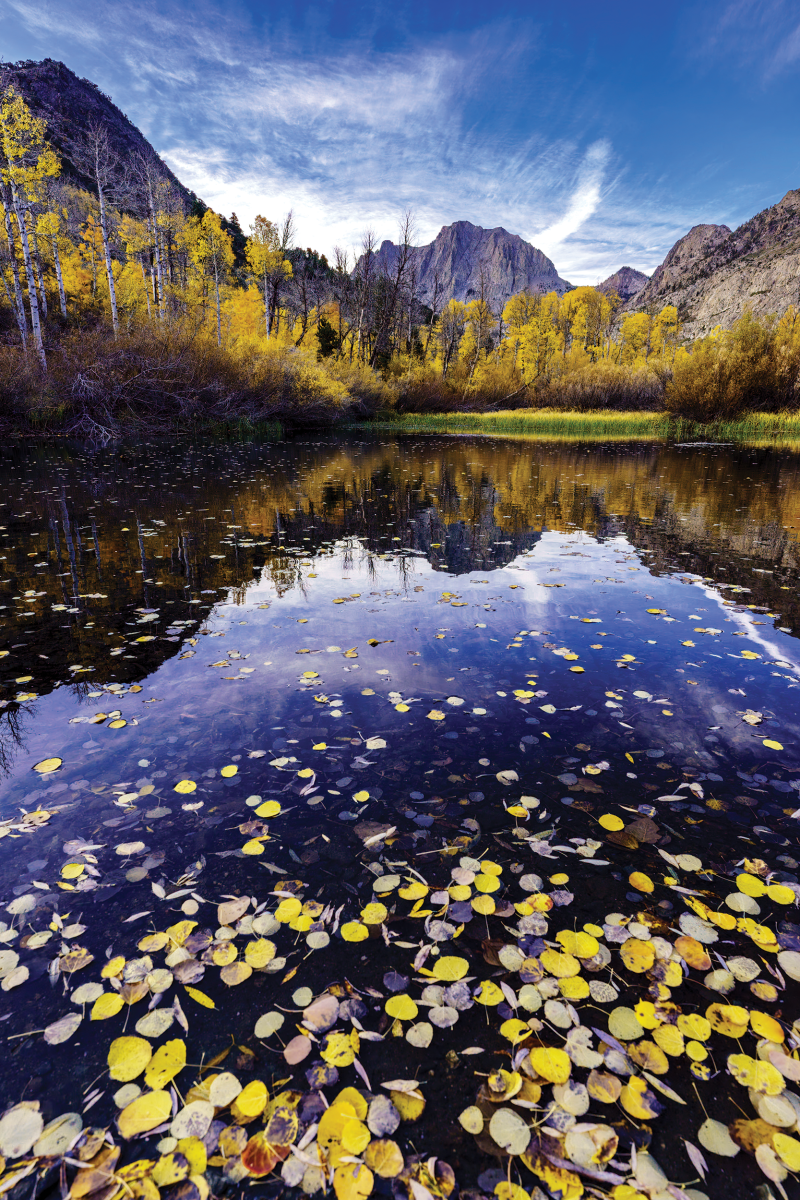
The fleeting nature of fall is one reason for its beauty, as seen
here on Rush Creek, located in the June Lake Loop. (Photo by Brad
Branan)
The “grand tour” for fall color in California is in the Eastern
Sierra, starting from Hope Valley near Lake Tahoe, over Monitor
Pass to Highway 395 and branching off to several locations along
the highway, all the way to the town of Bishop. I did this trip
last year for five days, and it was wonderful, adding a new
perspective to areas I visit all the time in other seasons. If
you don’t want to do it all at once, you can choose a section of
this tour for a day trip or two.
The Sierra Nevada is known for its conifers, which are trees with
needles. So how did it become known for its fall colors? Much of
the credit goes to quaking aspens found throughout the eastern
part of the range. While there are other deciduous (leafed) trees
that change colors in the Sierra, it’s the quaking aspens that
grab my eye the most, with their blazing orange, later red,
leaves and their bleached-looking bark. Aspens are a fascinating
species because they grow in groves of genetically identical
trees that sprout from vast, shared root systems called clonal
colonies. The colonies are among the largest and oldest organisms
in the world — the oldest, in Utah, has been given an upper age
estimate of 80,000 years.
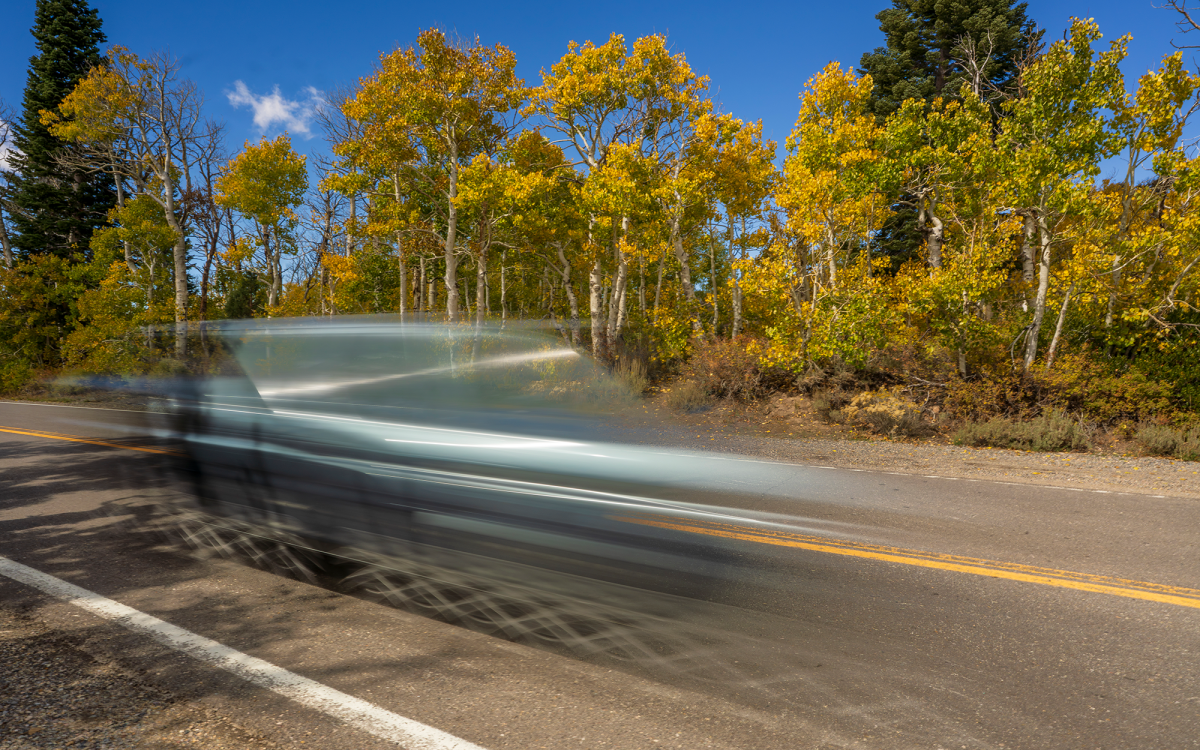
A car drives past an aspen grove on Monitor Pass in a
slow-exposure photograph. (Photo by Brad Branan)
The best spot near Sacramento for aspens is Hope Valley on
Highway 88 and 89, south of Lake Tahoe. The section near Luther
Pass has some excellent aspen groves. The Scotts Lake Trail,
which starts at Luther Pass, takes you through several aspen
groves and includes a beautiful view of Scotts Lake surrounded by
aspens. You can also pick up the Scotts Lake Trail along the
popular Big Meadow Trail just west of Luther Pass. If you have a
4-wheel-drive vehicle, consider driving to Scotts Lake.
Driving east on Highway 89 through Markleeville, aspens can be
found on the hillsides leading up to Monitor Pass, which has a
great aspen grove near the top. A superb day trip from Sacramento
would be to take in Hope Valley, Markleeville and Monitor Pass.
Or make a weekend of it and continue south on Highway 395 in the
Eastern Sierra. This highway provides one of the best road trips
in the country. I do it once or twice a year, usually in the
summer. It has world-class views of the Sierra, charming small
towns, and amazing parks and trails. Add autumn colors, and you
can see why some people make the trip every fall.
Some of the best locations along Highway 395 for fall color are
Virginia Lakes Road, Lee Vining Canyon, June Lake Loop, Convict
Lake and Bishop Creek Canyon. I visited these locations last
fall, and the memories are still vivid. They are spectacular
year-round, but vibrant autumn colors give them a much different
vibe than at other times of the year.
I especially like the June Lake Loop and the Bishop Creek area. I
have visited them in the fall a few times. Both have large aspen
groves and spectacular lakes and mountains. I camp in National
Forest campgrounds in each area, aided by a zero-degree sleeping
bag. But if you need more civilized comforts, both locations have
a variety of motels, inns and other lodging.
I hike on these trips and am always looking for scenes to
photograph, often returning at sunrise or sunset when the light
is best for pictures. Warm light accentuates leaf color.
My autumn ritual also includes a trip to Yosemite Valley around
the first week of November. Here the fall colors don’t come from
aspens but from oaks, maples and dogwoods. Fall colors reflected
in the Merced River make great photos. Crowds are much smaller in
the valley this time of year — another great reason to visit.
You don’t have to travel to see fall colors in California, of
course. Oaks, maples and other trees provide them in the
Sacramento area in November. But to my mind, nothing beats seeing
them earlier in the Sierra, where they are more concentrated and
abundant.
–
Stay up to date on business in the Capital Region:
Subscribe to the Comstock’s newsletter
today.