 Vol. VI, No. 1,407🗓️18 days to November General Election
—Voters across Alameda County are grappling with and trying to understand exactly what a host of ballot measures from the state down to individual cities mean and what will they cost them, if approved on Nov. 3.
The Alameda County Ballot Watchdog Committee reviewed the wording of local ballot measures and found that some fall well short of clearly explaining what voters are being asked to approve.
The committee, which has compiled a report on local ballot measures for several recent elections, maintains they are not judging the merits of the measures, only whether their ballot summaries are accurate, impartial and informative.
Even the clearest ballot summaries weren’t perfect. The committee found a recurring tendency among local governments to emphasize benefits while obscuring costs, leaving voters to dig deeper to understand exactly what they’re approving.
The group awarded scores on a five-point scale, with an average of 3.71.
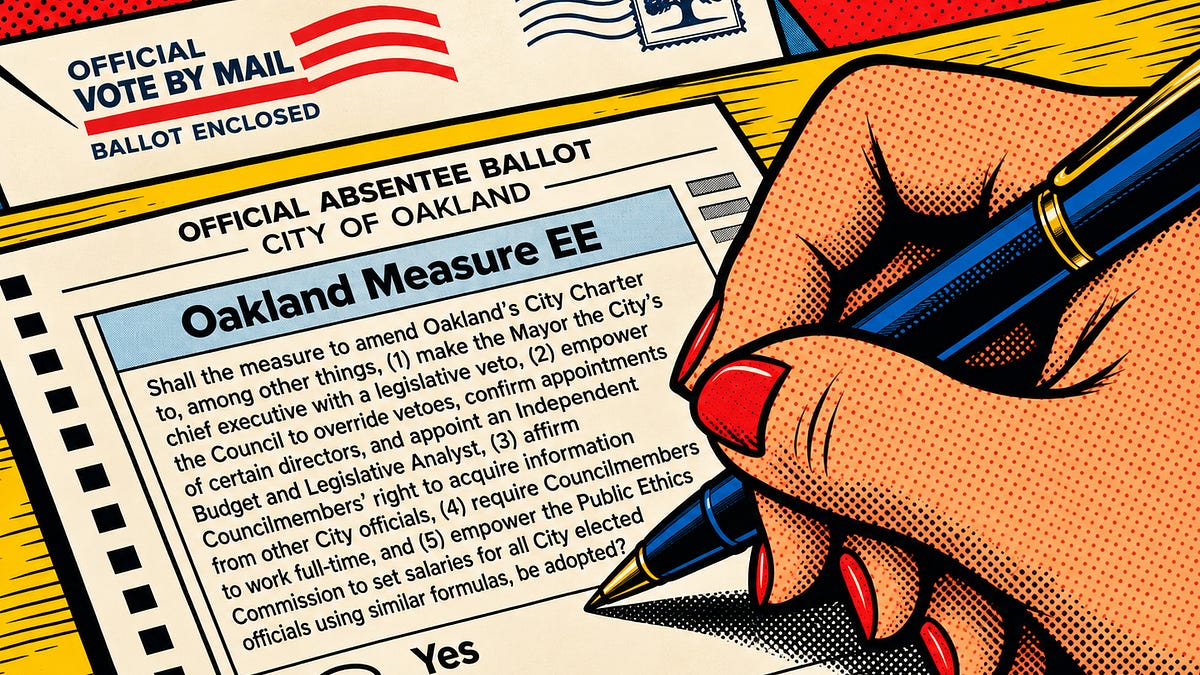
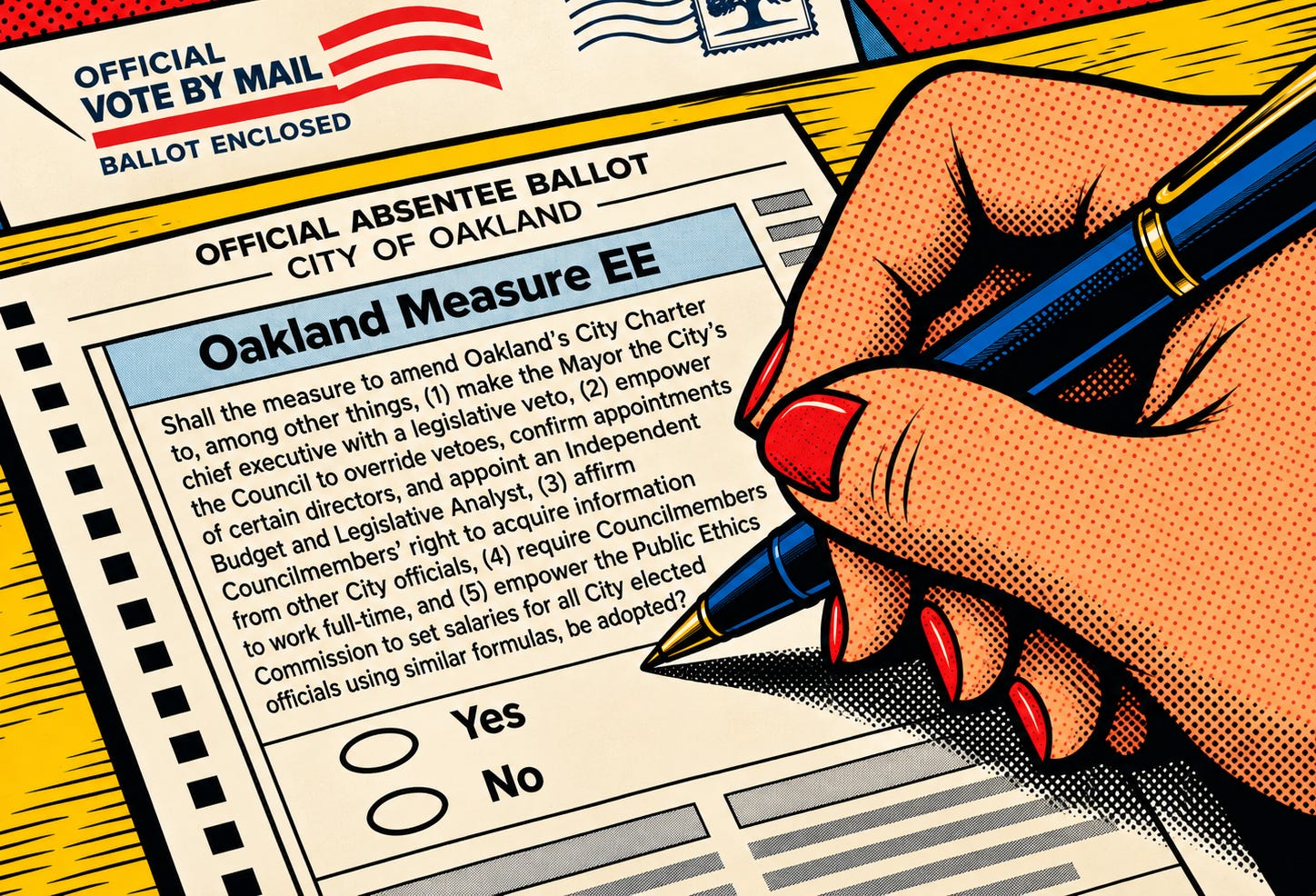
The worst offenders: Oakland Measure EE, which would restructure the city’s government by expanding mayoral authority, changing City Council powers and modifying how elected officials’ salaries are set, and Alameda Measure M, which would amend or repeal numerous outdated City Charter provisions. They tied for the lowest score at 1.8 out of 5.
Oakland’s measure was criticized for cramming too many changes into one ballot question. The committee also faulted its vague reference to additional provisions and failure to explain the financial consequences. Alameda’s cleanup charter measure was equally panned for simply listing charter sections without explaining what would actually change, why the changes are necessary or whether they would cost taxpayers anything.
—Top performers: Berkeley’s Measure Y, a proposed arts parcel tax, Pleasanton’s Measure HH, which would increase the hotel tax from 8 percent to 12 percent over two years, and Union City’s Measure II, which would extend its existing 5 percent utility users tax for nine years, each earned 4.6 out of 5, the highest scores in the report.
The committee praised their relatively straightforward descriptions of tax rates, revenue and duration, although it still identified shortcomings.
Measure Y was unclear about whether it creates a new tax or amends an existing one, while the Pleasanton and Union City measures highlighted popular public services without guaranteeing that tax proceeds would be spent on them.

ELECTION 2026: AIPAC Goes Silent as Hernández Campaign Hits Financial Rock Bottom
Congressional Campaign Finance Capsules
OAKLAND ON TRIAL: Defense attorney identifies former San Leandro official as subject of prostitution-related testimony
CAMPAIGN FINANCE: Form 497 large campaign contributions and Form 496 expenditure reports filed on Oct. 15
🎙️EAST BAY INSIDERS PODCAST
🚨Steve Tavares, Trishala Vinnakota is joined by Loren Taylor on the next East Bay Insiders Podcast, available for download later today🚨
—Listen on Substack or download episodes at Apple Podcasts, Spotify, or wherever you get your podcasts.