
From the return of a iconic conductor to La Catrina’s arrival in Oakland, there are a lot of great shows and concerts to catch in the Bay Area this weekend.
Here is a partial rundown.
Classical picks: Nagano visits, Oakland Symphony
Here are a pair of concerts classical music fans won’t want to miss.
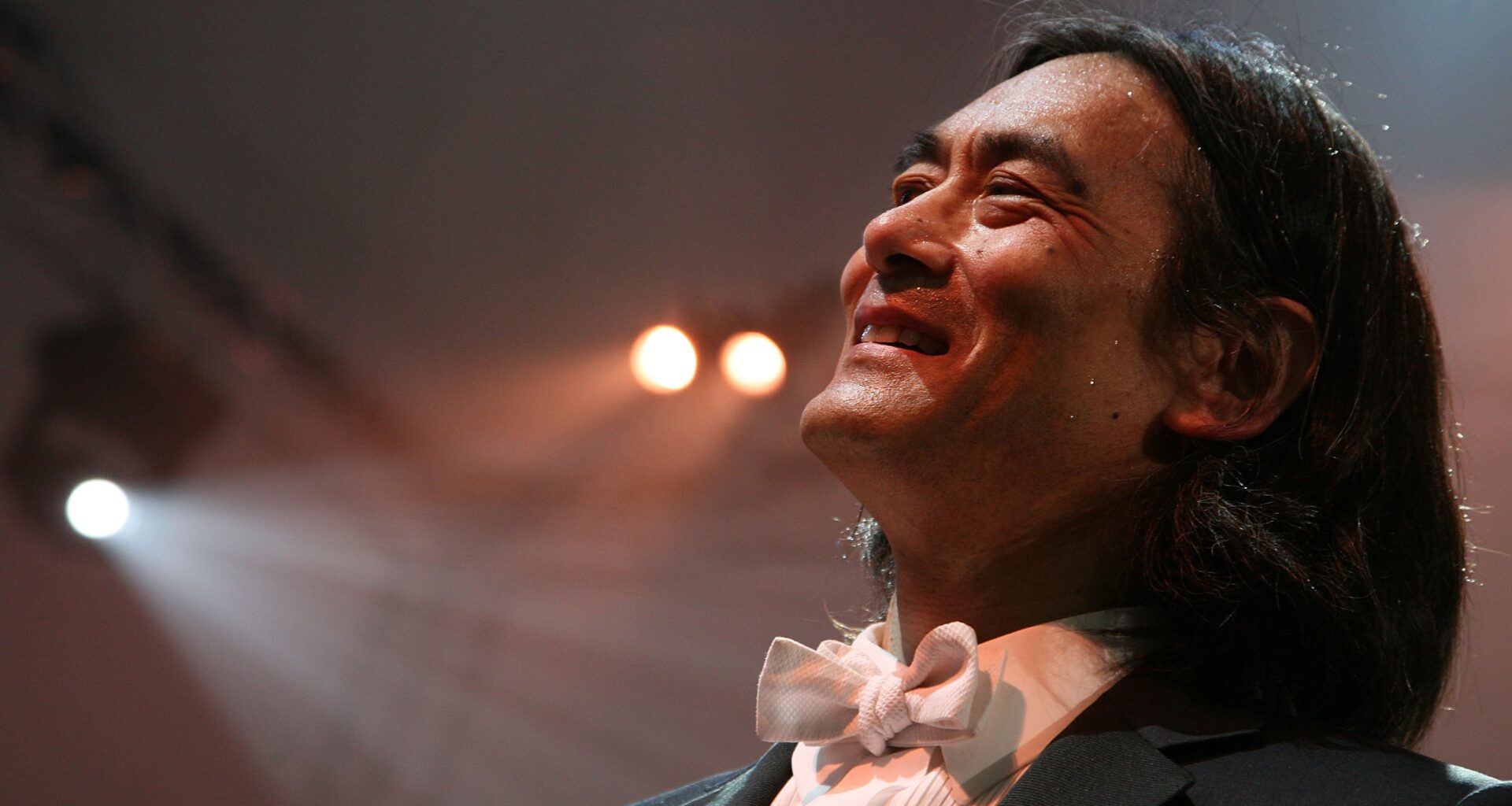
Nagano returns: One of the Bay Area’s most beloved conductors returns this week with a special East Bay concert. Kent Nagano, the Berkeley Symphony’s longtime Music Director Laureate, will appear in the East Bay to conduct the ensemble in works by J. S. Bach and Felix Mendelssohn; pianist Mari Kodama joins Nagano in Mendelssohn’s “Piano Concerto No. 1,” and the composer’s Symphony No. 5, “Reformation,” is also on the program.
Details: 4 p.m. Oct. 18; Henry J. Kaiser Center for the Arts, Oakland; $25-$118; Berkeley Symphony.org.
“Defiance”: That’s the title of the Oakland Symphony’s new program, and it’s one with plenty of heat in it. Under Music Director Kedrick Armstrong, the evening will conduct works by composers Anthony Davis and Karim Al-Zand, along with a medley by Tracy Chapman and Lauryn Hill, and the powerful Symphony No. 11 by Shostakovich.
Details: 7:30 p.m. Oct. 16; Paramount Theatre, Oakland; tickets $150 and up; oaklandsymphony.org.
— Georgia Rowe, Correspondent
Impressive La Catrina arrives in Oakland
In the lead-up to this year’s Día de Muertos, Oakland has a new guardian keeping watch: a 34-foot-tall La Catrina sculpture, made by artists in Mexico City and trucked to Oakland, where it’s been erected in Fruitvale Village.
Reportedly the tallest La Catrina right now in the U.S. — such figures are traditionally made to celebrate Day of the Dead — the massive, skull-faced creation was commissioned by the Unity Council (among others) and fabricated by artist Romain Greco, of the art collective Artsumex. It will be a centerpiece at Fruitvale’s Día de Muertos Festival, taking place Nov. 1, which typically draws as many as 100,000 visitors with live music, Latin American art and altar installations.
“La Catrina is one of the most recognized symbols of Día de Muertos, standing for remembrance, the celebration of life and the enduring connection between generations,” writes the nonprofit tourism group, Visit Oakland. “Designed with outstretched arms, Oakland’s La Catrina will serve as a powerful gesture of welcome and embrace — symbolically welcoming migrants into the Fruitvale community while expressing our shared values of inclusion, care, belonging and cultural pride.”
Details: On view at 3301 East 12th St., Oakland (next to the Fruitvale BART station); visitoakland.com/la-catrina.
— John Metcalfe, Staff
Composer Luppi back with ‘Wilma’
Daniele Luppi has a long and varied musical backstory.
The Italian composer has scored a number of films, including the 2008 Bruce Willis comedy “Assassination of a High School President,” and otherwise had his music utilized in the likes of 2003’s “Under the Tuscan Sun” and 2007’s “The Nines.” He’s also no stranger to TV, having garnered Emmy nominations for his tuneful work on STARZ’s “Magic City” and Netflix’s “Marco Polo.”
Luppi remains best known for the 2011 Danger Mouse collaboration “Rome,” which featured Jack White and Norah Jones and reached as high as No. 11 on the Billboard 200 album chart. “Rome” was inspired by the soundtracks of classic Italian spaghetti Westerns. Luppi has also worked with Red Hot Chili Peppers, Gnarls Barkley and Depeche Mode.
Now this fascinating artist — who was born in the picturesque Venetian city of Padua — returns with the enjoyable new album “Wilma.” The record finds Luppi collaborating with Mercury Prize-winner Michael Kiwanuka and R&B talent Orion Sun. The multi-talented artist, who can play piano, organ, bass, trumpet and other instruments, draws mostly from never-before-heard recordings by top Italian session players of the ‘60s, ’70s and early ‘80s to create a sonic love letter to Italian cinema.
Details: Released on Verve/slowplay label; available in most record stores and digital formats.
— Jim Harrington, Staff
Here’s your freebie of the week
Despite being credited as perhaps the sunniest neighborhood in all of San Francisco, as well as having some of the best views of downtown and the bay, Potrero Hill never seems to gain a massive amount of attention – even in these days of a real estate frenzy over any Bay Area zip code. But for 51 years now, the neighborhood in the southeast section of the city – bordered by Route 101, 16th Street and the soon-to-be-renamed Caesar Chavez Street – has hosted the lively Potrero Hill R&B Festival. And it returns this weekend with a pretty impressive lineup. The event, which serves as a fundraiser for the Daniel Webster and Starr King elementary schools as well as several area kids programs, runs from 10 a.m. to 5 p.m. Oct. 17 along 20th Street between Wisconsin and Missouri streets. You’ll find booths representing a wide variety of artwork, stuff to eat and drink and community organizations as well as music on two stages. Performers include JC Smith – one of the Bay Area’s best blues guitarists – and his band (1 p.m.), Mitch Woods & His Rocket 88s dealing New Orleans-style R&B (2:30 p.m.), R&B/soul act Andre Cruz & Chris Lujan (1:30 p.m.) and R&B/blues/soul singer But-tah Butterfly (1:30 p.m.) among others.
Details: Admission is free; go to potrerofestival.com.
— Bay City News Foundation
Lage and in charge
If you were around the Bay Area, or in touch with its music scene, about 30 years ago, you might remember the emergence of a young guitar prodigy from Santa Rosa named Julian Lage, whose mighty talents and keen understanding of music drew the attention of luminaries ranging from David Grisman to Gary Burton. He was the focus of an Oscar-nominated documentary, “Jules at Eight”; performed at the Grammy Awards at age 13 and was a member of the Stanford Jazz Workshop faculty at age 15. Some artists who break out at such an early age tend to phase out by the time they reach adulthood. Lage is not one of them. Now 38 and based in New York City, he has kept his career thriving while expanding his repertoire into country, blues and other genres. He has maintained his Bay Area connections as well, and last year served for a time as an SFJAZZ artistic director. In January, Lage released his latest album, “Scenes from Above,” on the Blue Note label and this weekend he returns to the Bay Area with his new quartet, including Jorge Roeder on bass, drummer Kenny Wollesen, and the phenomenal John Medeski on keyboards.
Details: He performs 7:30 p.m. Oct. 18 at the UC Davis’ Mondavi Center ($42-$72, www.mondaviarts.org), 8 p.m. Oct. 19 at Davies Symphony Hall in San Francisco $65-$135, www.sfjazz.org) and 7:30 p.m. Oct. 21 at Stanford University’s Bing Concert Hall ($50.76-$78.84; (live.stanford.edu).
— Bay City News Foundation
Last side, now, for Judy Collins
Judy Collins, one of the more acclaimed and influential singers/musicians in folk music history, has embarked on a farewell tour that lands in Berkeley this weekend. Despite releasing more than 50 albums over a six-decade career, and despite her dogged involvement with a variety of social causes, she remains best known for two hits that were not-particularly-rabble-rousing covers of others’ songs: “Both Sides, Now” (Joni Mitchell) and “Send in the Clowns” (Stephen Sondheim). She’s been blessed with one of the most purely gorgeous singing voices in popular music history, which is one reason why her rendition of “Amazing Grace” was inducted into the National Recording Registry by the Library of Congress as a culturally significant performance. Renowned artists ranging from Rufus Wainwright to Shawn Colvin to the late Leonard Cohen and Dolly Parton have cited her singing brilliance and influence, and all contributed songs to the tribute album “Born to the Breed: A Tribute to Judy Collins.” Organizers say her farewell concerts will span the whole of her career and will include a few stories and asides about her legendary musical journey. Even if your knowledge of Collins and catalogue doesn’t go much beyond “Send In the Clowns” and “Both Sides Now,” this weekend’s concert will likely serve up some utterly transcendent moments.
Details: Collins performs 3 p.m. Oct. 18 at UC Berkeley as part of the Cal Performances series. Tickets are $50-$119; go to calperformances.org.
— Bay City News Foundation
A double dose of TQ
Berkeley Chamber Performances is hosting the renowned Telegraph Quartet at two different East Bay venues, bringing them first to the Lafayette Library at 7:30 p.m. Oct. 18 and re-engaging them for a repeat recital at the Berkeley City Club at 7:30 p.m. Oct. 20. On their program is the “Elegy” and “Polka,” which Russian composer Dmitri Shostakovich wrote in a single night in 1931, basing them both on two of his earlier works – an aria from his opera “Lady Macbeth of Mtsensk” and a dance from his ballet “The Golden Age.” An 18-year-old Felix Mendelssohn gave his String Quartet No. 2 the title “Est is wahr?” (Is it true?), quoting from the first line of a song he had written a few months earlier.
The final work on the program is Austrian-born American composer Erich Korngold’s String Quartet No. 3 in D Major, which quotes liberally from music written after he became a titan among Hollywood composers in the 1930s and ‘40s, including the love theme from 1941’s “The Sea Wolf.”
Details: Tickets, $20-$40, are available at www.berkeleychamberperform.org.
— Bay City News Foundation
A homecoming of sorts
Arms are open and anticipation is high at the Berkeley Symphony over the welcome return of former maestro Kent Nagano. His long and adventurous tenure as music director, from 1978 to 2009, shaped the orchestra and brought it international recognition. He will open the ensemble’s new season Sunday at 4 p.m. at the Henry J. Kaiser Center for the Arts in Oakland with a concert titled “Inheritance,” as the theme of the day is the progression from tradition to innovation. Three works by Mendelssohn anchor the program, but it also includes the world premiere of young Argentine composer Alex Nante’s “Vater unser” (Our Father in German), which is dedicated to Nagano, a champion of Nante’s music. The concert opens with “The Hebrides,” commonly known as “Fingal’s Cave,” a standalone concert overture inspired on the spot by the composer’s visit to an acoustically eerie basalt sea cave on an uninhabited Scottish island in 1829. Mendelssohn’s Piano Concerto No. 1 is another highlight of the program, as it will feature the internationally acclaimed soloist Mari Kodama, also conductor Nagano’s wife for more than three decades. The concert will conclude with Mendelssohn’s “Reformation” Symphony, the No. 5 in D Major.
Details: Find tickets, $25-$118, through berkeleysymphony.org.
— Bay City News Foundation