
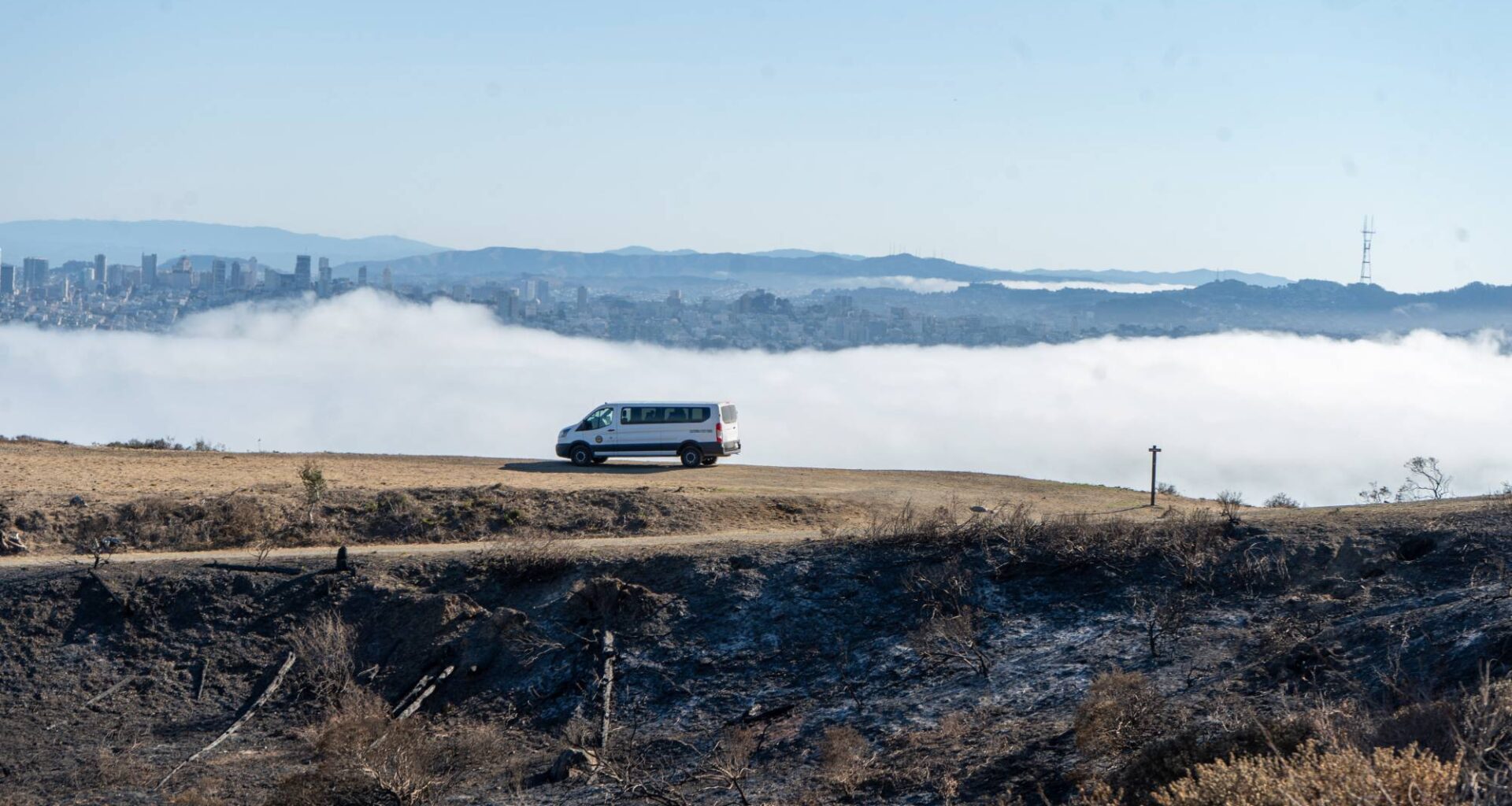
In September, prescribed burns on Angel Island sent smoke and at-times dangerous air quality to residents around the Bay Area. While Air District officials want to improve controlled burns on the island, environmental managers say the recent burn was a win. Today, Bay Nature reporter Daniella Garcia-Loos Almeida takes us on a journey to Angel Island to see the burn area through the eyes of the environmental stewards behind it.
Links:
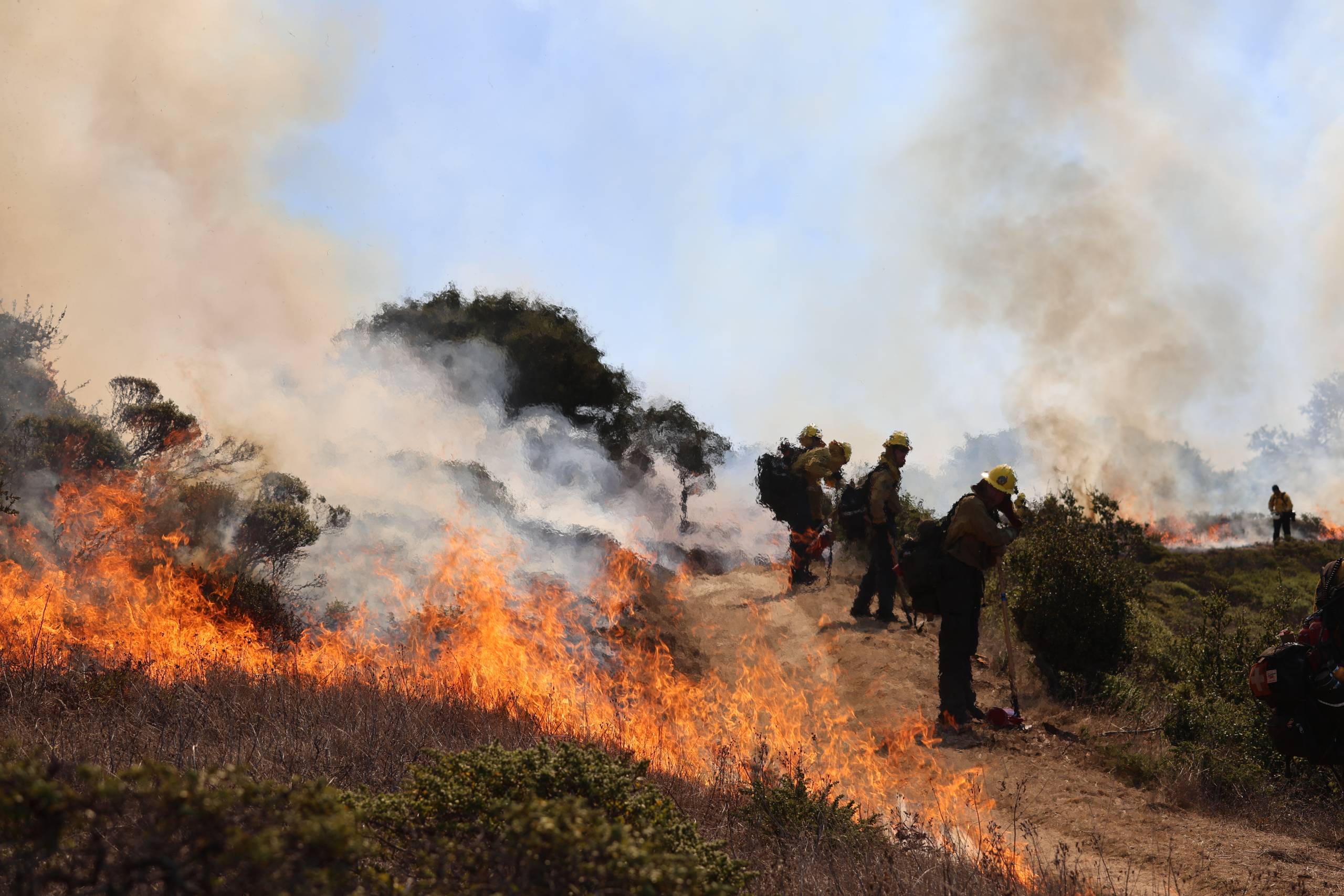 Firefighters attend to the prescribed burn on Angel Island on September 8, 2026 (CalFire)
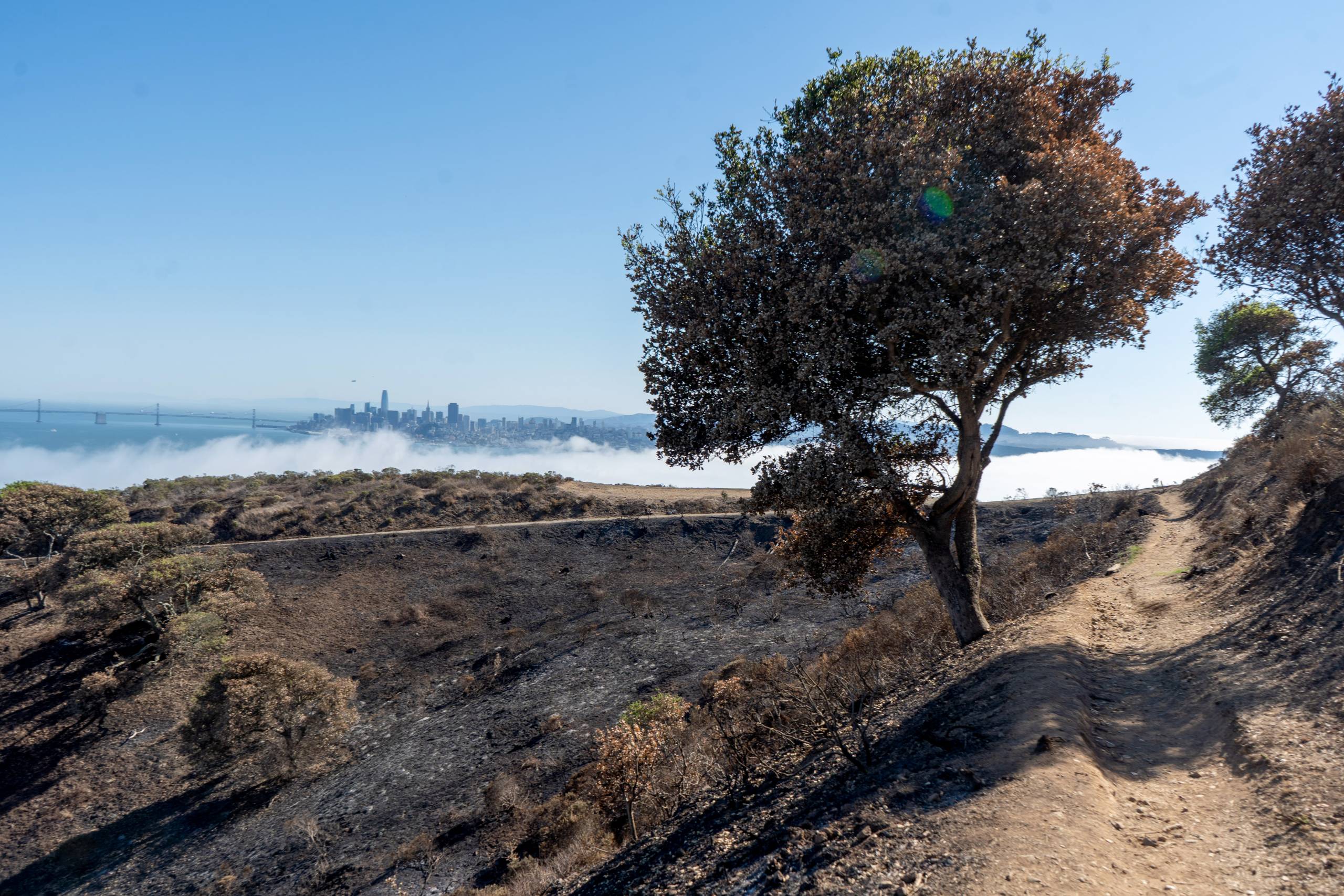 Charred grasses and shrubs after the prescribed burns (Daniella Garcia-Loos Almeida, Bay Nature)
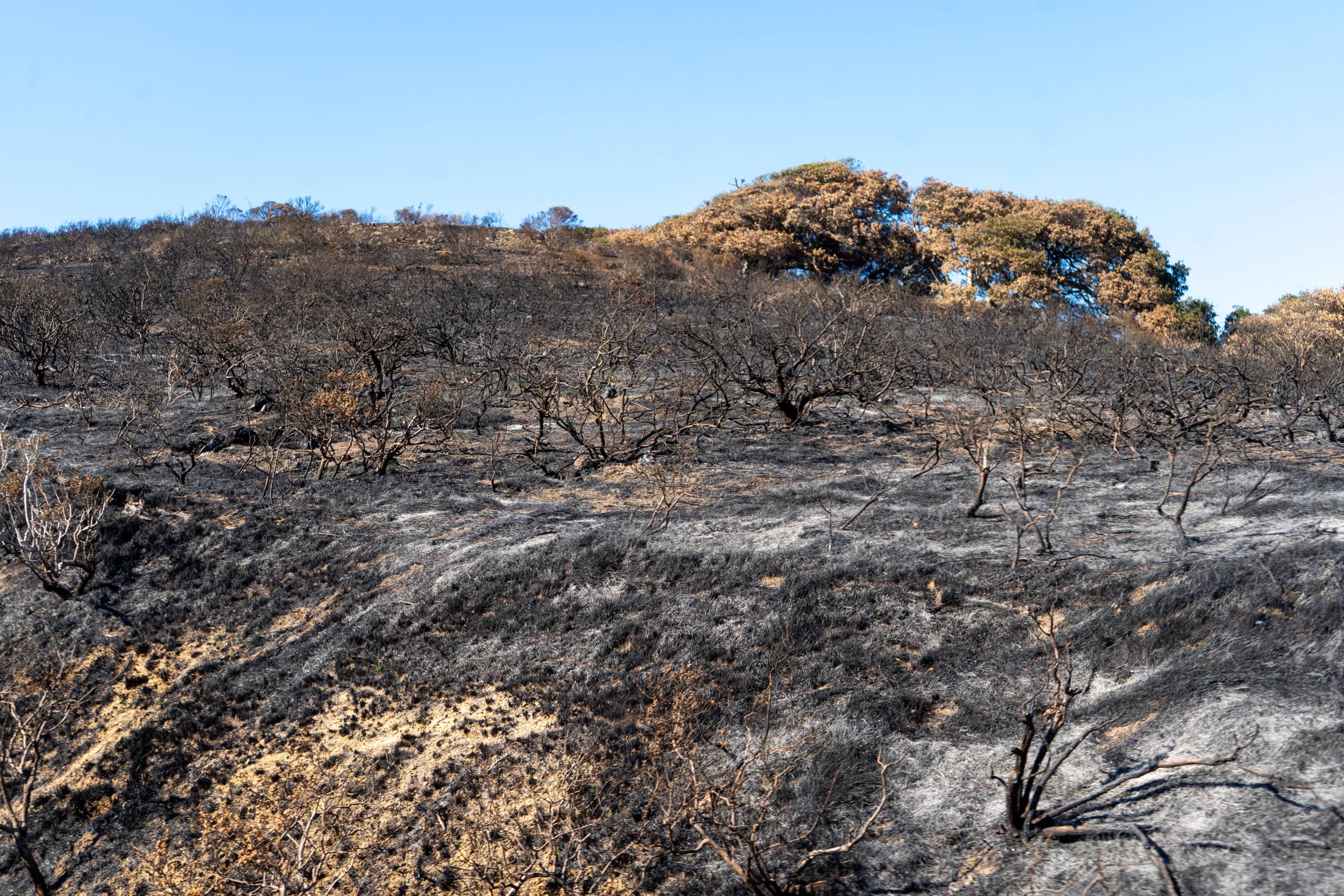 The burn scars on Angel Island are visible after a series of prescribed burns (Daniella Garcia-Loos Almeida, Bay Nature)
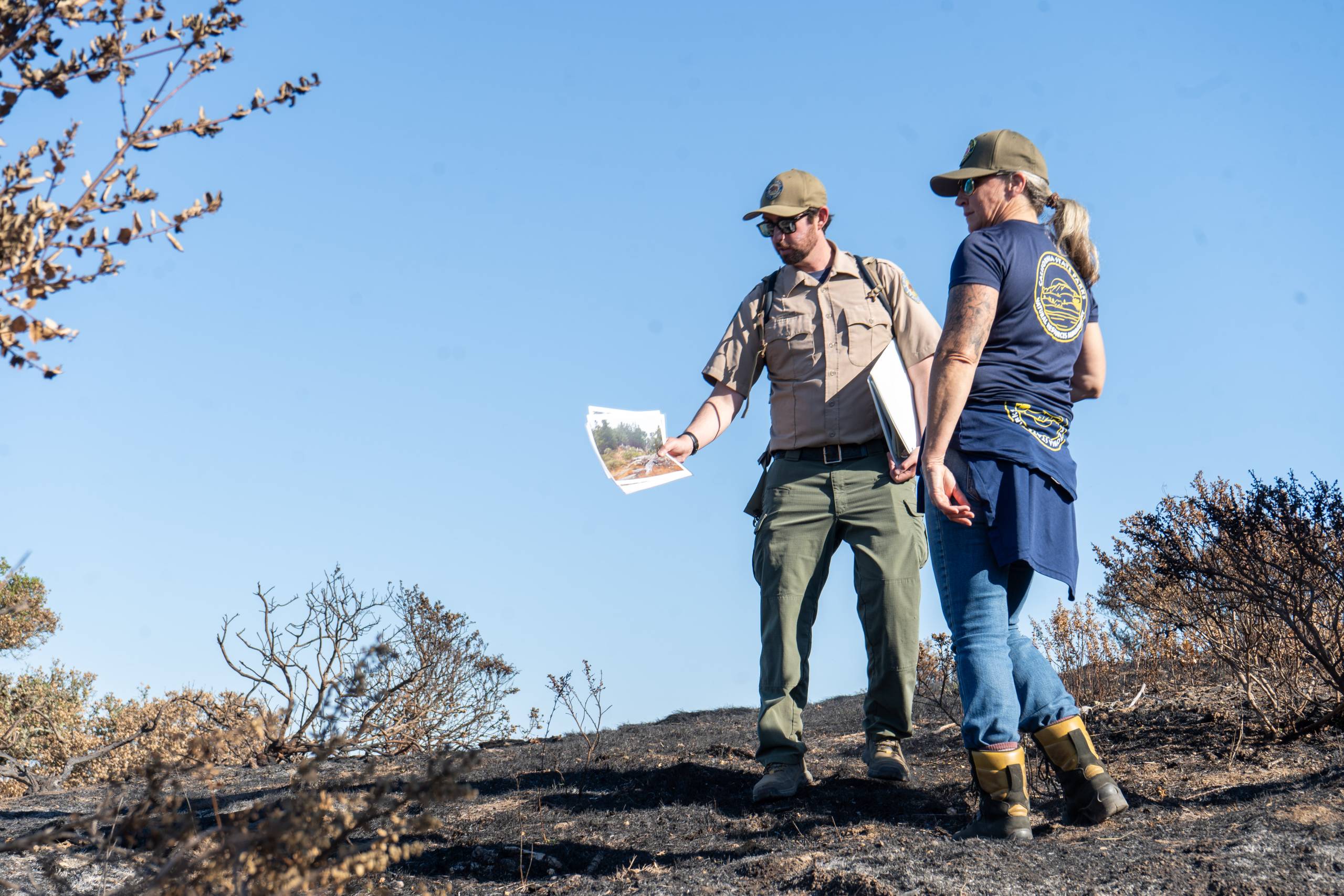 Naftali Moed and Sarah Gibson examine the burn site (Daniella Garcia-Loos Almeida, Bay Nature)
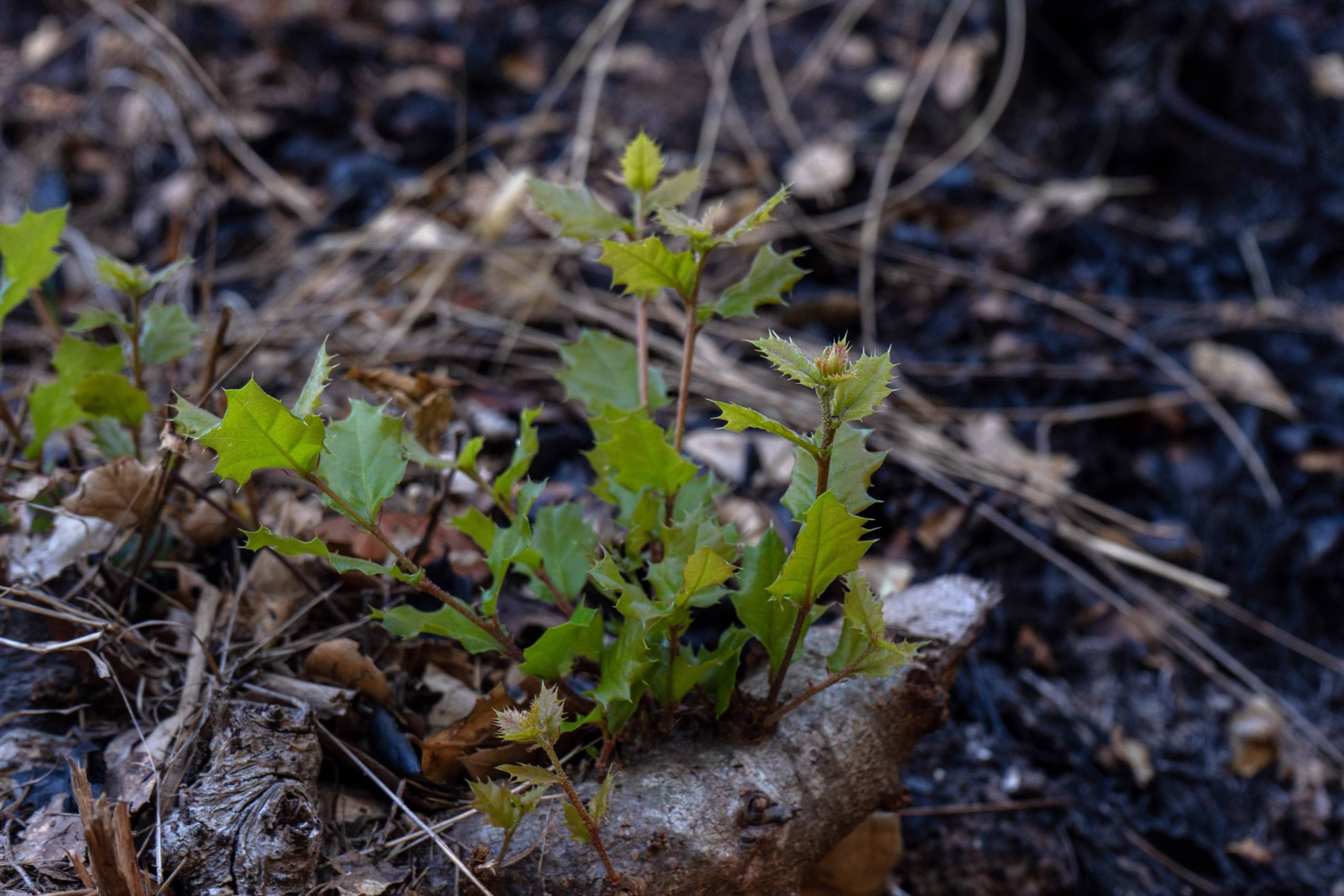 Even after the series of prescribed fires, an oak shoots up from the soil (Daniella Garcia-Loos Almeida, Bay Nature)
Transcript
Ericka Cruz Guevarra: I’m Ericka Cruz Guevarra and welcome to The Bay, local news to keep you rooted. So back in September, I was taking the ferry into San Francisco when the familiar smell of fire started to fill the boat.
News Tape: Smoke here in the Bay Area, but where was it from? Well, a prescribed burn right here on Angel Island. It sent out a tremendous amount of smoke. I’ve never seen so much smoke from a prescribed…
Ericka Cruz Guevarra: Angel Island was on fire and the haze outside of the Ferry window was almost blinding. Over the course of a few hours, the smoke had wafted into the East Bay and San Francisco and even as far as San Jose, sometimes at unhealthy levels.
Daniel Lurie: Ooh, it is actually very noticeable downtown right now. We’re getting a lot of calls and I understand why these. I also smell the smoke and air. If you have health issues, underlying health concerns, there is a good amount of smoke in there. So take care of yourselves, stay indoors if you need to. And we’ll keep you posted if anything changes.
Ericka Cruz Guevarra: While it was easy to mistake this for an emergency, the burning on Angel Island was actually intentional. These planned fires, which help clear up debris, are one of the state’s best tools for preventing bigger, more catastrophic wildfires. The controlled fires were halted because of the complaints, but the island’s caretakers say It was a huge win for the island’s wild landscapes.
Sarah Gibson: Although right now we look around and we see the blacks surrounding us and we see what we might understand from our contemporary view of fire as destruction or devastation, what we’re really seeing is a natural process of renewal.
Ericka Cruz Guevarra: Today we’re going on a journey to Angel Island with Bay Nature reporter, Daniella Garcia-Loos Almeida to understand the recent prescribed burns through the eyes of the environmental stewards behind it and why they say the benefits of this burn stand to outlast the smoke.
Daniella Garcia-Loos Almeida: Even going back to Smokey the Bear, I think a lot of people in California are used to preventing fire at all costs. But even before we were here, cultural burning was an important way to steward the land. And I think we’re starting to see how we can use fire to also steward our land and prevent these catastrophic wildfires.
Ericka Cruz Guevarra: I know you actually went to Angel Island this month to kind of try and understand this burn a little bit better and peel back the curtain a little. Can you tell me a little more about what you were hoping to understand by going to Angel Island?
Daniella Garcia-Loos Almeida: Yeah, I mean, I think a lot of places miss out on the aftermath of a burn, especially a prescribed burn. So my goal was to get out there and look at the impacts on the island’s ecology, learn more about what will happen after the burn, what we’ll see after the rains and the winter, and just how it’ll change the island. So there’s only a couple ways to get there. And the best way to get there is through the SF ferry.
Scene tape: Welcome aboard Golden Gate Ferry. The United States Coast Guard requires all passengers to know the locations of lifejackets and muster stations on board….
Ericka Cruz Guevarra: Okay, so you ride the ferry to Angel Island and then you get there. What is your plan? Like, what did you do next?
Daniella Garcia-Loos Almeida: The plan was to go out with two people that were there for both days of the burn. They were helping with the effort.
Sarah Gibson: My name is Sarah Gibson and I am our statewide burn boss at California State Parks.
Naftali Moed: My name is Naftali Moed, I work for California State Parks Bay Area District and I lead our wildfire and forest resilience work here at the state parks in Marin, Sonoma and Napa counties.
Daniella Garcia-Loos Almeida: And they were there to take us on a hike of the most recently burned areas that they burned these past two days in September.
Naftali Moed: Do y’all need facilities or water or anything else before we head up the hill?
Ericka Cruz Guevarra: For people who actually haven’t been to Angel Island, can you like sort of paint a picture for me?
Daniella Garcia-Loos Almeida: Yeah, Angel Island is the biggest island in the whole Bay Area. I had never been there before either. It certainly seemed a lot bigger than I expected when we got there and a lot more wooded than I expected.
Naftali Moed: To your point, exactly what you will see as soon as you get off the boat is our amazing oak woodlands and also some forests that are dominated by Monterey pine trees…
Daniella Garcia-Loos Almeida: There’s hundreds of eucalyptus trees that were planted there by the military way back when.
Naftali Moed: If you look closely you’ll get to start to see a lot of the animals that we have out here too. We just saw a coyote a few minutes ago, there’s many many deer.
Daniella Garcia-Loos Almeida: And I guess the other part that I didn’t expect was that the island is full of these historic buildings, including the Angel Island Immigration Station.
Naftali Moed: There’s so much beauty out here and so much history and on the wildfire side so much potential for something terrible to happen and we’ll talk a little bit about that too.
Ericka Cruz Guevarra: Yeah, so there is a lot on the island to protect and also a lot there that could potentially catch on fire. So tell me more about what they were trying to prevent from happening here.
Daniella Garcia-Loos Almeida: They were trying to prevent another catastrophic wildfire from happening. The last wildfire happened in 2008 called the Angel Fire, and it burned almost half of the island and they were so lucky that it didn’t get to any of the historic buildings. That fire started on a Sunday at like 8 p.m. at night and they had to find a way to get all of these fire trucks out there. What takes maybe a couple of minutes like here in Berkeley, took over a day to get just all the personnel out there. So they’re really trying to prevent something like that from happening.
Naftali Moed: Again, once a large fire is established on the island, it’s incredibly difficult to manage. And that’s, I think, one of the hardest things for us to convey to the public, is the difficulty and potentially the harm, not just to the island and the structures and the ecology out here, but also to the Bay Area community by and large, from the volume of smoke that’s produced during a significant or catastrophic wildfire.
Ericka Cruz Guevarra: So fighting a fire there is, it sounds like, a logistical challenge, but as I understand it so is planning for a prescribed burn. Tell me about that planning process.
Daniella Garcia-Loos Almeida: Yeah, I mean to me it seems like a logistical nightmare.
Sarah Gibson: It takes years to get to implementation day.
Daniella Garcia-Loos Almeida: They usually start these fires really early in the morning, as early as they can. They have to get seven fire engines out there on a boat. The boat can only carry one engine at a time, takes at least half an hour to get there. You also have to get all these dozens of firefighters, all the staff. Then to pick a day, they have to look at weather models. They have to look at the wind.
Sarah Gibson: It’s just like when you’re flying an airplane. You have a checklist to go through, getting permission from the agency to burn, notifying the dispatch centers who would get 911 calls. And when we get that go, we go to what’s called a test fire. And in that test fire, the first thing we actually look for is the smoke.
Daniella Garcia-Loos Almeida: they want the fire and the smoke to go straight up. If it goes straight up, it’ll start to blend with the air in the atmosphere.
Sarah Gibson: We’re checking to make sure that fire is quote-unquote behaving the way that we want in that test fire.
Daniella Garcia-Loos Almeida: All of this to prevent smoke from reaching all the seven million people that live around here. So really they have to be looking at these wind models and even after all this modeling, talking to the National Weather Service, it can still change.
Naftali Moed: See all the fog is rolling in? You may have also noticed the wind picked up as we rounded the corner. One of the many, many challenges that we have certainly burning, but really doing anything out here on Angel Island is navigating the weather.
Ericka Cruz Guevarra: Can you actually talk a little bit more about the weather factor and how they plan for that element? Sounds like it’s a pretty difficult thing to plan for when talking about an island in the middle of the ocean.
Daniella Garcia-Loos Almeida: Yeah, so when we were on the island, we kind of got a look and feel for ourselves as to how unpredictable the weather is there. You know, it was really hot and sunny on one part of the island, then it was cold and breezy on one of the island. Sometimes the fog comes in on the shore. I mean, the island has a pretty, you know, big elevation change.
Naftali Moed: And even the best modeling we have available to help understand the weather, can’t always predict with total certainty exactly when the wind’s gonna start or when it might shift or what specific direction it’ll come from.
Ericka Cruz Guevarra: Coming up, why rangers say this burn was a success and what they learned. By the way, if you support the work that we do here at KQED, consider becoming a sustaining KQED member, which you can do at donate.kqed.org/podcasts. We’ll be right back.
Ericka Cruz Guevarra: Okay, so they’ve got this whole plan, they’re looking at the weather, they pick a day to do this, how does this actually go down? What did you learn about how a prescribed burn actually works on the ground?
Daniella Garcia-Loos Almeida: There’s broadcast burns and there’s pile burns. A lot of state parks do what’s called a pile burn where staff and volunteers build these piles of sticks and like debris, and then they burn these piles individually.
Naftali Moed: And so that’s something, again, that’s happened intermittently through the 1990s, but it’s happened pretty much every year since 2022 out here. And it’s one of the many different tools in our toolbox that we’re using to help take care of this place and protect the historic buildings.
Daniella Garcia-Loos Almeida: When you have as much debris as you have in a place like Angel Island, you can’t feasibly burn what you need to burn by building these piles. It’s almost near impossible, you know, you have like shavings off of eucalyptus trees, you have debris from leaves, you have pine needles. And so when you need to burn a larger area of land, that’s when you do a broadcast burn.
Naftali Moed: And those cannot happen in the dead of winter when it’s raining, most simply because the fuels, all the dead plants that we are burning, can’t burn when they’re wet. And if we can get them to burn, the amount of smoke that’s gonna be generated is far greater.
Ericka Cruz Guevarra: And so these prescribed burns, which is what caused those plumes of smoke to float out across the Bay Area, those leave scars on the landscape. And as part of your reporting trip, you actually visited those scarred areas. What did that look like?
Daniella Garcia-Loos Almeida: The landscape was pretty charred. It’s kind of what you expect, it’s, you know, gray and white, there’s ash on the ground, piles of soot.
Naftali Moed: We’re standing right now in the middle of the area that we burned so looking out in most all directions you can see that black along the landscape. You can see areas that have concentrations of white ash again many of those were places where we had…
Daniella Garcia-Loos Almeida: But you also see some green. I mean, there was already buds of coast live oaks and dandelions starting to sprout up even just as recently as a week after that burn.
Sarah Gibson: As we look for solutions some of the best ones we can use are nature-based solutions and so when we lean into these nature- based solutions and we do our best to minimize the impacts to people then we’re really you know helping Mother Nature do her best work.
Ericka Cruz Guevarra: And I guess it might look kind of concerning if you don’t really understand what you’re looking at, but did everything go as planned for the rangers that you talked to? Like, what did they say about that?
Daniella Garcia-Loos Almeida: I mean, logistically, it worked out pretty well, you know, they got everyone out there, they got all the fire engines out there. They burned about 140 acres out of the 260 they had planned over these two days. And the smoke seemed to be going the direction that they wanted it to go while they were burning.
Naftali Moed: If we’re burning something, there’s going to be smoke and it’s going somewhere.
Daniella Garcia-Loos Almeida: A lot of people thought that the burning was still occurring when the smoke was traveling to them, but the burn kind of had wrapped up by like, the afternoon. And then the wind shifted, making it go east, hitting Oakland and the rest of the East Bay and traveling as far as San Jose.
Naftali Moed: That’s one of the really challenging things and at the end of the day, even with all the climate modeling, all the forecasting, and a lot of really, really great minds, that was really the one part of this that we always knew wasn’t fully within our control.
Daniella Garcia-Loos Almeida: I think it definitely wasn’t intentional, you know, they never want smoke to go where it would hit people. But while they were burning, the winds were doing pretty much what they wanted them to.
Sarah Gibson: We were able to really put in a nice piece that not only met ecological objectives, but will protect the amazing, incredible history here.
Daniella Garcia-Loos Almeida: They called off the remaining burn day, you know, to sort of go back to talk to the Bay Area Air District, the Marin County Fire Department and Cal Fire, just to all sort of work together and figure out if there is a sort of better time in the future, that would be better to burn. But I think it was still overall a successful thing.
Sarah Gibson: A lot of people who worked on this burn live in the Bay Area and while we love these habitats we all have family members who you know would be impacted by smoke maybe differently than I am. So we care greatly about that and we did hear their concerns and take them to heart. It does impact people. It can be negative. In some ways, but what happens if we don’t do it? What’s gonna be left for our children and grandchildren?
Daniella Garcia-Loos Almeida: It’s a good learning experience because this was the first broadcast burn that they had done since the 90s. So just to see what happened and they’re currently studying what’s happening from now until the spring and further on. They have wildlife cameras out seeing how the animals are reacting and they’ll definitely be looking to see, what happens after the first rain to see what species of plants come back and how the landscape itself is rebuilding.
Ericka Cruz Guevarra: And it sounds like they’re studying how to do this maybe a little bit better and in a way that doesn’t upset so many people. But it’s interesting, I think, Daniella, to hear your perspective of actually going to the island and talking with the people behind the burn who say this was sort of a success and that they did what they needed to do. On the other hand, you have all these people living on the other side of the water who are really upset. What do you make of the gap between those things?
Daniella Garcia-Loos Almeida: Yeah, I mean, I think also the state of California itself was kind of against prescribed burns for a really long time. I mean you really only saw this spike in prescribed burns after the 2020 fires. CalFire has so much more funding to be able to do these. California State Parks has more funding to do this. So you’re seeing a lot more of these. And I think most of them happen in places where you can’t see what’s going on, you know, they’re happening in like these heavily wooded state parks, they’re happening in like Big Basin State Park, Henry Cowell, and you know you have like these towering redwoods that kind of cover your view of the smoke.
Ericka Cruz Guevarra: But that was not the case this time around.
Daniella Garcia-Loos Almeida: Yeah.
Ericka Cruz Guevarra: What do you think then that it’s gonna take to get more people to understand that there is such a thing as a good fire? I mean, we’ve been through quite a bit in terms of wildfires here in California, and I think there’s so much trauma there. So I wonder as a reporter, what do you thing it will take to sort of shrink that gap between what the experts you talk to say is a really good thing and then people who are concerned when they see smoke in the air?
Daniella Garcia-Loos Almeida: Yeah, I mean, I think as a whole, we can all do our part to learn more about them. You know, we only see, oh, there’s this prescribed burn happening and not really much as to like, why, why it’s happening right now? What did the last one do? My main takeaway was just how logistically complex these things are. There’s really a lot just like talking about the safety of the firefighters, the safety of the people on the island, the safety of people in the Bay Area, there’s just so much more that goes into it than I previously thought.
Ericka Cruz Guevarra: Well, Daniella, thank you so much for sharing your reporting with us on the show. I really appreciate it.
Daniella Garcia-Loos Almeida: Thank you so much, too.
Ericka Cruz Guevarra: That was Daniella Garcia-Loos Almeida, a reporter with Bay Nature. We’re going to leave you a link to Daniella’s reporting on Angel Island for Bay Nature in our show notes. Thanks as well to KQED’s Danielle Venton for the tape that you heard at the top of this episode. This episode was cut down and edited by me, Gabriela was the field producer of this. She also scored it and added all the tape. Our editor was Pauline Bartolone. The Bay is made every week by me and Gabriela Glueck. The rest of the podcast team includes Jen Chien, Katie Springer, Maha Sanad. Ethan Toven-Lindsey.
If you want to get in touch with us here at The Bay, feel free to send us an email. We’re at [email protected]. The Bay is a production of listeners supported KQED in San Francisco. Support for The Bay is provided in part by the Osher Production Fund. Some members of the KQED podcast team are represented by the Screen Actors Guild, American Federation of Television and Radio Artists, San Francisco, Northern California Local. And I’m Ericka Cruz Guevarra. Thanks so much for listening to The Bay. We’ll talk to you next week.
Some members of the KQED podcast team are represented by The Screen Actors Guild, American Federation of Television and Radio Artists, San Francisco-Northern California Local.