
ROCHESTER, MI — Some students say the school is going against their wishes by using AI to record name pronunciations for a living voice artist, but a vice provost says the move is misunderstood and will reduce mispronunciations.
Some Oakland University students are criticizing the school’s decision to incorporate artificial intelligence into an upcoming graduation commencement, saying the move goes against their wishes when it comes to how graduates’ names will be read.
The school is turning to AI to help properly record names, then using a live voice artist to say them at the ceremony. I spoke with students and a vice provost to learn why Oakland University says the move is much needed.
Watch the Full Story Below
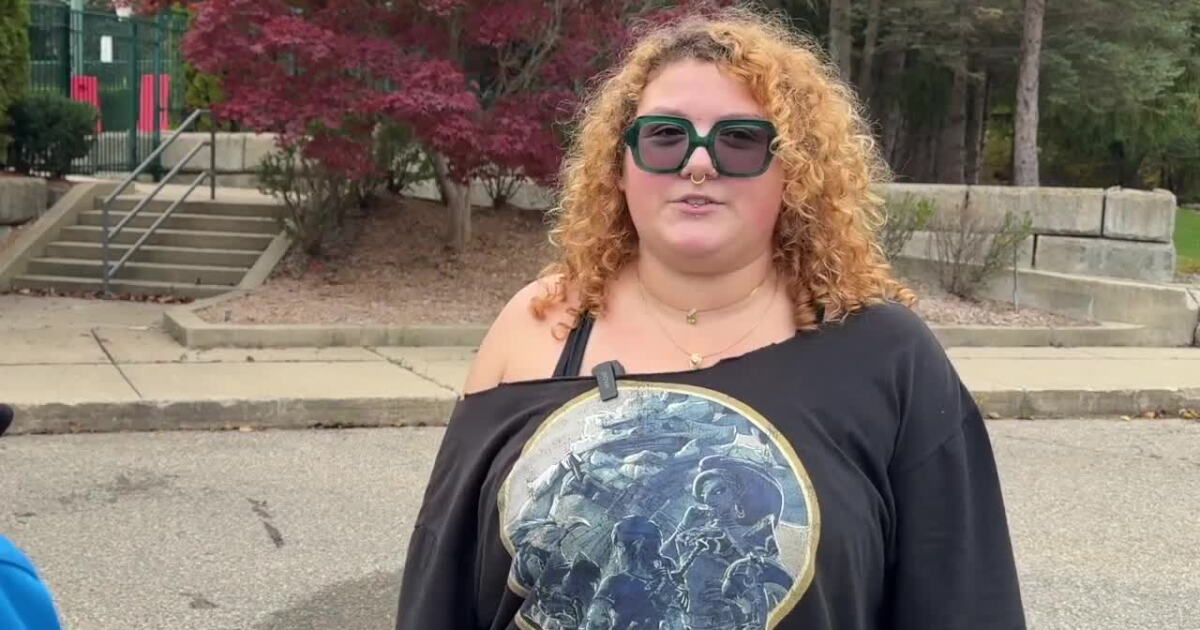
Summer Roy, a soon-to-be graduate, says she was looking forward to not just walking across the stage and being greeted by school faculty, but also to hearing her name and others being read by them. She recently learned, both in class and through an email, about the change.
“I love it at OU. Their counselors are amazing. Professors are amazing,” Roy said.
Roy learned about the shift through one of her professors.
“At what point did you hear the ceremony could be different this year? One of my professors goes did you guys know there is going to be AI involved with reading of names at the graduation ceremony?” Roy said.
Erin Pendygraft, who also plans to walk in mid-December, says she is uncomfortable sharing any information with an AI program, including about her major.
“It feels like a shock to the heart that they won’t let the professors say the names,” Pendygraft said.
I took these concerns to Vice Provost Amy Banes-Berceli, who says the move is misunderstood. She says students approve how their names are pronounced before a live voice artist records them.
“They approve the pronunciation of their name. That then goes to a live voice artist. We have both a male and female artist doing the recordings,” Banes-Berceli said.
Banes-Berceli says the feel of graduation will actually be very similar to years past, and even better because it should eliminate names being mispronounced through human error. She adds that if AI can’t get a pronunciation correct, a backup option will be a human doing a custom recording.
“Why use this new system as opposed to having a president, governor, or provost just read the name? We’ve had so many complaints from students very upset their name is mispronounced. We are trying to make this a good experience for students and be respectful to students,” Banes-Berceli said.
Roy says she wants her big moment, and that of so many others, to be special and memorable, and she doesn’t want an unfamiliar voice as part of the ceremony.
“They could redirect their efforts to having faculty members actually do the work and reach out to students to make sure they are pronouncing their names correctly. Instead of automatically resorting to using an AI feature,” Roy said.
I also checked in with several other Michigan universities and heard back from Wayne State and Michigan State. Both schools say they do not have plans to use AI in this way at commencement.
_____
This story was reported on-air by a journalist and has been converted to this platform with the assistance of AI. Our editorial team verifies all reporting on all platforms for fairness and accuracy.