
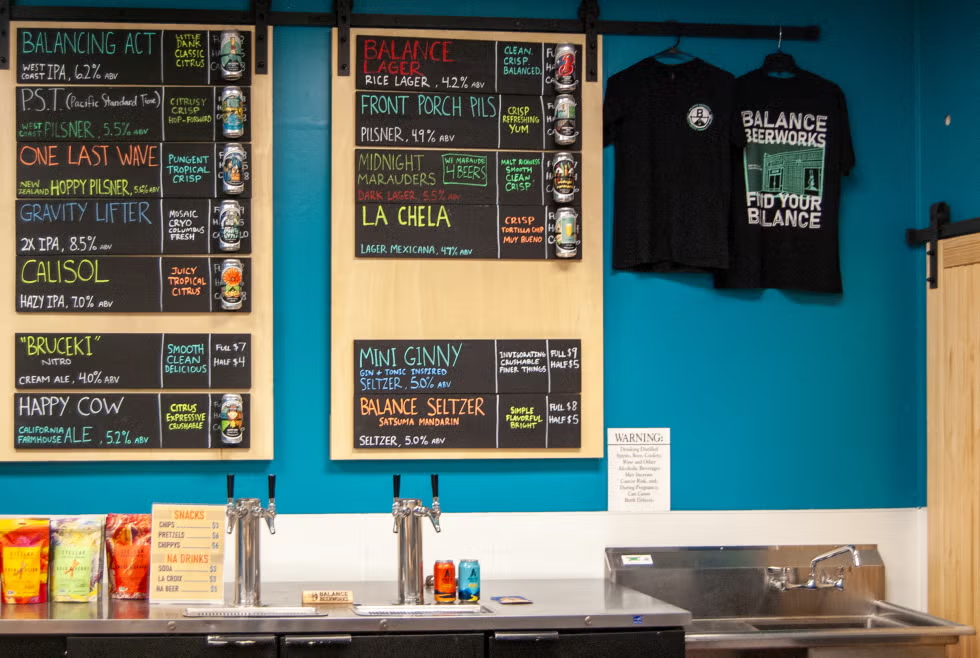
Balance Beerworks taproom blends soft blues and yellows while
square windows frame roughly a dozen stainless steel fermenters
and storage tanks. The logo adorns the walls along with drawings
of precariously balanced stacks of rocks, a nod to the
name.
Those visiting Balance Beerworks taproom may run into Bryce
McEfee or Bruce MacPhee, one of the brewers and a veteran of
Deschutes Brewing and Device Brewing.
“Chances are, if you come to the taproom, you’re talking to an
owner,” McEfee, one of the founders, explains.
Balance Beerworks opened this June at the location of a former
well-known Sacramento craft brewer, Device Brewing. The sudden
exit of Device Brewing from the space, and Track 7 before it,
gives the Balance Beerworks founders a chance to plant their flag
on the Sacramento craft brewing scene. In fact, the closure of
the 14th Avenue taproom near Sacramento State and brewing
location was a catalyst for Balance’s formation.
Along with McEfees Bryce, Alana,Tom “Pops” and Kathy, there’s
Bruce and Katie MacPhee, Ian and Mykenzie Marriott, and Van and
Paul Bonilla-Rios. The founders’ backgrounds span brewing,
taproom operations, marketing and hospitality; all coincidentally
connected through their time at Device Brewing, where they held
similar roles and first met.
“It was when Device was closing, we all looked at each other and
said, “Alright, we have a golden opportunity. Do we want it?
Okay, how do we go about it?” McEfee says about buying the
taproom and brewery equipment. Last year, the Balance team
acquired the Device Brewery and taproom on 14th Avenue near
Granite Park and began working toward a spring or summer
opening.
A local approach to a changing beer industry
The Device Brewing and Track 7 closures for the Sacramento beer
scene matched recent national downturns in craft beer. The
Brewers Association found craft beer production fell by 4 percent
in 2025, but taproom and brewpub models are a bright spot for the
industry and something Balance is looking to capitalize on.
Across California, somewhere north of 900 craft breweries are in
operation, still the most of any state, according to the
California Craft Brewers Association.
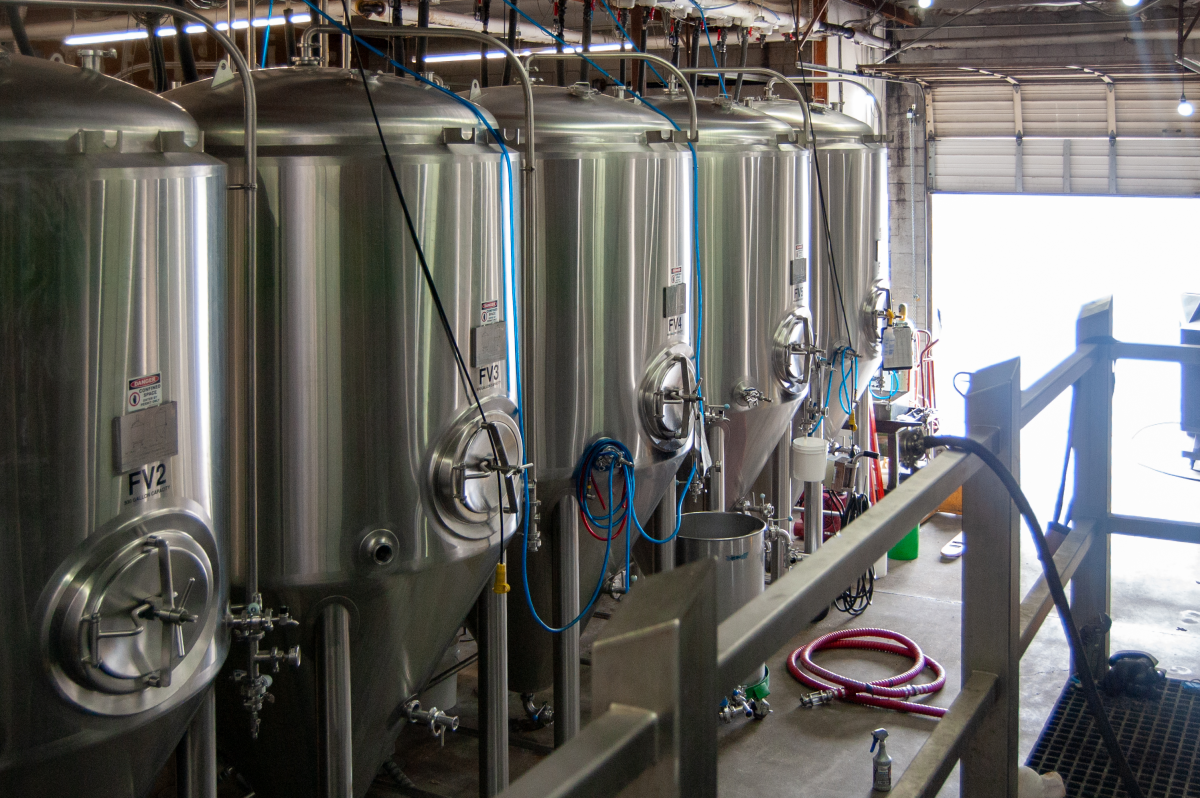
Balance maintains about a dozen beers on tap and two seltzers
with adjustments based on the season.
“We’ve seen a lot of breweries go into the heavier distribution
model and not succeed. And I think you saw Device do that and
fail. Rubicon did that and failed. That was, you know, way before
COVID. Right. Track 7 did that and failed,” says David Weiss,
president of the Sacramento Area Brewers Guild and brewer at Blue
Note Brewing in Woodland. “Everyone that’s local in the industry
pays attention to what’s going on, and seeing that happen again
and again discourages breweries from going that route.”
Balance isn’t the only relatively young brewery to focus on a
neighborhood model. Twenty minutes north, Granite Bay Brewing Co.
opened in 2023 with a focus on the neighborhood. “I knew when we
opened that craft brewing seemed to be in a downturn,” says
Carter Gray, one of the owners and head brewer at Granite Bay
Brewing Co. “But I wanted people to come to a brewery, and when
they left, have it feel like it’s their bar. The key to a small
neighborhood brewery like ours is managing overhead and making
sure that we can serve anyone walking in the door with a beer
they like.”
Movement Brewing, celebrating its sixth anniversary in Rancho
Cordova, was built around a similar neighborhood craft beer
model. Co-owner Alanna Cavanagh says Movement Brewing still
prides itself on brewery collaborations and a spring,
1990s-themed nostalgic brew event, “There’s not a lot of
industries where people collab and work together this much. The
‘beer people’ are just the best. There’s so much potential for
even more growth for the beer community in Sacramento.”
Weiss from the Brewer’s Guild echoed a similar sentiment,
“Quality-wise, we have amazing breweries here in Sacramento that
go toe-to-toe with breweries from Portland, San Diego or Denver.
You’re going to find as good a beer in the Sacramento area as
anywhere in the country.”
Finding opportunity in the craft beer downturn
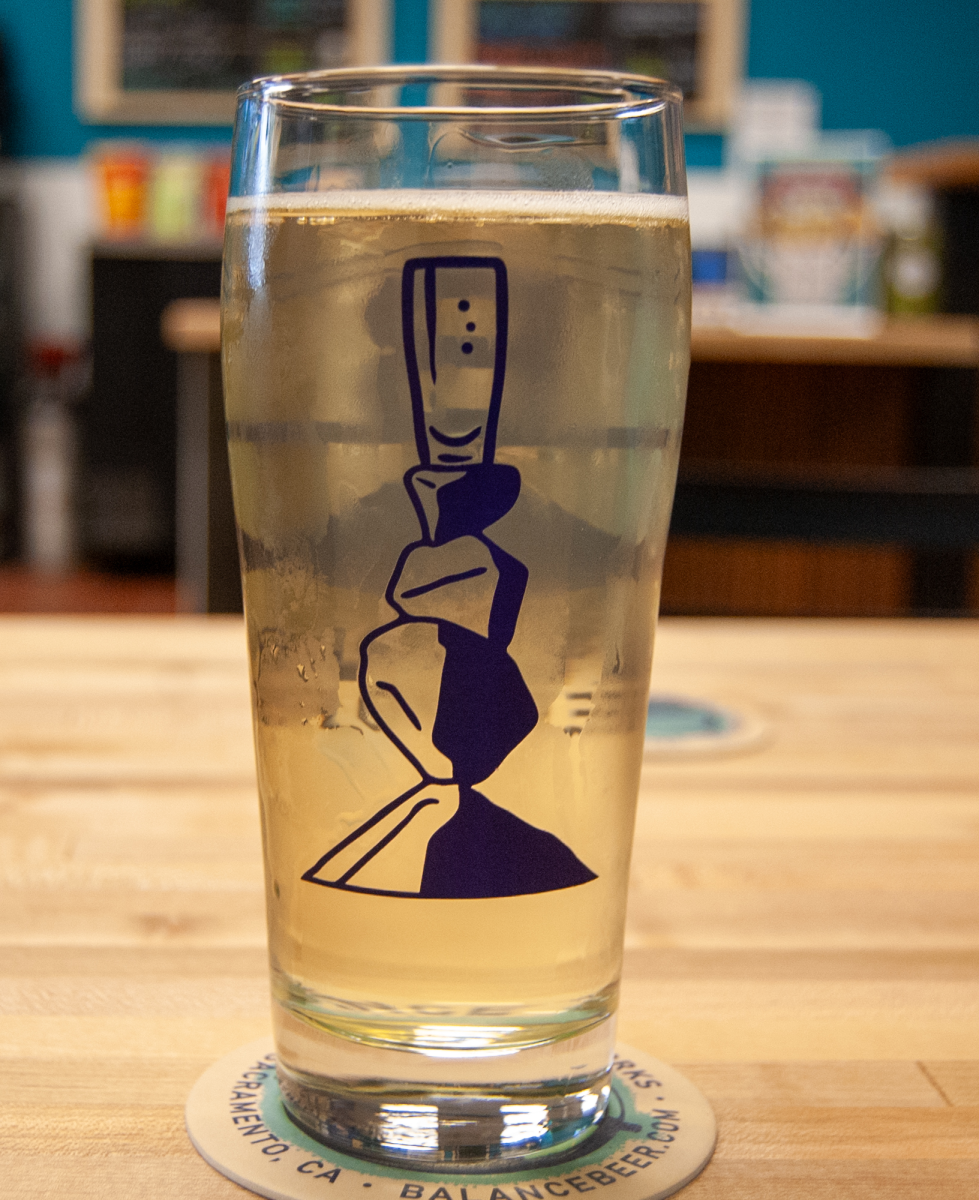
Their logo features precariously balanced stacks of rocks, a nod
to the name.
Balance Beerworks is emphasizing lower
ABV (alcohol by volume) brews, like the Front Porch pilsner and
one of the brewery’s staples, the Balanced Rice Lager. Balance
maintains about a dozen beers on tap and two seltzers with
adjustments based on the season, including the “Minnie Ginnie,” a
gin-and-tonic-based seltzer.
Gray called the hazy IPA craze from a decade ago “hop fatigue.”
“Lagers are gaining traction and popularity again. It takes a
little longer to make a really good clean lager, but I think it’s
worth it.”
Despite the apparent shift to lighter craft beer, GB Brewing did
take home a gold medal this year at the California State Fair
Commercial Craft Beer Competition for the red rye Hearth Fire
IPA. Movement Brewing offers “slushy” versions of seltzers, as
well as taproom-made non-alcoholic versions of drinks.
“With the explosion of craft brewing, the story of what craft
beer is has been lost a little,” says Bruce MacPhee, one of the
brewers at Balance. “For us brewers, craft beer is still very
much about honing our skill, just as restaurant chefs hone
theirs. Every beer we make at Balance is an extension of our
palate and creating a finished product beer drinkers enjoy.”
–
Never miss a story: Get Comstock’s weekly newsletter delivered to your
inbox.