
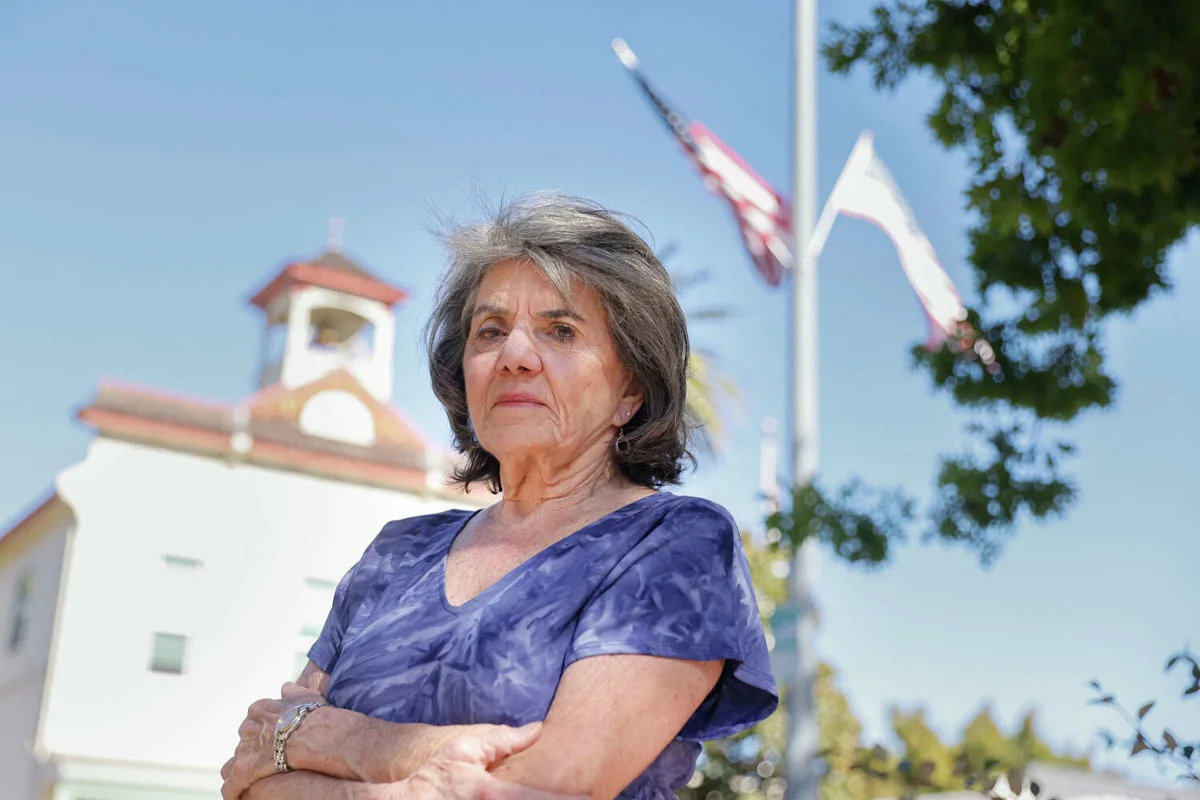
When she picked up election paperwork in July, Lana Richardson had one question for Calistoga’s city clerk: After she filed, could she still change her mind about running for City Council?
A former bed-and-breakfast owner in this Napa Valley town of hot springs and vineyards, Richardson had spent years in local civic life, including a stint on the housing advisory committee. But at 77, she hoped to see someone younger join a Calistoga City Council composed largely of retirees.
Richardson’s recruiting efforts included meeting with prospective candidates and talking up the need for different voices on the council. Still, no other first-time candidates filed to run, leaving just one candidate for each of the city’s three open seats: mayor and two council positions.
In mid-August, the City Council voted unanimously to cancel those November races and appoint Richardson and the only two other candidates who had filed, saving an estimated $60,000 in election costs. The decision took about six minutes. There was no public comment.
In doing so, Calistoga did more than join Livermore, Lafayette and Martinez in calling off Bay Area city council races this year. Calistoga’s decision also offered a telling example of a conundrum vexing a growing number of California communities: Residents rely on city councils to make critical decisions about housing, public safety and basic services, yet cities are having a harder time persuading people – particularly younger ones – to run for office.
Less than three years ago, in an effort to attract more candidates, Calistoga raised its council stipends, from $200 to $950 a month for council members and to $1,500 for mayor. The increase has done little to change the council’s makeup. Even though more than half of Calistoga’s roughly 5,000 residents identify as Hispanic or Latino, the council remains mostly white and older.
“It’s just so disappointing,” said Richardson, a petite grandmother of three with graying hair. “I really hoped somebody else would step up.”
Age in politics is a national concern. An April NPR/PBS News/Marist poll found that 80% of adults supported a maximum age for congressional candidates.
But in small cities such as Calistoga, the challenge is often finding younger people willing to run. Experts point to possible deterrents including the rising cost of living and a polarized political climate.
A recent study found that the share of California city council elections classified as uncontested nearly tripled from 2006 to 2024, from 10.3% to about 30.8%. Ballotpedia estimates that, across all offices, around 69% of the almost 1,200 California elections it’s tracking this year are uncontested.
That tally includes about a dozen uncontested council races in the Bay Area, but it doesn’t capture towns that canceled their council elections and appointed candidates.
In Calistoga, Kevin Eisenberg, who was appointed mayor, Scott Cooper, who was appointed to a second City Council term, and Richardson all support the council’s decision to cancel the election as a cost-saving measure. Still, they worry about what could happen to their community if civic engagement doesn’t improve.

Kevin Eisenberg, who will be Calistoga’s next mayor, holds a recycled City Council campaign sign. (Lea Suzuki/S.F. Chronicle)
Calistoga’s hospitality and agricultural workers span a wide range of ethnic and economic backgrounds. Eager to make the City Council younger and more diverse, Richardson and outgoing Mayor Donald Williams spent part of the summer urging Latino residents in their 30s and 40s to run. Several were interested, but worried they lacked the time, funds or knowledge to take on the job.
“Parents with young families are already stretched thin,” Williams said. “Though the City Council pay is certainly better than it was, it wasn’t enough to get people to sacrifice sleep or time with their families.”
At least one potential candidate told Richardson that hostile comments directed at council members also made her wary of running. Recently, one local issue has become particularly divisive.
When the city bought back its historic fairgrounds from Napa County in 2024, city officials intended to transform the underused land into an essential community gathering place. Many in town want to restore traditional uses such as the speedway and golf course. But residents and officials remain split on how to do so while generating enough revenue to maintain the property.
A controversial proposal for a data center on the grounds drew nearly 100 residents to a contentious June meeting of the fairgrounds advisory committee. After the backlash, the plan didn’t move forward.
City Council meetings are typically less heated, but that hardly makes their agenda items less consequential. With Calistoga’s median home price now more than $1 million, city officials are trying to build more affordable housing for the local workforce, lower residents’ water bills and upgrade aging streets – all while sidestepping a fiscal crisis.
Surrounded by verdant vineyards and rolling hills at the foot of Mount St. Helena, Calistoga depends heavily on hotel taxes, which are projected to provide nearly 55% of its general fund revenue this fiscal year. But an ailing wine industry and softening tourism could put that revenue at risk, along with the city services it supports.
“It does feel like this is sort of an inflection point,” Council Member Cooper said. “We need good people leading us. And, even though I like who we have on council, you do wish there were more people trying to serve in that way.”
Nolan Higdon, a UC Santa Cruz lecturer who studies media literacy and political communication, called city council positions “an increasingly tough sell” for younger professionals. Higher pay might attract more candidates in some communities, he said, but it wouldn’t solve the broader problem.
In smaller towns such as Calistoga, even a $950 monthly stipend may not come close to compensating for the time the job demands. Eisenberg, who has taped over some of his old City Council signs and written “MAYOR,” estimated that he spent about 30 hours a week on council duties this year.
Higdon argued that stronger civic engagement starts with teaching younger generations the value of investing in others. “Our society has become very capitalistic, and that’s clear in young people’s priorities,” he said. “We need to show people early on that a fulfilling life isn’t just about maximizing earning potential. It comes in giving back to your community.”
Mario DiPrisco’s return to local office shows just how old some city councils have gotten.
As a 24-year-old in 2000, he became the youngest person ever elected to Albany’s City Council. This year, after he was appointed because his race was uncontested, he’s poised to be the youngest member of Lafayette’s City Council – at age 50.
“It’s crazy to me,” DiPrisco said. “More than 25 years later, I’m still somehow the youngest person on a city council.”
Age isn’t the only gap in representation on local councils. A recent Bay Area Equity Atlas study found that people of color held 39% of the region’s top elected positions in the 2024 and 2025 elections, 25 percentage points below their share of the population.
Richardson acknowledged that older white people have “almost always” held a council majority during her nearly 30 years in Calistoga. “And that’s part of why my appointment feels a little bittersweet,” she said. “I’m happy to help my community, but we really need different kinds of voices.”
Stephanie Garcia could be one of them. A 37-year-old Latina who helps investigate welfare fraud for Santa Clara County, she too picked up paperwork to run for Calistoga City Council this summer.
But in spite of Richardson’s encouragement, Garcia decided she was better off waiting until another council seat opens in 2028.
“I’m going to spend the next two years doing everything I can to prepare myself,” Garcia said. “I don’t care that it’s a lot of work for little pay. I want to be a voice for my people.”
Subscribe
There’s more to San Francisco with the Chronicle. Subscribe today for just 25¢.
This article originally published at This Wine Country town canceled its mayoral election. Why more California cities could follow.