
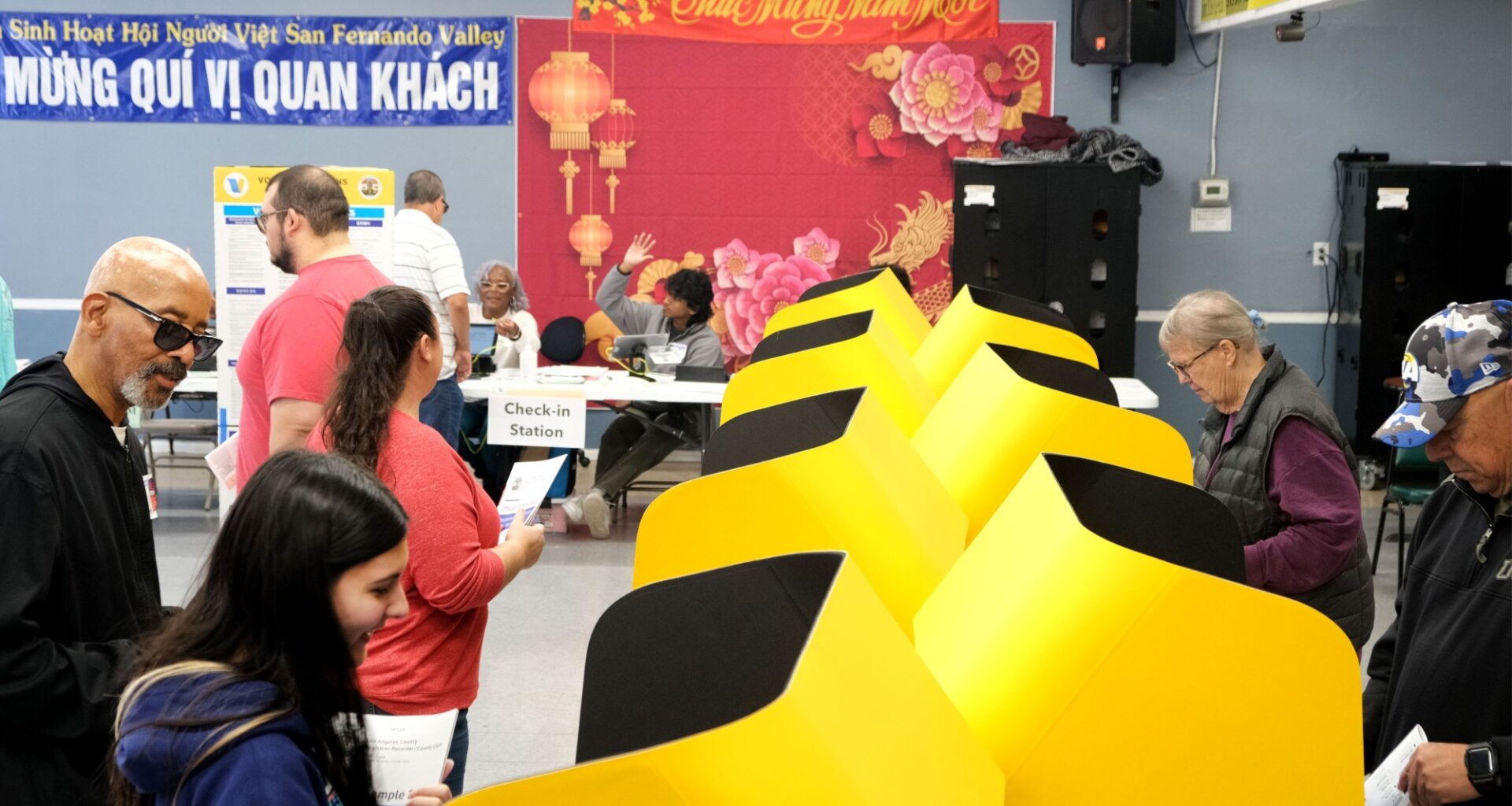
Thirty-six states have voter ID laws. Did you know that?
The opponents of Proposition 39, the ballot measure that would bring this sensible safeguard to California’s elections, don’t mention that voter ID is a routine and uneventful part of elections in the U.S. already. Instead, they cite ivory-tower academic studies, complaints about the Trump administration, and ridiculously scary claims that have been disproven by the experience of 36 other states.
The same people do not complain that we have to show an ID to board a commercial flight. They don’t complain about two-factor verification that demands to send a code to your phone or email before you can check your bank balance.
They might say, “But voting is a constitutional right.”
Yet you have a constitutional right to travel. The money in your bank account is your property, and your right to use and enjoy your property is also protected by the Constitution. That doesn’t mean airlines and banks have to take your word for it when you tell them who you are. For everyone’s protection, identification is routinely verified.
Elections in California authorize billions of dollars in taxes and debt and elect the people who spend the money, sometimes by very narrow margins. Preventing voter impersonation in elections is just as important as preventing passenger impersonation on a flight or customer impersonation at a bank.
Prevention is especially important in elections, because after the election, it’s too late.
It’s shockingly easy to impersonate a voter in California, undetected. Using voter data that’s available to all campaigns, a fraudster can walk into a vote center, give someone else’s name and address, and sign the pollbook. Signatures from in-person voters are not verified, as even the analysis of Proposition 39 by the Legislative Analyst acknowledges. The poll worker must give that person the voter’s ballot.
Once the ballot is cast and in the box, there’s no way to identify it, retrieve it or remove it from the vote tally.
What evidence exists that the fraud happened? None at all. If the real voter casts a ballot later, it will be rejected because “the voter already voted.” I vote in Los Angeles County, and in the last election, when I voted in person, the poll worker politely explained as she checked me in that she was canceling my mail ballot. If someone had impersonated me and I had later mailed in my ballot or voted provisionally, my genuine ballot would not have counted.
Does that ever happen? How would we know? In California, there’s no way to collect evidence or identify a suspect to prosecute. So what good is a research study that concludes there is “no evidence” of voter impersonation? It proves nothing. Voter impersonation must be prevented, because it can’t be detected.
About 16 million Californians voted in the November 2024 election, roughly 3 million in person and 13 million using a vote-by-mail ballot. That doesn’t have to change. Proposition 39 doesn’t prevent vote-by-mail ballots, it makes it easier to verify that the ballot really came from the registered voter.
Voters would write a four-digit number on the return ballot envelope that corresponds to the four-digit number in their voter registration record. Proposition 39 requires the state to issue a voter ID card with a unique number to any eligible voter who requests one. There’s no need to use a partial Social Security or driver’s license number. The measure also requires that the designated four-digit number must be available to voters “on request by phone or electronically,” anticipating that voters may not know what number they wrote down when they registered.
You know who else would not know the four-digit number? A fraudster trying to vote with other people’s ballots. Although signatures on mail ballot envelopes are matched to the signatures on file, there’s necessarily a lot of leeway to account for aging, illness, even bumpy writing surfaces. Fakes can get through.
Proposition 39 does not require voters to show up with their birth certificate or any other citizenship documents when they register or vote. It only requires state and county officials to use their “best efforts” to verify whether the citizenship attestations on voter registration records are accurate, and to issue annual reports on what percentage of each county’s voter rolls they have verified.
Currently, Californians attest that they are citizens, signing the voter registration form under penalty of perjury, but state and county officials never verify that the citizenship attestation is true.
California has made many changes to its election laws, implementing automatic “opt out” voter registration at the DMV and other offices, allowing third parties to return voters’ ballots, mailing a ballot to every registered voter, abolishing assigned precinct polling places in favor of countywide vote centers, installing unattended ballot drop boxes and accepting ballots for seven days after the polls close, even without a postmark as long as the voter wrote the date on the envelope by Election Day.
All of that will be more secure with voter ID, a simple verification that a ballot is genuinely cast by the registered voter.
Vote yes on Proposition 39.
Write Susan@SusanShelley.com and follow her on X @Susan_Shelley