
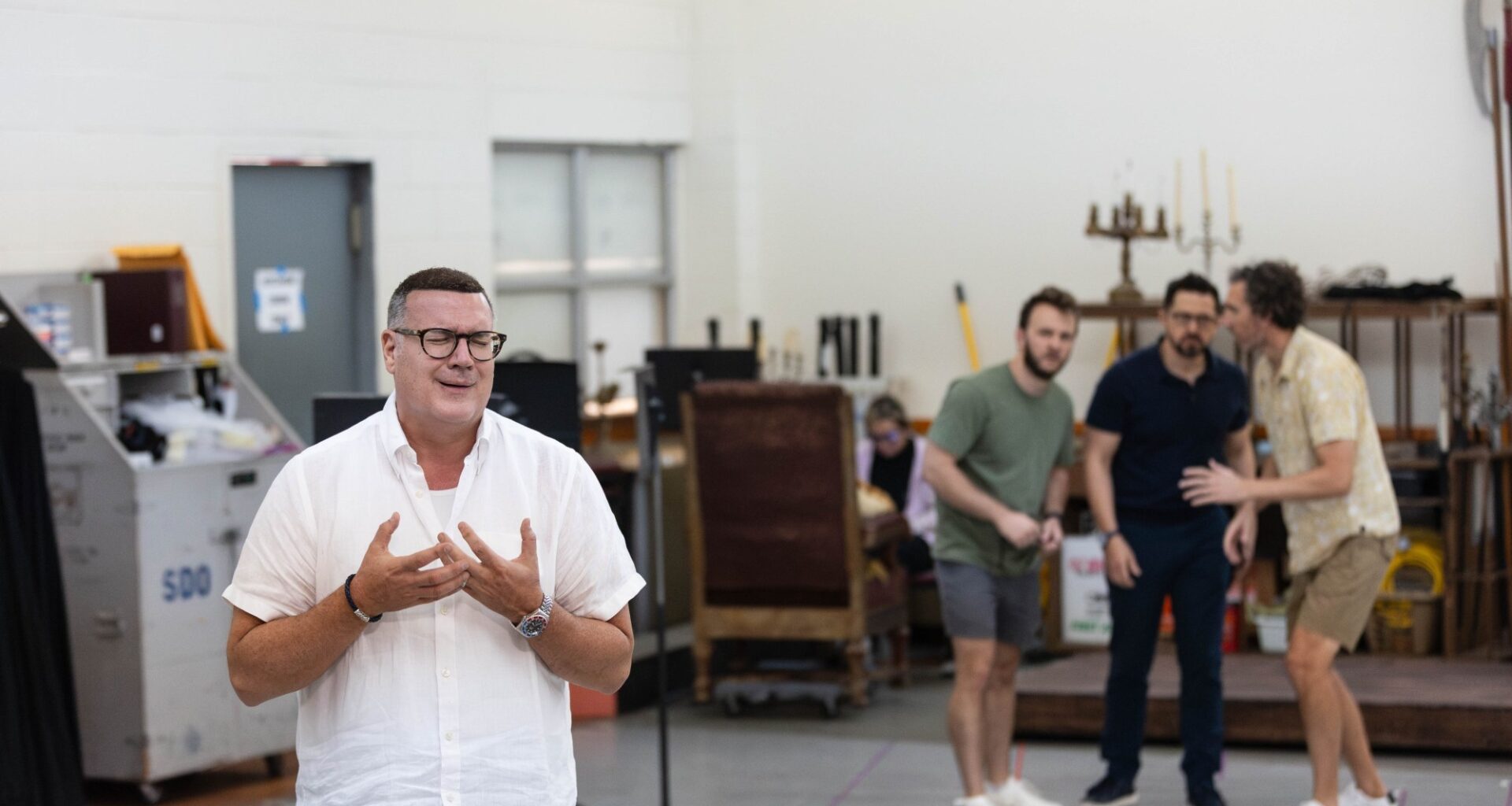
There’s something special about seeing an opera for the first time.
Christopher Mattaliano’s first opera was Giuseppe Verdi’s “Rigoletto,” performed in a summer festival at New York’s Metropolitan Opera in June 1973. A family friend bought Mattaliano a ticket for his 16th birthday, and he was so enthralled by the experience, he returned a few days later and saw world-famous heldentenor Jon Vickers sing Verdi’s “Otello.” After that, he was hooked for life.
“I loved the whole combination of a very intense story that was very dramatic, being told by people that sing, and an orchestra and a chorus,” said Mattalianio, who has run opera companies in Portland, Ore., for most of the past 25 years, and has been a freelance opera director since the mid-1980s.
This month, Mattaliano is directing “Rigoletto” for San Diego Opera. He hopes there are audience members at the San Diego Civic Theatre next weekend who — like him, 53 years ago — are being introduced to the art form with this Verdi classic.
“We need to get more people less afraid of opera, so I hope that this is one that brings some newcomers to the opera house, because it’s good one for your first,” he said. “It’s relatively short and there are tunes in this that everyone has heard. From spaghetti sauce commercials to the background music in movies, people will hear it and realize ‘I know this.’”
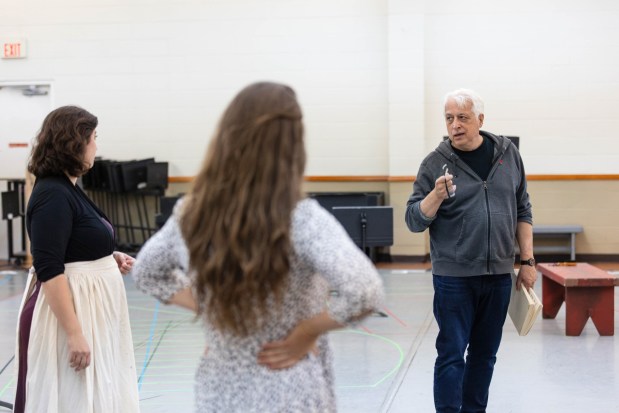 Director Christopher Mattaliano rehearses with performers for the upcoming San Diego Opera production of Rigoletto on Thursday, Oct. 8, 2026 in San Diego, CA. (Zoë Meyers / For The San Diego Union-Tribune)
Verdi and librettist Francesco Maria Piave based their 1851 opera “Rigoletto” on the Victor Hugo play “Le roi s’amuse.”
It’s the story of the hunchback jester Rigoletto in the 16th-century court of the Duke of Mantua. The heartless Duke regularly seduces the wives and daughters of his hapless courtiers, and Rigoletto compounds the men’s shame by humiliating them for laughs at court. When the men discover Rigoletto secretly has a virgin teenage daughter, Gilda, whom he keeps at home under lock and key, they take revenge by kidnapping Gilda and delivering her to the Duke’s bed, setting off a tragic chain of events.
The opera is best known for the Duke’s famous bar song “La donne è mobile” (“Women are changeable”) and for Gilda’s love aria to the Duke, “Caro nome” (“Sweet name”). It’s also famous for its surprise plot twists, in particular how far Gilda will go to protect the self-absorbed Duke.
The San Diego production is the 10th “Rigoletto” that Mattaliano has directed around the US. since 1988.
“I think it’s a great, great opera, of the five or 10 great operas that exist. And there’s a reason it’s so popular,” Mattaliano said. “This is Verdi’s 17th opera. This is the one that historians have said is the first great opera of Verdi’s maturity. His genius comes to full bloom.
“It’s intense and white hot. ‘Rigoletto’ is a touchstone in terms of his sense of theater, orchestration, character and pacing. It’s so well constructed, it just flies by. All of it comes together with one glorious melody after another,” he said.
Mattaliano describes “Rigoletto” as Shakespearean in style.
“When we meet Rigoletto his life is on a collision course. He has compartmentalized his life in keeping his work life separate from his home life. (But) he has a horrific job and he’s very good at being a horrific character. His tragic flaw is that he thinks he can keep these two things apart,” he said.
In San Diego, baritone Michael Chioldi will sing the role of Rigoletto, which Mattaliano calls devilishly difficult to sing.
“The biggest challenge for baritones who sing this role is finding that emotional balance, because you’re dealing with music of enormous intensity. But you’ve got to be able to sing. It’s always a balancing act of not letting your emotions get the best of you when you’re performing,” Mattaliano said.
San Diego Opera General Director and CEO David Bennett said he’s excited to have Chioldi bring his signature role to San Diego. “He has a big, wonderful voice and is a real technician and phenomenal performer.”
Making company debuts are soprano Madison Leonard as Gilda, Argentinian-American tenor José Simerilla Romero as the Duke, bass Peixin Chen as paid assassin Sparafucile and Tijuana-based mezzo-soprano Guadalupe Paz as Sparafucile’s sister, Maddalena. Also featured are Joel Balzun, Søren Pedersen, Adam Caughey, Travis Sherwood, Emily Weinberg, Maya Goell and Lisa Parente.
Like many women characters in 19th-century operas, Gilda falls in love with the wrong man and pays a price for it.
Mattaliano said these female characters — including Cio-Cio San in “Madama Butterfly” and Marguerite in “Faust” — take actions that most modern women would not, but their emotions are relatable. Mattaliano said he remembers telling his teenage daughter years ago that, sadly, predatory and insensitive men like the Duke still exist.
The San Diego Opera production will be traditional in style, featuring the company’s own sets and costumes, first featured in the 2019 “Rigoletto” staging. The opera will be sung in its original Italian with English and Spanish supertitles projected above the stage.
San Diego Opera Principal Conductor Yves Abel will lead the San Diego Symphony. Mattaliano and Ybel worked together last season on San Diego Opera’s “Pagliacci.” Mattaliano said he and Abel are in agreement on the greatness of “Rigoletto” and the jobs that they’re both fortunate to have.
“I was talking to Yves about rehearsals and how fortunate we are,” Mattaliano said. “In this short lifetime we get to hang out with Shakespeare and Mozart and Wagner and Puccini, and I get to sit and listen to Verdi all afternoon.”
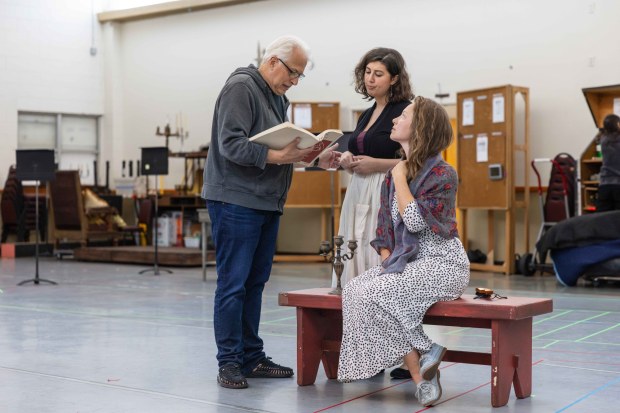 Director Christopher Mattaliano rehearses with Emily Weinberg, center, and Madison Leonard for San Diego Opera’s upcoming production of Verdi’s “Rigoletto.” (Zoë Meyers / For The San Diego Union-Tribune)
Audience building
“Rigoletto” arrives on the heels of San Diego Opera’s season-opening production of “Fellow Travelers” in July.
The 2016 opera by composer Gregory Spears and librettist Greg Pierce was based on Thomas Mallon’s 2007 novel about the “Lavender Scare,” the real-life purge of LGBTQ federal workers that began during the McCarthy era in the early 1950s.
Bennett said the sold-out weekend of shows at the Balboa Theatre were a success in many ways.
“I’m super proud of how it reached our audience, what it meant to our audience and the growth of new audience, and that it was timely and evocative,” he said.
First, it proved that audience members still have a strong appetite for chamber opera and want to see it come back as a regular season feature, Bennett said. Second, it helped the company in its efforts to build its LGBTQ audience and recruit first-time operagoers.
“We positioned it the weekend before the (San Diego) Pride Festival, where people come here from all over. That was part of the thinking about why to produce ‘Fellow Travelers.’ It definitely worked for us. Forty-two percent of the audience were first-time ticket buyers. We surpassed our ticket number goals and exceeded our revenue goal. Those are the kinds of metrics we want to see. The opportunity ahead of us is to find a way to make them come back.”
Bennett said that he has found that if ticket-buyer returns to San Diego Opera three times, they usually end up becoming subscribers. The crucial next step is retaining subscribers. Bennett said he now writes personal letters to first-time subscribers and they receive invitations to special behind-the-scenes events.
Bennett said chamber operas are a great way to recruit new subscribers because they’re more accessible and a little less intimidating for first-timers.
“For audiences used to seeing theater, chamber opera is a nice way to step into the world of opera,” Bennett said. “It doesn’t have all the perceived boundaries of opera, especially if it’s in English. It also helps if it’s in a smaller theater which is more intimate. If they know the story, and if it has immediacy, it’s a fabulous thing.”
Bennett said that “Fellow Travelers” proves that opera isn’t just about “German mythology or 18th century royalty.” Chamber opera is an ideal way to tell contemporary stories in a fresh way.
Although he can’t share what’s to come in future seasons, he did say that San Diego Opera is commissioning an immersive new work that will incorporate augmented reality, which is technology that overlays digital technology like images, designs and text, over physical spaces. Bennett said the company is also working on a chamber series called California Voices that will commission new works about California.
“Rigoletto” director Mattaliano is also a believer in the value of chamber opera. He served as general director of Portland Opera from 2003 to 2019. Then in 2022, he launched OrpheusPDX, a Portland company that each June presents two chamber operas, one from Mozart’s time or earlier and one by a living composer, in a 475-seat university campus theater. (PDX is the code for Portland’s airport).
Mattaliano said he has found that chamber operas do have an intimacy and immediacy that classical music and opera enthusiasts love. But rising production costs and recruiting donors is always a challenge. Orpheus PDX canceled its 2026 season after its two lead donors passed away in the past year. But the company is restructuring and will return in 2027.
Mattaliano said the statistics about opera visibility are sobering. One study he read said opera is on the radar of just 2.5 percent of the population.
“But If you can get that 2 percent in your theater,” Mattaliano said, “then you’ll be doing well.”
San Diego Opera presents ‘Rigoletto’
When: 7:30 p.m. Friday and Saturday; 2 p.m. Sunday, Oct. 25
Where: San Diego Civic Theatre, 1100 Third Ave., downtown
Tickets: $31 to $297
Online: sdopera.org