
By the time Amanda Vicars realized she forgot to buy her husband a gift, it was already his birthday. The busy nonprofit executive took out her phone and asked Muse, Meta’s new AI agent, to order flowers and chocolate and send them to their San Ramon home.
The gifts arrived late, she said — even though she’d paid extra for priority delivery. The bot, which she’d nicknamed Ren, suggested she call for a refund. “Can’t you do that?” Vicars recalled asking it. Obediently, Ren got her a $50 refund, something Vicars said she wouldn’t have bothered to do herself.
Vicars is part of a wave of Bay Area early adopters embracing AI agents — digital assistants previously used primarily for technical tasks — to manage their personal lives. This group seems to be especially giddy to have a new option to handle the drudgery of everyday life. They’re asking agents to order lunch, book flights, nab restaurant reservations, and clean up their email inboxes — gladly handing over access to personal data and power over basic decisions, all in the name of optimization.
While an AI chatbot can answer questions and put together presentations or generate an image, an agent will take action and work independently to accomplish a task. Using agents requires a leap of faith, giving them access to email accounts, payment data, and other sensitive information so they can move about in the world as if they are you.
 Mark Zuckerberg, wearing Meta Glasses, stands in front of the mascot for the company’s new personal AI agent, Muse. | Source: Andrej Sokolow/picture alliance via Getty Images
Many early adopters were already familiar with the technology, having used existing enterprise-facing agents for work. They got their feet wet with Anthropic’s Claude Code and Cursor, then moved to open-source AI agent platforms like OpenClaw and Hermes. In August, the crowd became enamored with Instinct, an agent that works with iMessage. The company was founded by a 23-year-old and is valued at $10 billion.
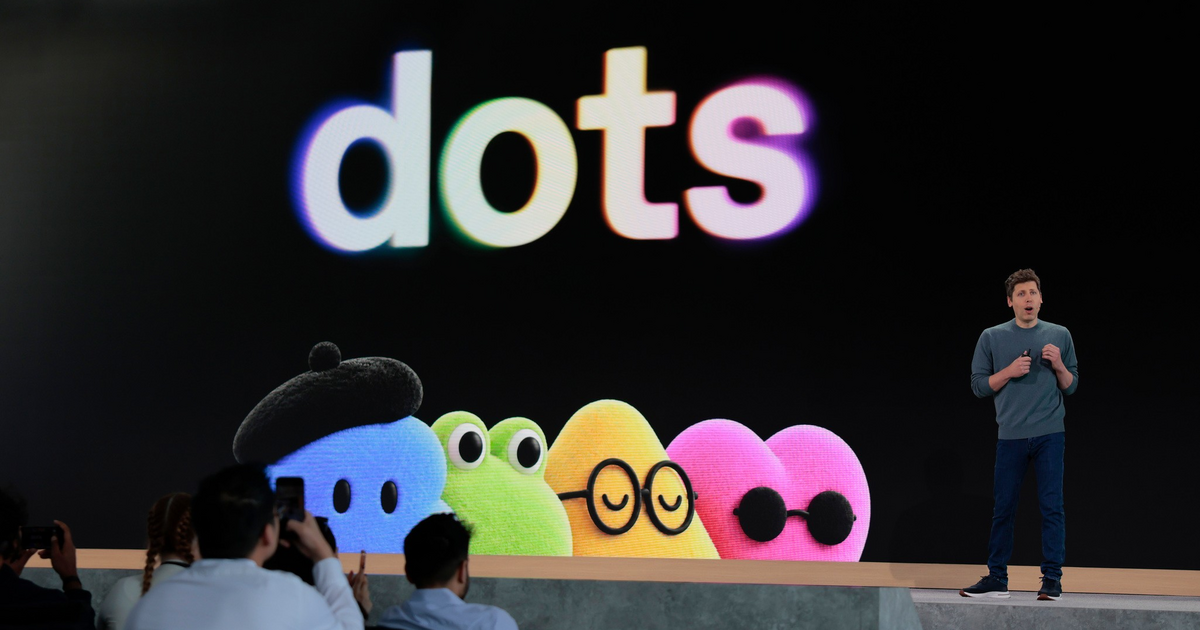
But the real mainstream breakthrough came in recent months, as major tech firms started rolling out AI agents for regular people — some for free, others with paid subscriptions. There’s SpaceXAI’s Grok Bot, Google’s Gemini Spark, Meta’s Muse, and OpenAI’s dots, each packaged as a personal assistant with a cutesy mascot. Muse became the No. 1 downloaded free app in the Apple App Store and Google Play store less than two weeks after its release (opens in new tab), surpassing ChatGPT.
On social media, excited users are trading workflows and suggestions for use cases, like having their agents come up with dinner ideas or screen nannies. At Dreamforce and Tech Week in San Francisco, agents were the topics of multiple discussions and the theme of after-parties, including a Great Gatsby-style “Agent Economy Gala,” complete with a humanoid robot and sparkling wine pyramid.
One San Francisco tech worker at The AI Conference at Pier 48 used an agent to scrape local Facebook Marketplace listings for a specific ice axe for his next hiking trip. Over the summer, members of FoundHer House, a local all-female hacker house, used an AI agent to coordinate and book a group getaway to Tahoe.
The people building the agents have been most vocal about how they’re using them.
Meta CEO Mark Zuckerberg said in an interview (opens in new tab) Monday that he uses his agent to coach him on mixed martial arts technique. Alexandr Wang, Meta’s 29-year-old chief AI officer, said he has his Muse agent — named “Oiler” — buy him obscure tea “from a random farm in Taiwan” on a weekly basis.
Haz Hubble, 28, founded a startup making a textable AI agent, Pally. He compared it to an executive assistant or “a smart university grad with a laptop.” Hubble estimated that he texts his agent 50 to 100 times daily to handle work and personal matters. Most recently, he gave Pally his health insurance information and told it to find him an in-network optometrist who could change his eyeglass lenses. The agent made calls to about 10 offices before booking him an appointment for the following day.
At The AI Conference, Jaclyn Konzelmann, director of product management at Google Labs, spoke to an overflowing room about her agents. She uses them mostly to help with parenting tasks and projects for her kids. Konzelmann had AI make a scary story podcast for her 5-year-old daughter, then put it on Spotify (opens in new tab).
She has no loyalty to a single AI agent and is experimenting with all of them. Konzelmann hasn’t given them full control of her data and made a separate email for the podcast’s Spotify account. But she looks forward to the day when she can trust her agent enough to hand over the keys.
“I think it is worth the time savings on the clicks,” she told The Standard. “There’s safe ways to do it without giving over your full credit card, and that’s where I need to play around a little bit more.”
Not everyone at The AI Conference was sold on the idea of handing their logins to the bots. “Why do you need access to all of my information?” said Sarika, an Atlanta-based product manager who declined to share her last name.
“I connected it to my email, and all of a sudden it knew everything.”
Amanda Vicars, nonprofit executive
There have already been instances of consumer agents gone awry. One user on X (opens in new tab), Shane Mac, CEO of XMTP Labs, said his Grok Bot AI agent posted his bank balance to his company’s Slack without his permission. YouTuber Matt Robb posted (opens in new tab) about his Muse agent mishandling a Facebook Marketplace transaction and giving his address to a stranger.
Jennifer King, a privacy and data policy fellow at the Stanford University Institute for Human-Centered Artificial Intelligence, is arguably one of the few people who reads the privacy policy pop-up before using a new technology.
“It’s my job,” she said.
She’s not using any of the AI agents because she hasn’t seen a use case that would make her life easier, the way the tech companies are promising. King advises people to be cautious if they use an AI agent and to not assume that their data will be secure.
“I am really concerned about the access to data that agents need, and so that trade-off for me right now is just too great,” she said. “I don’t see a gain if I have to give something unfettered access.”
Vicars is aware of how much data her agent can access. “I connected it to my email, and all of a sudden it knew everything,” she said. But when asked about privacy, she said, “Oh, I don’t care about it.”
Daniel Tian, CEO of Photon, recognizes the security concerns associated with AI agents and says they will need to be addressed for the bots to reach mass adoption. Tian, 22, is building a startup that connects AI agents to iMessage and WhatsApp for easy texting with bots.
He used an agent to buy sought-after tickets for “The Odyssey” for himself and his girlfriend. Tian told the agent what days and times he was available and set it loose to hunt for the tickets. And yes, it has his credit card on file.
“I give most of the access, to be honest. I’m fine,” he said. “I’m part of the pioneer group. We’re the ones that might be sacrificing some of our data privacy and stuff in exchange for pushing the technology forward.”