
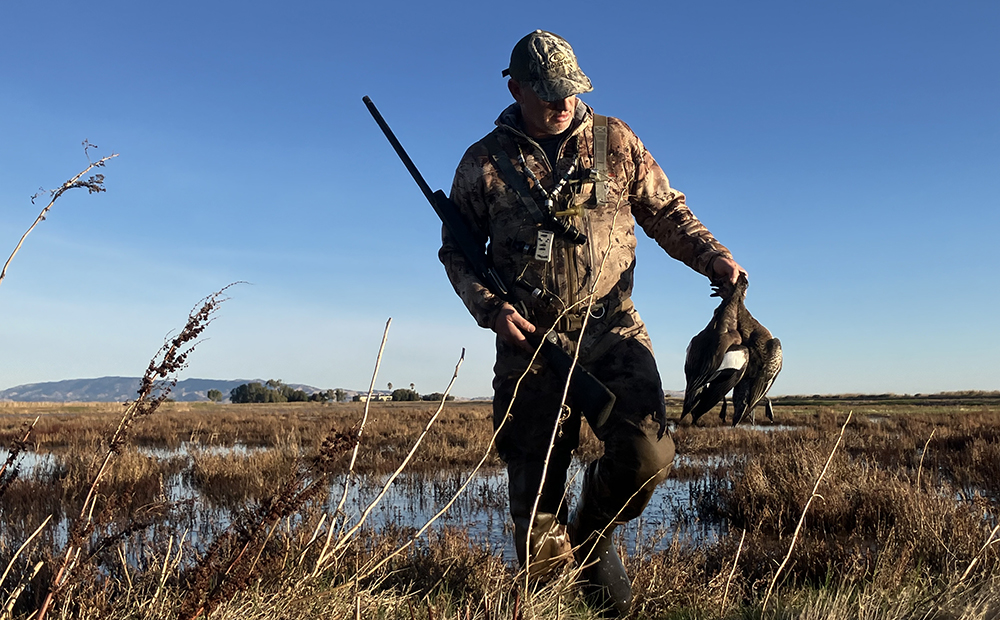
It’s a four-month drama that plays out across the Pacific Flyway each fall and winter.
California’s 2026-27 waterfowl hunting season begins Saturday, Oct. 24, 2026, in most zones. Duck and goose hunters will watch it unfold from their marsh seats, layout blinds, duck boats and other hides among the wetlands, flooded fields, coastal edges and watery habitat frequented by wintering waterfowl.
The plot twists are many and largely unknown: When will the rice get harvested? When will the cold weather — and the northern birds — arrive? When will our duck club get water? Will any season-changing refuge draws materialize? How will my new dog do? Will there be teal early or big ducks late? Any storm days in the forecast? What’s El Niño going to do?
Many of these questions are beyond scientific scrutiny. California Department of Fish and Wildlife (CDFW) biologists say that wetland conditions look favorable early and waterfowl hunters can expect a strong start to the season.
“We had abundant spring rains along with carryover water late last year that created favorable habitat conditions for nesting ducks and our managed wetlands,” said CDFW Waterfowl Program Biologist Melanie Weaver. “These local birds make up the bulk of our harvest early until the wintering population arrives later in the season.”
Detailed information about specific opening and closing dates, daily bag and possession limits can be found in the 2026-27 California Waterfowl, Upland Game, and Public Use of Department Lands Regulations booklet.
Public hunting access is available at more than two dozen national wildlife refuges, wildlife areas and ecological reserves. Information regarding access and reservation applications for these public hunting areas is available at CDFW’s 2026 Waterfowl Hunting Newsletter. Hunters are encouraged to review area-specific regulations and plan ahead as licenses, validations and passes must be purchased in advance. Updates about wildlife area and refuge closures will be posted to CDFW’s Emergency Closures web page.
Licenses, validations and passes can be purchased at select CDFW License Sales Offices, online through CDFW’s Online License Sales and Services, in-person at a license agent or through telephone license sales at (800) 565-1458.
Hunters should take precautions when handling harvested birds and cleaning equipment as Highly Pathogenic Avian Influenza H5N1 continues to circulate among wild waterbirds and typically re-emerges during fall migration. While the risk to humans remains low, hunters are still encouraged to follow safety tips and review information related to avian influenza. Importantly, dress wild game in a well-ventilated area and away from chickens and other pet birds. Do not feed dogs or other animals raw meat or organs from harvested waterfowl.
CDFW is also asking waterfowl hunters to help prevent the spread of invasive golden mussels and protect the waters they like to hunt. The most common way that invasive mussels are unintentionally moved between waterbodies is by hitchhiking on watercraft and equipment — even mud and debris on and within watercraft or equipment can lead to the spread of invasive mussels. Keep the waters you enjoy safe and always do the following:
###
Media Contacts:
Melanie Weaver, CDFW Waterfowl Coordinator
Krysten Kellum, CDFW Communications, (916) 825-7120