
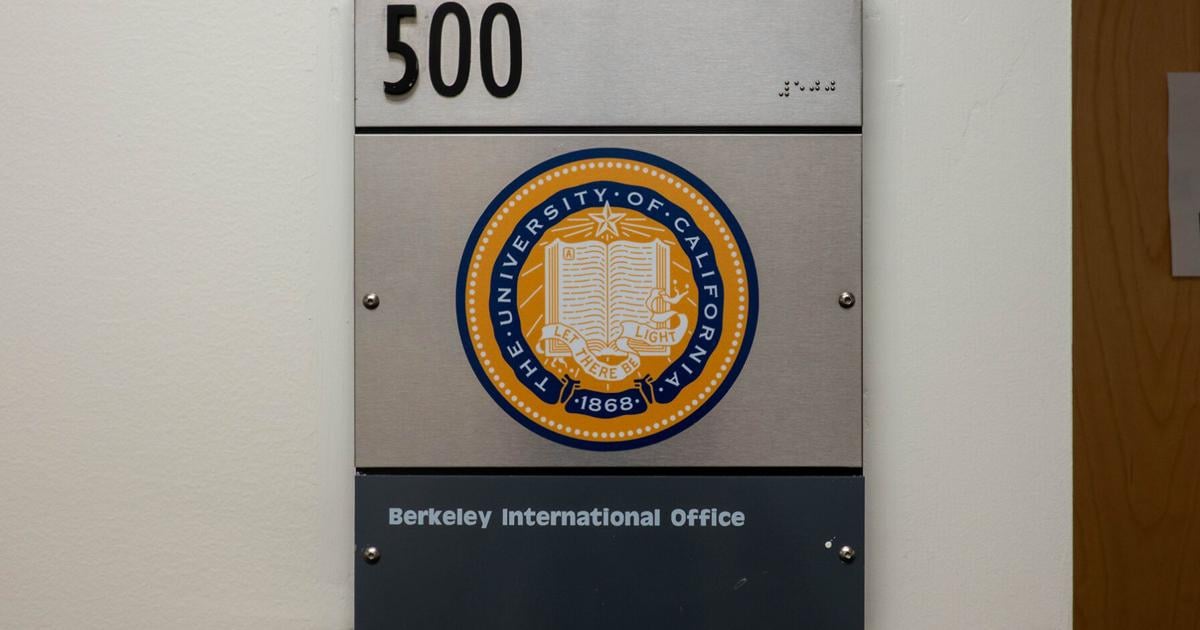
After several higher education associations sued U.S. Immigration and Customs Enforcement for sending threatening letters restricting work authorizations for international students, UC Berkeley student representatives are questioning whether the UC system is doing enough for international students.
After two ICE memos, campus indefinitely suspended Course Credit Curricular Practical Training work authorizations for international students Aug. 26.
The Association of American Universities, Presidents’ Alliance on Higher Education and other parties filed a lawsuit against ICE and the Department of Homeland Security on Oct. 5.
Eight UC campuses are members of the Association of American Universities. However, the UC system is not a party to the suit.
The UC Office of the President did not directly answer whether or not it plans to join the suit.
“Especially West Coast schools that have many, many international students, they should really push harsher on the CPT rule by joining the lawsuit,” said East Asian and International Students’ Community-endorsed ASUC Senator Sandra Ding. “They’ve only (responded) by releasing an announcement, like a campus-wide message. That’s all they have done.”
The lawsuit argues that the ICE memos are legally flawed for numerous reasons. First, they were announced without providing opportunities for public comment. Second, they could make school officials personally liable for following what had been longstanding policy. Third, the memos “needlessly” disrupted students’ internship and work plans.
The plaintiffs are requesting a preliminary injunction from the court, which would immediately halt ICE’s interpretation of CPT regulations from applying to universities, students and employees who are parties to the lawsuit. UC Berkeley School of Law lecturer Stephen Rosenbaum believes this is the “most effective” way to challenge the ICE memos.
“That’s why I’m also happy about the CPT lawsuit because finally there are schools that are willing to advocate and also be in the forefront, instead of just taking the language and trying our best to interpret it 180 ways,” Ding said.
According to a presentation by UC San Diego’s International Services and Engagement Office, its decision to pause CPT application processing was done “in coordination with all UC campuses.”
Nevertheless, UCOP told Rayne Xue, the UC Student Association International Student Appointed Officer, that adjusting campus policies to be more compliant with the ICE memos and allow CPT application processing to restart was “out of their jurisdiction.” According to Xue, UCOP encouraged student leaders to keep lobbying academic departments on their own campuses.
At UC Berkeley and UCLA, the processing of CPT applications is still indefinitely paused. According to UC Riverside spokesperson John Warren, UC Riverside resumed processing CPT on Oct. 1 “for students in programs that require an internship and graduate students who require opportunities to finish their thesis or dissertation.”
“As a publicly funded university, UCR is required to comply with federal immigration law,” Warren said in an email.
Ding spoke to Sabrina Agarwal, acting dean of undergraduate studies for the College of Letters and Science, about alternative pathways for international students to receive broader CPT authorizations. According to Ding, Agarwal said arrangements with academic departments depend on the number of international students who have previously received CPT authorizations.
Ding said she has been discussing such arrangements with department chairs, including one who told her that changes to academic tracks to support international students’ access to CPT are “problematic” and should instead be “driven by the academic mission.”
Ding noted that the UC system has sued DHS before, specifically over its 2017 attempt to terminate the Deferred Action for Childhood Arrivals program. UC Student Association Government Relations Chair Duke Dela Rosa said the UC system submitted a comment in the lawsuit that successfully postponed a DHS rule limiting international student stays to four years from going into effect.
Referring to the 2017 DACA lawsuit, Ding said, “I believe (the UC Board of Regents) have the power to do the same for international students, but they are just not doing that yet.”
Rosenbaum cautioned that, even if a federal district judge sides with the plaintiffs in the CPT lawsuit, the decision might not be “long-lasting.” He noted that any lower court ruling could get overturned in an appeals decision to a higher court, including the Supreme Court.
As a long-term solution, Dela Rosa and Xue call on the UC system’s Federal Government Relations team to push California representatives in Congress to codify protections for international students into federal immigration law.
“Today, they’re throwing a hundred thousand dollars on (Optional Practical Training) processing. The other day, they’ll throw something out on CPT, and the other day they’ll throw something at H-1B and the next day they come back again about Duration of Status,” Ding said.