
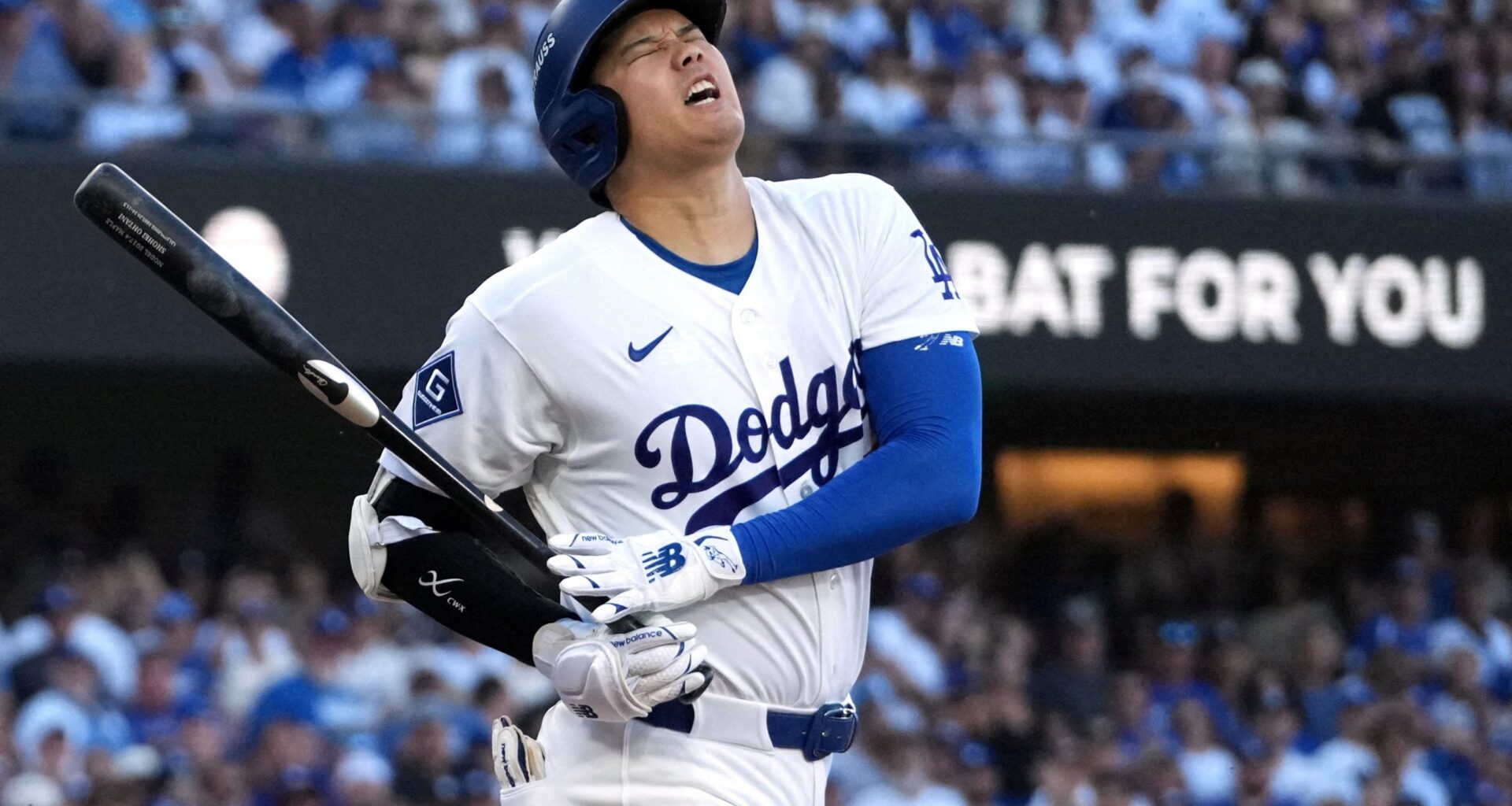
Image credit: IMAGN IMAGES via Reuters Connect
Los Angeles, the city known for casting calls, had their role secured long before the season began, no auditions necessary. The big-money market team, the team Ruining Baseball™. Blinding payroll, massive front office, mega superstars, all marching confidently towards a three-pete.
But any good work of Hollywood is going to let the actors inhabit the role a little. The talent can help steer a character, help remake a script. From Robert De Niro adlibbing in the mirror, to Harrison Ford responding to a love confession with, “I know,” the Dodgers were never going to fill the role to spec. From Kiké to Shohei, Freddie to Yamamoto, it is simply too likeable a squad to be cast as the villain.
Still, the owners needed a blockbuster bag guy, and the Dodgers were the biggest budget in town. Projected by PECOTA to claim the best record in baseball, they were the best possible foil for the cadre of billionaires trying to sell the wild, paradoxical idea that money was ruining the sport. Instead, the best record in baseball went to a small-market team with a small-market team’s budget. And that same team, the Milwaukee Brewers, defeated the “villain” before the third act, dismissed in an unlikely four-game sweep.
The Sample Size MacGuffin
Can we take away meaningful, deep insights from the National League Championship Series? Does the NLCS tell us more than, say, 162 games played before it?
The sports fan in us all, craving narrative and understanding from a chaotic sport and world, says yes. Of course! The offense cratered, the pitching floundered, and a team of phenoms didn’t phenominate. But the internal analyst knows: It’s just four games.
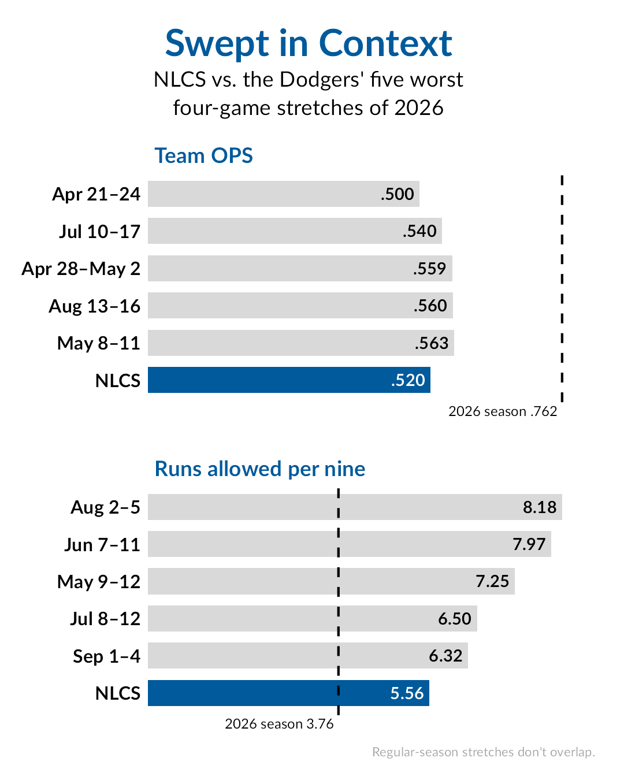
Yes, the .520 OPS they mustered was gruesome. But they had similar stretches during the 100-win regular season—and that was against average teams, playing average strategies. In an April stretch of games against the lowly San Francisco Giants, plus a game against the Cubs, the Dodgers averaged just a .500 OPS, scoring only two runs per game.
Pitching-wise and defensively, they had many stretches where their runs allowed per nine innings (RA9) well eclipsed the 5.56 RA9 they posted against Milwaukee. These things happen. And in playoff games, against the best teams deploying their best tricks and leaning heavily on their best talent, they can happen even more.
Part of the reason the playoffs are such a roulette is that baseball requires large samples for any sort of predictability or consistency. Another part is that teams cannot choose who will be healthy, who will be hot. And for the Dodgers, they just weren’t healthy enough. They just weren’t hot enough.
The story goes on for the rest of the teams, but Los Angeles won’t be back until the credits roll.
Playoff baseball is like that. It felt like destiny, until it isn’t. Until it all falls apart. A hundred wins in the regular season isn’t admissible currency in the post-season. And instead of a third act finale, the screen goes blank, and the story is over. It just ends.
From Here, to Anywhere