
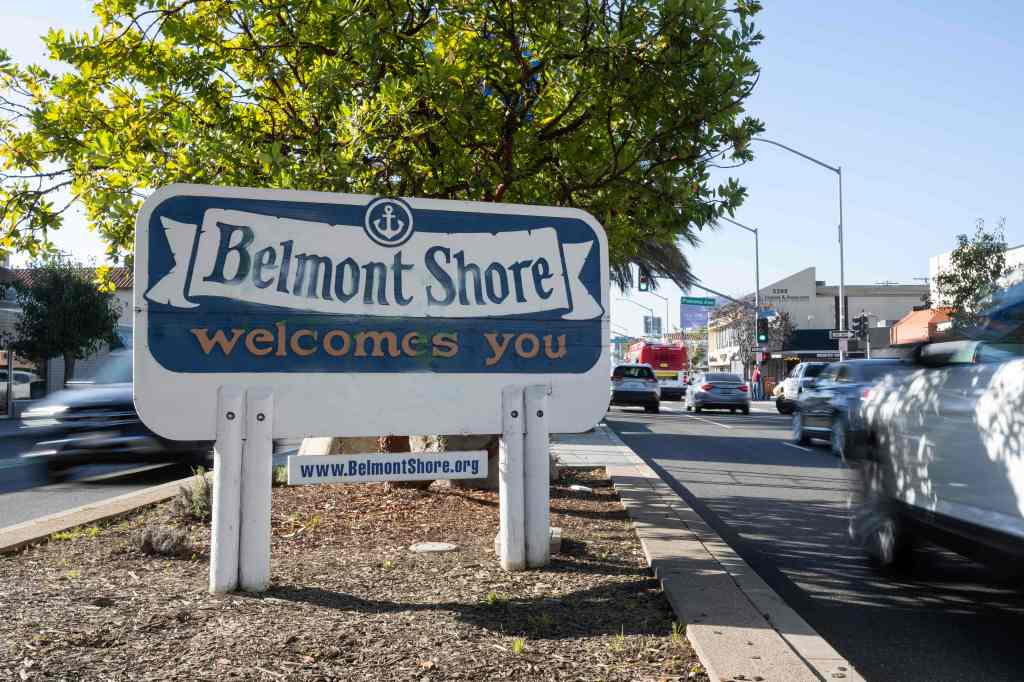
Long Beach will study a proposed late-night public safety plan for Belmont Shore after councilmembers and residents expressed concerns about the popular nightlife area being unruly — while also researching ways to bring additional safety measures to the rest of the city.
The City Council and community members shared their perspectives and opinions about how to best address public safety concerns, such as gun violence and homicides on Tuesday, Nov. 11.
The spotlight on the need for a late-night public safety plan for Belmont Shore home to Second Street, a dining-and-entertainment hot spot — was brought forward by Councilmember Kristina Duggan, who represents the area. The proposed plan includes a midnight curfew for bars in the area and increased police presence, among other safety measures.
The council ultimately voted unanimously to have staffers return in 45 days with an update on Belmont Shore’s proposed plan, and in 90 days with a citywide analysis. While Duggan expressed disappointment over not keeping a focus on Belmont Shore, she agreed to move forward with the additional analysis for citywide concerns proposed by others on the dais.
Public safety in Belmont Shore caught the public’s eye last month when an altercation erupted at a local bar and continued outside in the 100 block of La Verne Avenue, which ended in the fatal shooting of 32-year-old Jeremy Anthony Spears.
It’s not the only violent crime that’s happened in the area in recent years. Last year, for example, two people were killed in Belmont Shore over an 11-day period: One man was fatally stabbed during a fight outside a Belmont Shore bar in February 2024, and days later, another person was stabbed during a fight at Dave’s Hot Chicken.
Besides those violent incidents, Duggan said, there have been ongoing public nusiance and safety issues in Belmont Shore for years — a major problem for her constituents in the Third District.
“The dynamics of the area have changed significantly since the COVID-19 pandemic,” Duggan wrote in the staff report for her safety proposal. “What used to be a familiar community hub and casual social destination has become more of a regional nightlife and entertainment center.”
That shift in dynamics, the report added, has brought visitors to the neighborhood who “often act in ways they wouldn’t act in their own neighborhoods,” ranging from public drinking and littering to fighting and — in the worst instances – violent altercations resulting in the deaths of Long Beach residents.
“We need a consistent police presence; I think it’s just what it comes down to, especially when bars close, parking lots need to be patrolled,” said Nicky Loizides, owner of George’s Greek Cafe on Second Street. “We want to revive our neighborhoods in our city. As business owners and residents, we’re ready to do whatever it takes to make our city what it once was, but we need your help to make these changes real and permanent.”
Duggan’s proposal asked the city to explore the possibility of implementing a one-year moratorium on alcohol-serving bars and other establishments after midnight — since, according to a city staff report, most of the violent crimes in Belmont Shore recently have occured after the clock struck 12.
But since it would take about 18 months for the city to implement that kind of moratorium, bar owners in Belmont Shore have agreed to self-impose the midnight curfew for the next month to allow Long Beach time to find a longer-term solution, city officials said during Tuesday night’s council meeting.
“City staff was able to explain that a one-year moratorium would take months to properly structure and implement. This is a very heavy lift for a temporary solution. I’ve said from the beginning that I’m looking for permanent solutions,” Duggan said Tuesday. “The bar owners and operators all agreed to voluntarily close at midnight for 30 days while we work together with residents, businesses and city staff to develop these permanent operating requirements for businesses selling alcohol that stay open late.”
The plan also suggests looking at the feasibility of and cost associated with reestablishing Long Beach Police Department walking beats during high-traffic hours and reactivating the police sub-station in the area.
“These patrols and this sub-station once served as a visible and effective deterrent to crime,” the staff report said, “offering a sense of safety for residents and visitors while providing officers with closer engagement with residents and businesses.”
But they were discontinued, she added — and never restored.
As part of the LBPD East Division — which covers nearly half the city, including Belmont Shore — current police staffing levels are not sufficient to manage a changing and increasingly regional bar scene operating until 2 a.m., according to the staff report. The Long Beach Police Department has been struggling with staffing levels — a citywide issue — in recent years.
“I (feel) compelled to add that the police officers we have in our department for nearly two years have been working mandatory overtime in patrol to maintain the level of service that’s expected by our community,” police Chief Wally Hebeish said during the meeting, “and they do it willingly, and I applaud them for that.”
There has also been a reduction in crime both citywide and in Belmont Shore over the past year, Hebeish said — though that’s just one way the department measures a community’s public safety needs.
“Our murders are down nearly 30% citywide. Our shootings are down 35% citywide,” the chief said. “That includes the East Division as well. In nearly all crime categories in the Belmont Shore area, we’ve seen a reduction.
“I say that with the understanding that that’s not the only analysis for us,” Hebeish added. “We also talk to our councilmembers, attend community forums, talk to our community to get feedback, to determine how best to allocate our resources, and we’ll continue to do that.”
Still, the city has worked to address ongoing safety concerns in the area, according to officials, by adding patrols — including bike patrols when possible. They’ve also met with bar owners to review their operations and discuss ways to strengthen safety practices.
While these steps have helped, officials said, there are still ongoing issues.
“Hundreds of residents have contacted my office with detailed accounts of late-night disturbances, public intoxication and unsafe conditions,” Duggan’s wrote in the staff report. “This feedback makes it clear that the situation in Belmont Shore is not limited to a few isolated incidents.”
Duggan also asked the city to look into implementing additional DUI enforcement in Belmont Shore, aligned with bar closing times, in hopes of deterring impaired driving, alongside targeted late-night enforcement of nuisance issues, including public drinking and unauthorized vendor operations, the report said.
During public comment, the majority of speakers expressed support for the Belmont Shore late-night public safety plan. Residents spoke about the changed environment in the area, issues with regulations on alcohol, the importance of public safety and the need for increased police presence along the corridor.
“People who own these bars and own the property need to start being held accountable for what’s going on in their bars,” said Belmont Shore resident Steve Honig. “We want action. We want something to change.”
Other business owners along the Second Street and Belmont Shore corridor – as well as representatives from the Long Beach Area Chamber of Commerce and Belmont Shore Business Association – also publicly backed the plan and the need for more enforcement.
Several owners and employees of the four bars – Legends Restaurant & Sports Bar, Dogz Bar & Grill, Panama Joe’s and Shannon’s Bayshore Saloon – were also in the audience on Tuesday to show their support.
“We support the city’s safety measures that have been presented,” said John Evan, who spoke on behalf of the businesses. “Belmont Shore shines bright when we work together.”
But after some pushback from other members of the City Council, Duggan agreed to consider how the findings from her safety plan for Belmont Shore could be applied all across the city.
Mayor Rex Richardson, during the meeting, said there seems to be a “natural tension” between the Belmont Shore business corridor and people who live near it, acknowledging there needs to be a balance. Richardson said he supported the proposal because Duggan, businesses and the Belmont Shore community are working together to find solutions.
While acknowledging that Belmont Shore is a special place in Long Beach, Eighth District Councilmember Tunua Thrash-Ntuk also expressed the need to dive into these public safety concerns in every part of the city.
“The anxiety that a family might feel in Belmont Shore is the same anxiety that is felt by a family in the north part of our city, in West Long Beach, or in the First and Second districts,” Thrash-Ntuk said. “Our response must be comprehensive.
“It must be grounded in data,” Thrash-Ntuk added. “It also must be grounded in equity.”
Thrash-Ntuk asked city staffers to return within 90 days with a report about a citywide, data-driven hot spot analysis of violent crime incidents, police calls and gun violence; an extension of hot spots to include smoke shops and liquor stores; an equitable citywide deployment strategy for resources like LBPD walking beats, based on the data; and enhanced enforcement of nuisance issued citywide, not only late at night, but also during peak times in other parts of the city.
Councilmembers Suely Saro and Mary Zendejas supported those suggestions, while also acknowledging the specific concerns in Belmont Shore.
The mayor suggested that the council agree to do both analyses — a suggestion initially denied by Duggan, who wanted the focus of her item to remain on Belmont Shore and her district.
Eventually, though, the councilmember agreed to accept the amendment to her motion.
“Well, I have to say, I’m disappointed,” Duggan said. “But we’re going to collaborate on this and have a report back. I work for the good of the city, as well as my district.”