
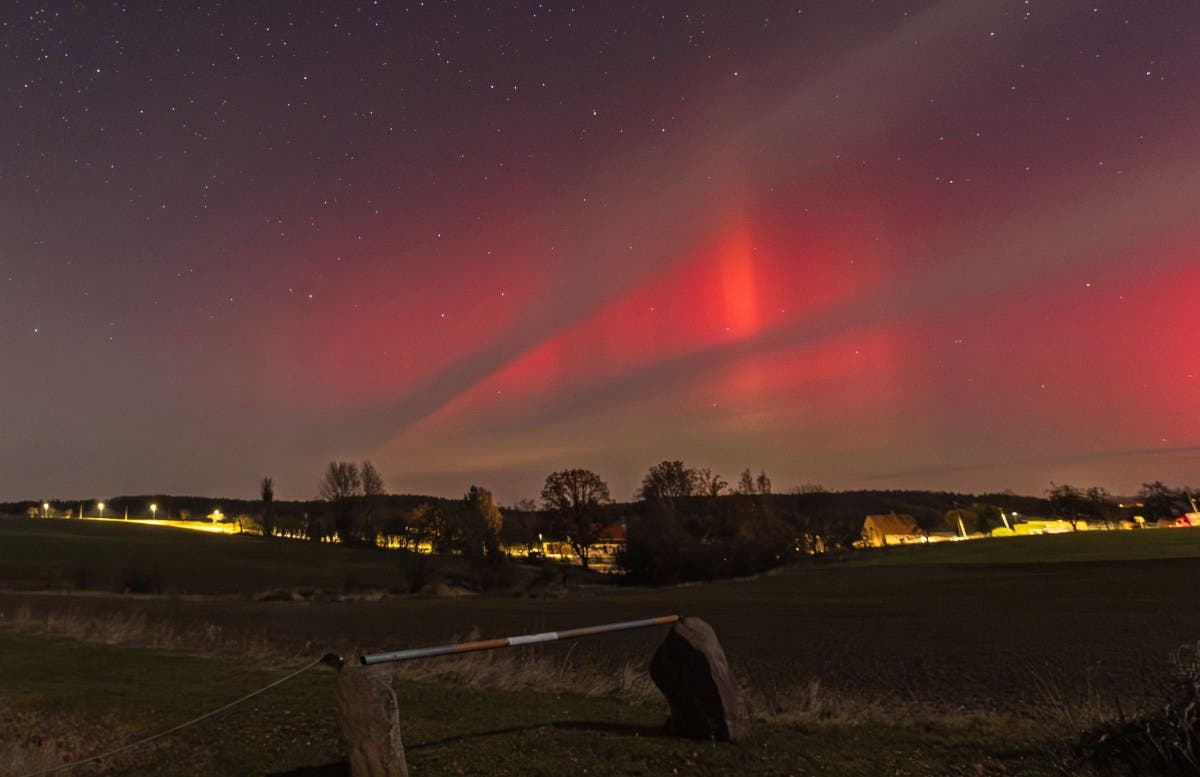
Aurora forecasts span a wide range of time scales, each shaped by distinct solar observations and space weather dynamics. The most precise predictions come from satellites stationed at the first Lagrange point (L1), located about 1.5 million kilometers sunward from Earth. These satellites monitor the solar wind and interplanetary magnetic field, enabling accurate aurora forecasts with a lead time of 15 to 45 minutes.
Medium-range forecasts—hours to days ahead—rely on detecting coronal holes and coronal mass ejections (CMEs) as they emerge from the sun. Instruments like solar coronagraphs and imagers such as NOAA’s SUVI help track these features, though predicting their speed, direction, and magnetic intensity remains challenging.
Longer-term forecasting hinges on solar rotation. Active regions and coronal holes can persist for months, reappearing every 27 days as the sun turns. If auroral activity occurred during a previous rotation, similar conditions may return, within a margin of a day or two.
On a broader scale, solar activity follows an 11-year cycle. During solar maximum, increased sunspot activity and frequent CMEs lead to heightened auroral displays. Even during solar minimum, high-speed solar wind from coronal holes can still trigger moderate geomagnetic storms and visible auroras.