
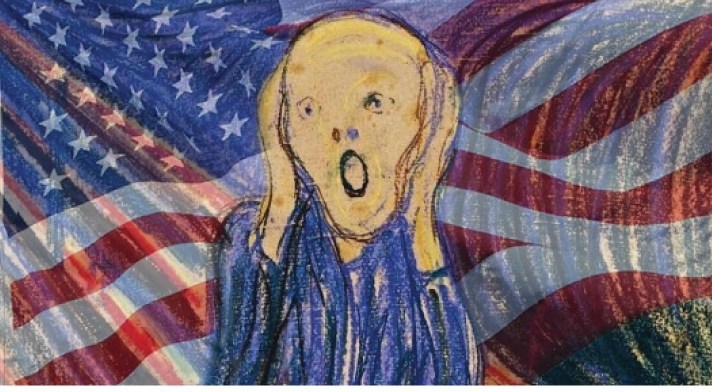
Fear factor
With Halloween and a election only days away, we’re looking at the findings of Chapman University’s annual survey of what scares us. You can find the full results here.
The survey
The goal of the Chapman University Survey of American Fears is to collect data annually on the fears, worries and concerns of Americans and how those fears are associated with other attitudes and behaviors. This is the 12th year of the survey conducted for Chapman. The 2026 survey was fielded by NORC using its AmeriSpeak probability-based panel designed to represent the U.S. household population. The survey was conducted online in English from April 7 through April 21, 2026, with 1,221 completed interviews and a margin of error of ±3.79%. Chapman Survey of American Fears (CSAF) asks a representative national sample of Americans about more than 79 fears and related behaviors.
The 2026 findings also show that fear of corrupt government officials remains the nation’s top fear for the 11th consecutive survey, with 61.1% of respondents reporting they are afraid or very afraid of government corruption. The fear of the United States becoming involved in another world war rose from No. 6 in 2025 to No. 2 this year, with 58% expressing that fear.
For the first time, researchers added several questions specifically examining fears surrounding artificial intelligence. Two AI-related concerns landed in the top 10: AI harming the political process ranked No. 3, at 51.9%; and AI hurting the economy ranked No. 7, at 49.7%.
“These findings make it clear that Americans are concerned not just about what AI might mean for their jobs, but about its potential impact on our political system and the economy,” said Christopher Bader, Ph.D., professor of sociology at Chapman University and a lead researcher on the survey.

2026 survey, 11-20:
11. Pollution of drinking water 46.5%
12. Russia using nuclear weapons 45.9%
13. Not having enough money for the future 45.9%
14 Cyber-terrorism, 45.7%
15. Corporate tracking of personal data 45.5%
16. Collapse of the electrical grid 45.5%
17. Widespread civil unrest 44.6%
18. High medical bills 44.1%
19. Artificial intelligence hurting the environment 43.2%
20. Pollution of oceans, rivers and lakes 42.9%
Bottom five:
75. Falling/tripping on uneven sidewalks 16%
76. Needles 15.6%
77. Strangers 15%
78. Whites no longer being the majority in the U.S. 14.4%
79. Technological change at work 12.7%
2025 notes:
For the second consecutive year, all fears in the Top 10 were reported by more than 50%. “This is something we saw for the first time in 2018, after a pretty rapid increase across the board from 2016,” said Chapman researcher Ed Day. “We were sorry to see it return.” Anticipating a frequently asked question, the survey team noted that fear of public speaking ranked No. 46 (33.7%), right before murder by a stranger (No. 47, 33.5%) and after a devastating hurricane (No. 45, 34.1%)
Homelessness
While Americans are frightened by many things and events, most are not fearful of tent camps or homeless people. They report low levels of fear of homeless tent camps (18.3%) and homeless people (11.9%). Surprisingly, respondents were more afraid of strangers (14.6%) than people experiencing homelessness, which represented the absolute bottom of the list of all fears reported in the survey.
There were some patterns regarding political affiliation. Among those reporting they were afraid or very afraid of homeless tent encampments, the majority were people identifying as conservatives, at 44%, with moderates at 29% and liberals at 22%.
Chapman University professors have a book available, “Fear Itself, The Causes and Consequences of Fear in America,” by Christopher D. Bader, Joseph O. Baker, L. Edward Day and Ann Gordon (NYU Press). The authors say persistent fear negatively affects decision-making abilities and causes anxiety, depression and poor physical health. Further, fear harms communities and society by eroding social trust and civic engagement. Yet politicians often effectively leverage fears to garner votes, and companies routinely market unnecessary products that promise protection from imagined or exaggerated harms.
Coping with fears
Drawing from decades of social science research, the Chapman research team offers several strategies for managing fear in healthy and productive ways.
These include:
— Limiting screen time and media exposure to minimize alarming content
— Facing fears through learning and preparation, which engage reason over instinct
— Building social connections, since isolation heightens fear while community reduces it
— Recognizing manipulation, whether in political rhetoric or consumer messaging, that exploits fear to influence behavior
“When we step back and understand what’s behind our fears, we can make better decisions, as individuals and as a society,” said Bader. “Fear can motivate us, but it shouldn’t mislead us. Our goal is to encourage thoughtful awareness, not alarm.”
“When we step back and understand what’s behind our fears, we can make better decisions, as individuals and as a society,” said Dr. Bader. “Fear can motivate us, but it shouldn’t mislead us. Our goal is to encourage thoughtful awareness, not alarm.”
Source: The Chapman University Survey of American Fears; Chapman’s Wilkinson College of Arts, Humanities and Social Sciences