
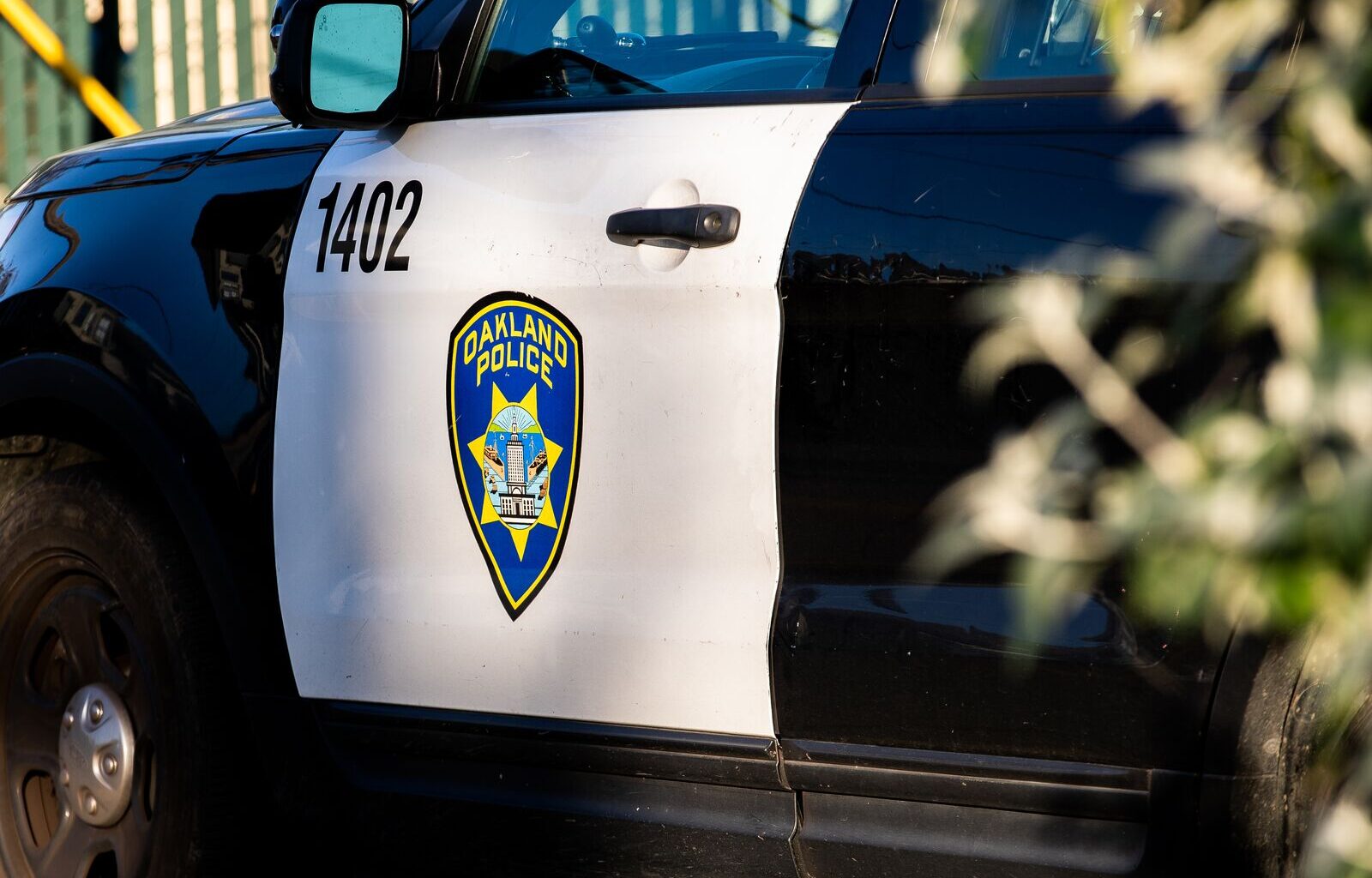
Gianni Robinson was driving northbound on I-880 in Oakland on Nov. 29, 2025, when, according to police records, she crashed into another vehicle that had stopped ahead of her. Killed in the collision was 31-year-old Anmol-Kiran Kaur Bassi, who had halted in a lane on the highway to help a motorist who had crashed his car, according to a CHP report.
Robinson was transported to Highland Hospital with injuries. A California Highway Patrol officer who took her statement wrote in a report that he noticed a strong odor of alcohol on her breath. The officer made Robinson take a sobriety test. They discovered her blood alcohol level was well over the legal limit, according to a CHP report. A passenger who had been riding with Robinson told the CHP that Robinson was drunk, according to police records.
Robinson was arrested and later charged with gross vehicular manslaughter while intoxicated and driving under the influence, according to court records. She has pleaded not guilty and has a pretrial hearing on Dec. 14.
Deputy Public defender Satch Slavin, who is assigned to represent Robinson, told The Oaklandside, “Our client is a young mother who is devastated by what happened. The evidence shows this collision occurred when she tried to avoid hitting a vehicle that was disabled and stopped in the fast lane, blocking traffic. Unfortunately, that part of the freeway has almost no shoulder at the center divide. The victim was standing in that shoulder when she was killed.”
When Bassi’s family got the news their loved one had been killed, they immediately started looking for answers, asking CHP for records of the crash, according to their attorney.
But it would take nearly six months before they were told about a potentially key piece of information: Robinson’s arrest by CHP was not her first run-in with law enforcement that night.
Roughly an hour before the deadly freeway crash, according to CHP reports and court records, Robinson and a friend had been driving in the Jack London District, on their way to the In-N-Out in Alameda, when their car got stuck on a railway track near Oak Street and 2nd Street. Robinson called 911.
OPD officers arrived, and a tow truck hauled Robinson’s car off the tracks, according to a CHP report. One of the OPD officers who helped free Robinson’s car allegedly “told her he knew she was intoxicated and she was lucky he was not arresting her for DUI,” according to a CHP report summarizing an interview with Robinson.
The OPD officer didn’t administer a field sobriety test or arrest Robinson, according to court records. Instead, he allegedly let her go.
The Bassi family learned about the OPD officer’s alleged decision to let Robinson go with a warning when a CHP officer called them on May 11, 2026.
On June 16, the family received additional records from CHP that revealed more details, including Robinson’s 911 call earlier that night, her alleged drinking, and how an Oakland police officer reportedly told her he knew she was intoxicated but wasn’t going to arrest her.
Oakland tried to block wrongful death lawsuit
When they learned of OPD’s possible involvement, the Bassi family wanted to file a legal claim against the city; they believed OPD was liable for allegedly allowing a suspected drunk driver to get back on the road.
However, by the time the Bassi family was ready to file their legal claim, they were already past the six-month deadline under state law. On June 9, about two weeks after the deadline, they filed an application with the city asking for permission to file late, and they attached a copy of their claim. Without being able to file a claim, they also potentially wouldn’t be able to file a lawsuit in state court.
Oakland refused to accept the paperwork, arguing that the deadline had passed.
In response, the Bassis asked a state judge to let them sue the city, arguing that they had no way of knowing an OPD officer may have had a chance to detain Robinson earlier that night.
In court filings, Oakland’s city attorney called the fatal crash “tragic” and extended condolences to the Bassis. But the city attorney argued the Bassis shouldn’t be allowed to file suit. To be granted the right to file a late claim, the Bassi family needed to prove they thoroughly investigated whether anyone was potentially liable for their daughter’s death. According to the city, the Bassi family did not do this.
Within days of the accident, “CHP was aware that OPD had helped move Robinson’s car off railroad tracks earlier in the night,” City Attorney Ryan Richardson wrote in a court filing. Richardson’s office cites a CHP report where a CHP officer spoke with an Oakland police officer about the crash on December 12, 2025. The CHP summarized this interaction in a report a month later, according to the city attorney.
Monica Burneikis, an attorney who represents the Bassi family, stated in a response motion that the records documenting CHP’s communications with OPD were part of the criminal investigation of Robinson. The Bassis didn’t obtain this report until a few days after the DA charged Robinson on June 9.
Burneikis also argued that the records show CHP had to make repeated written requests to OPD over six weeks to learn about OPD’s interaction with Robinson. “If the information was that hard for CHP to pry out of the City, it was not ‘readily available’ to two grieving parents,” Burneikis wrote in a court brief on Oct. 5.
Oakland’s city attorney declined an interview request for this story and referred The Oaklandside to the court filings in the case.
Last week, Alameda County Superior Court Judge Thomas Eagle Weathers issued a decision allowing the Bassi family to pursue their lawsuit against Oakland.
Burneikis said in her experience it’s incredibly rare for courts to grant late claim applications.
According to Burneikis, the record clearly shows that the Bassi family was in near-constant contact with CHP, trying to make sense of what happened to their daughter and to understand what criminal repercussions Robinson was going to face.
This ordeal has been “Nothing short of a nightmare” for the Bassi family, Burneikis said.
“Anmol was a 31-year-old, she was a paramedic, she had a good job, and she had her entire life ahead of her,” Burneikis said. She said that Bassi had stopped on the road the night of the crash to help a motorist who had lost control of their vehicle.
The family will likely file their lawsuit within the next 30 days, Burneikis added.
OPD officer is “pending termination,” department says
The Oakland Police Department told us that the officer who allegedly suspected Robinson was intoxicated but still allowed her to go free that night was placed on administrative leave, stripped of his police powers, and is pending termination. OPD declined to say when they took these steps.
According to the Bassi family’s legal claim, once OPD responded to the train tracks and helped Robinson free her car, they “assumed a duty of care to the public requiring that they exercise reasonable care in discharging that response.” In this case, they argued, reasonable care required them to administer a field sobriety test, potentially impound Robinson’s vehicle, summon a sober driver, issue a citation, or detain Robinson for further evaluation. The claim adds that by not doing this, “OPD officers affirmatively returned a visibly impaired driver to the roadway.”
According to a CHP report, a highway patrol officer interviewed an OPD officer about Robinson’s statements shortly after the November 29 crash. The OPD officer, who is only identified in the report by their first initial and last name, said he was the primary police officer at the incident and that he did not observe any objective signs of alcohol intoxication during his interaction with Robinson. Robinson had watery eyes, the OPD officer said, which he thought was consistent with “emotional crying.” He watched the car leave the scene but did not recall who was driving.
CHP asked OPD for body camera footage of the incident at the train tracks, and according to the CHP report, the department said there was none.
A CHP officer who visited Robinson in the hospital after the accident with Bassi wrote that he “immediately detected the strong odor of an alcoholic beverage emitting from her breath and person,” that her eyes were “red and watery,” and her “speech was slow and slurred.”
In the investigative report for Robinson’s arrest, a CHP officer wrote that the passenger in Robinson’s car said, “I don’t know if it’s snitching, but she is drunk.”
Correction: We have updated this story to clarify that Bassi was not in a fender bender. She stopped on the highway to help a motorist who had been in an accident, according to court records.
“*” indicates required fields