
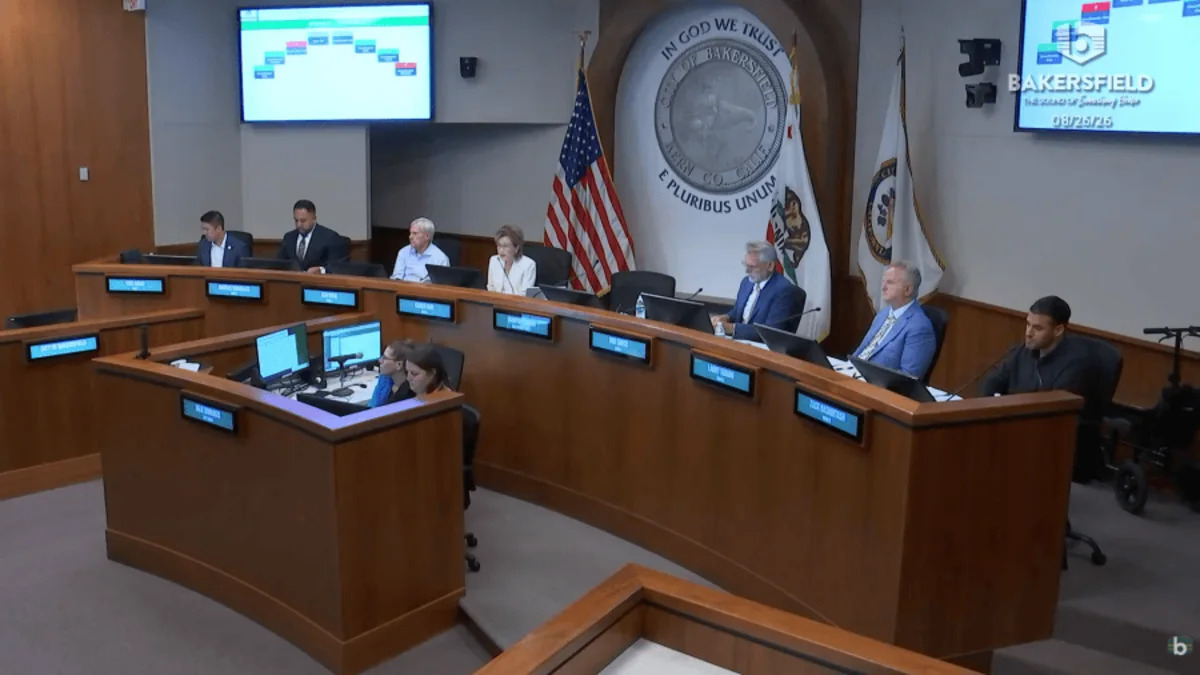
BAKERSFIELD, Calif. (KGET) – The Bakersfield City Council is continuing its conversations about the jail bed implementation in the city and largely agreeing that the proposal needs to be studied and refined further.
In the City Council meeting on the evening of Wednesday, Oct. 21, the Council unanimously approved to set aside $4 million to help address the shortage of local jail bed capacity that leads to the release of many low-level offenders in the city within hours of their arrest.
The push comes just over a year after Ward 4 Councilman Bob Smith began spearheading the Jail Bed Task Force, with the help of Councilman Zack Bashirtash of Ward 6.
Through Measure N funding, Smith said the city has seen progress in its crime rates over the past several years but said a way to expand the number of jail beds in the city has been the missing link.
He said the issue has also cost the community “considerable grief and time and money, injury.”
“It seems to me that we have to move the needle somehow,” Smith said during the meeting. “It’s not just about locking people up, it’s behavioral health. It’s slowing them down long enough for treatment. It’s trying to change the system and disrupt what is happening.”
The ongoing conversation around jail bed capacity in Bakersfield comes as the city has continued work bolstering its homeless emergency services, like Flood Ministries and the Brundage Lane Navigation Center.
Councilman Eric Arias, who represents Ward 1, said the jail bed issue is linked to the increasing number of homeless individuals in Bakersfield who are refusing services.
City Manager Christian Clegg said when Brundage Lane first opened, about 30% of unhoused individuals contacted refused help. But within a year to 18 months, Clegg said that the refusal rate rose to 65%.
“We’ve made more services available,” Clegg said. “There’s a very high percentage of individuals who are no longer accepting services.”
When asked for clarification from Councilman Andrae Gonzales, Clegg said the jail bed pilot project would not be an alternative to a homeless individual who is refusing services from one of the city’s other programs, such as through Flood Ministries.
Clegg also clarified by saying that if the pilot program for additional jail bed space does go through and is successful, it does not mean that homeless individuals would be arrested and booked into the facility.
Rather, he said it would be specifically for low-level, repeat offenders.
“We would ensure that they get to that point where they can choose diversion or, or have sentencing, and then work again with that population to help them achieve better outcomes,” Clegg said.
Clegg also said the issue isn’t specific to jail bed availability.
“We need permanent supportive housing. We need transitional housing. We need residential behavioral health, long-term residential behavioral health beds. We need medical detox beds,” he told the Council. “We need substance use sober living beds, and so Kern County historically has not had enough of almost all of those types of beds.”
Bashirtash said he would support moving forward with the jail bed pilot but said there should be a focus on accountability and helping offenders reintegrate into the community.
“It’s definitely going to be done with a lot of accountability and oversight,” he said.
Although the Council agreed to set aside the $4 million for the pilot project, they agreed to bring the item back to the Council at a later date to discuss further.
Copyright 2026 Nexstar Media, Inc. All rights reserved. This material may not be published, broadcast, rewritten, or redistributed.For the latest news, weather, sports, and streaming video, head to KGET 17 News.