
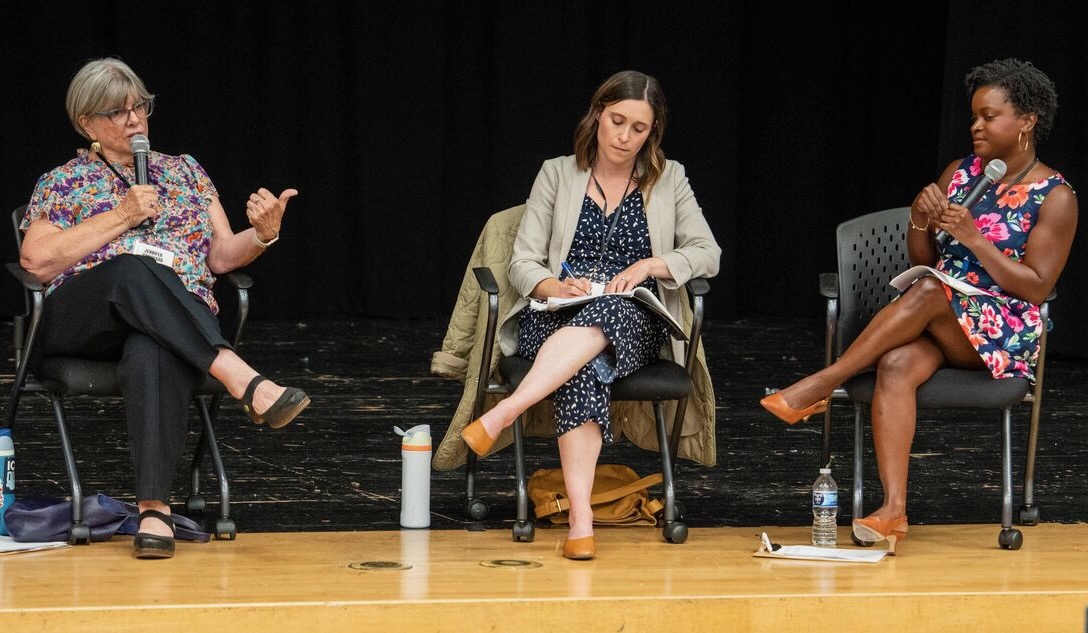
On September 29, The Oaklandside gathered all eight candidates vying for seats on the Oakland Unified School District school board this election cycle for a public debate at Oakland High School. Each candidate briefly addressed the crowd of some 150 Oakland parents, teachers, principals, students and community members, and then the candidates broke out into separate rooms by district, to engage directly with voters.
See the other discussions here:
District 2 in central Oakland is home to Oakland and MetWest high schools; Roosevelt Middle School; alternative schools Dewey Academy and Gateway to College at Laney; and Lincoln, Cleveland, Franklin, Garfield, Crocker Highlands, Bella Vista and La Escuelita elementary schools. In the race to represent it, parent and policy director Arielle Fleisher is squaring off against incumbent board president Jennifer Brouhard.
Fleisher highlighted her public policy bona fides by leaning into her background in transit policy, including at the San Francisco Municipal Transportation Agency, detailing her experience working across agencies to execute on equity proposals; she’s backed by Empower Oakland and a roster of former elected officials including former Oakland mayor Libby Schaaf and several former school board directors. Brouhard, who has served on the board for four years, talked about her decades of classroom experience as an OUSD educator and highlighted her support from the teachers union, SEIU Local 1021 and the Working Families Party, saying, “First and foremost, I’m a union person.”
Sharp disagreements emerged on some of the key issues the board will face in the coming period as it seeks to solve a persistent structural deficit, hire a new superintendent of schools and strengthen lagging academic performance across the district. Brouhard, for example, who has taught at schools including Glenview Elementary and Melrose Leadership Academy, said school closures should not be an option, while Fleisher, a parent at Crocker Highlands Elementary, said everything should be on the table that could put the district on a path to solvency. While Brouhard defended a board decision to separate from the previous superintendent, Kyla Johnson-Trammell, Fleisher criticized the move for taking place “behind closed doors.”
The two candidates also found several points of agreement, with each expressing support for Oakland’s immigrant sanctuary policies during a time of stepped up immigration enforcement and the need to retain experienced teachers. And they debated other hot topics the board will face in the years ahead, including school safety, whether OUSD has fallen short in its anti-discrimination efforts and student access to technology.
The Oaklandside’s education equity reporter, Ashley McBride, moderated the District 2 debate, kicking it off with a question about the district’s budget challenges and then opening it up for audience questions. This transcript has been lightly edited for clarity and ordered by topic.
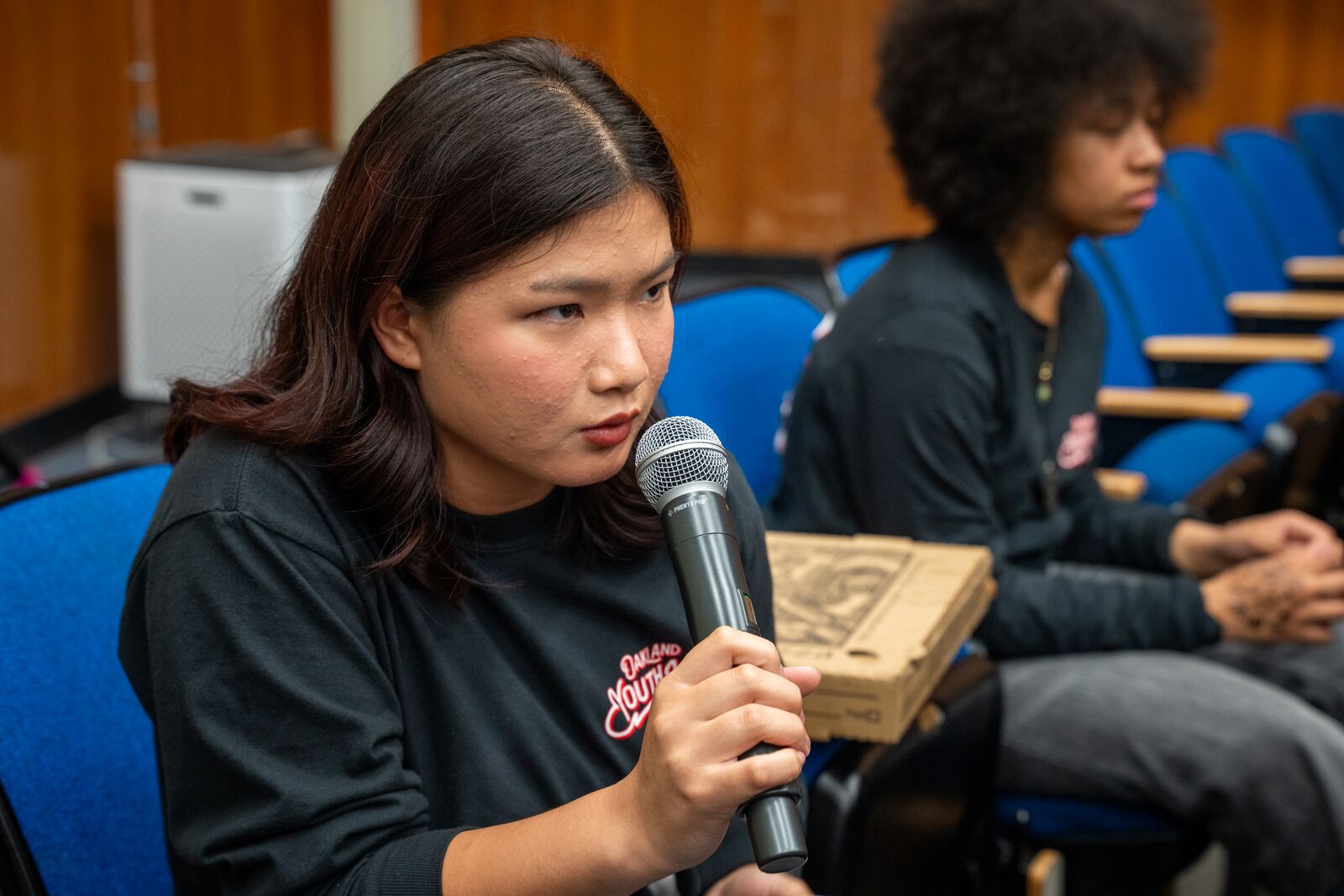 A student asks District 2 candidates a question at an Oaklandside school board forum at Oakland High School, Sept. 29, 2026. Credit: Maurice Tierney/Cityside
Ashley McBride: Thank you all for being here. I’d like to welcome our District 2 candidates: challenger Arielle Fleisher and incumbent Jennifer Brouhard. Let’s get started. What are the changes that OUSD needs to make to maintain a sustainable budget? And should school closures or mergers be on the table?
Arielle Fleisher: In order to make a sustainable budget, there are three things I think about. The first one is that we need to admit we have a problem: We are overspending. Last year we overspent by $90 million. We need to cut $30 million this year, major cuts, which are incredibly destabilizing to our schools. We need to admit the size and the gravity of this problem.
The second thing we need to do is have a vision. What are we budgeting for? What are our goals for our district? What does it look like to have a district that is fully resourced to deliver reading, math, college- and career-ready students?
And the third thing that we need to do is think thoughtfully and put everything on the table in order to get to a place of solvency.
That means we have to look at our programs. We have to look at our contracts. We have to look at our curriculum. We need to have an honest conversation about everything that’s happening in the district. When I think about school closures, we did not do this well in the past, and we have to admit that, and we have to honor that, but we are a learning institution.
Our principals have sent three letters to our board, basically saying, “Please close schools.” The moral I’m trying to get to is: We have to listen to our educators, and at this point we need to put everything on the table, because that is leadership. It means wrestling with hard choices.
Jennifer Brouhard: Thank you. Well, as an educator, I am opposed to closing schools. I think to start with that on the table right now when we still have so much restructuring to do in our budget harms our communities, harms our families, harms our students. So the things we really need to look at? I agree we need to spend within what our revenues are.
In past years when we had COVID money and other federal resources, we paid for positions, and we can’t afford a lot of those positions anymore, or we have to find other ways to fund it. But as our money ran out, as it did across the nation, we continued to spend. So we do have to spend within what we have.
We need to look at contracts and outsourcing, and this has been led by an ad hoc committee, with our unions and staff working together to cut our outsourcing. So this year we’ve hired more OUSD speech and language pathologists and psychologists, cutting down a lot of our outsourcing costs.
We need to look at our central office and our site positions and see what is efficient, what meets the needs of our students, what are things we can combine. And the reality is there are things we’re going to have to do without, but I don’t think that closing schools is one of them.
School closures and a balanced budget
Audience question: This one is for Ms. Fleisher. Given what Director Brouhard said about the problem with school closures and how disruptive they are on a community, on students, on staff, and that studies show they do not save money for the district and it disproportionately hurts Black and brown and low-income communities, what is your justification for considering more school closures?
Fleisher: A couple things I want to say in response to that. One, I don’t think it’s really a response to our budget problems. It’s more about academics and resourcing. The extent to which you save money from school closures is very much down the line. Two, when you ask what I think about it, I want to read to you what our principals said to that.
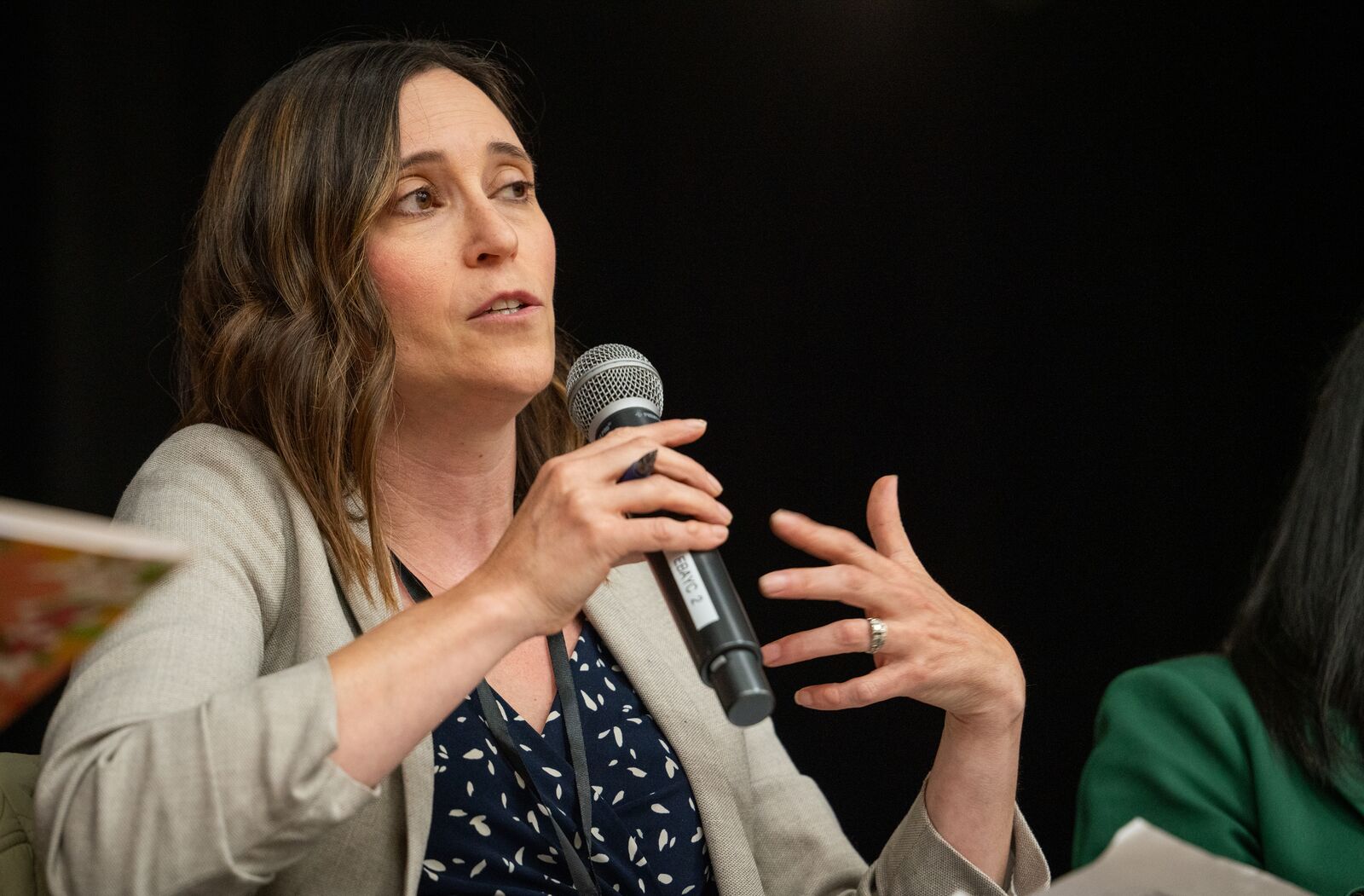 District 2 school board candidate Arielle Fleisher gives opening remarks at The Oaklandside’s election forum at Oakland High School, Sept. 29, 2026. Credit: Maurice Tierney/Cityside
Our principals have sent three letters to our board. It is notable that in the list of unions that endorse my opponent, the administrators’ union was not included. Our principals have sent three letters to our school board voting no confidence. And they said, and I quote:
“The experts have been clear. We operate too many schools for a district of 33,755 students. We can no longer afford to postpone difficult decisions. Critics point to school closures as an equity issue. We posit that the gradual starvation of our schools is also an equity issue.” Our principals have essentially said, “Put me out of a job.”
I cannot stand on the sideline and watch while our schools are starved of the resources they need. What I want to do is have an open and honest conversation about reimagining our schools. That is my goal.
Brouhard: On the union for administrators, they are not endorsing. I do have good relationships and meet regularly with UAOS [United Administrators of Oakland Schools], and I’ve had some great conversations. But as far as servicing schools and students getting what they need, closing schools doesn’t do that either.
We’re not able to use the money that we get from closing schools for our general budget. So we still have the same amount of money. The only thing we really lose are administrators and SEIU classified staff. Teachers will go to other schools. Students will go to other schools.
I was at La Escuelita when it was closed, and it was brutal. [Editors’ note: only its middle school was closed; the elementary school remains open.] Kids were told where to go. They didn’t want to go. I mean, it was a mess, and we were told abruptly. So we can say we’ll learn from it. I’m not sure we will.
The other piece is, who’s going to get crowded schools? Because when we close schools in West Oakland, Deep East Oakland, those kids are going to go to more crowded schools.
Audience question: I was reading an article in the Oaklandside last week about the board meeting discussing a September 15 letter from the Alameda County Office of the Superintendent, and there was a quote there from Director Brouhard saying that letter was a wakeup call.
What was it about that letter that felt like a wakeup call for you? And what are the most important takeaways from both that letter and other recent communications we’ve seen from the county?
Brouhard: The wakeup call for me was two parts. One, I think she [Superintendent Alysse Castro] did recognize the hard work that we’ve done, and she recognized more importantly that we made these decisions and we stood by them, which has probably been her biggest criticism and to some extent a true criticism. So she has recognized the depth of the collaboration that we’re doing with the district leadership to restructure our budget.
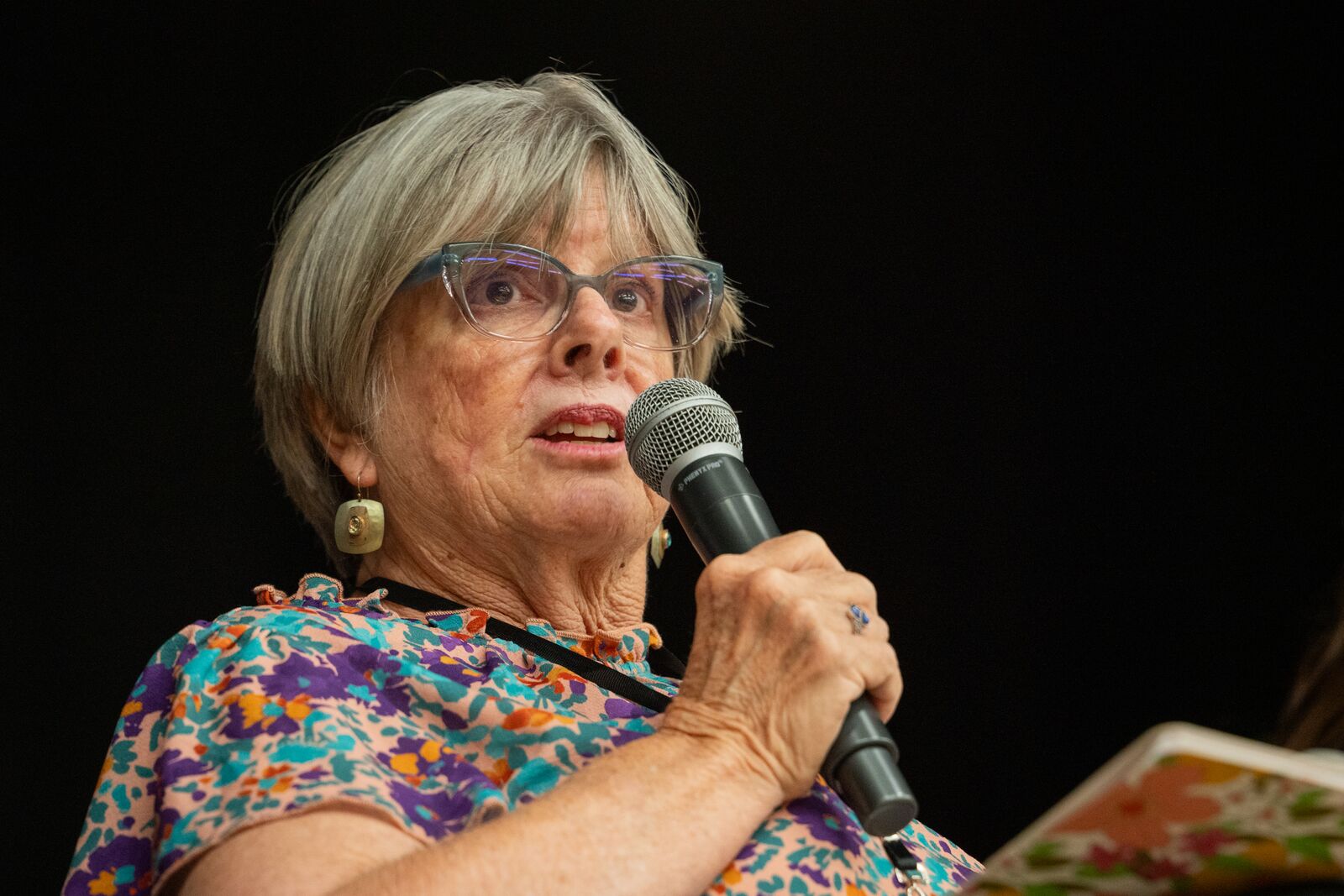 District 2 school board candidate Jennifer Brouhard, the incumbent, gives opening remarks at The Oaklandside’s election forum at Oakland High School, Sept. 29, 2026. Credit: Maurice Tierney/Cityside
On the other hand, she was extremely clear about timelines. We had to discuss the letter by October 8, which we did. We had to have our fiscal stability plan, which we are working on, and what we’re going to be doing at each of our meetings is taking a section of that fiscal stability plan so that we can talk about it piece by piece so people can really look at what we’re doing.
The wakeup call to me was: We recognize the work, now get down and finish it. I think that was a very different tone than she’s had before, which has been: We’re not doing the work. It represents a change in our relationship with her.
Fleisher: I don’t know how many of you guys have read these letters in depth, but it’s worth reading. It’s good reading. When I read that letter, it’s funny — to me, it made me sad because it felt like our county was really okay with Oakland just being in survival mode. What we did last year was we drew down our reserves by $90 million by effectively using your retirement fund to pay for your lunch and we shifted pots of money around.
And if we did that to become stable, sure, but there was nothing that we did in the whole year last year to think about the structural reality in front of us. The fact that we spend more than we take in. We didn’t have any real conversations with the community, as a board, to acknowledge and talk about what are we going to do about that structural challenge.
So I’m deeply concerned that, again, we are here in survival mode, we are not addressing the fact that we have this $30 million gap and we’re not looking at our structural challenge. We cannot deliver the school district our kids deserve if we are continuing to operate in survival mode. And I refuse to let this incredible school district just be in survival mode.
Academic priorities
McBride: Please name one academic program or initiative in OUSD that you think the district does well and deserves more investment.
Brouhard: One thing they do well at our high schools is our career training and Pathways. I know the one at Oakland High School, we’ll give a shout out here, is an amazing program.
In our district, among many of our high schools, we have 95% or more of our students enrolled in Pathways. [Editor’s note: For the 2025-2026 school year, 92% of OUSD’s 10th, 11th and 12th graders were enrolled in a pathway.] This is definitely a program that keeps students in school and focused on not just skills, but experience. If you ever get a chance to get to the Capstones, they’re really amazing. That is one thing that we do really well.
Fleisher: I have the same answer, and I swear I thought of it before you said it. I think our Pathways programs are really wonderful. I do a lot of work in my day job in workforce development, and I think it’s really important to think about the wide breadth of careers that are possible after graduating from high school.
Thinking about a skill suite and all the ways we can link learning and connect what is happening in the classroom to real world jobs and how that makes you feel empowered and capable and able to, post high school, get on the track that is right for you.
So I agree — it’s an incredibly impressive program here in Oakland, and one that I think we can continue to grow and to celebrate for what it’s done.
McBride: Let’s do a lightning round, with a community-submitted question. Briefly, what is the one student outcome metric that you would commit to track at every board meeting?
Fleisher: Growth on our i-Ready scores [the diagnostic tool OUSD uses to assess students’ math and reading levels].
Brouhard: Student attendance.
Teacher retention
Student question: How will the district support teacher retention and having quality teachers that have the best interests of youth in mind?
Fleisher: I like this question a lot. Our teachers are the backbone of our schools. We know that success is so important to having teachers at our schools.
I have the statistics somewhere in my notes, but right now our teacher retention is very low. We’re some of the lowest across California. [Editor’s note: Teacher retention is about 81% in OUSD, just a bit below the state average of 86%.] A lot is made about the raises that our teachers just got, which is wonderful. Our teachers need to be paid more. But to me, when I think about retention, a solid salary is just part of it.
Think about you in the jobs that you like. Why are you there? You’re there in part because you’re paid well, but also because you feel supported, because you feel like you have the resources that you need to succeed in that classroom. And when I hear things from our principals, I’m actually very worried about principal retention.
We’re losing our principals this year who are so important to our schools because of the situation that we find ourselves in. When we talk about teacher retention, salary is a big part of that, but so are those supports at our schools, so is feeling resourced, so is feeling we have a strong community.
And we see that strength in our middle school network right now, that it’s really working backwards from goals. Very data-driven, very community-oriented; coaching, professional development, all ladders up, and I think that’s all important to retention.
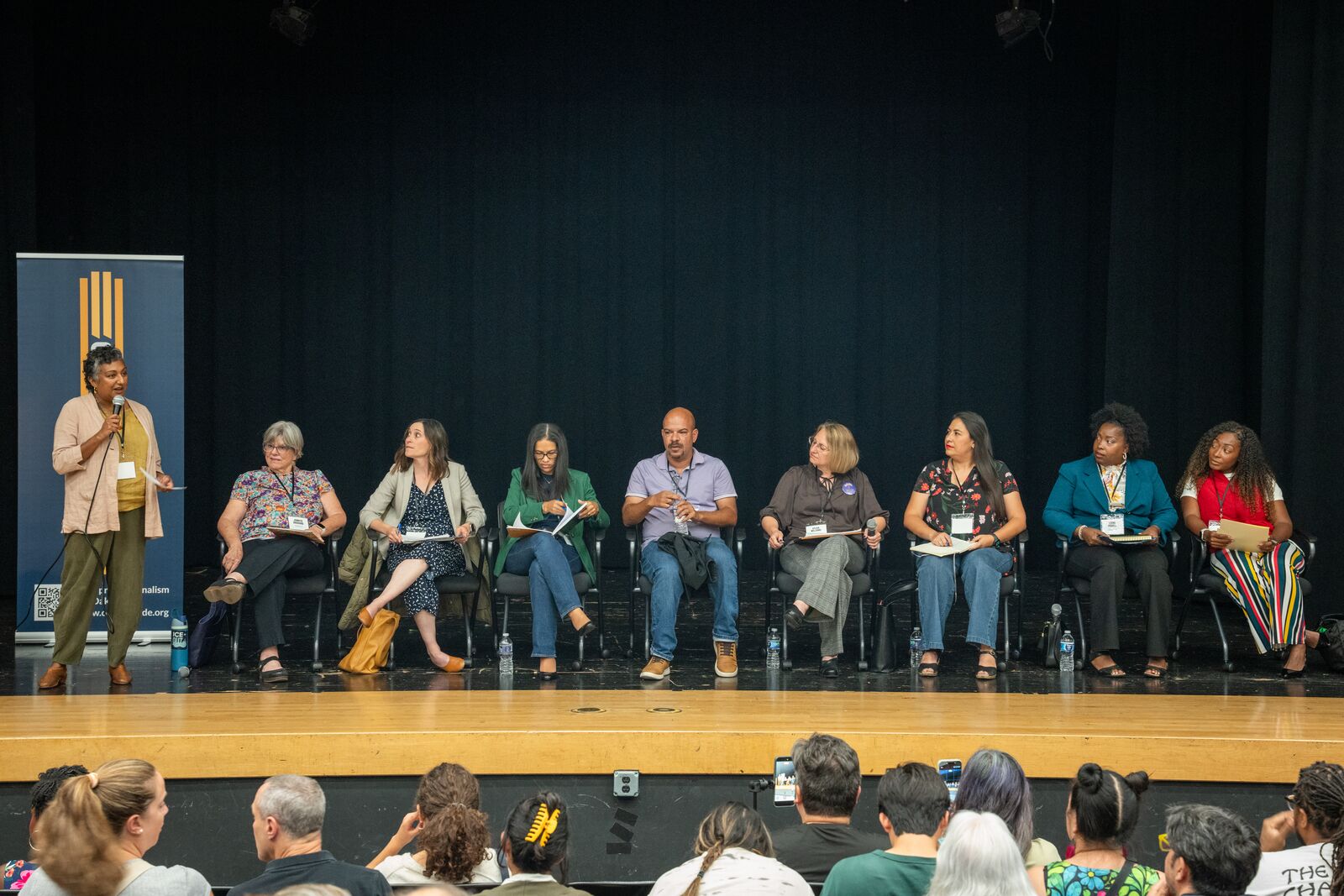 Oaklandside Editor-in-Chief Tasneem Raja with school board candidates Jennifer Brouhard and Arielle Fleisher, District 2; Kathryn Camp, Mike Hutchinson and Sylvia Williams, District 4; and Valarie Bachelor, LeAna Powell and Alexandra Williams, District 6 at a candidate forum at Oakland High School, Sept. 29, 2026. Credit: Maurice Tierney/Cityside
Brouhard: I think that the compensation is important, but what really matters to me is that our teachers were organized, our teachers stood together, and they fought for what they deserved. And that to me is a lot of the retention, and I think that, actually, our retention rate for teachers is not that low.
It’s lower in the third year when teachers are tenured, but the last time I looked, we were around 87% retention of teachers.
This year is the first year [in a long time] we started every single classroom with a teacher, a teacher with a contract, and not somebody from the central office that we pulled in to teach part-time till we could hire somebody, not subs that had to change at 30 days.
We had a classroom teacher in every single classroom. We hired speech pathologists. We hired 10 speech pathologists. [Editor’s note: According to recent hiring reports, OUSD has approved two speech pathologists and six speech therapists so far this year.] That’s huge for us.
Discrimination and inequity
McBride: We received several community questions about discrimination and inequity. Do you believe OUSD has adequately addressed antisemitism, racism, gender discrimination and anti-LGBTQ bias in our schools? And where has OUSD fallen short?
Fleisher: I don’t think this is something that we are ever done addressing, right? Again, we are a learning institution. That’s what we are. That’s what we do. We’re continually learning and thinking about how we can do this better and how we can create more belonging for our students. Belonging is one of the most important things — the evidence is very clear, and we feel it too, right? Belonging is so essential to being able to thrive in school.
There’s always more that we can do to create opportunities and to create a space where we can support and celebrate learning. There’s always room for us to continue to think thoughtfully and deeply about how are we creating environments where our kids are thriving, and how we are centering belonging in our schools.
Brouhard: I would agree. I think it is an ongoing problem. I want to address one of the things that I am proud of in our work, our sanctuary policy, which was broadened this year to include LGBTQ+ students. We are looking as a board for ways that we can infuse our policy and develop all that work.
I’ve heard complaints, and in our Title IX office, I think we need to make a lot of improvements so that parents feel, and students feel, that their complaints go somewhere, and that there’s resolution to those.
As a former history teacher, I think one of the places to really embrace this work is in our history curriculum and social science. That sense of belonging, that sense of studying your history and seeing yourself in that history is very important. We do have a lot more work to do in that.
School safety and sanctuary polices
Student question: What is your stance on the district sanctuary policy protecting students from ICE, and what would you do in your role to support your school sites with that work?
Brouhard: I think our sanctuary policy is really important, and I’m proud to have been a part of co-sponsoring that and co-writing it. I am extremely pleased that we include other people as well, that we include the LGBTQ community.
As far as our work supporting our students against ICE attacks, I was very moved by the day we heard there was a possible attack at Hoover [Elementary School], and the community came out. It was amazing to see. The whole school was surrounded.
What I felt at that moment living in Oakland was that we show up. We show up for communities that most of us didn’t live in. We show up for students and families that we didn’t know. But we showed up to protect those students and to allow those parents to walk their students out and feel protected at school that day. The principal also did an amazing job. That’s where we really do that work — is we show up when we need to.
Fleisher: Likewise, I think it’s imperative that we have the sanctuary policy. I’m very grateful that it is on the books and it is something that we hold and we carry.
You’re right that this is Oakland. I think about that a lot. The way that our community is standing behind this policy is very, very special and very important. And my own story of being moved is parents who are doing ICE patrols outside of schools here, walking, having Signal group chats to be able to support people who are feeling unsure when they’re just trying to come to school and to learn.
I wish we weren’t in that position. Like many of you in this room, it bothers me to no end. But I’m very impressed and moved by the community of Oakland and how people stood up for a community of people they didn’t even know to support this policy and ensure that we kept ICE out of our schools.
I’m glad to see what strength that we have behind that.
Student question: I’m a junior at Oakland High School, and I was wondering how you envision a safer environment for students on campus, and how would you implement those safety measures specifically around Yondr pouches [used to lock up phones during the school day] and how we’re going to be able to contact home in case of an emergency?
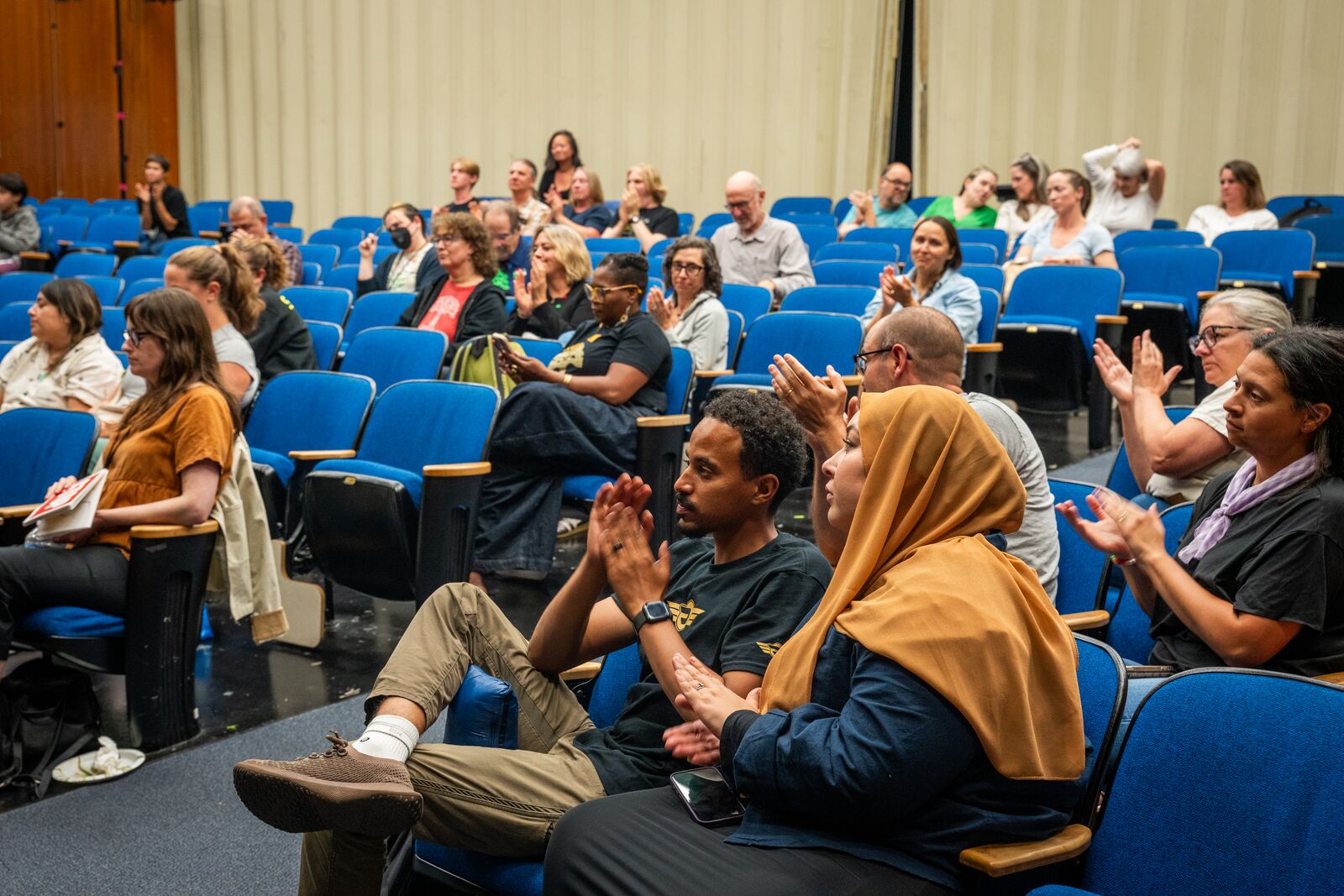 Audience applause during the District 2 breakout discussion at The Oaklandside’s school board candidate forum at Oakland High School, Sept. 29, 2026. Credit: Maurice Tierney/Cityside
Fleisher: These are all fair questions. I have a first grader in school, and I think a lot about safety. I think a lot about being able to communicate. There’s too much bad in this world, and that’s something that I know keeps me up at night.
At Oakland, we have our culture keepers who do an important job at our school, keeping our kids safe. The focus on restorative justice I also think is really imperative to keeping our kids safe and to having environments of learning and growth as being embedded in our schools.
With the Yondr pouches, I think a lot about the rollout. What I would have loved to have seen is piloting it at one school. What did we learn? What did we need to change? Iterating before we rolled it out across the district. I know it was state law, but still, I would have loved to have seen that so we can talk through some of the issues that you’re describing today of how do we plan for these edge cases? How do we plan for these scenarios? What are the metrics of success? Our student board members did a survey, but I would have liked to have seen that required as part of the rollout.
Brouhard: One of the biggest things for safety is working with the city and the county to get our violence prevention work. We were funded by the city previously, and they’ve cut back that funding.
Too often we look at safety in schools and safety in our communities as two separate things. Our students are in the communities, they’re in our schools, and we have to work together to provide really safe neighborhoods, safe communities, and safe schools together.
Our culture keepers do amazing work, but we need to take care of our culture keepers. A number of our culture keepers see things that are very traumatic, and we say, “Thank you for doing your job,” and they really need care. This is coming up a lot in talking with SEIU.
The Yondr pouch, I do agree. I think we should have talked with the students about it. The state law said we had to do this, and I know different districts have done it different ways. I’m not sure we needed to do it that way. But I also hear that people have seen more communication between students without the phones.
The superintendent and other personnel decisions
McBride: This question is specifically for Director Brohard. As we reported, Superintendent Saddler sidelined her chief business officer from the budget process last year, prompting her resignation. And the board then approved the district spending far more on outside financial consultants to replace her. Can you explain your position on those events?
Brouhard: Sure. So what the board did is we presented [budget] scenario three to the district. At that time Lisa Grant-Dawson was there [as chief business officer]. And there became this fork in the road. There were those of us on the board who were directing the superintendent to do whatever we needed to do to restructure our budget so that we didn’t have to take a loan out.
There’s probably many of us in this room whose kids went to school during our state takeover, who taught during state takeover, who tried to organize during state takeover. We absolutely had no voice, and none of us wanted to go back to that. I think Lisa Grant-Dawson and Dan Bellino, who was the chief of staff at that point, had proposed another [budget] scenario, which was taking out a loan.
And we voted on our scenario first, so therefore that was the one in place, so we did not vote on the scenario to take out a loan. I can’t say enough: It was extremely important to those of us on the board to not take out a loan and to maintain local control.
McBride: The board initially approved a one-year contract for Superintendent Denise Saddler in 2025. This year, the board extended it another year. Will you commit to a robust and transparent search process this year, and what would that look like?
Brouhard: We do have a robust plan to do this. We have a search committee on the board, and what that committee is doing right now is working with a consultant to get the community engagements together, get the community search team together. And the people on that board are [school board members] Patrice Berry and Rachel Latta, the student directors Andrew Bloch and Amina Tongun, and [school board member] Clifford Thompson.
So it’s a broad range of people, and they are starting that work now. We’re kind of late in the game, so we’ll start, hopefully, doing our engagements in the spring. But we also realized we had elections coming up, so we wanted to make sure that whatever board was in place was also the one making the decisions about the superintendent. But yes, there is a search.
Fleisher: I find the superintendent process to be very concerning the way that it happened with [former superintendent] Kyla Johnson-Trammell being removed from her role, and then an interim superintendent [Denise Saddler] being installed when there was supposed to be a community search.
The part that actually really irks me as a parent in this district is when the interim title was lifted behind closed doors in a closed meeting and she became our superintendent. I don’t think that’s right. I don’t think we should be doing such big, important business behind closed doors. The superintendent is the most important role in our district, and it deserves public transparency, it deserves happening on the dais, not behind. It’s really imperative that we work with our community right now and start to have an honest conversation about the right leadership for our district.
I’m also frustrated to see that we don’t have a superintendent work plan. We don’t have priorities. We don’t have a board work plan. All things we would get from a strong superintendent. So yes, I’d love to see that search happen.
Audience question: I work with young people. I would like a response from Director Brouhard and Ms. Fleisher about the last issue, the [nonpublic] superintendent vote.
Brouhard: So what was done in closed session was done legally according to the Brown Act. We discuss personnel decisions in closed session.
But I want to make one thing clear: Superintendent Kyla Johnson-Trammell was not fired. She actually came to me and said, “I wanna renegotiate my contract.” We came to a different view of things, and we renegotiated her contract. That renegotiation was done in closed session.
With extending the superintendent [Saddler] for a year, we knew that this year with budget cuts coming up, with an election, with making sure that we had a stable board come January, we did not want to do a superintendent search right now. We do want community engagement, and that’s why the extension of the superintendent’s contract was only for one year.
Fleisher: Thank you. If I used the word fired, I apologize. I did not mean to use that word. The challenge I have is Superintendent Kyla Johnson-Trammell was eight years in this role, Oakland homegrown, the longest serving superintendent in Oakland for a long time. I think that’s wonderful and I am frustrated as a parent and a community member that we didn’t lift that up, somebody who was doing really well in this role. I would’ve loved to have seen that leadership continue. I thought she was doing wonderful work for the district.
I appreciate that there are complexities this year, but I still don’t think that means we have to take the interim title from our superintendent and make her superintendent. That to me, without a community-driven process, crosses a line that I am very uncomfortable with.
That should not have happened in a closed session, behind closed doors. I would have wanted to see at least something of that process, something at the board meetings telling us more about what happened. It is the most important role in our district.
Policy background
McBride: Ms. Fleisher, we’ve heard about aspects of the incumbent’s record, so let’s turn to you. You often reference your policy expertise, which I assume is based on your years working for Waymo; the policy think tank SPUR, or the San Francisco Bay Area Planning and Urban Research Association; the SFMTA or San Francisco Municipal Transportation Agency; and on the leadership team of Empower Oakland. How would this experience in big tech and public transit shape your approach to the school board?
Fleisher: I do have a very strong background, a lot of experience, in policy. I’ve worked in the nonprofit sector, I’ve worked in government at SFMTA, SFDPH [San Francisco Department of Public Health], in nonprofits at SPUR, which is a policy think tank, and in my current role doing policy development.
Look, the school board is a policy board. That’s the job. It’s a governance board, it’s a stewardship board. Its job is to do rigorous analysis, weigh trade-offs, understand the big picture, bring people together and make decisions. And that’s what I have done my whole career.
I’ll give an example. One of the things in my career is I’ve done a lot of work in transit policy. It’s esoteric, right? Who thinks about these things? I do. I think about those little issues. If you transfer from AC Transit to BART now, that’s free, and that’s because of the work I did. That might not impact a lot of us in the room, but I met so many people who would walk to BART because they couldn’t afford both paying for the bus and paying for BART. It’s a huge piece of transportation equity.
What did I do? I did rigorous analysis, understanding the challenges. We looked at best practices all around the world. We brought 27 different transit agencies together. We thought of each other as disparate agencies, and we brought them together as collaborators, and I think that’s what it takes to do this.
Student access to technology
Student question: I have a question about Chromebooks, because some students don’t have access to them. They struggle to turn in their work and they get frustrated. What can you do to make sure all students have Chromebook access?
Brouhard: You’re absolutely right. As well as wi-fi hookups in people’s homes. During COVID, we did have money to buy Chromebooks, and OaklandUndivided donated a lot of Chromebooks and made sure that everyone had them at home.
This is something that we have to budget in as we look at priorities. You’re right, especially for our older students who need computers at home, when so many of our textbooks are online, so many of our resources are online, we do need to look at how to fund that in our budget.
But right now, we aren’t funding that. Once OaklandUndivided took their money out, we lost that funding. So I would encourage students to work with us to get that funding. Come to Budget and Finance [committee], come to Teaching and Learning [committee]. You can do it online. Come and raise those issues in the places where we can really discuss them.
Fleisher: I appreciate the question as well. Good for you for sticking up for your friends. I think it is really important that we have access to Chromebooks. It’s important for your work, to be able to turn in your assignments, for learning.
One of the challenges I have right now with our budget is we’re not budgeting towards goals. So if we want all of our kids to graduate college- and career-ready, we have to work backwards from that. And when you think backwards systematically, then you think about what are the supports that we need in the classroom to deliver against that goal. And that’s not what we’re seeing right now in terms of our budgeting, and why things like this often fall to the side. So I’m really glad that you brought that up, and it’s really imperative that this is something we think holistically about when we are budgeting.
Are we budgeting towards goals? Are we budgeting to make sure that our kids can read on grade level, do math on grade level, and graduate college- and career-ready?
Board accessibility and tone
Student question: Right now, the major budget items often get discussed later in the school board meeting. Would you be in favor of moving that up earlier so people can understand what’s going on before it’s time to leave, before it’s time to go to bed, and allow people to be involved?
Fleisher: I’m happy with that idea. I get it. What I would love to see as best practice is that 50% of our board meetings should be talking about student outcomes.
So I agree with you, the budget’s incredibly important. It’s a policy document. It informs those student outcomes. But what I would like to see first and foremost is 50% of our board meetings actually covering student outcomes as a baseline expectation. Too often, student outcomes come at 10 o’clock, but I can’t stay anymore, and I have to go home and go to bed.
That’s something I would really prioritize in the meetings. At last week’s board meeting, there was going to be another round of discussion on the budget, and unfortunately, that was not allowed to happen. And I think it’s very important. We are running a debt. We overspent by $90 million last year. We have to make $30 million in cuts.
So I would like to see more prioritized discussion around our budget. It’s hugely important. But first and foremost, I want to see more conversation about student outcomes.
Brouhard: I agree. What we’re trying to do is actually have one board meeting where we talk about student outcomes and student work, and then have another one where we do business. A lot of districts function this way. We’re trying to get there.
We go back and forth on the order. We have parents who come from PSAC [the Parent and Student Advisory Committee], and they’ve got their kids with them, so we try to do that first. We try to do the student board directors first because I know a lot of them have to go home and study. So there’s a number of reasons why we’ve moved that forward. We moved the public comment up to the front for people who couldn’t stay.
But I agree. I know Dr. Saddler and Vice-President Bachelor and I have been working on trying to get an agenda pinned down so that one meeting would be students and one meeting would be our budget.
Audience question: How should school board members respond when parents, students, educators and community members strongly disagree? How would you listen without simply following the loudest voices?
Fleisher: I appreciate that question. The main job of a school board member is to represent your community, to listen to your community, to understand the vision and values of your community. It’s really important as a starting point to be in your community and listening, and to not just have everything happen down in the boardroom, but to be holding community meetings.
Right now, there is a community engagement effort happening, MSEG [the volunteer Multi-Stakeholder Engagement Group], and it’s great that it’s happening, but I think it’s the board’s responsibility to be leading engagement in communities and to be out there and talking and listening.
My values and my priorities here on this board are to fix the budget for real this time. I want to have a vision for our schools, our budgeting boards, and I want to lead with transparency and accountability. That’s me. That’s what I’m going to do when I’m on this board. Those are my priorities that I will hold when I’m in that seat and when I’m talking with community members.
Brouhard: One thing I learned coming onto the board — I came on as a teacher — is that I had to work with a lot of different voices, and I had to build relationships with a lot of people I had been on the opposite side of bargaining tables with. And I think building those relationships and learning to put my voice in the background and learn to listen was really a valuable thing for me.
I would like to think that my constituents know that I listen. I do community engagements. I do engagements at schools. I’ve done engagements in houses. I’ve done all kinds of things. I go out in the community. But the biggest thing is really deeply and actively listening and committing to things that I will act on as a result of that listening.
I am not, as many of you know, the loudest voice in the room. I am the under-the-radar person. I have the skill as a teacher, learning to really listen and act on what I hear.
Community and staff engagement
Audience question: I’m Matt Glaser. I wanted to first thank you for plugging our organization, MSEG. This district has done board-supported and district-supported community engagement over two decades, maybe even longer. I’d like to know from both of you, would you support the efforts of a homegrown community engagement organization?
Fleisher: Look, I think it’s a wonderful program. They’re leading this community group. We spoke with Matt and we learned more. It’s incredibly impressive. I think it’s wonderful that you’re taking the initiative in doing this.It’s a wonderful district, right? It needs all of us to step up. It’s why we’re all here tonight.
But when you are elected to this board, you are elected to be the voice of the community. That is your job. That is the job. To understand the community’s vision and values and to be the representative for the community. So I think it is imperative that the board own that trust, the board own the sorting of our district through its next chapter, that this is really board-led. I hear you on the before, but I maintain that if elected to this seat, I’m elected as your voice for the community, and it is my job to be out there, to be doing outreach, to be engaging.
Both things can be true, but I do think it’s very important that there is a board-led process for restructuring and reimagining anything for our district. I’d also like to see the superintendent having a huge part of that.
Brouhard: I’m going to take a little different approach because I have been the liaison to PSAC [Parent and Student Advisory Committee], and I have been the liaison to the CAC [Community Advisory Committee], which is the special education group. I deeply value the work that PSAC does. When I want to understand LCAP [Local Control and Accountability Plan, which guides how funds are spent], I go to PSAC.
The work that they’ve done, the research that they’ve done, the conversations that I’ve been a part of — we’ve read Matt’s blog. The analysis that our parents have done, this group of, what, 40 parents, is phenomenal, and everybody should look at their analysis of LCAP. It is totally worth looking at. What I feel with this group is that, yes, I do represent my constituents, but we are a shared governance model district.
I think that’s what many board directors aim to have, is that there’s an equal voice at the table. So it’s not my going and listening to people and then deciding what I’m gonna do. It’s my going to PSAC, going to CAC, going to your conference that you do once a year. That’s where I get the information I need and that shared governance and realizing that these are parent and community leaders, and I rely on that expertise.
Audience question: My name is Dr. Shalonda Gregory. I’m the principal of MetWest High School. I’m also a resident of District 2 and very active in my community. I don’t really care for performative behavior. I care about having a board that is supportive of not just the community, but also supportive of principals.
Currently, I only have a part-time counselor. I’m teaching two classes as a principal. So I want to know, one, what measures will you put into place to hold yourself accountable? And, two, what are you going to do to support schools and principals and address the need for us to have a voice in the decisions you make? Because that’s absent at this point.
Brouhard: I’m not sure about the first part, but I have been extremely lucky in my time at OUSD to have worked for some amazing principals, and I know the value of a principal. If a principal creates community at the school, the principal is the instructional leader, that’s the person I go to when I need help in my classroom. I have worked from Deitra Atkins to Chelsea Toller to Farris Jabbar — I’ve worked with some amazing principals, and it’s been an amazing experience for me. I do meet regularly with your leadership in UAOS.
I do pass on different things as we talk about the needs and the wants and the desires in your contract negotiations. I do have those conversations with district leadership. I fully support the demands of the principals. I’m meeting right after having a bargaining session next week. I do 100% support, and I do feel that principals have an untenable job.
Fleisher: I think it is actually imperative that the board do self-evaluations as well as a superintendent evaluation. That’s part of being in a leadership role. I don’t know if that is happening right now, but it’s something that I would definitely like to see: formal board evaluations and reporting on that to the public. How did we evaluate ourselves? What are the criteria we’re using? Do we feel like we’re going in the right direction?
That’s all part of a growth mindset, and that’s what I think we need to be bringing to the board. It is deeply concerning that our principals have sent three letters to our board, none of which were acknowledged, none of which were responded to.
There was also a principal walkout during the district professional development period at the beginning of the school year. It is deeply concerning what we see in this relationship right now between the principals and the board. Principals are an incredibly important part of our school. I don’t think this tension is healthy for our kids in order to be supporting learning.
So how do we solve this problem? I know our principals right now are out of contract. We had giant raises that usually are equalized across bargaining units, and that didn’t happen right now. I think we need to be listening with empathy and focus to our principals.
The youth vote
Student question: I’m a senior at Oakland High School and my question is: How do you support systematizing the Oakland youth vote?
Brouhard: I know that there is a youth vote curriculum that I’m hoping Oakland High is doing, and it really is a good curriculum. I mean, as a teacher I did go look at it, and we’ve had discussions with ACOE [Alameda County Office of Education] about how to implement it in schools throughout Oakland. I think that’s a first step, because a lot of students don’t understand what it means to vote for the school board. I think every class should do that curriculum, whether it’s math class, science class, history class, they should do it.
The other piece is I know that we do come to the high school to do a candidates thing in your history classes, right? So that’s a chance for you to meet the board directors. The other piece, and this is a little hard because it crosses a bit of a line of campaigning, we’re trying to send school board directors who aren’t running for re-election into the schools to try and get students to vote and talk to them about voting. [Editors’ note: California state law prohibits candidates from using public resources, including public buildings, for campaigning.]
For either one of us to come here, as much as we’d love to, it’s crossing a line in campaigning. We did hear that line from many principals. So whatever we can do to get out the vote.
Fleisher: I think it’s wonderful you’re here tonight. It’s wonderful that we’re at O High. It’s great to see so many students in this classroom engaging with our government. I did not know about local government when I was in high school, and it’s really wonderful to see so many folks here.
I agree with the curriculum. I think it’s incredibly important. I hope everyone in this classroom goes on to a career in service and works in local government and maybe one day even runs for office. Whatever we can do to help plant those seeds at this age about the importance of being engaged and involved and active in your community.
But voting is huge, and to have the ability to vote at 16, 17, what an amazing privilege. I do think it is incumbent on not just the board, on all of the public, on all of you, on parents, on community members, to help our kids understand the ballot and to get out that vote.
Candidate endorsements
Student question: I go to Oakland Tech, and I was just wondering what were the endorsements made to the candidates?
Fleisher: That I have memorized. I am endorsed by a slew of former city council members. Former mayor Libby Schaaf has endorsed me. Former [school board] member for District 2 Aimee Eng, as well as Jody London, Sam Davis, Gary Yee, Jorge Lerma, all former school board members, as well as Danny Wan and Pat Kernighan, who are former District 2 councilmembers as well. I’m also endorsed by many parents and families who are in the room tonight.
I’m very proud of the folks who have endorsed me. The endorsements obviously carry weight, but I hope that you also listen to all of us, and what we say tonight, and that you do your own reading up on the candidates to learn more about us.
Brouhard: Okay, first and foremost, I’m a union person. I have worked in almost every union that’s represented in our district at one time or another, and I’m extremely proud of the support that I have from OEA [the Oakland Education Association, the teachers union], SEIU, AFSCME, Building Trades, and Teamsters. These are the staff that I represent on the board, so I feel deeply honored to be supported by our unions and our schools.
I’m also supported by the Working Families Party, and if you don’t know about the Working Families Party, you should find out because looking at progressive elections, looking at progressive candidates, I’m also deeply honored to be supported by them. I am also supported by different elected officials — Nikki Fortunato Bas, Attorney General [Rob] Bonta, Assemblymembers [Mia] Bonta and [Liz] Ortega.
But I have to say it’s the unions — that when the unions go out and they’re knocking on doors for me on Saturday — that’s the strength. That’s who we are. That’s the power of people.
McBride: Thank you. Alright, that’s all we have time for. I really appreciate everyone for coming to attend our forum today. I also want to thank Oakland High School for sharing their space with us, and thank you to the candidates for being here.
Have a good night. Don’t forget to vote.
“*” indicates required fields