
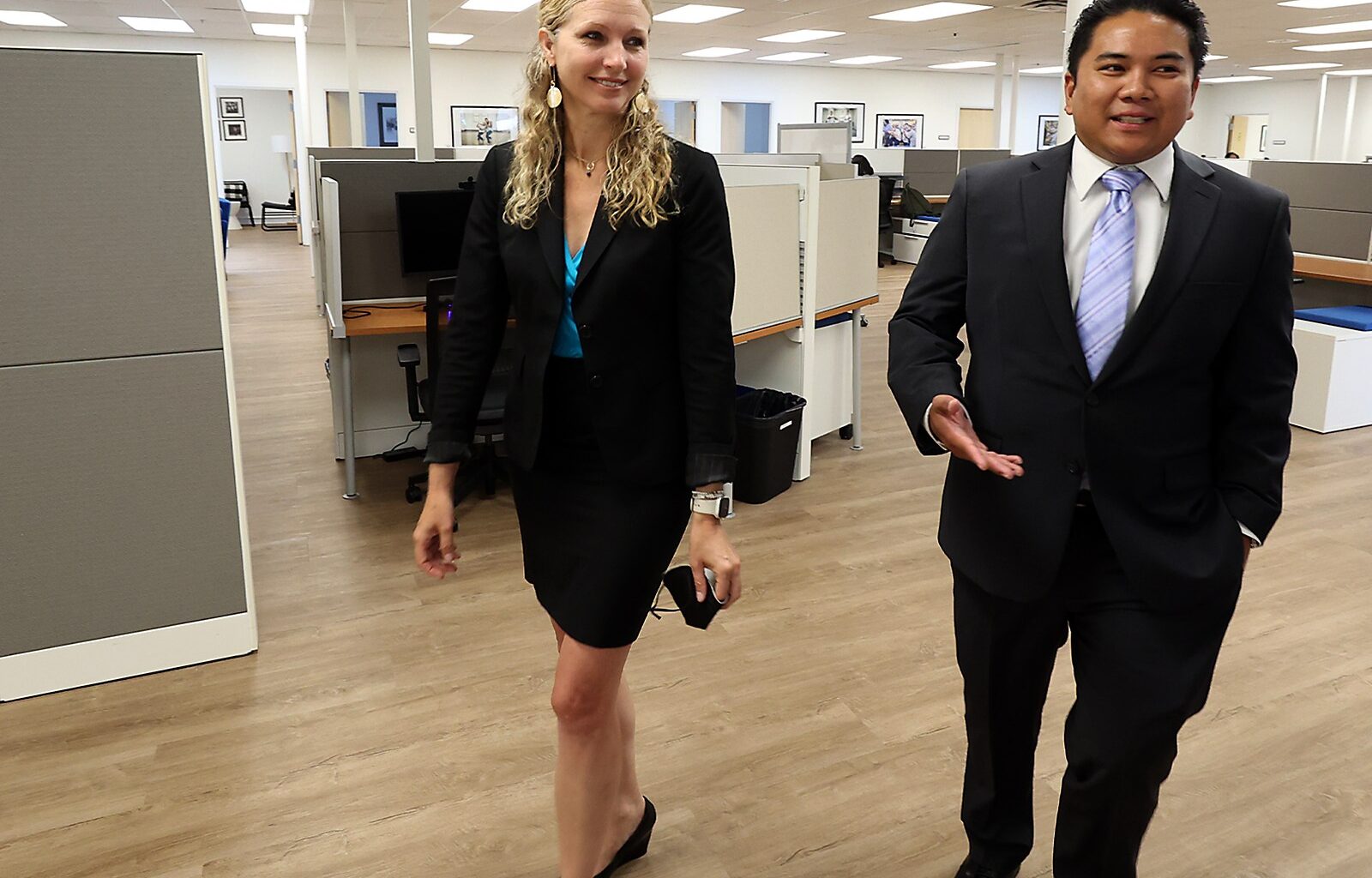
SANTA CRUZ — The new California Independent Commission on Public Defense held its inaugural meeting in Berkeley this month and Santa Cruz County’s public defense office had a seat at the table.
The brand-new commission made up of legislators, public defenders, academics and advocates is a part of a yearlong process to create a plan to push California to provide state funding and enforceable standards for county public defense systems. California is one of just two states that does not fund basic public defense.
Heather Rogers, Santa Cruz County public defender, attended the Oct. 9 meeting where she spoke to the group about the realities on the ground of working in public defense and the people she sees in Santa Cruz County.
At the meeting, Rogers spoke about all of the moving parts her office works on when taking on a case.
“While we are defending the case, gathering evidence, talking to witnesses, trying to understand whether a crime occurred and if so, what crime it was, we’re also working up for many of our clients’ mental health diversion plans,” Rogers said. “All of this is happening at once. We’re preparing for a jury trial. We’re preparing for diversion. We’re litigating motions, and our interdisciplinary teams are tasked to provide this service for all of these folks who so desperately need it.”
In 2022, Santa Cruz County replaced its flat-fee defense contract with a county public defender’s office. Since then, the caseload for the team of 64 has risen from a handful to thousands of cases per year, and many of them require interdisciplinary resources from social workers, client advocates and other branches of the office.
Convened by the Wren Collective and UC Berkeley’s Criminal Law and Justice Center, the California Independent Commission on Public Defense aims to develop a five-year plan to phase in state funding and enforceable standards like caseload limits and access to defense investigators, and to draft legislation to propose statewide funding for public defense.
“It’s a robust commission of people who do have influence with the lawmakers,” Rogers said. “So I think that is what makes it unique and hopefully effective in creating something that not only addresses the problems and gets us to a better outcome, but also has a chance of actually being passed.”
A CalMatters investigation from 2025 found that criminal defendants in California are routinely convicted without anyone investigating the charges against them. It also found that almost half of the counties across California do not employ any full-time public defense investigators.
As it stands, Rogers said, public defense is largely funded by individual counties through general dollars and it is becoming increasingly difficult for counties to meet all obligations for their general funds.
In September, just a month before the commission’s first meeting, Gov. Gavin Newsom signed two bills related to improving county public defender systems. The Fair Representation Act bans the use of flat-fee contracts when a defendant is facing the death penalty or life without parole, and a second law requires counties to report attorney caseloads and other basic information about their public defender systems to the state.
Rogers said she wishes to see interdisciplinary, collaborative and holistic defense as the constitutional standard in communities where mental illness, substance use and homelessness drive criminal justice system involvement.
“It’s not enough to just put attorneys in the courtroom … because what happens is we just have cyclical involvement in the system, and we are working with clients who are struggling to participate in their defense,” Rogers said. “It is the constitutional right to participate in your defense, and for that, we need to stabilize folks. We need to make sure that they are well enough to do that.”
She also said she wants to see sustained funding for public defenders that matches the grants and funding given to prosecutors. From 2019 to 2025, California awarded more than $1 billion in grants to prosecutors, and about $150 million to defense — with the defense grants having an expiration date, Rogers said.
The lack of funding not only impacts clients and their ability to receive the support they need to help them understand how they got into the system and how to get out of it, but it also impacts the public, Rogers said.
“Our communities are less safe if we are not providing the kind of public defense people need to break these cycles of harm,” Rogers said. “Now is the time to change it, and that is the charge of this commission.”
Over the course of a year, the commission will meet again in Los Angeles, the Central Valley and Northern California as it works to draft its five-year plan and legislative package.