
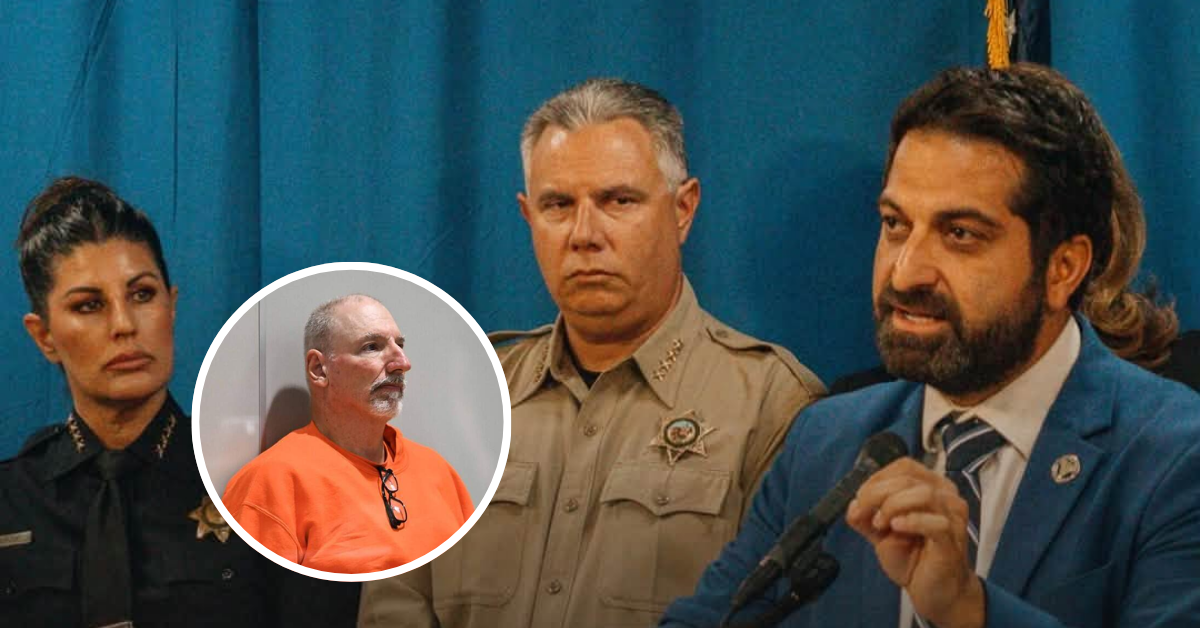
Fresno is moving forward with a plan to regulate group homes that house sex offenders due to a growing influx of recently-paroled predators eyeing Fresno County.
The Fresno City Council voted 6-0 on Thursday to direct staff to study the proposed Sex Offender Housing Inspection, Enforcement, Licensing and Disclosure (SHIELD) Act. Councilman Tyler Maxwell was absent.
Driving the news: Fresno City Councilman Mike Karbassi proposed the SHIELD Act after the attempted release of convicted child kidnapper and serial molester David Allen Funston.
Ahead of the attempted release, Funston said he planned to live at a transitional home in Fresno. The Board of Parole Hearings found him suitable for release in September 2025 under the state’s Elderly Parole Program.
Ultimately, Placer County prosecutors brought previously-dismissed child sexual abuse charges against him that date back to 1996, keeping him in custody.
The big picture: While the council was not voting on the actual SHIELD Act on Thursday, it directed the City Attorney’s Office and city staff to conduct a study for a licensing program for landlords of sex offender housing facilities, often referred to as transitional homes.
The City Attorney’s Office will craft an ordinance that will create a licensing program for sex offender housing.
The ordinance will restrict the number of licenses to a maximum of one per city council district and will have buffer zones for sensitive areas, such as schools, day cares and parks.
Landlords that violate the eventual ordinance would face criminal and financial penalties.
What we’re watching: The City Attorney’s Office will return to the council with the SHIELD Act within 60 days.
What they’re saying: Karbassi said there is a cottage industry in Fresno with companies buying homes and turning them into transitional housing.
“It’s not about people here,” Karbassi said. “It’s about them importing people here, and we have no idea where they’re going, because you can allow Megan’s Law all you want, but that’s kind of an honor system to a degree. We need to know where they are, where they’re housed.”
Karbassi said the city will push the envelope with the SHIELD Act and challenge the system, saying he is happy to get sued over it.
“This is what we are looking to do in our city of Fresno, because we are unfortunately the victims of a system that protects these people,” Karbassi said. “And they’re not people. People like David Allen Funston cannot be rehabilitated. They can’t. They were intended to stay in prison, and they are being released because of weak state laws. I’m not comfortable saying, ‘OK Sacramento, we’ll just take it.’ No, I can’t do that.”
Councilwoman Annalisa Perea said she is a big supporter of the SHIELD Act and wishes the council could pass it immediately, adding that it is worth the risk of any lawsuits the city may face over the proposed ordinance.
“I commend people for being rehabilitated, but we don’t talk often enough about the victims and the fact that they have to live the rest of their lives never having the chance to get rehabilitated,” Perea said.
Councilman Nick Richardson said he likes the idea and the measure of accountability, but is concerned about potential litigation against the city given state law that he ran up against when looking into regulating senior citizen group homes in his district.
“I don’t think this is going to pass,” Richardson said. “I would be surprised if it passed legal scrutiny, and I wouldn’t see this at any future readings coming back with a positive result for one reason or another. And if we do, yes, it will become one of those things in closed session we talk about how much we want to settle for using taxpayer money.”
Karbassi responded, “Appreciate the support – not sure how supportive you actually are.”
Karbassi added that he thinks there is a big difference between regulating sex offender housing and senior citizen housing.
“I think getting sued when it comes to a violent sexual predator is worth the risk,” Karbassi said. “A grandma not so much. So it is not quite apples to apples.”