
Sacramento is moving forward with plans to transform the Railyards north of downtown into a new neighborhood with housing, a hospital, shops, a concert venue and a professional soccer stadium following decades of delays. But labor groups and the city continue to clash over how much affordable housing will be built at the 244-acre urban infill site.
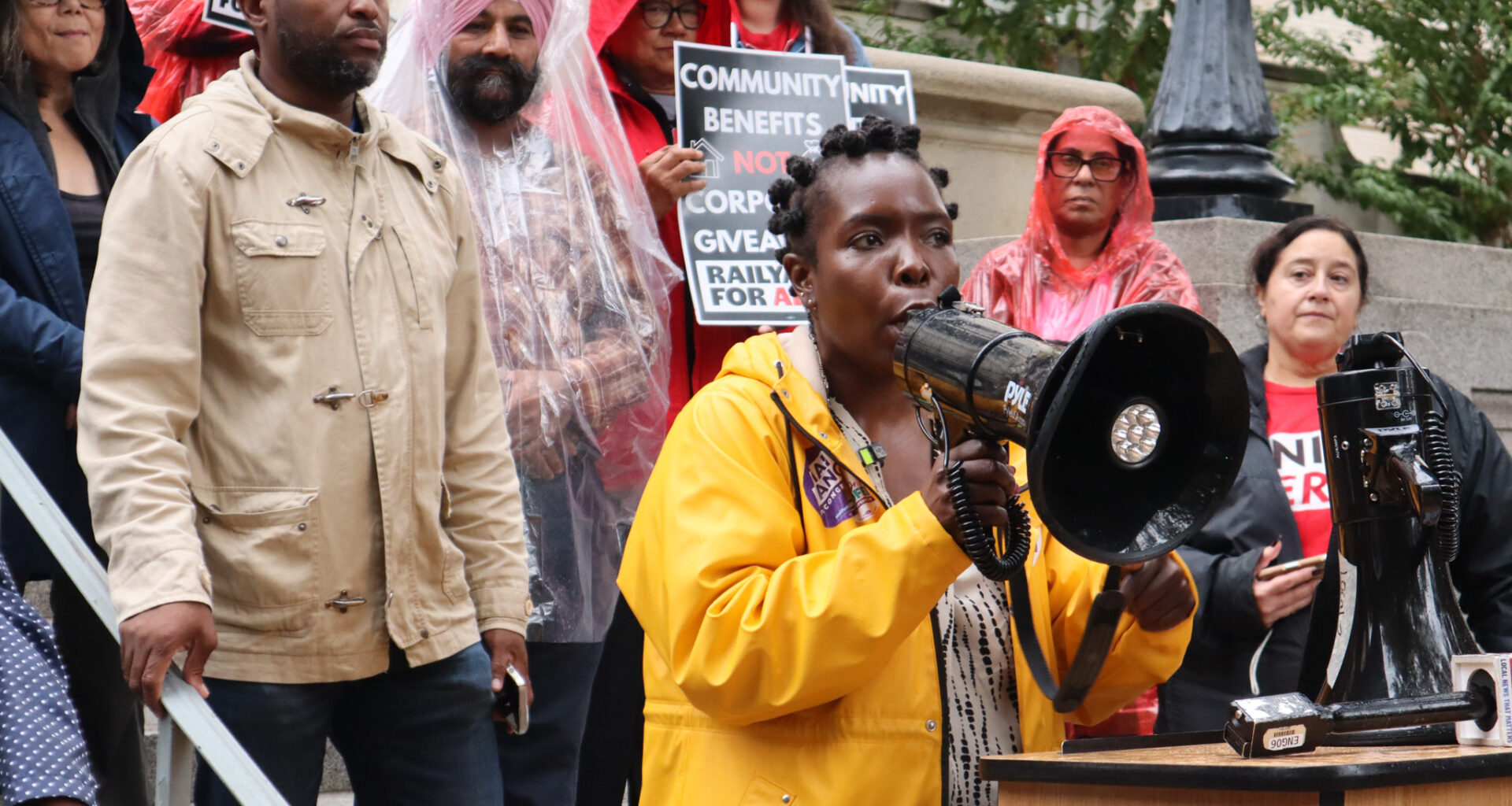
Union members from UNITE HERE Local 49 rallied outside Sacramento City Hall on Wednesday, calling for the city to require more affordable housing, a grocery store, and better-paying jobs once the area is built.
The union represents hospitality workers like hotel staff, stadium employees, and food service workers. They say under current agreements, employees must commute to downtown but can’t afford to live close to work. The city’s current proposal would require only 6% of the Railyards’ planned housing to be affordable. Those pushing for change want at least 25%.
Enriqueta Layune has worked in housekeeping at the Citizen Hotel for nearly 18 years. She lives with her son in South Sacramento and said she can’t afford to live closer to work. Driving downtown also means paying for parking, which she noted can cost $12 a day.
“I love downtown,” Layune said. “I can’t afford it. But we need affordable housing; it’s urgent, because the cost of living is getting higher and higher.”
Under what’s called an enhanced infrastructure financing district, or EIFD, the city would use property tax revenue from the new development to reimburse developers for building the site’s roads, utilities, and other infrastructure. This special taxing district wouldn’t raise taxes or take money from the city’s general fund.
On housing, city officials say 44% of homes already built in the Railyards are affordable. They also plan to put 20% of future financing district revenue toward affordable housing once certain infrastructure and land costs are paid off.
But that funding commitment is different from the percentage of homes developers would be required to make affordable.
Marco Gonzalez, a senior project manager with the city, said the tax revenue reimbursement is necessary for developers and the city to move forward.
“It is strictly for public infrastructure where we’ve mapped out a long list of public infrastructure needs that are in the Railyards,” Gonzalez said. “They certainly will support the private development, but they are public in nature.”
Last year’s proposal would have allowed the city to reimburse developers about $95 million over 30 years using future property tax revenue. But residents and property owners protested, halting the plan.
Under state law, the city could not move forward with that proposed expansion for one year. Now, the city council will vote again in November on a revised proposal that excludes existing residential buildings from the financing district.
Aamir Deen, president of the union challenging the project, said workers and residents of the Railyards neighborhood haven’t had a seat at the table.
“We don’t want the development to stop. We want it to go forward, but we want it to go forward with a community benefits agreement,” Deen said. “These are all things that are very common in community benefits agreements, but none of these things are in this agreement, despite the fact that there are hundreds of millions of dollars of taxpayer money involved in this.”
Dr. Flojaune Cofer, who narrowly lost Sacramento’s 2024 mayoral race and is now running for county supervisor, joined Wednesday’s rally.
“I think every single one of these demands is reasonable: living wage jobs, a grocery store, and at least twenty-five percent affordability,” Cofer said.
At least one housing advocate says pushing back against the Railyards plans could backfire. Ben Raderstorf with House Sacramento said this fight could prevent any housing from being built. He said having more market-rate apartments could lower rents across Sacramento by giving renters more options.
“When we build more housing, landlords have to compete for tenants, and they have to lower rents,” he said. “It’s six to ten thousand units of housing right downtown, right on top of Amtrak, right on top of light rail in terms of housing affordability and climate goals, like this project is the holy grail, right?”
But Cofer questions the argument that building more market-rate housing will help people already struggling to afford rent in Sacramento.
“I understand that we need more housing in the region, but I also think that argument assumes that we are going to add to the supply, and it’s going to shift the power over to renters and people needing housing and away from the owning class,” Cofer said. “And I don’t think that’s true.”
Sacramento City Councilmember and District 7 congressional candidate Mai Vang was the only councilmember at the rally. She said she supports the development, including the soccer stadium, but wants residents to have more involvement in how the neighborhood is built out.
“Families can’t afford rent and mortgage now.” Vang said. “This is about building with intentionality and making sure that we leave no residents behind.”
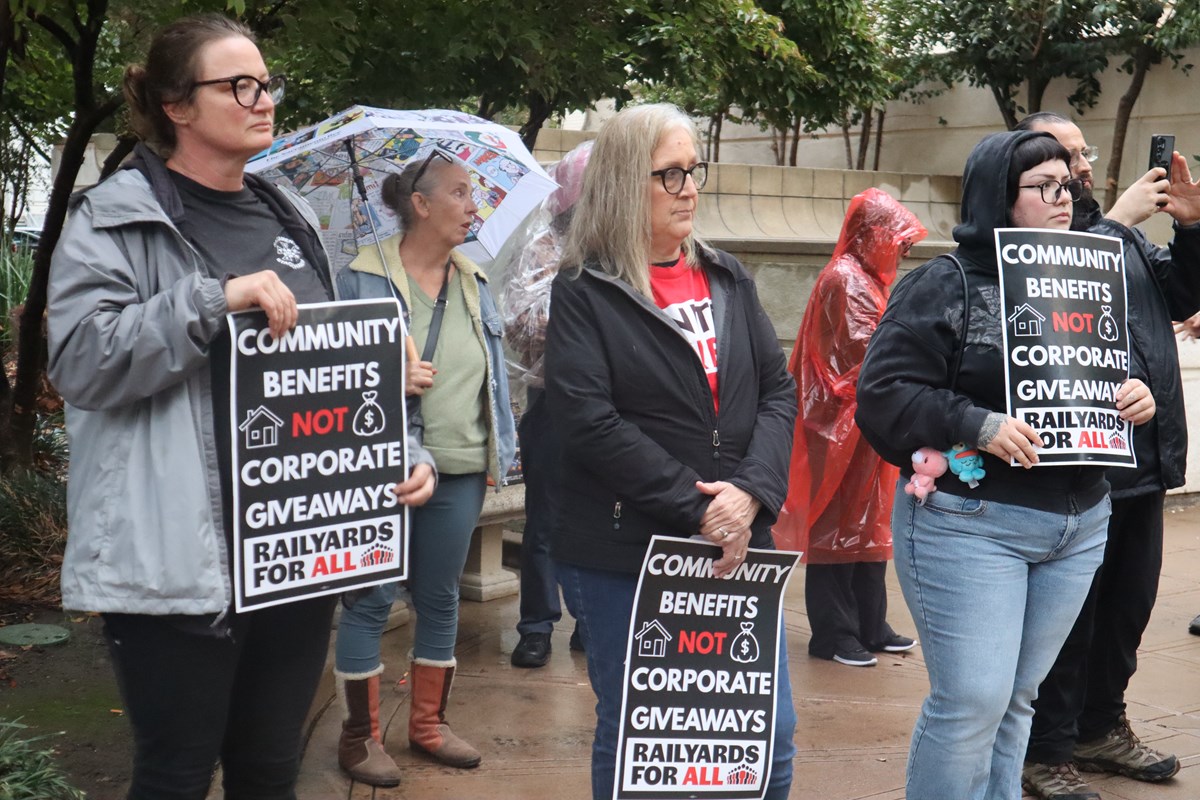 Rally participants hold signs outside Sacramento City Hall on Wednesday, Oct. 21, 2026, urging city leaders to require more affordable housing and community benefits in the Railyards development.Tony Rodriguez/CapRadio
The union is also involved in a separate labor dispute at Sky River Casino in Elk Grove, which is owned by Wilton Rancheria. The tribe owns a majority stake in Sacramento Republic FC and is partners in developing the new Railyards stadium.
UNITE HERE Local 49 has spent years trying to represent Sky River employees. Wilton Rancheria has maintained the workers should vote on union representation through a secret-ballot election under tribal law.
In April, a federal appeals court sided with the union in a dispute over a 2017 agreement outlining how casino workers could unionize. The U.S. Supreme Court declined to hear the tribe’s appeal earlier this month, leaving that decision in place.
Raderstorf with SacYIMBY questioned whether the Railyards campaign partly extends that dispute. While sympathetic to the union’s organizing effort, he said he doesn’t believe its housing demands are realistic.
“This isn’t a housing fight. This is a unionization fight,” Raderstorf said.
CapRadio asked the union president about the connection; Deen acknowledged the union’s ongoing dispute with the tribe but said its involvement in the Railyards is also centered on protecting a workers’ right to organize.
Cofer defended the union’s involvement, saying the wages paid at future businesses could affect workers throughout the region.
“I think unions are fighting to make sure that workers are well taken care of and that we don’t have a new crop of workers exploited,” Cofer said.
LDK Ventures is the master developer of the broader Railyards project. CapRadio reached out to the developers for comment but did not receive a response before publication.
Sacramento City Council is now expected to consider the revised financing district plan and related digital billboard agreements on November 10.