
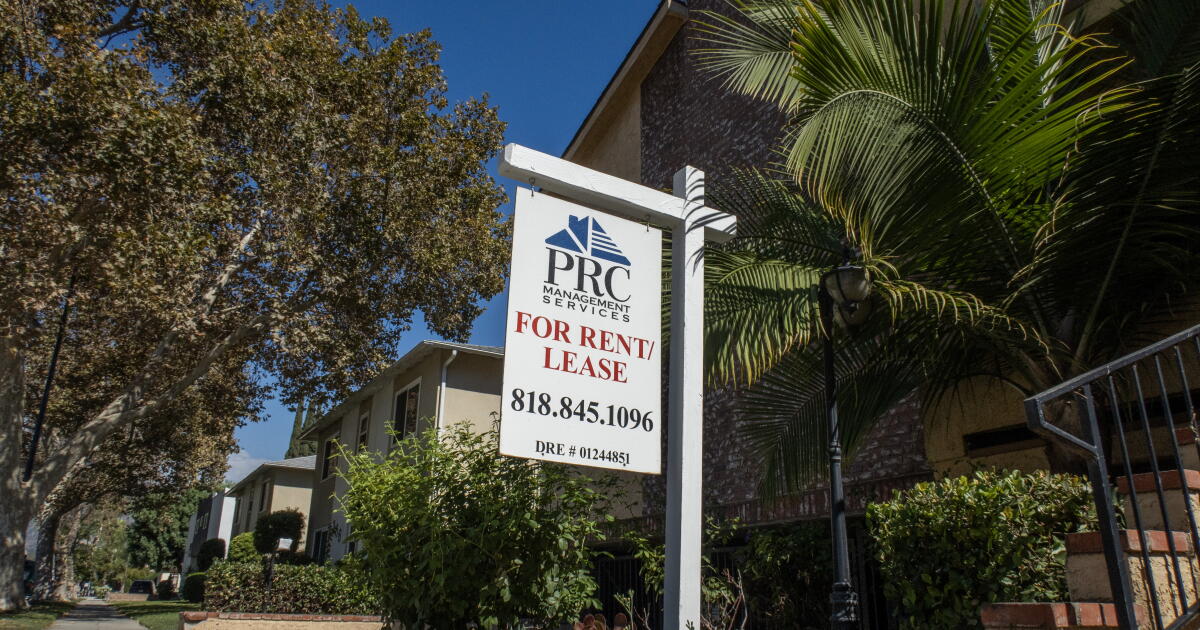
Despite years of rising rents, Los Angeles County still has hundreds of thousands of affordable apartments.
But the region’s cheapest rentals are also the oldest, and they’ll probably need costly upgrades in the years ahead. Some units are crumbling to the point of being unlivable. Others are at risk of being torn down to make way for more profitable projects.
This marks a major challenge at a time when developers aren’t building enough new housing to keep up with demand.
“It underscores a massive slowdown in construction over the past several decades,” said USC research professor Jared Schachner, who co-wrote a Lusk Center for Real Estate study on aging affordable housing. “When you’re not bringing in a large influx of units, that’s the result: a large share of old buildings with a higher probability of being dilapidated.”
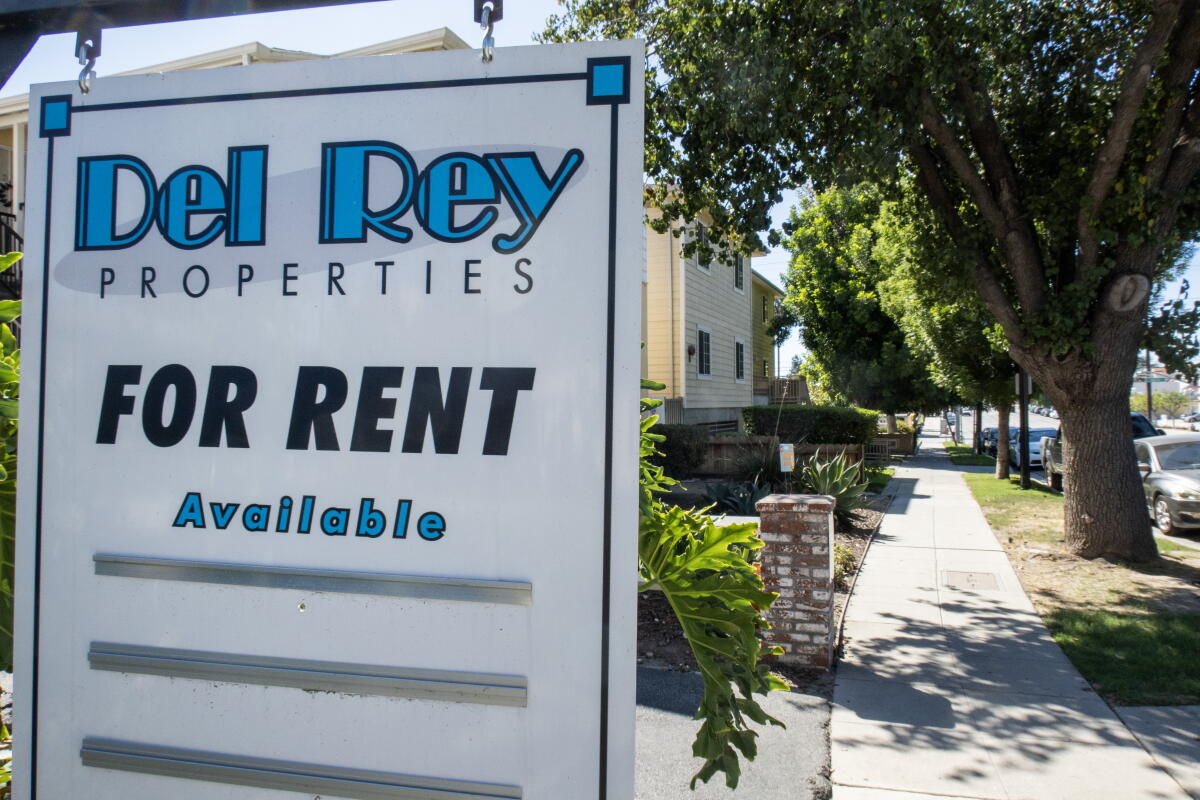
A rental sign on Alameda Avenue in Burbank on Oct. 7, 2026.
(Myung J. Chun / Los Angeles Times)
As the L.A. area grapples with an affordability crisis, local governments have a tightrope to walk. Should they enact policies to preserve crumbling homes and keep rents down? Or should they encourage upgrades to the aging housing stock, bringing in more comfortable and energy-efficient, yet more expensive, properties?
As a metropolis, L.A. is relatively young compared with other urban areas, but its housing stock is old. The average L.A. County home is 58 years old — 11 years older than the California average and 16 years older than the national average.
That’s largely due to a building boom in the 20th century that has since slowed significantly. In the 1950s, more than 70,000 housing units were built in L.A. County. In the 2010s, fewer than 15,000 were added, according to the report.
The USC study focused on “naturally occurring affordable homes” that aren’t subsidized by the government in order to be affordable. In the midst of a housing crisis, when governments have tight budgets and limited power to influence rents, these naturally occurring affordable homes are crucial for lower-income residents.
According to the study, the most affordable apartments tend to be in five- to 19-unit buildings built before 2000. These make up 43% of L.A. County’s multifamily housing stock with five units or more — a sizable chunk.
“That segment is a promising place for intervention,” Schachner said. “What types of resources need to be provided to ensure they remain affordable?”
Fixing up aging affordable apartments can be part of the solution, but it depends on who’s financing the fixes. The government can subsidize renovations and dictate that rents remain affordable. But private developers and homeowners will want higher rents to offset their investments, especially because construction and labor costs have skyrocketed since the COVID-19 pandemic.
Schachner suggested that local governments should concentrate their efforts on areas with a lot of naturally occurring affordable housing. The Koreatown-Mid-City area, where 62% of rentals are naturally occurring affordable homes, has the highest rate in L.A. County, followed by Hollywood-Studio City at 61% and Burbank-Glendale at 57%, according to the USC study.
“Policymakers could look to preserve units in these areas because the affordable housing is so densely concentrated,” he said.
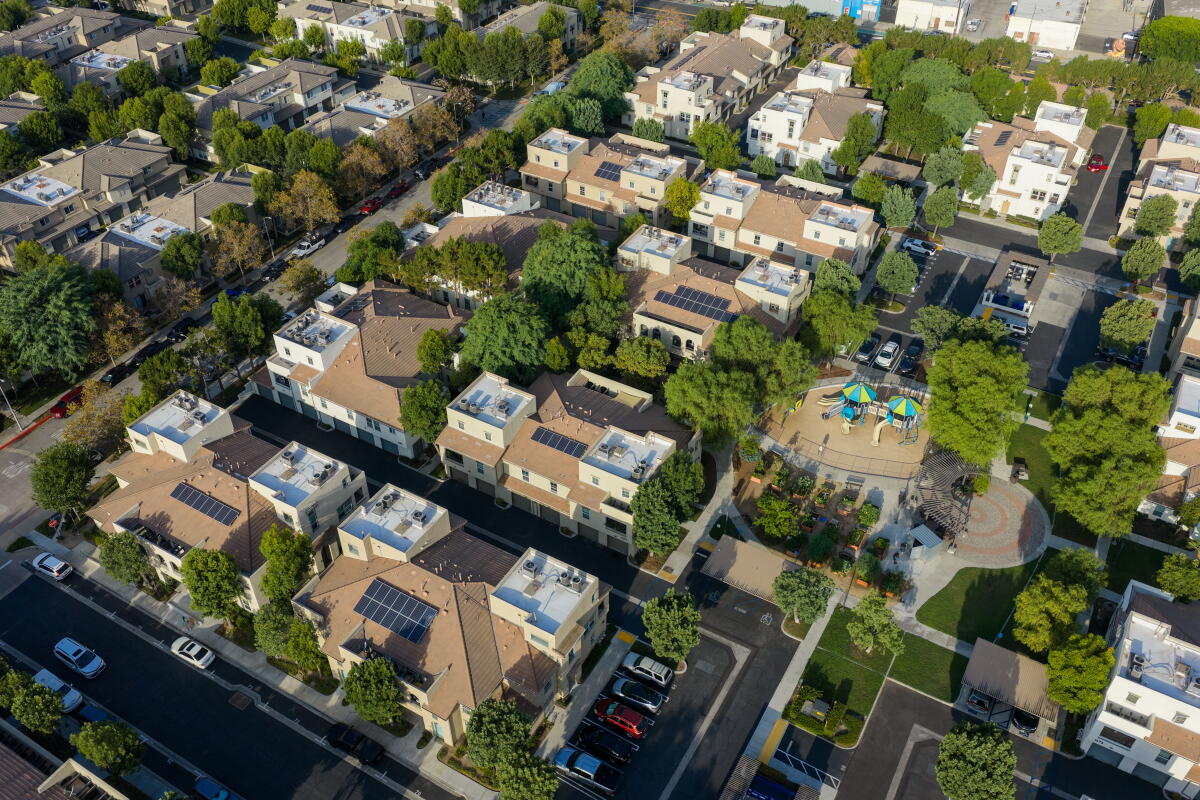
Pueblo del Sol, an affordable housing community in Boyle Heights.
(Allen J. Schaben/Los Angeles Times)
Another approach would be to preserve affordable housing in neighborhoods with the oldest homes, which tend to be in East L.A. and South L.A. According to a 2020 map by Abundant Housing L.A., the oldest neighborhoods include Cypress Park, Vermont Square, South Park and Harvard Park, all with average home ages of at least 90 years.
“Solving the housing crisis that has been ignored for decades will not be fixed by one approach — it will take both preservation and the acceleration of affordable housing,” said Paige Sterling, a spokesperson for Los Angeles Mayor Karen Bass. “Since taking office, Mayor Bass has cut red tape and eliminated the bureaucratic barriers that have slowed housing production for decades.”
Donovan Rypkema, principal of consulting firm PlaceEconomics, said it’s unrealistic to rely on the private sector, including developers and landlords, to prioritize affordable apartments, because building luxury projects is more profitable. Therefore, he said, governments need to intervene.
“We tend to think of housing as a private good, but on the affordable side, there’s a public good aspect,” he said. “Waiters, teachers and janitors can’t afford the housing that exists. But the city needs that workforce, so there’s a public benefit to having houses that are affordable to them.”
Rypkema said the region could look to San Antonio’s Under 1 Roof program, which provides low- to moderate-income homeowners with one-time grants of up to $19,000 to fix worn or damaged roofs. Local governments could enact similar programs to help landlords fix up run-down rentals and keep them from being replaced with more expensive housing.
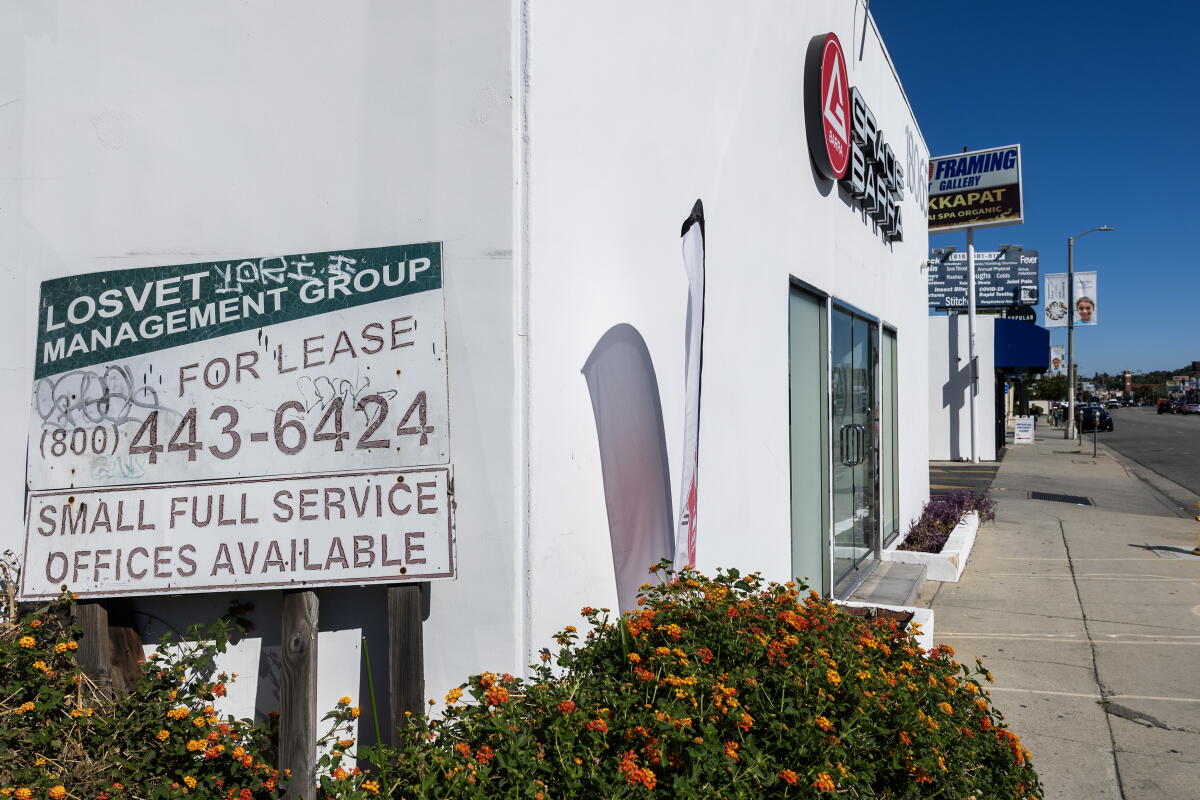
An Encino building on Oct. 7, 2026.
(Myung J. Chun / Los Angeles Times)
“It’s tricky to invest public resources in private homes, but what’s the cost if we don’t?” Rypkema said. “Houses fall apart, and developers tear them down.”
He added that preservation should be the top priority. To address the affordability crisis, the region needs new homes, but not at the expense of the ones it already has, because new construction won’t command cheap rents, he said.
Another possible option? Build our way to affordability.
Azeen Khanmalek, executive director of the nonprofit YIMBY (“yes in my backyard”) group Abundant Housing L.A., said the city’s problem is that 75% of its residential land is zoned for single-family homes.
“We’re limiting the map of where new housing is able to be built, so there’s more economic pressure on neighborhoods like Echo Park and Silver Lake that have aging affordable housing stock,” Khanmalek said. “An easy way to reduce that development pressure is to expand the map of where we can build new dense housing.”
New laws such as state Senate Bill 79, which increases zoning density near transit stops statewide, could be key to building that housing. L.A. delayed SB 79’s implementation until 2030, but as part of that delay is allowing projects of up to 16 units in 55 single-family zones throughout the city.
As for the private sector, Khanmalek said many small landlords are being pushed underwater by deferred maintenance costs, with some selling to larger companies that have the money for repairs. Smaller-scale landlords tend to be more flexible with tenants on issues such as late rent, data show, so the city should award grants or subsidies to help those landlords keep their properties habitable, Khanmalek said.
But ultimately, he argues, building new homes will help stabilize the market.
“If we have an adequate supply of new housing, it’s not as desperate of a situation when old properties get to a place where they need to be torn down,” he said.
The city of L.A. is on a tight budget, but it does have a relatively new tool to help save affordable apartments: Measure ULA. The so-called mansion tax, levied on high-end property sales, has raised more than $1.4 billion for affordable housing initiatives since 2023, including the preservation of at-risk apartments.
The City Council approved a $466.6-million round of funding in September, which developers, nonprofits and other organizations can apply for through Dec. 4. In addition, Sterling said Measure ULA’s Small NOAH program will have $102 million in funding available over the next four years.
“Preservation has been on everyone’s mind,” Khanmalek said. “There are pots of money out there to be utilized.”