
In August, the Del Mar City Council cut its summer recess short for a special meeting. It lasted about 10 minutes and had one item on the agenda. That item was not a plan to deliver the mere 113 affordable homes the state requires of Del Mar by 2029. Instead, the council voted unanimously to ask county and federal prosecutors to investigate California Attorney General Rob Bonta and Del Mar Fairgrounds board member Mark Arabo.
Their crime? Insisting that Del Mar actually build the affordable housing it owes.
Since Del Mar wants to talk about lawbreaking, let’s review the case file.
Del Mar’s alibi is that it had a plan. For years, the city’s plan was to meet more than half its affordable housing obligation on someone else’s land: the Fairgrounds, a state property, where the only site the fair board would accept sits inside the city of San Diego. In other words, Del Mar’s plan for housing working families was to put them just outside its own city limits.
San Diego never committed to handing over the land. In August, with a November 2026 state deadline looming, the fair board voted to walk away.
Every city is responsible for its own share. Wealthy coastal cities cannot keep outsourcing theirs while the service workers who keep them running are pushed farther inland.
The evidence starts with Del Mar’s own state-certified Housing Element, which names a backup if the Fairgrounds deal fails: the North Bluff.
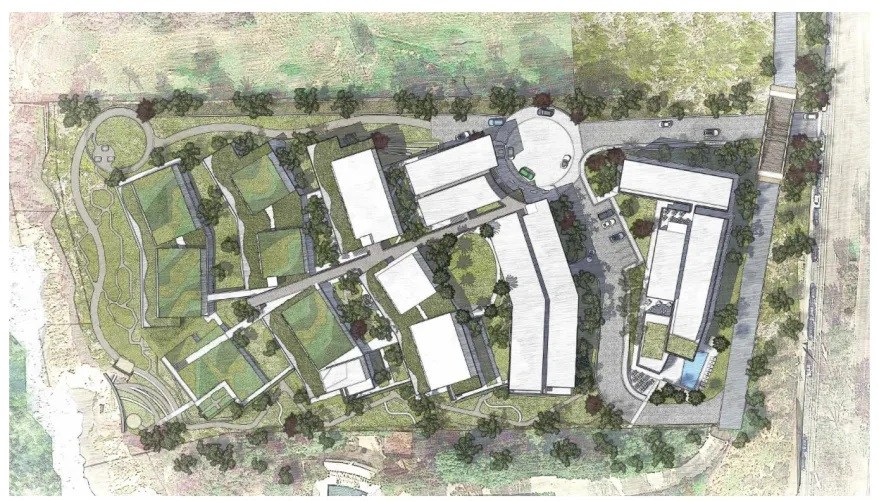
That’s where a proposed development called Seaside Ridge has been ready to build since 2022. The project would bring 259 homes, including 85 affordable units, plus an oceanfront public park and trail paid for and maintained by the project, not by taxpayers. That is more affordable housing than the roughly 61 units the Fairgrounds plan could have delivered.
Seaside Ridge should have been approved under California’s Builder’s Remedy, which limits a city’s power to block housing when it lacks a compliant housing plan. Del Mar lacked one at the time. The city refused to process the application, then formally denied it, and the owner is now suing.
Then there are the warnings. Since December, the attorney general has sent Del Mar a series of letters urging it to follow state housing law. The city’s response was to refer the attorney general to federal prosecutors. Del Mar isn’t trying to uncover misconduct. It is trying to prevent affordable housing from being built.
This is not Del Mar’s first offense. In 2020, the state found Del Mar out of compliance for failing to complete rezoning it promised in its own housing plan. In 2023, Del Mar joined a lawsuit against the state to escape SB 9, a law allowing duplexes on single-family lots. Last year, the city asked the governor to veto SB 79, the landmark housing bill of the decade that allows more housing to be built near transit.
And on Sept. 22, the council approved, on its consent calendar, a nearly $170,000 contract to draft a brand-new zone for the North Bluff. Back in May, the city cast that rezoning as preparation for its next housing plan, which doesn’t start until 2029. That was the same night it voted 4-0 to deny Seaside Ridge, the project ready to build on that very bluff.
The priors confirm what we already knew: Del Mar treats the coastline like a Gilded Age estate. Workers can come in to cook, clean and lifeguard, as long as they leave by sundown.
That leaves the sentence. Under AB 712, which took effect in January, a city that loses a housing lawsuit must pay the developer’s legal fees. If the state warned the city first, as it has warned Del Mar, the court must also impose fines of at least $10,000 per home. For Seaside Ridge’s 259 homes, that would top $2.5 million.
Taxpayers, not council members, will foot that bill.
Enough is enough.
The council should call off its witch hunt, implement the rezoning its own Housing Element already promises, and settle with Seaside Ridge so these homes can get built.
Del Mar residents who don’t want to spend their next dinner party explaining why they live in the town that tried to prosecute public servants to block affordable housing should tell the council so at its next meeting.
As for the investigation, Del Mar’s council members went looking for lawbreakers. They didn’t need to call prosecutors. They just needed to look in the mirror. Every warning letter the attorney general sent names the same suspect: the city of Del Mar.
Rodriguez is president of YIMBY Democrats of San Diego County.