
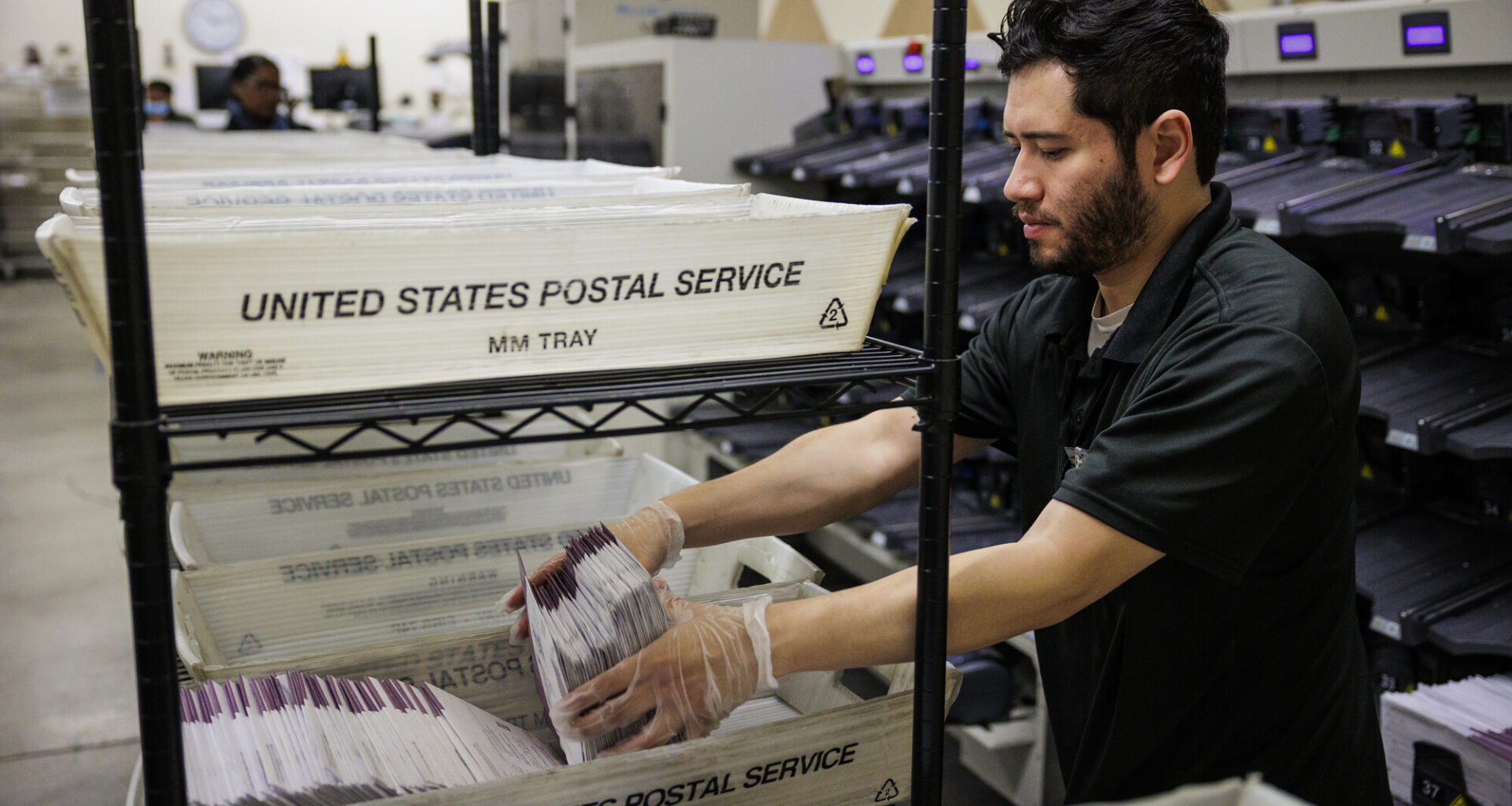
Election officials across California, including in Contra Costa County, received letters demanding officials verify ballots that may belong to noncitizens.
Safiyah Riddle, The Associated Press
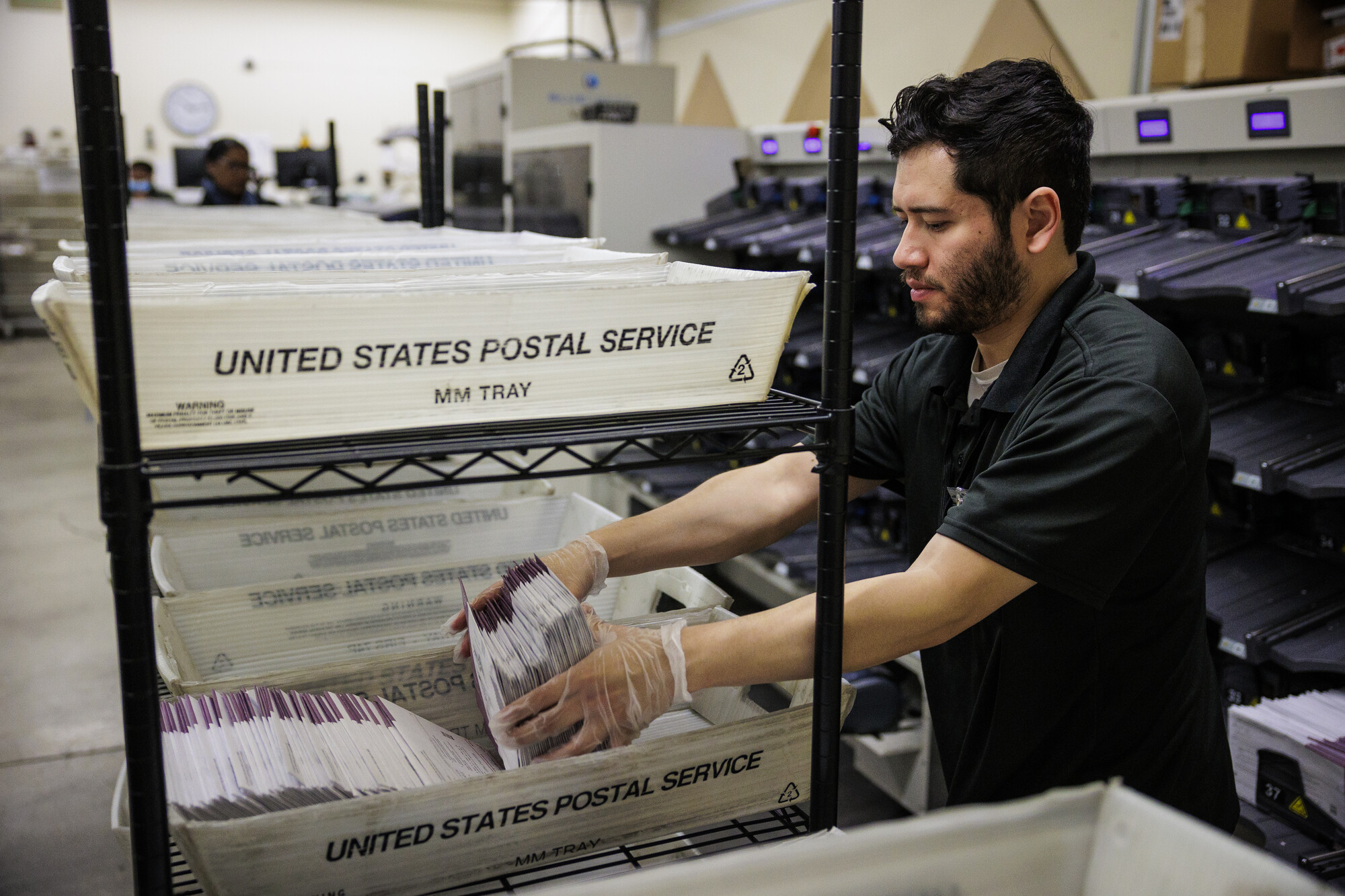
Poll worker Eddy prepares mail-in ballots for sorting at the Contra Costa County Elections Operation Center in Martinez on March 5, 2024. (Martin do Nascimento/KQED)
Federal prosecutors sent letters to county registrars across California on Friday demanding that local officials set aside and verify ballots that the Department of Justice said may belong to noncitizens, according to the Los Angeles County registrar and a letter obtained by The Associated Press.
The letters are the latest escalation in a legal battle between California and President Donald Trump’s Department of Justice, which has recently focused on the state in its efforts to root out noncitizen voting ahead of the midterm elections. Data shows illegal voting by people who aren’t U.S. citizens is incredibly rare, difficult to prove and has not been shown to change the outcome of races.
Earlier this month, the federal government targeted Los Angeles County and the California Secretary of State’s office in a lawsuit that aimed to block them from counting the votes of roughly 20,000 people who are “likely” noncitizen voters. A hearing on the case is scheduled for Tuesday.
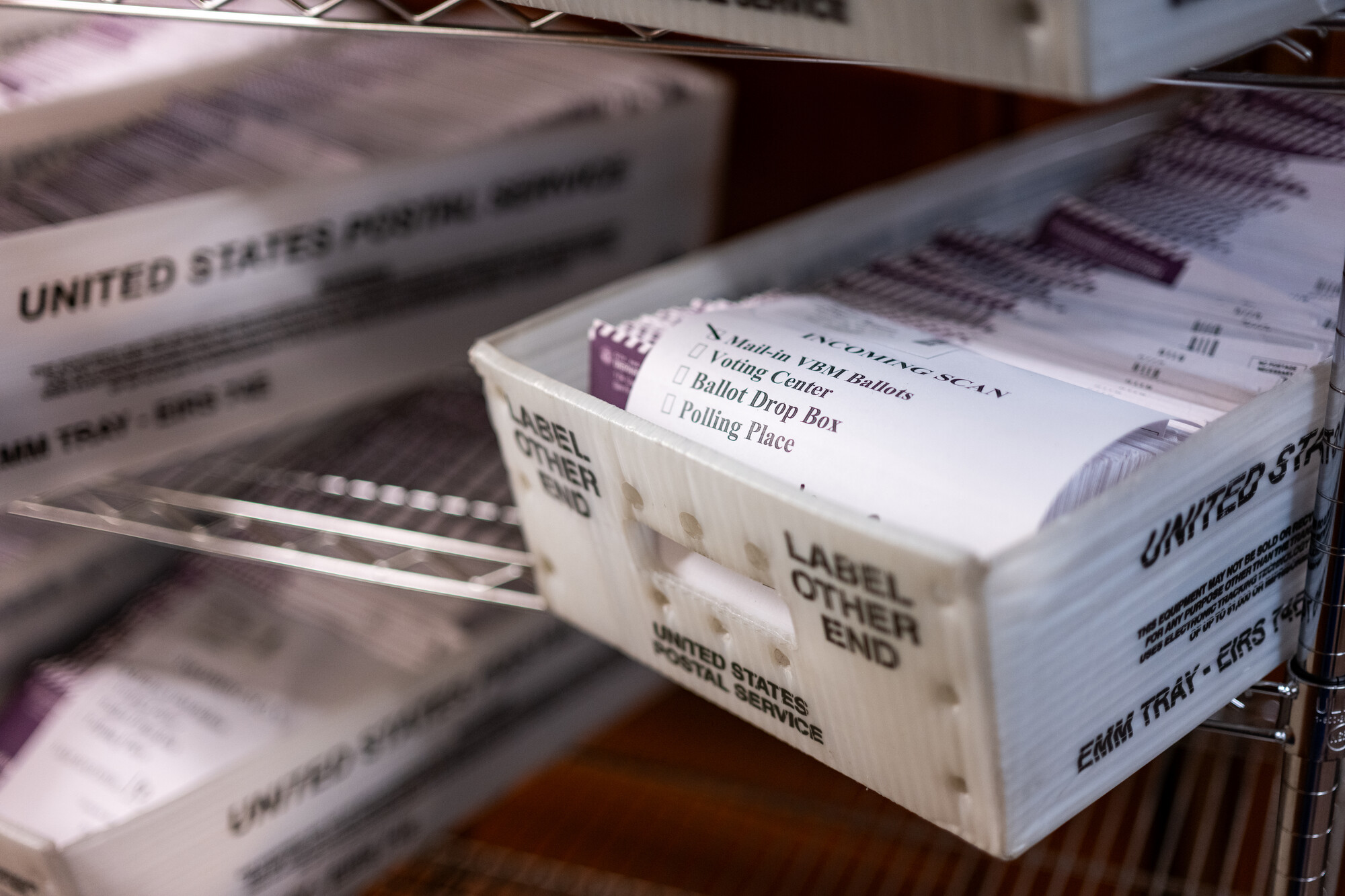 Ballots sit in crates before being counted at the City Hall Voting Center in San Francisco on Oct. 30, 2025, ahead of last year’s statewide special election. (Beth LaBerge/KQED)
The Trump administration asked the 9th Circuit court of appeals to rule on the lawsuit barring a decision from the district judge assigned to the case. They set a deadline for Saturday.
Now, according to the LA County registrar’s office, at least 18 counties across the state have received similar letters. They have been given a 48 hour deadline from Friday to provide identifying information corresponding with ballots that the federal government believes were sent to noncitizens illegally registered to vote. The letter requests that county officials also sequester any ballots where citizenship cannot be verified.
“Any election official who knowingly processes the ballot of a noncitizen is opening themselves to legal jeopardy,” said First Assistant U.S. Attorney Bill Essayli.
East Bay Rep. Mark DeSaulnier, whose district includes parts of Contra Costa County, said in a statement that Contra Costa election officials were among those that received a letter.
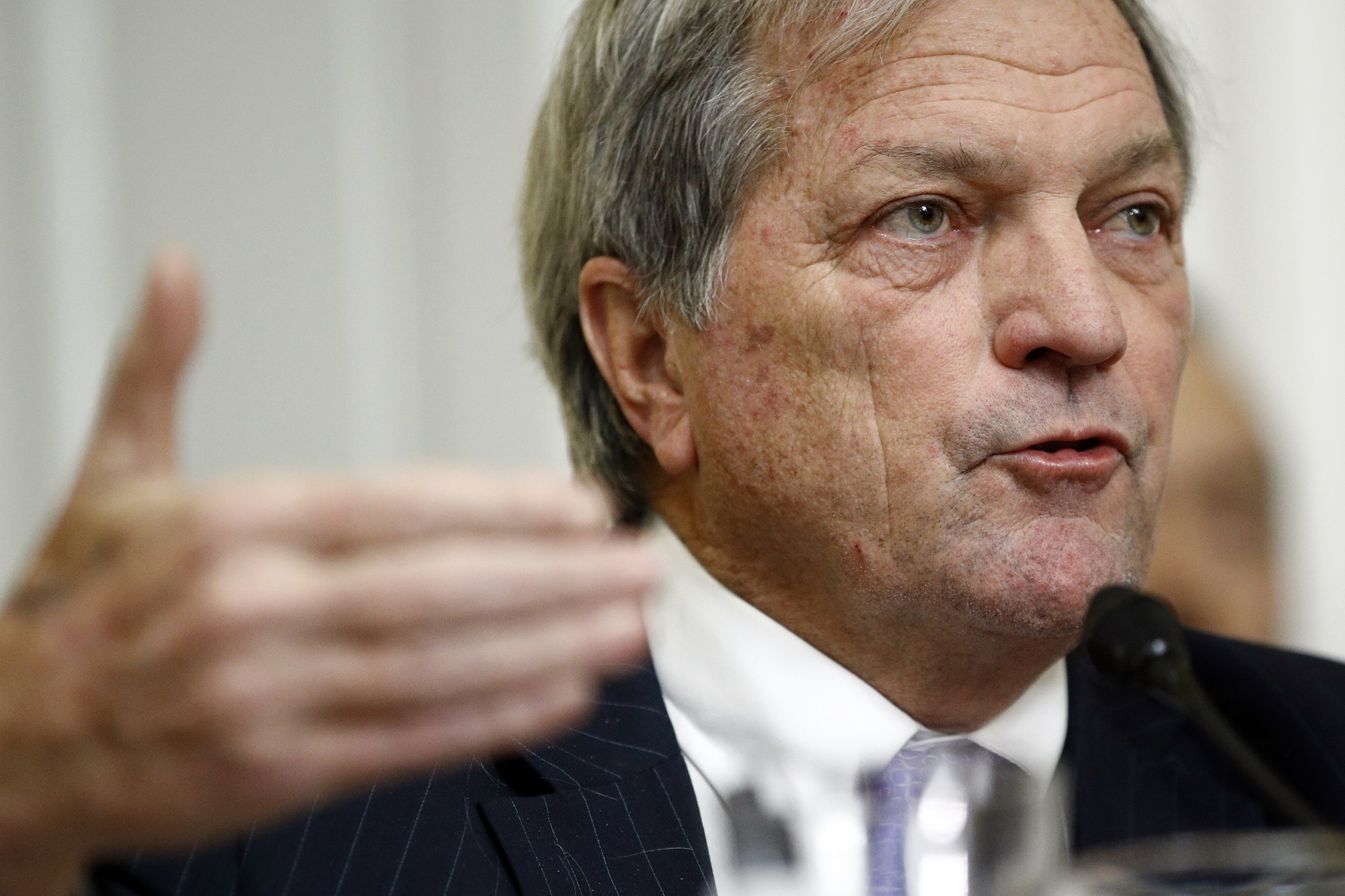 Rep. Mark DeSaulnier (D-CA) speaks during a House Rules Committee hearing on the impeachment against President Donald Trump on Dec. 17, 2019 in Washington, D.C. (Patrick Semansky-Pool/Getty Images)
“I have confidence that local elections officials are conducting this election in accordance with all state and federal laws and working to protect the Constitutional rights guaranteed to American citizens, including ensuring that every eligible voter who wants to participate in the upcoming election has the opportunity to do so,” DeSaulnier said.
The Justice Department is asking counties to send information about the voters it suspects are noncitizens including social security numbers, ID information, a copy of their registration and more.
That information can help the government and state quickly assess each person suspected of illegally registering to vote, said the letter sent to San Bernardino County voting officials. The letter says the government’s list of suspected noncitizen voters includes 1,133 people from the inland Southern California county.
Sen. Alex Padilla, ranking member of the U.S. Senate Rules and Administration Committee with oversight over federal elections, said in a statement that the Trump administration is “afraid and desperate” and attempting to interfere in the state’s elections.
“Trump’s DOJ has not provided any evidence for their claims of massive voter fraud. They’ve admitted that the data they point to is inaccurate and unreliable,” Padilla said. “No matter how many lawsuits they file or how many election officials they threaten, they do not have the authority to interfere.”
KQED’s Samantha Kennedy contributed to this report.