
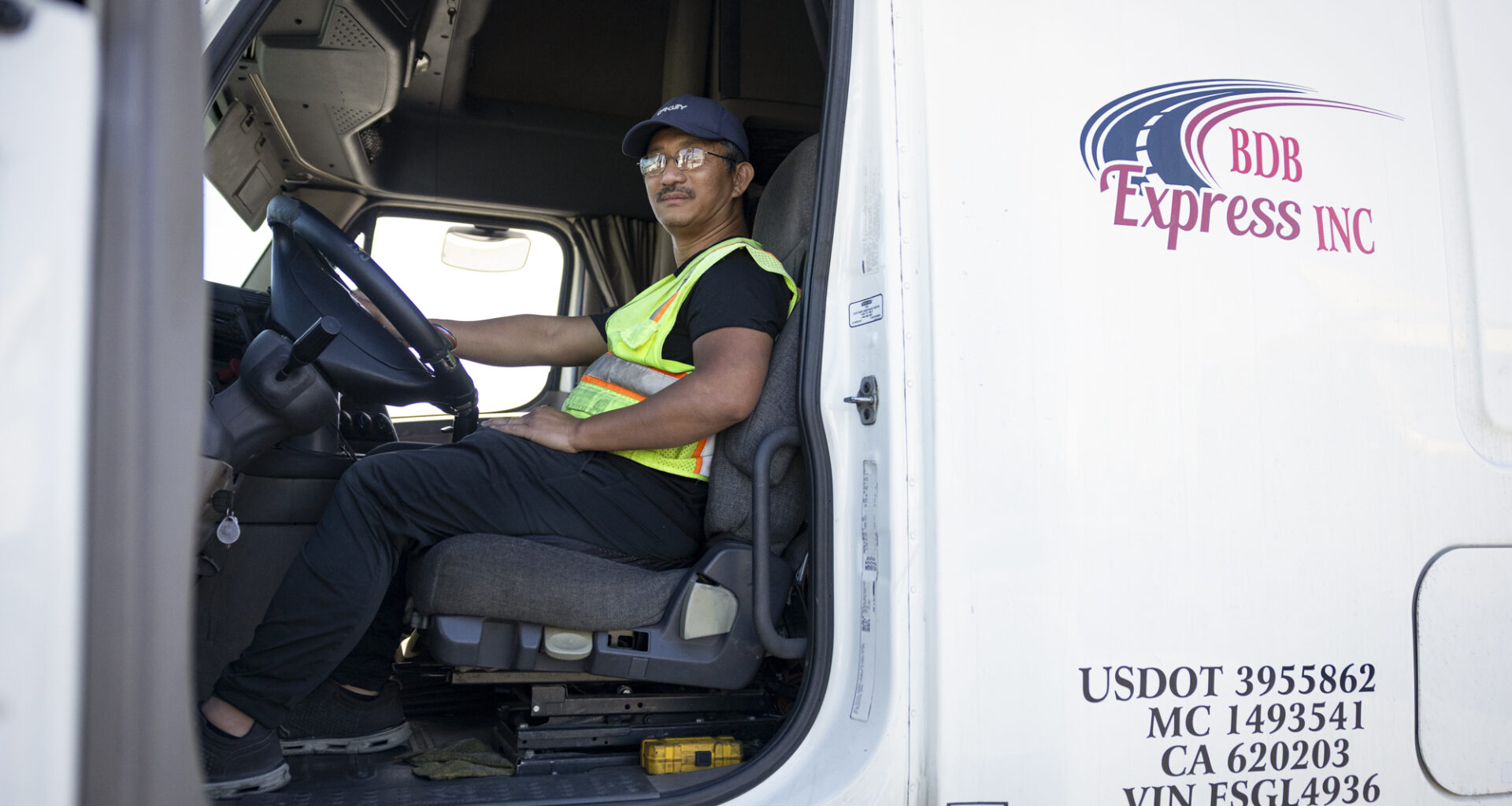
Danny Bui’s semi-truck, a 2015 Freightliner Cascadia, is stocked with the essentials: a bed, a microwave, a refrigerator and a hearty supply of instant noodles.
These comforts keep the 49-year-old father of four going during long days driving as a licensed motor carrier — the industry term for an independent contractor.
“ I love the job. I love its independence. You want more money, you work hard,” Bui said in the expansive yard of PCC Logistics, the shipping company he works for at the Port of Oakland.
Over the past six years, Bui, who immigrated to the United States from Vietnam when he was 14, has relied on trucking to support his family in San José. But as the wars in Iran and Ukraine have driven diesel prices to record levels — over $8 per gallon on average in California, up $3 more than a year ago — Bui and other truckers said they’re struggling to afford loan and insurance payments and meet the high costs of living in the Bay Area, from housing to groceries.
Bui said he pays double what he used to— around $1,400 — to fill up his 240-gallon tank.
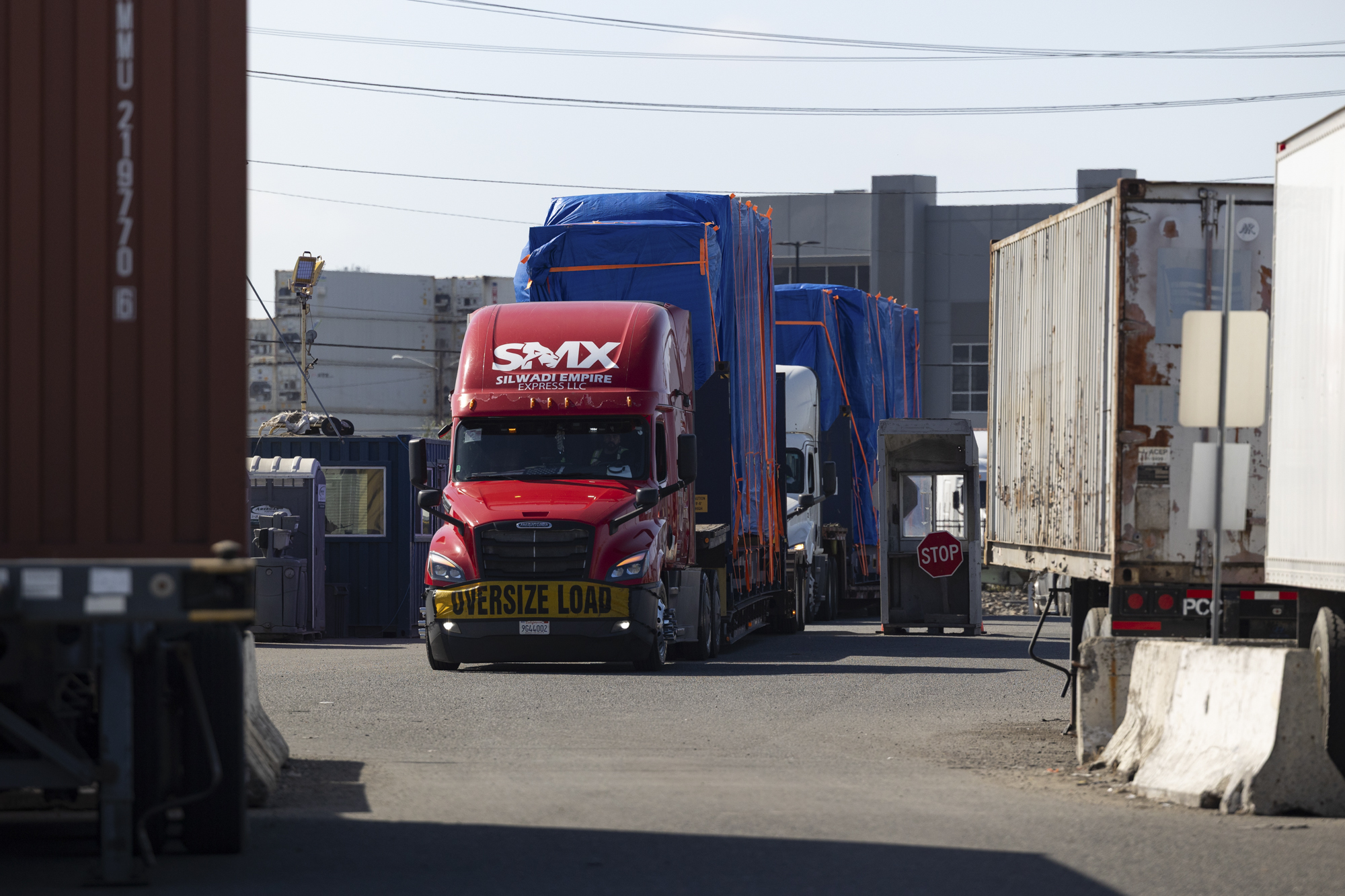 Trucks pull oversized loads into the Port of Oakland where the loads are checked by U.S. Customs and Border Protection on Sept. 28, 2026. (Nina Glick/KQED)
“ Before, you make money. Now, you try to cover the cost. That’s how it works now,” he said. “ We just live day by day.”
PCC works with approximately 85 licensed motor carriers (among 800 at the port) and owns 10 company trucks. The company relies heavily on the licensed motor carriers — as opposed to drivers employed by the company — to cut down on costs, such as leasing and purchasing trucks and paying for fuel and insurance.
The company specializes in trucking meat and produce from the Central Valley to the Port of Oakland, where goods are loaded onto ships bound for Asia. This time of year, PCC distributes the Central Valley’s pomegranate and kiwi harvests, having wrapped up shipping honeydew melons out of the Fresno County city of Firebaugh, according to Steve Gardner, director of transportation for PCC.
But the company’s independent truckers have become reluctant to make these long hauls because of high diesel prices, Gardner said. Diesel semi-trucks typically get around 7 miles to the gallon, he said.
The longer prices remain elevated, the less likely truckers will be able to absorb the financial losses, ultimately affecting the price and availability of everyday retail goods, said Severin Borenstein, a petroleum industry expert at UC Berkeley.
“ In the short run, truckers end up eating some of it, and retailers end up eating some of it. But gradually, over time, they can’t keep doing that, and you get less supply and the price goes up,” he said.
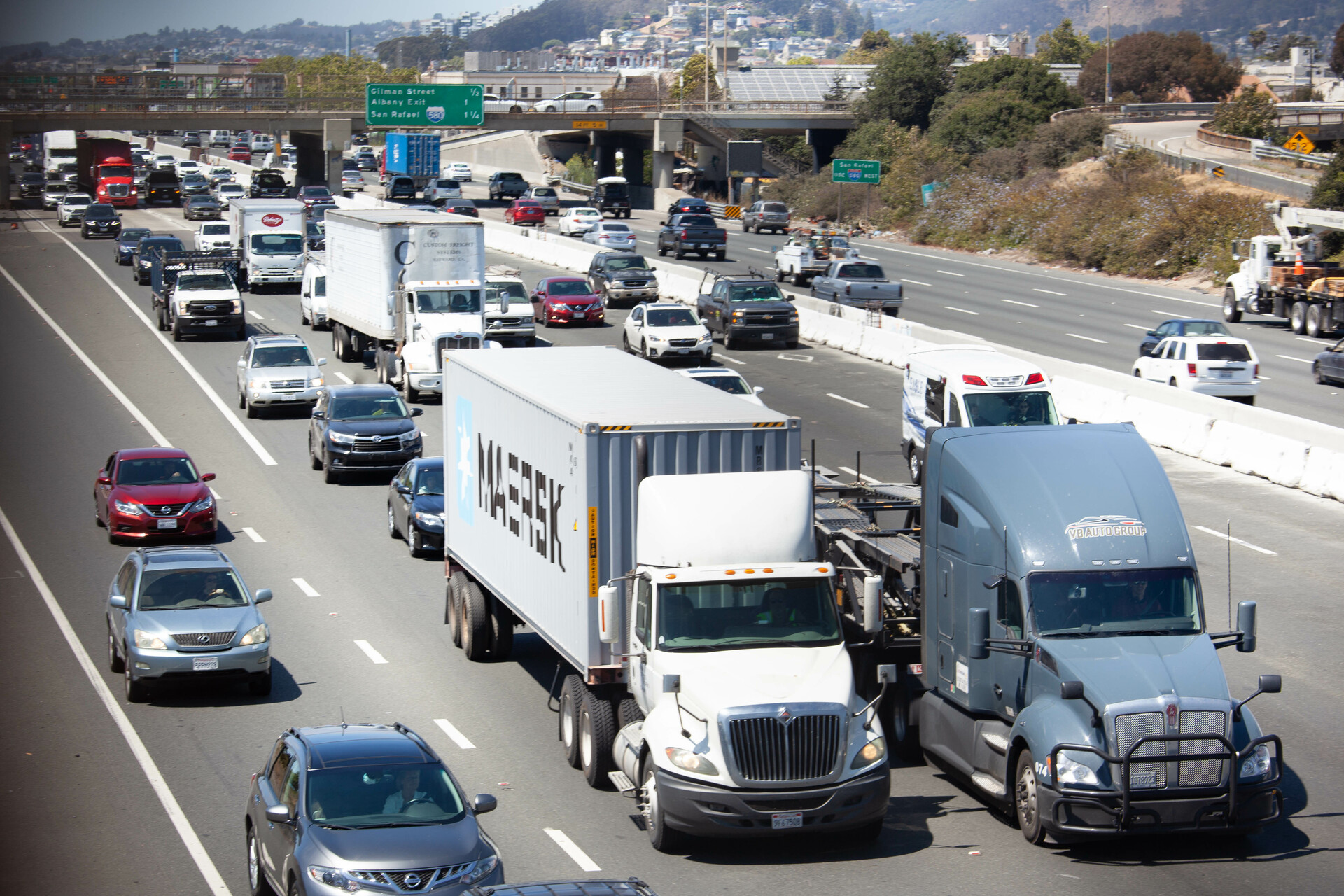 Traffic on Interstate 880 toward Oakland jam-packed with cars and diesel trucks mid-afternoon on June 28, 2021. (Joyce Tsai/KQED)
That’s especially true for goods like produce, which is heavy relative to its value, so the shipping costs are significant, Borenstein said.
Even if the wars were to end tomorrow, the damage done by missile and drone strikes to oil fields and refineries in Russia and the Middle East would take months to over a year to repair, he said.
“If I were a trucker, I would certainly not count on diesel prices getting back to pre-war levels any time in the next many months, possibly more than a year,” he said, referring to the start of the Iran war in late February 2026, when the state’s diesel prices were around $5 a gallon.
Fuel prices in California are typically higher than the rest of the country due to a number of factors, namely taxes and the state’s emission reduction programs. The average price for a gallon of diesel in California is currently about $2 higher than the national average, according to AAA.
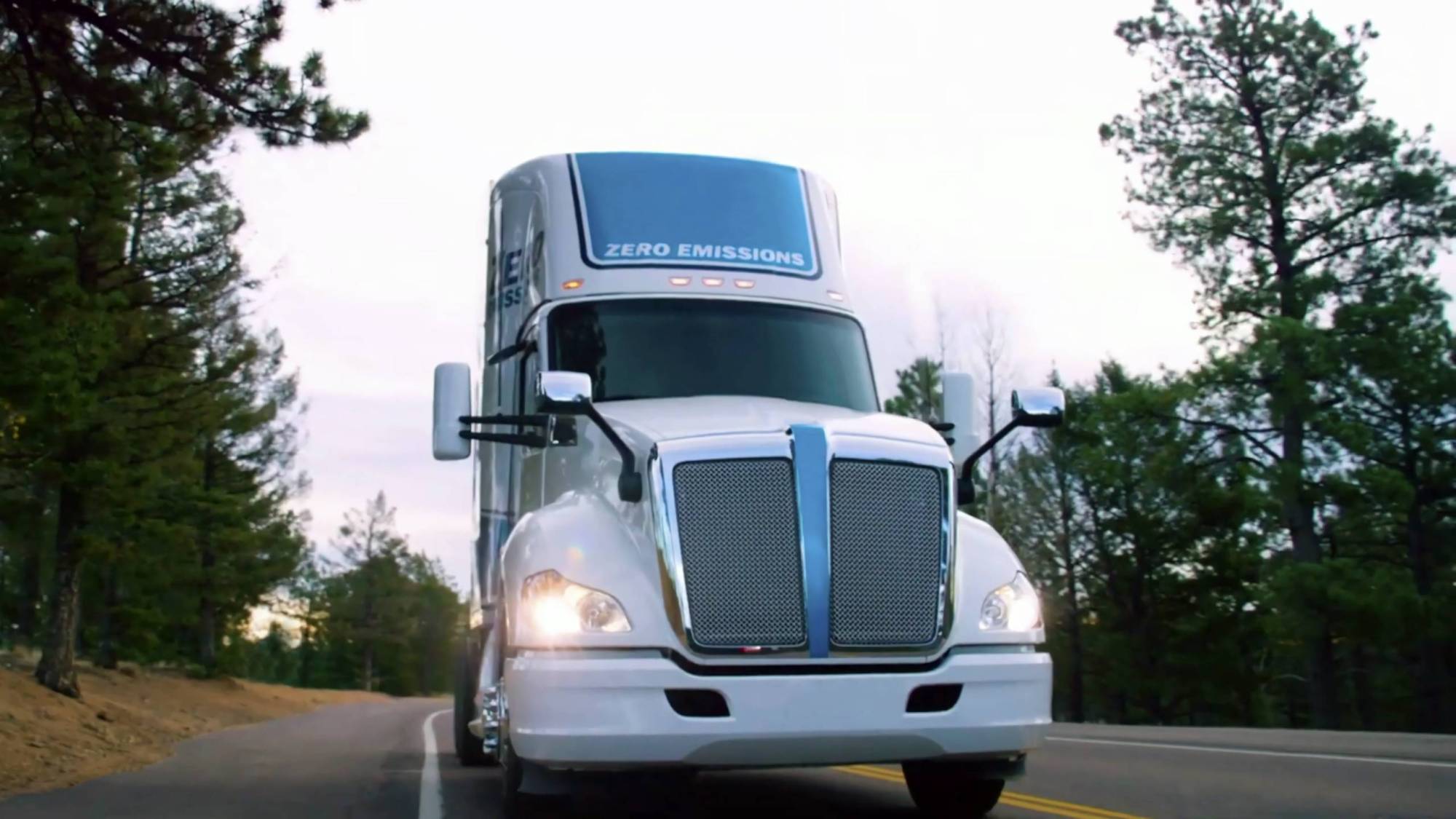 Close-up of a hydrogen fuel cell truck driving on a road. According to the California Air Resources Board, heavy-duty fossil-fuel trucks spew 70% of the state’s smog-forming gases and 80% of carcinogenic diesel pollutants. (Aranga87/Getty Images)
In August, the California Energy Commission approved a $95 million plan to expand zero-emission vehicle infrastructure across the state, including heavy-duty kinds for port and freight trucking. Gov. Gavin Newsom said this investment is partly aimed at “breaking Big Oil’s grip on Californians’ wallets.”
Technology, like electric semi-trucks, could help insulate truckers from volatility in the diesel market, but Gardner said those alternatives don’t yet have the infrastructure they need to be feasible.
“ You can put 1,000 electric trucks over here, but I don’t have any place to charge them,” he said.
For now, Bui has elected to only take short jobs, running loads between the port and nearby warehouses, to help minimize his exposure to high fuel costs. But he said it’s not a long-term solution.
“ The diesel is killing the business,” Bui said. “ I would give it until the end of this year. If not, then I’ll have to find something else to do.”