
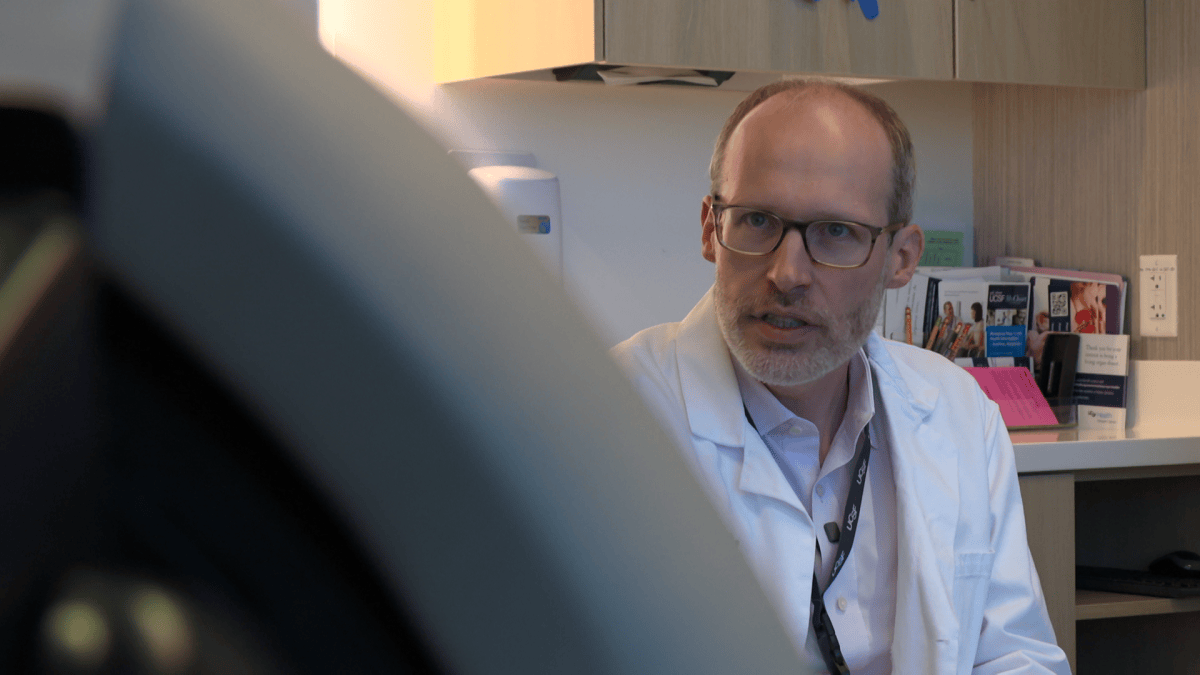
Over the course of his medical career, UCSF transplant surgeon Dr. Chuck Rickert has been involved in roughly 300 transplant surgeries.
Two of them, however, were different from all the rest.
Those were the two in which Rickert was the donor, not the doctor.
“My life has been so enriched by others,” Rickert said. “And I’ve only ever felt that what I have to do and what I want to do is to spread that to others.”

NBC Bay AreaNBC Bay Area
Rickert’s journey as a living organ donor began in 2008, while he was still in medical school.
He remembers the moment clearly. He was working in a lab and listening to the radio when he heard a discussion about the value of organ donation. It prompted him to consider something he had never seriously contemplated before.
“There was this sort of thought process of, well, if the risks are this low, the benefit is this high, why should I not consider doing this?” Rickert recalled.
Within months, one of Rickert’s kidneys was removed and given to a complete stranger in the hope of saving that person’s life.
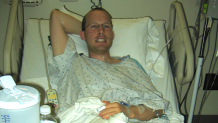
Dr. Charles RickertDr. Charles Rickert
The experience also changed the course of Rickert’s own life. He became part of the organ donation community and was so moved by the experience that he decided to pursue a career as a transplant surgeon.
But even after donating a kidney, and going on to help hundreds more patients through transplant surgery, Rickert felt he wasn’t done.
“Over the last few years, I’ve been seriously thinking about what else, you know, if I could donate more,” he said, adding that he continued to be inspired by other donors.
Two months ago, Rickert became a living donor again, this time giving a portion of his liver to another stranger.
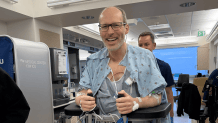
Dr. Charles RickertDr. Charles Rickert
In deciding whether to donate a second time, Rickert found himself returning to much the same reasoning that led him to give away a kidney years earlier. This time, however, he also had years of professional experience showing him firsthand how living donors can recover.
“Kind of came back to the same thoughts that I had before, which was, well, the benefit is going to be so great,” Rickert said. “And the risks, I’m seeing with my own eyes that people do well if they’ve been donors in this way.”
For Rickert, the decision is an extension of the philosophy that has shaped both his personal life and his career: that the generosity he has received from others is something worth passing along.