
As Berkeley’s legendary 924 Gilman approaches its 40th anniversary as a cornerstone of East Bay punk, it’s worth looking back at the informal DIY spaces that helped shape the scene from which it emerged.
Before Gilman became a destination for all-ages punk shows, a loose network of grassroots venues and makeshift gathering places—including Barrington Hall in Berkeley, Valencia Tool & Die in San Francisco, and Your Place Too in North Oakland—gave emerging bands places to play and young punks a scene to call their own.
In Emeryville, New Method Warehouse became one of those formative spaces. For a few pivotal years in the 1980s, the former laundry served as home, rehearsal space, and underground venue for musicians, artists, and young punks. Its DIY culture helped establish a model that Gilman would later bring to a wider audience.
Punk Moves East
By the late 1970s, San Francisco’s Mabuhay Gardens—affectionately known as “The Mab”—had become a focal point for the Bay Area’s emerging punk scene. The North Beach club hosted early punk acts including the Avengers, Dead Kennedys, Flipper, the Nuns, and Crime, alongside influential touring acts such as Devo and the Ramones.
As punk’s popularity grew, so did demand for shows, helping draw the scene across the Bay Bridge, where all-ages venues emerged to serve a growing audience of young punk fans.
Berkeley’s Ruthie’s Inn, opened in 1982 by famed promoter Wesley Robinson at 2618 San Pablo Avenue, became a key venue for Bay Area thrash-metal bands like Exodus, Slayer, and Metallica, as well as punk and hardcore acts like Flipper, D.R.I., and MDC. Robinson also had ties to the Emeryville Warehouse on Park Avenue, a structure with its own storied musical past.
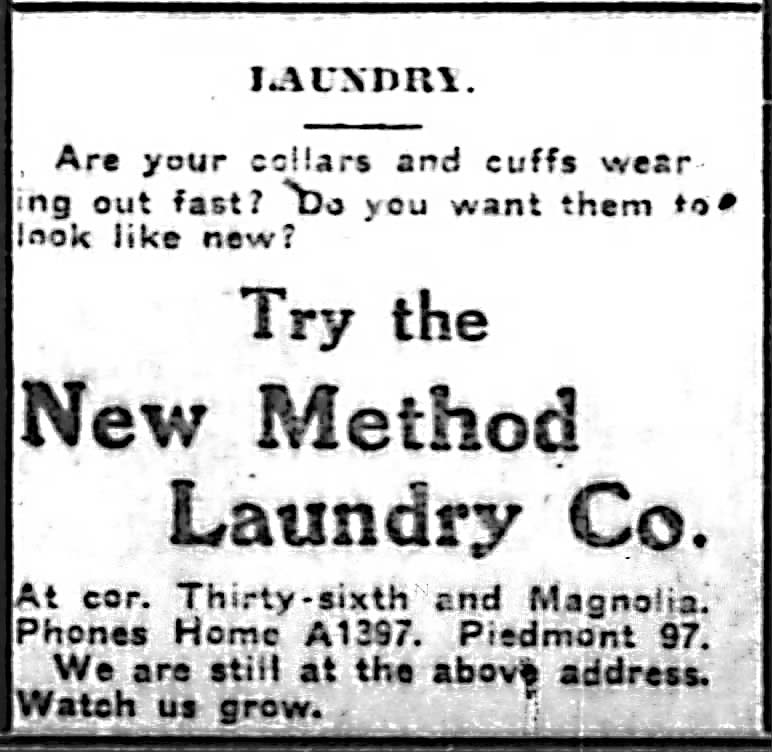 An Oakland Tribune article from December 29, 1907, documents the building’s early history
A Warehouse With a Past
Deindustrialization during this time left parts of Emeryville and West Oakland dotted with vacant or underused warehouses, offering room for musicians and artists to rehearse, perform, create, and sometimes live through informal “grey-market” rentals or even squatting. New Method was one such space, where industrial vacancy helped foster a DIY music community outside traditional venues.
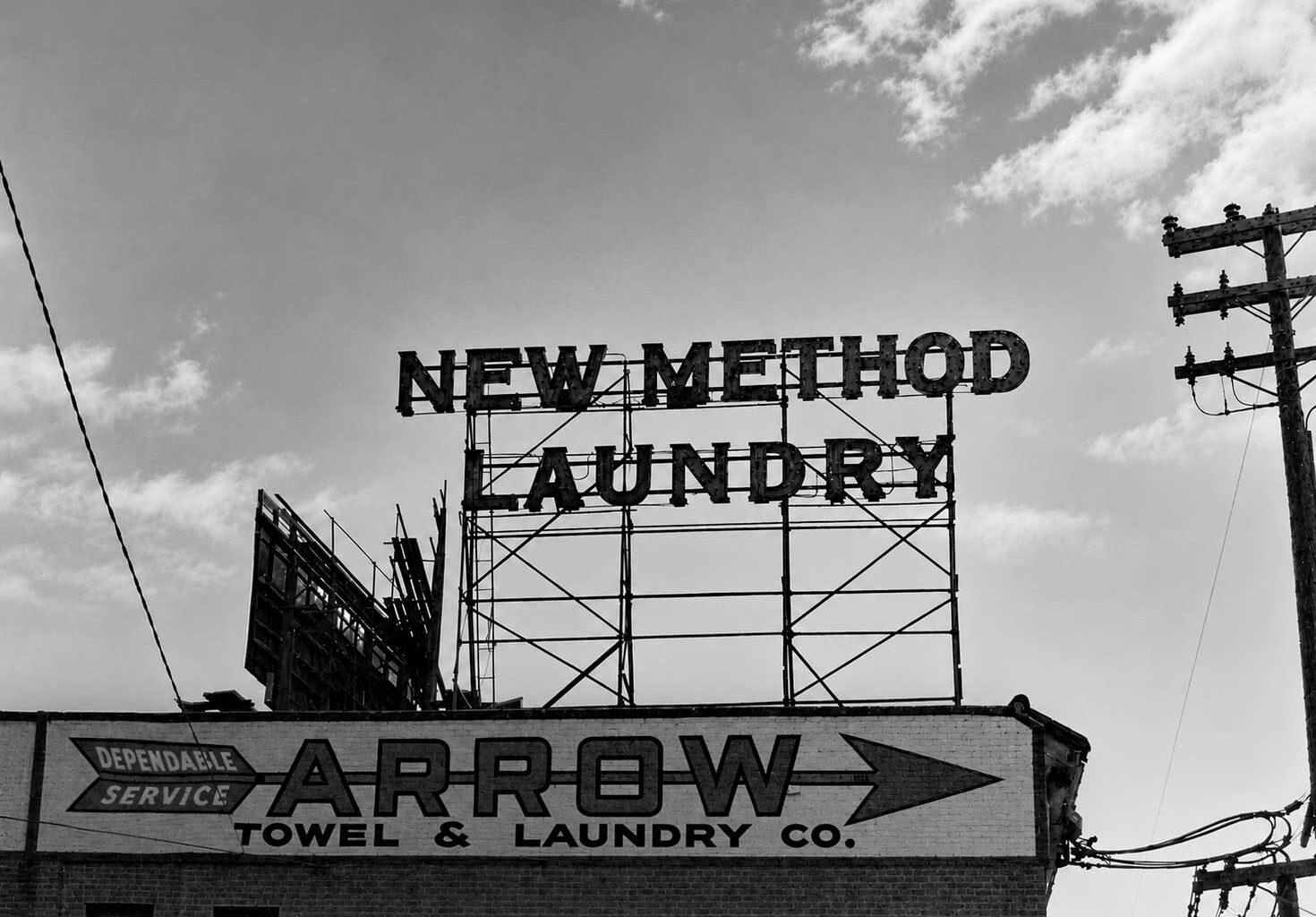
Located at the corner of 36th and Magnolia in the shadow of I-580, the building had been constructed in 1907 for the New Method Laundry Company, a commercial laundry and dry-cleaning business. Later occupants included Ambassador Laundry Co. and Arrow Towel & Laundry.
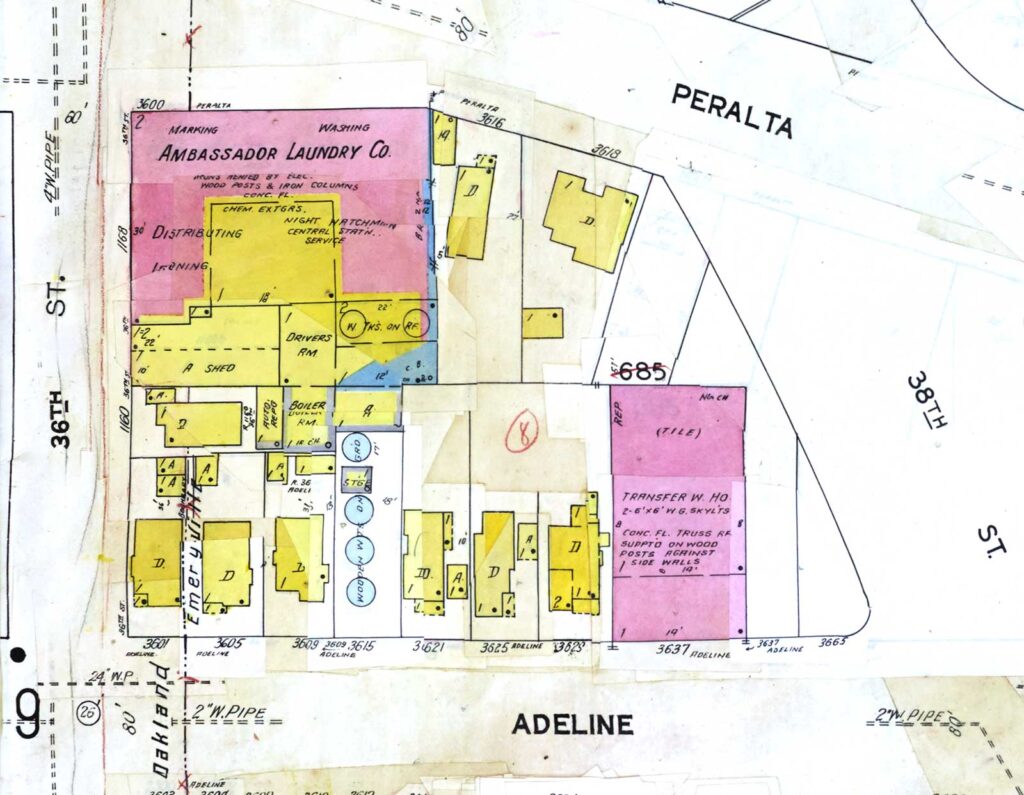 A 1951 Sanborn map shows the sprawling facility then occupied by Ambassador Laundry Co.
When musicians and artists moved in, the building’s industrial past remained visible. The rooftop sign reading “New Method Laundry” inspired the name of the space, giving the former industrial site a new identity shaped by the DIY ethos.
The ground floor facing 36th was occupied by Pacific Spas, which manufactured fiberglass hot tubs. The operation reportedly generated considerable noise, fumes, and dust—providing cover for the loud music and unconventional creative life upstairs.
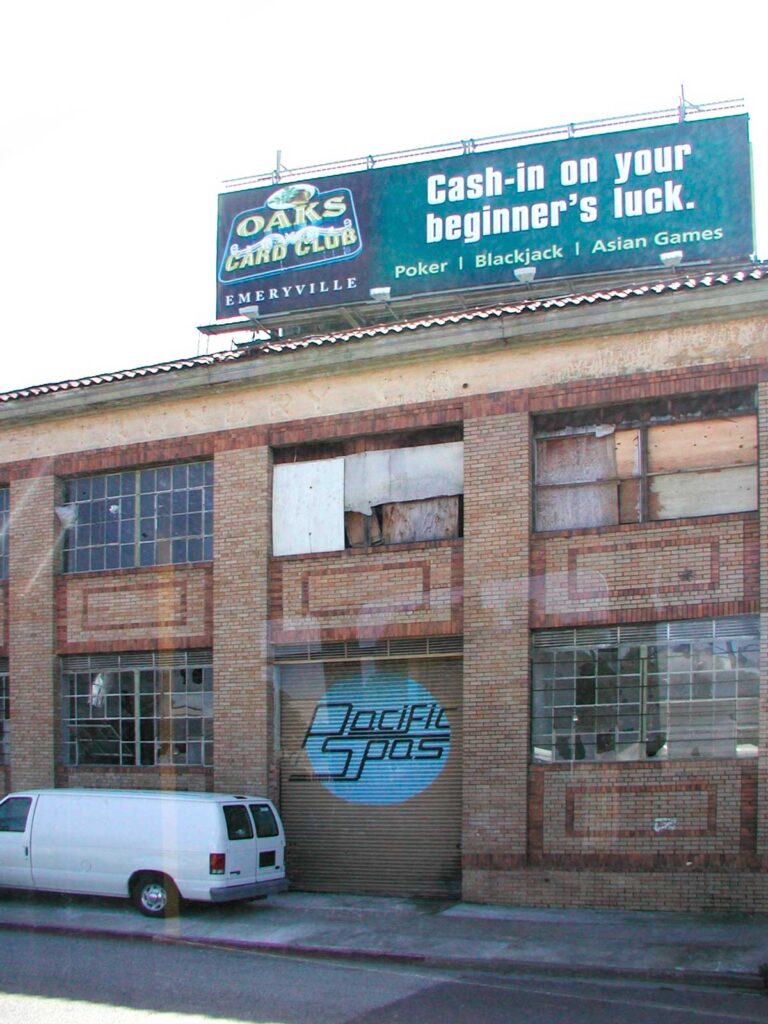 A view of the building from 36th Street shortly before its demolition in 2005.
Residents occupied roughly 6,000 square feet of raw industrial space, adding a stage, kitchen, bathroom, bedrooms, and rooms for performances and everyday life. Rather than a conventional club, New Method was a space its residents built and ran themselves.
Life Inside New Method
New Method was home to different generations of residents over the years. Tresca Behling moved in around 1983, as the warehouse was becoming a gathering place for musicians and artists drawn to the emerging punk scene.
Raised in Berkeley by countercultural parents, she was just 16 when she saw the Dead Kennedys and the Zeros perform at Sproul Plaza in 1978. The experience changed her direction.
“I decided that I could not just be a spectator. I could not just be a groupie. I needed to be doing this,” she recalled. “I got a job, saved my money and I bought a pair of roller skates and an electric bass right off the wall at Tupper & Reed Music on Shattuck.”
She went on to form the band Animal Things with her friend Vincent Deranged. At New Method, home life and music intertwined: residents lived and rehearsed alongside one another, turning the warehouse into a hub for the emerging punk community.
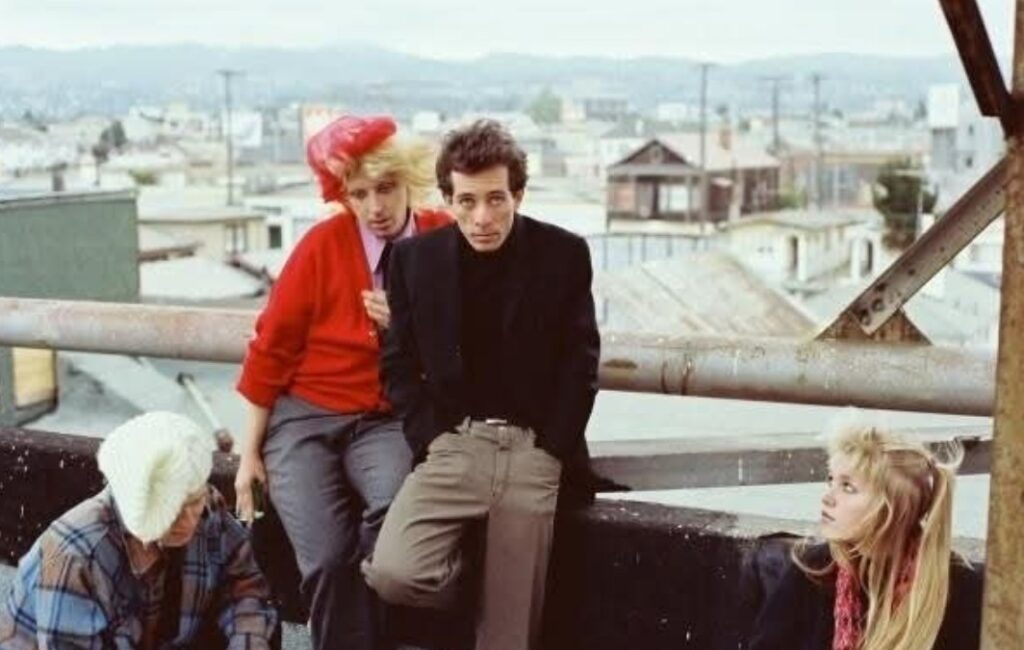 Tresca Behling, lower right, on the roof of New Method along with Animal Things band members (L-R): Jeffy Milstead (saxophone), Vincent Deranged (vocals, guitar), and Misha Cabinski (drums).
Beyond the music, New Method fostered a broader DIY culture of art, zines, and political organizing. Shows were promoted through word of mouth and hand-drawn flyers, and typically cost just $3–5 to attend.
The warehouse was sometimes described as a “punk squat,” although Behling clarified that residents paid rent during her time there. How some earlier occupants financed their lives there, however, was more controversial.
Behind a false wall, occupants had built a lab for manufacturing methamphetamine. “New Method was sort of the local hangout for that kind of thing during this time,” Behling reflected. “The Meth lab financed our tour bus and the buildout of our space.”
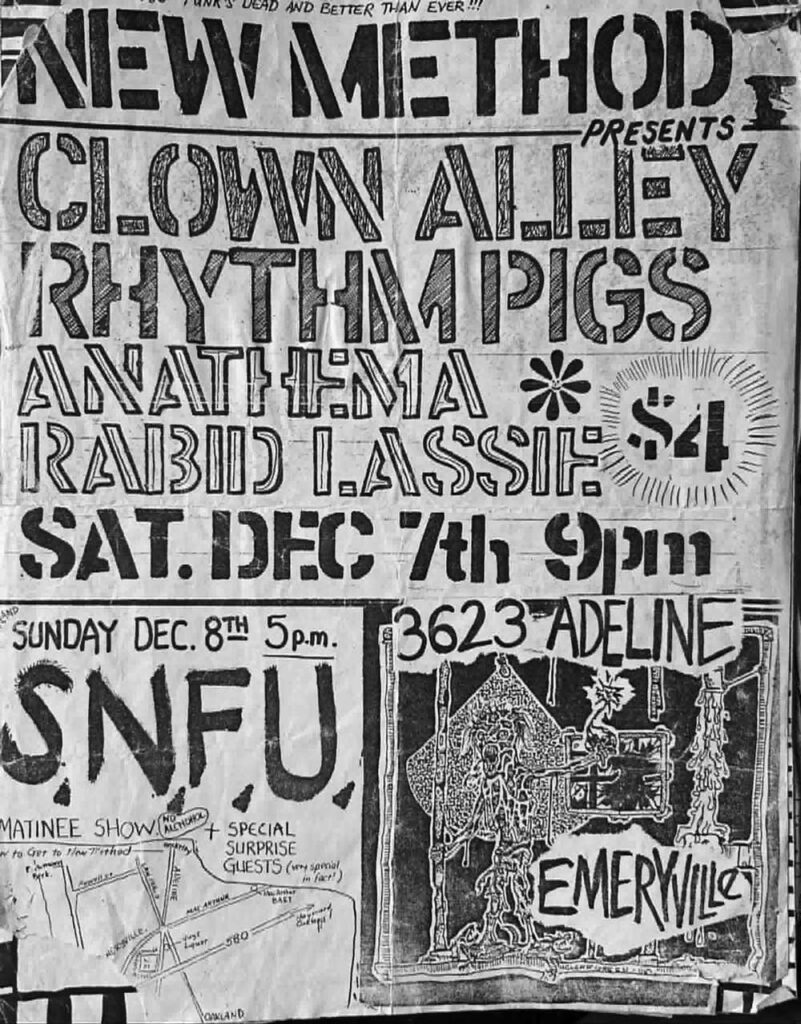
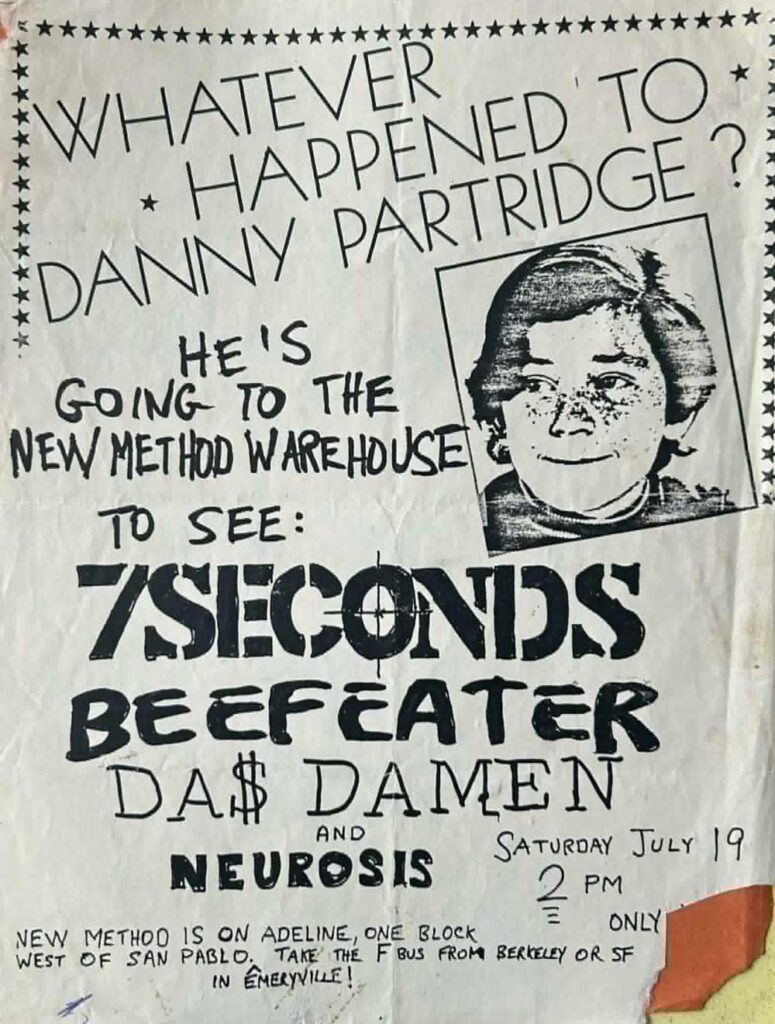
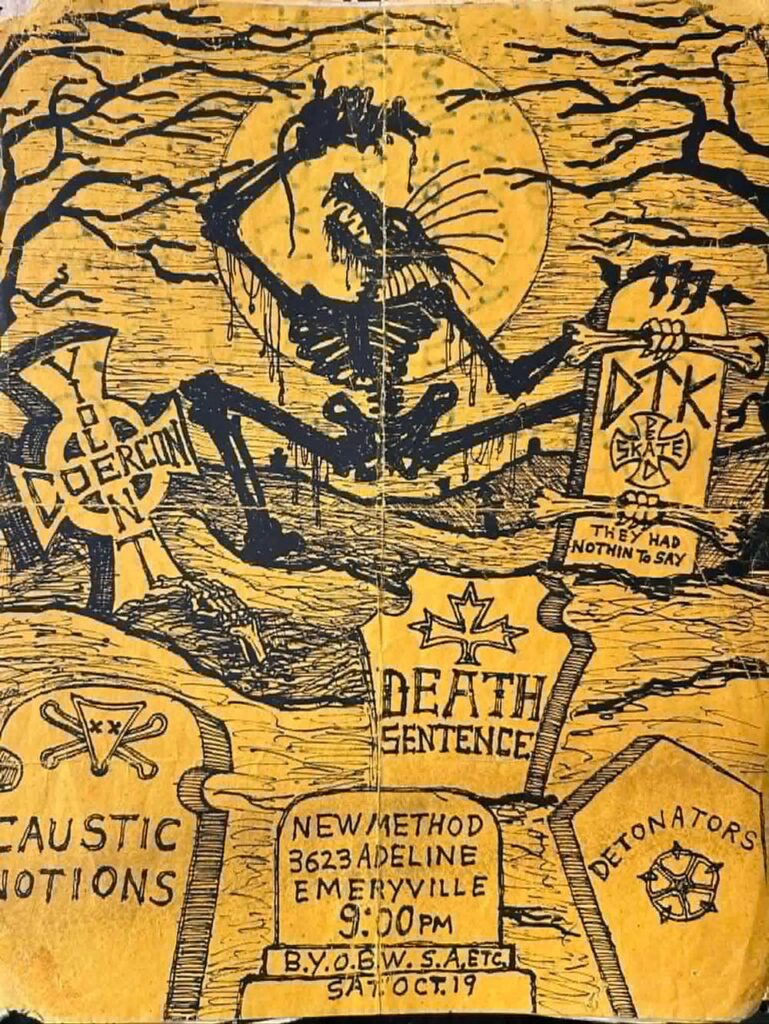
A selection of show flyers preserved by fans (Eliot Fairley Collection).
The Birth of a Hardcore Legacy
New Method began hosting underground punk shows around 1982. Flyers preserved in the Cornell University archive document local acts including Fang, Attitude Adjustment, Corrupted Morals, Special Forces, and Clown Alley. The warehouse also hosted touring bands, including Corrosion of Conformity and Rhythm Pigs.
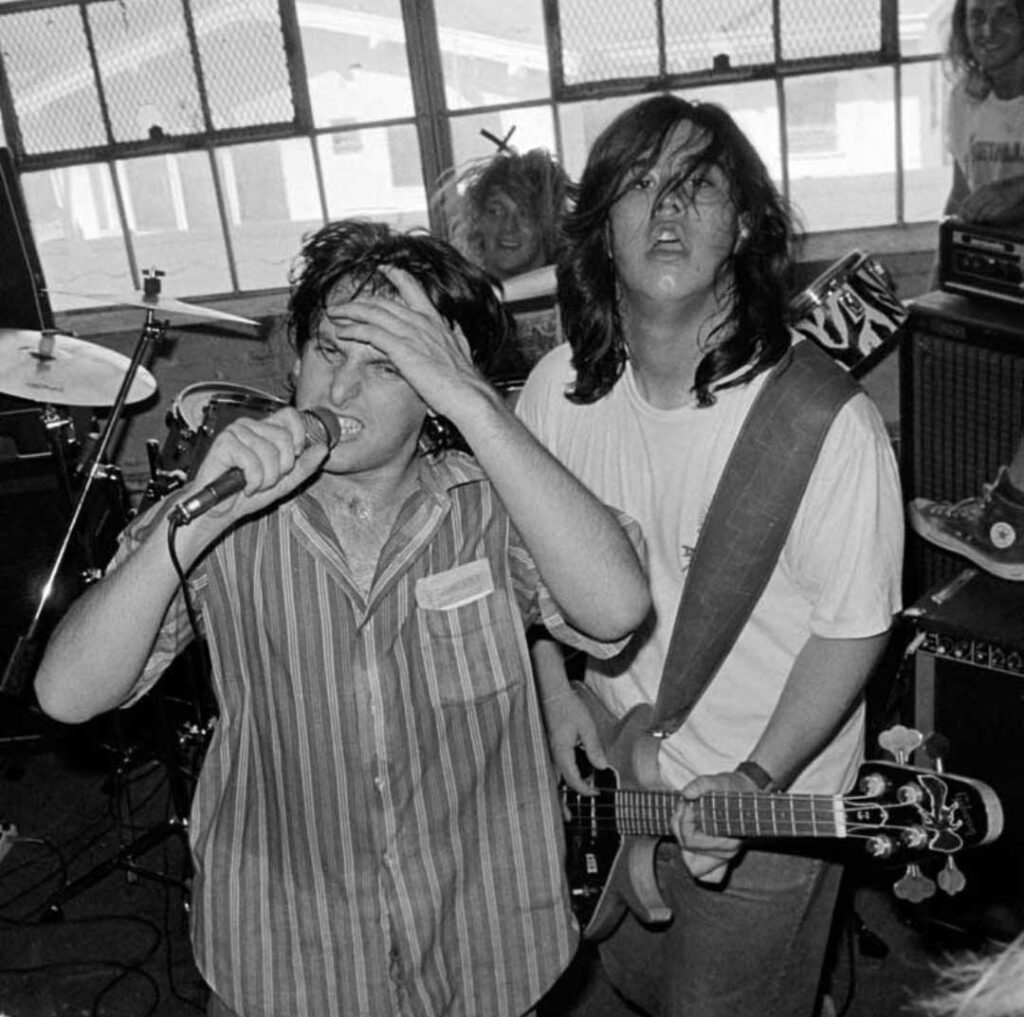 7 Seconds
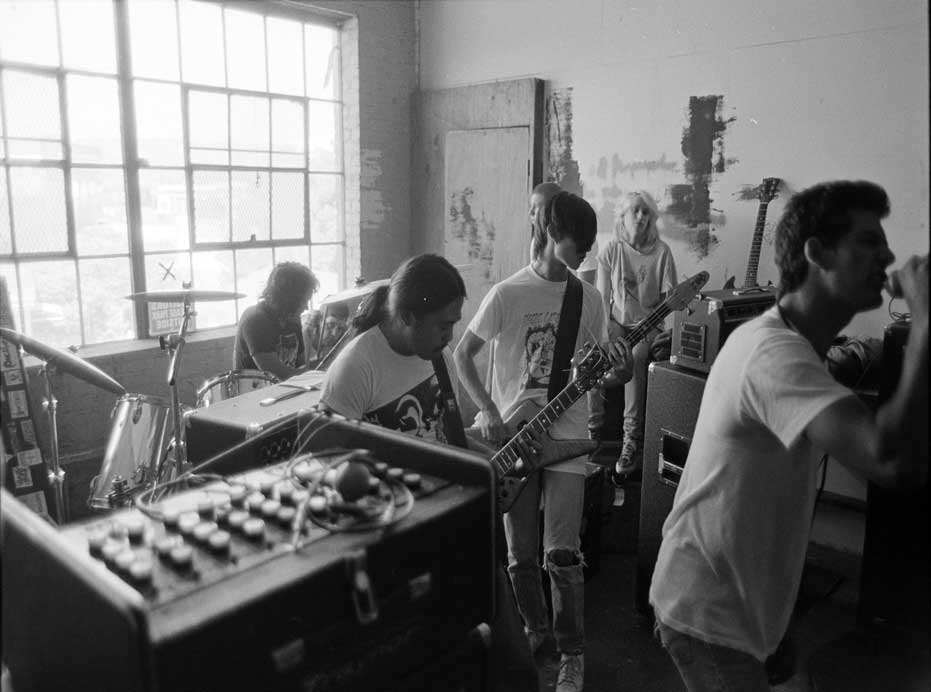 Corrupted Morals
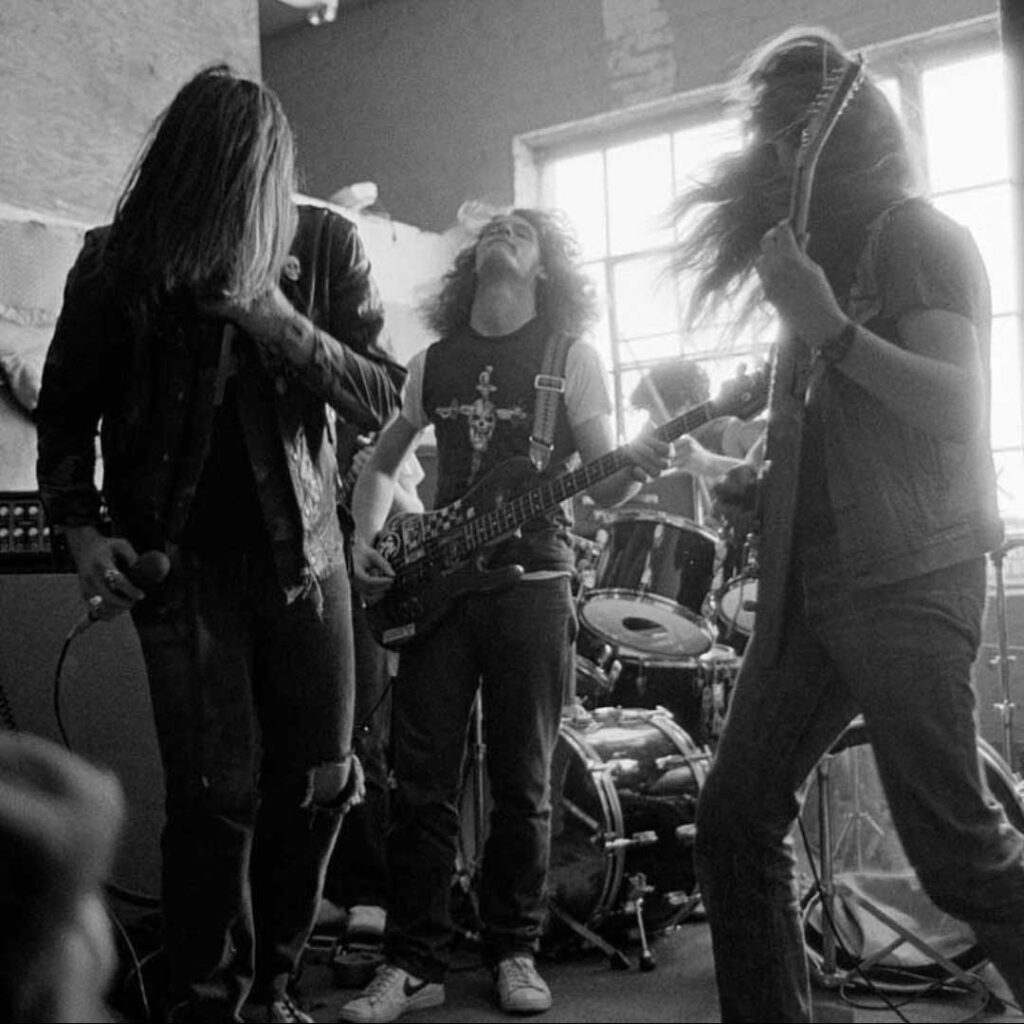 Sacrilege
Like many shows of the era, they were documented by iconic photographer Murray Bowles.
The shows drew fans from across the region, helping New Method earn its reputation as a gathering point for the underground music community.
Life at New Method could be exhilarating, but it was also unstable. Behling remembered a community that grew increasingly difficult to sustain. “Things got chaotic and messy toward the end,” she said regarding her tenure. “Heroin turned things sour and two of my bandmates became addicts. I moved out by early 1985 and never looked back.” Behling moved on to another DIY space, the Sauce Factory on Third and Linden in West Oakland.
The Peace-Punk Years
The next wave of residents brought a different culture to New Method, one more closely associated with psychedelics, punk politics, and collective living than with the earlier methamphetamine scene. By around 1985, the warehouse was no longer being used as a base for methamphetamine distribution, according to the accounts of former residents. Occupants also expanded into more of the building, including parts of the ground floor.
The venue evolved into a gathering point for musicians drawn to the sound and politics of the seminal British anarcho-punk group Crass. This strand of punk paired abrasive music with antiwar, anti-authoritarian, and anti-establishment messages. For this generation, New Method became a creative compound where music, communal living, and shared political ideals converged.
Crucifix, a politically charged hardcore band from Berkeley, was among the acts connected to New Method. Members of A State of Mind (ASOM) and Christ on Parade also lived at or were closely connected to the warehouse. Members of the alt rock band Short Dogs Grow also used New Method as a home base during this time.
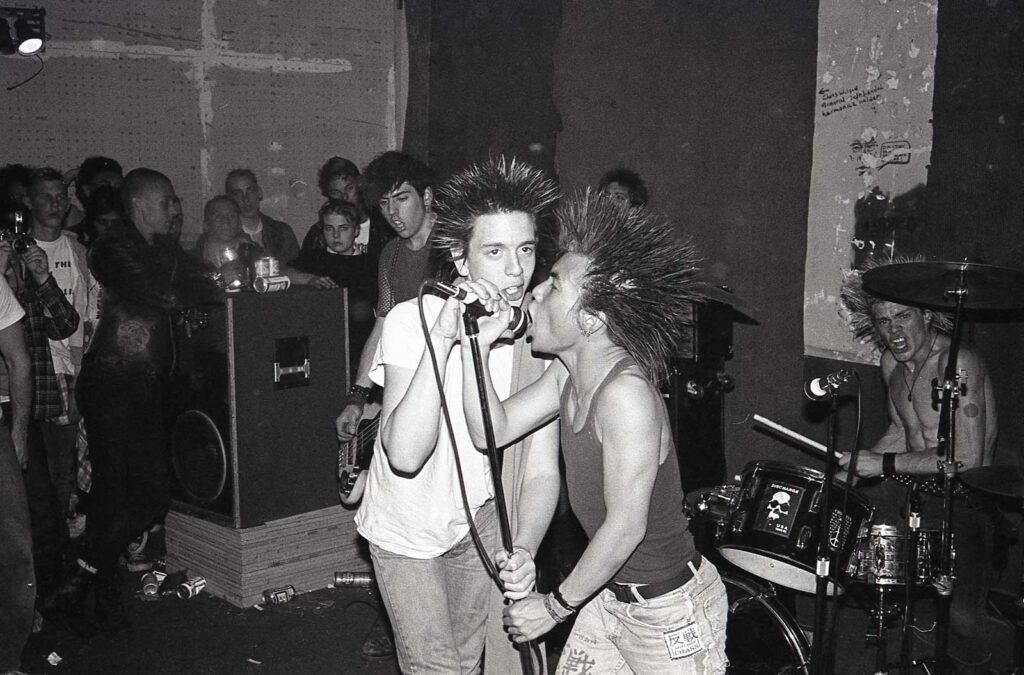 Crucifix performing at New Method in 1983 (Photo: Murray Bowles Collection)
Neurosis: A Legacy Forged at New Method
Perhaps the most enduring musical legacy connected with New Method was Neurosis. Formed in 1985 by Dave Edwardson, Scott Kelly, and Jason Roeder, the band emerged from the East Bay punk scene. Edwardson was a Berkeley High student at the time, and the other founding members also came from the East Bay. Kelly lived at the warehouse for several years.
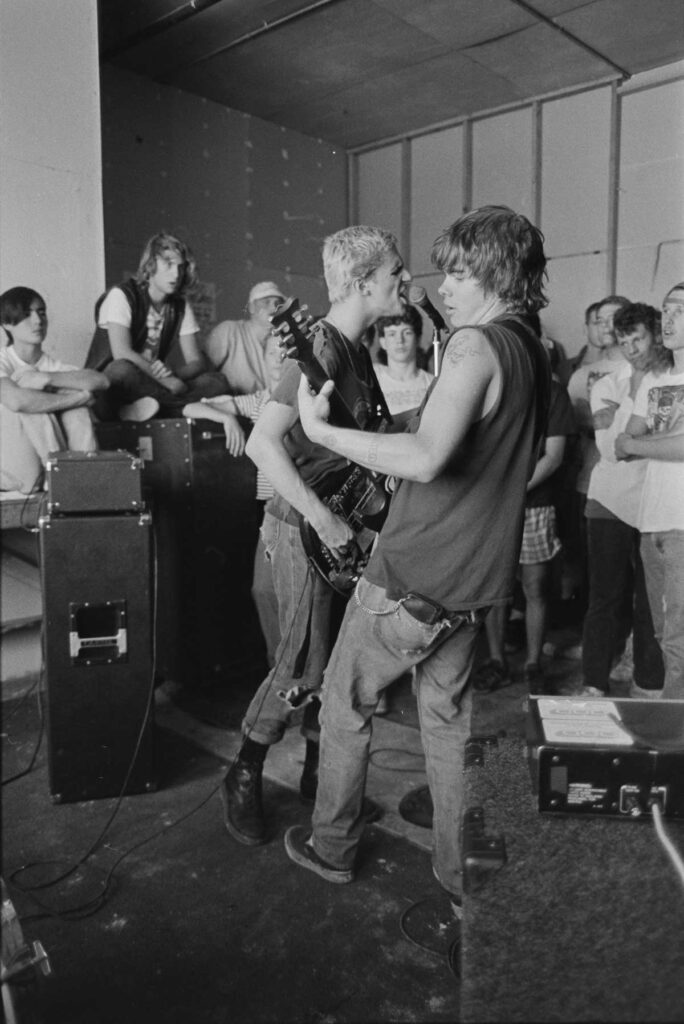 Neurosis performing at “Own’s Pizza” after New Method was shuttered (Photo: Murray Bowles Collection).
In a 2004 interview with the zine Punk Planet, Kelly recalled how Neurosis spent its earliest days discussing and visualizing the band they hoped to become—including its keyboards, visual elements, and expansive sound. With other bands rehearsing nearby, the warehouse exposed them to a constant mix of musical ideas.
“It was a compound kind of atmosphere,” Kelly said, recalling bands such as Amebix, Celtic Frost, and A State of Mind. “At one point, I spent a whole year without leaving Emeryville, just going to the store across the street and going back. Everything we wanted or needed was within those walls.”
Edwardson and Christ on Parade founding member Noah Landis, who would later join Neurosis, remembered New Method as a hub for what Edwardson called the “peace punk” scene. The warehouse brought together anarchists, artists, and politically engaged thinkers who tried to live by their ideals. Edwardson described its strong Crass influence: “It was a super Crass influence scene happening there,” Edwardson said in a 2026 KALX interview. “Like, everyone was vegetarian, and yeah, a lot of anarchy symbols, a lot of peace symbols.”
Landis recalled the excitement of discovering punk when the scene was still small and largely underground. “It was the kind of world where you had to really seek it out. If you were interested in this weird subculture underground thing that’s going on, you have to get in there and find it.”
Neurosis’s ties to the warehouse community endured as the bands evolved. When Christ on Parade eventually broke up, Landis joined Neurosis, bringing a connection forged at New Method into the band’s next phase. His keyboards and sampled elements became increasingly important to its sound.
Neurosis helped define post-metal with its heavy, atmospheric sound, expansive compositions, and immersive performances blending music and striking visuals. Its influence reached well beyond the East Bay. In the 2017 documentary Turn It Around: The Story of East Bay Punk, Green Day frontman Billie Joe Armstrong summed up his local pride: “I am so proud Neurosis is from our area.”
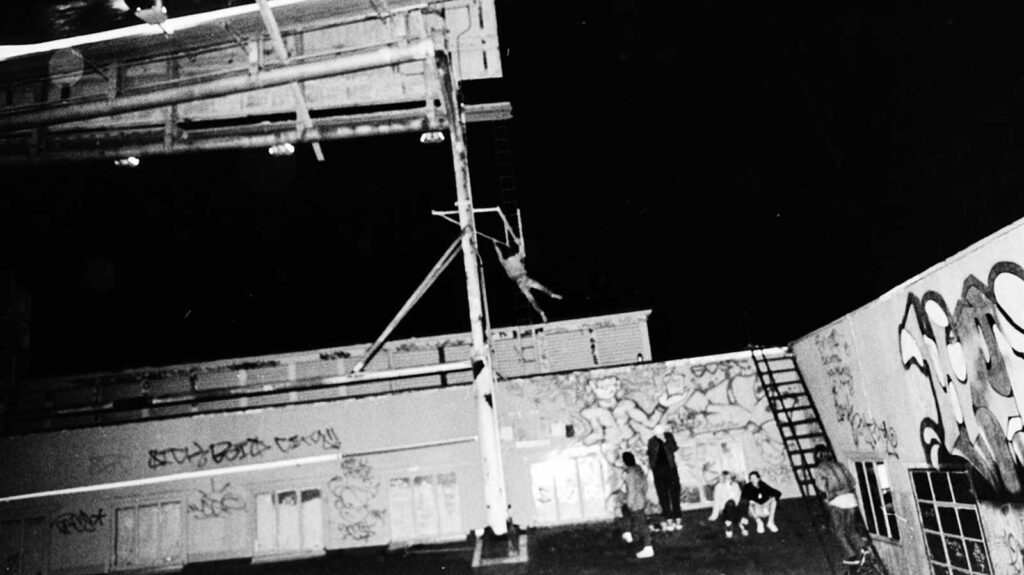 A 1986 photo shows a fan swinging from the sign frame atop the roof of the NMW (Courtesy Murray Bowles Collection).
The End of an Era
Conflicts with the landlord and damage to the building added to the strain. One recollection describes a show at which people hung from overhead water pipes, causing flooding and damage. Christ on Parade’s 1985 song Landlord Song captured tensions surrounding the warehouse and its ownership.
As New Method’s run as a venue came to a close, organizing efforts behind 924 Gilman Street in Berkeley were gaining momentum. The venue hosted its first show on December 31, 1986, offering a more organized, all-ages alternative that would become one of the country’s most influential independent punk venues.
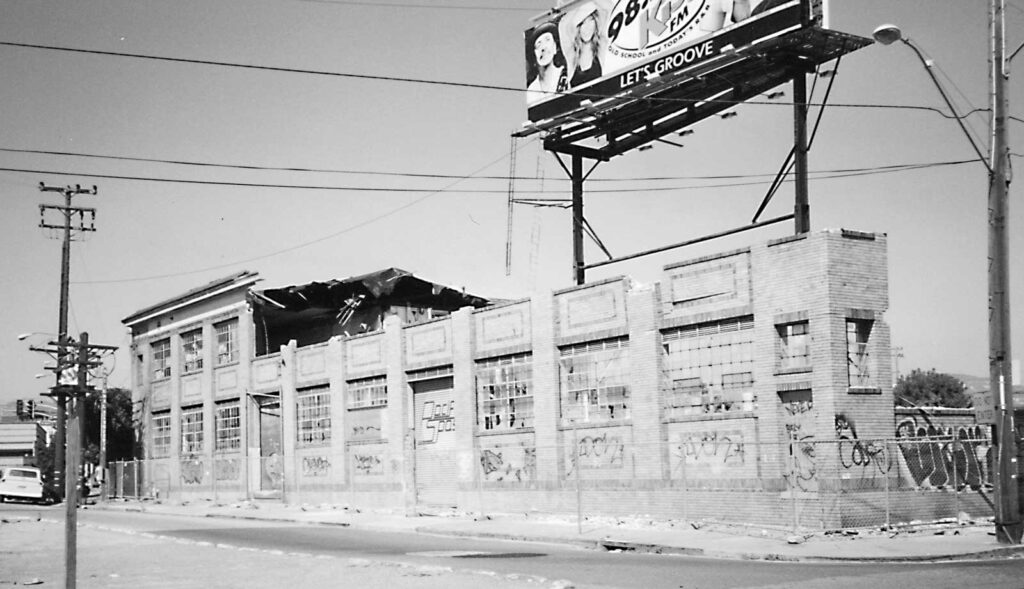 Demolition of the former New Method building in 2005 (EHS Collection).
Shows at New Method had ended by around 1987, but residents continued living in the building. According to Edwardson, occupancy persisted until around 1988 or 1989. In the final two or three years, he recalled, the remaining residents went on rent strike and the warehouse became an actual squat.
The building would be demolished in 2005, and the site was redeveloped for housing as the Ambassador project—a name that recalled one of the laundry businesses that had occupied the property.
With the warehouse gone, the physical traces of the scene largely disappeared. Photographs, flyers, recordings, and the memories of people who lived and played there are now essential to understanding its history.
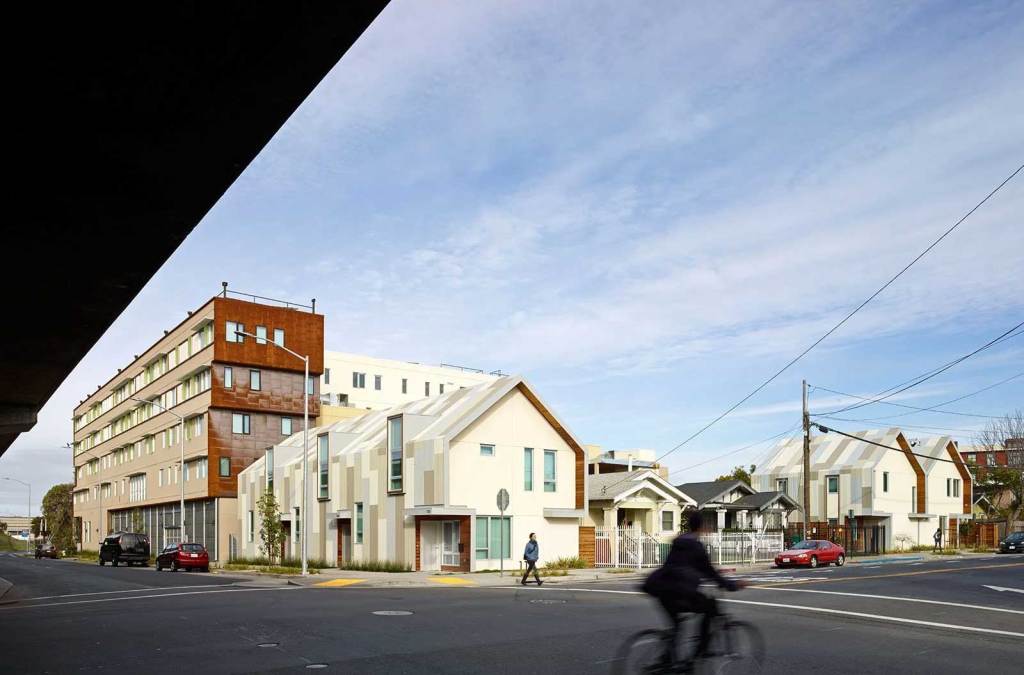 The site is now occupied by the 69-unit Ambassador affordable housing project, designed by Kava Massih architects.
Emeryville’s Independent Music Legacy
New Method was one of several spaces that connected Emeryville to the Bay Area’s independent music scene. The Emeryville Warehouse, located at 1500 Park Avenue, was another gathering place for local music and culture. In 1996, Formula operated out of the former Bavarian Village Hofbrau, now the site of Honor Kitchen. Alternative Tentacles moved its offices to Emeryville’s Apex Building on Horton Street in 2002. Nearby Eli’s Mile High began hosting punk acts as early as 2008, and Pirates Press Records moved to Powell Street in 2016.
New Method’s legacy also lives on in the musicians who passed through its doors. Neurosis, whose early years were closely tied to the warehouse and its surrounding community, went on to build an international following with its expansive approach to heavy music. Nearly a decade after their last album, Neurosis returned in 2026 with An Undying Love for a Burning World, followed by a tour in support of the new record.
New Method is long gone, but its story illustrates how a DIY space’s influence can outlast the building itself. Other spaces left fewer traces, their histories surviving in flyers, photographs, recordings, and the memories of those who were there.
Photos by Murray Bowles, whose book Hail Murray!: The Punk Photography of Murray Bowles, 1982–1995 is available from publisher Last Gasp.
Related
You have Successfully Subscribed!