
 SACRAMENTO, Calif. —
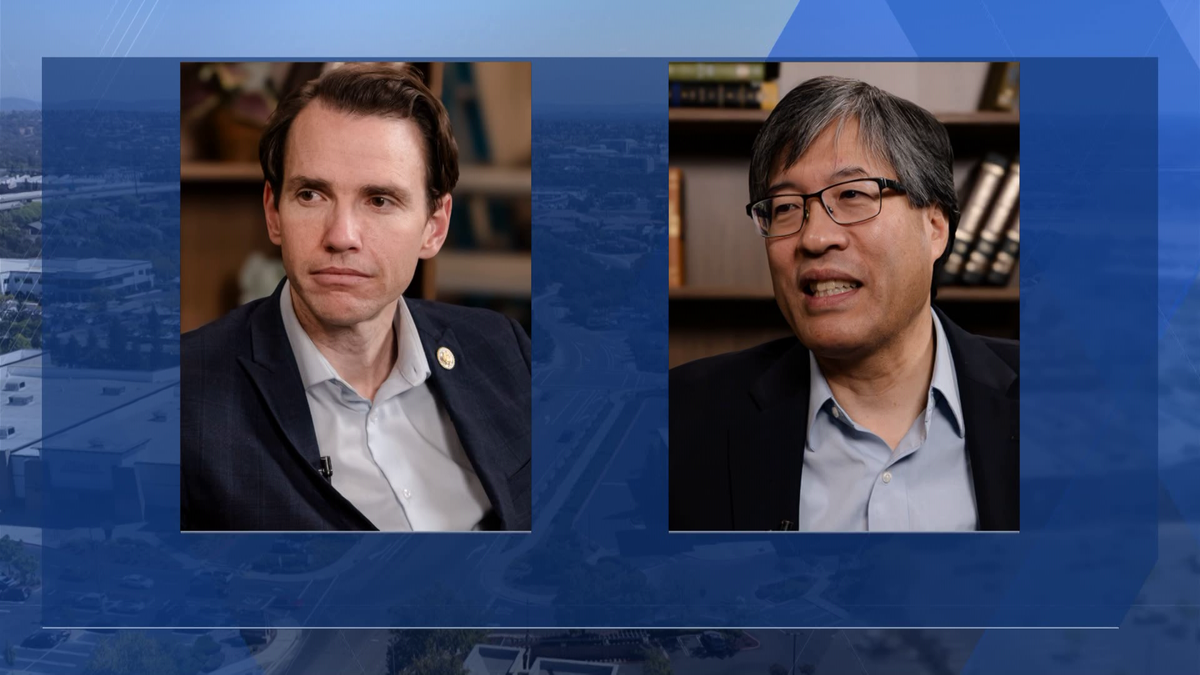
Independent Congressman Kevin Kiley is clashing with Democratic former State Sen. Richard Pan in one of the state’s most competitive races to represent California in Congress.
Voters statewide approved Proposition 50, which redrew this district to include parts of Placer and Yolo counties.
Kiley currently represents the old Congressional District 3, which was completely redrawn under the new maps, which are meant to oust Republicans from office.
Kiley left the Republican party earlier this year and is hoping to be the second Independent in recent U.S. History to be elected to Congress. Pan is trying to push him out of the U.S. House of Representatives.
Kiley accepted an invitation to debate Pan on KCRA 3, Pan did not.
Pan did not say why exactly he would not do a televised debate with Kiley but noted they did a few forums together.
Pan and Kiley do agree on a few things, including what they say is a need to put guardrails on artificial intelligence and more oversight into the war in Iran. They both also provided examples of how they’ve stood up to their current respective (or in Kiley’s case, former) political parties.
Here’s where the two stand on several key issues.
Healthcare
As a pediatrician, Pan’s cost of living and other policy proposals revolve around healthcare.
Pan would not directly say yes or no when asked if he would support Medicare for All or if he would push to provide Medicaid to undocumented immigrants nationwide. As a state senator, Pan voted to extend California’s health insurance for low-income people to undocumented immigrants.
“I think that we should be looking at perhaps trying to make preventative services more available to people,” Pan said. “Right now we do pay for some emergency services. But that’s when things have gotten really bad and it’s the most expensive to treat. And so, we want to think about what’s the most cost-effective way to be sure people have health care. That also ensures that all of us, including those of us who aren’t even on Medicaid, how we can try to keep our premiums down as well.”
Pan has blasted Kiley repeatedly for voting for healthcare cuts included in H.R. 1.
When asked if he thinks the federal government is moving in the right direction on healthcare, Kiley said he thinks there have been “major mistakes.”
Kiley specifically pointed to the Affordable Care Act subsidies that expired earlier this year, forcing millions to pay more for healthcare.
“At the end of last year, I worked very hard to try to get these extended. I had bipartisan legislation, the Fix It act, to extend these expiring subsidies,” Kiley said.
“We had bipartisan support, a number of bipartisan coauthors for that bill. But because of a failure of leadership, frankly, on both sides, because, for their own reasons, the speaker and the minority leader did not want this to pass. Those subsidies ended up expiring, and because of it, folks in California, a couple million are having to pay hundreds of dollars, even thousands of dollars, more for health care,” Kiley said. “That’s a very clear example of how I think excess partisanship is making life more difficult for folks.”
Cost of living
Aside from attempts to bring down the cost of healthcare, both candidates have different ideas to bring down other costs.
On housing, Kiley noted to the work Congress did this year to ease some of the regulations and costs on housing construction. He also defended his vote for H.R. 1, stating the measure took steps to make it easier to build affordable housing.
“I think that we can build on those steps that we’ve taken with the 21st Century Road, the Housing Act. That was a good start. But there were some things that didn’t make it into the bill in terms of, affording a proper riding, the right incentives for for jurisdictions to make sure that their rules don’t unduly inhibit, building,” Kiley said.
“I’m also sponsoring a bill called the no. The More homes on the Market Act, which essentially makes it so, folks aren’t locked into their homes because of perverse tax incentives, but when they feel like they’re ready to maybe move up or move down to a different type of house than it provides the right incentives to do that.”
Pan said if elected he would work to push back on President Trump’s tariffs. He also pointed to the war in Iran as a major driver of costs now.
“That’s jacking up not only our gas prices, of course,” Kiley said. “It’s raising diesel prices, which then affects the cost of everything. Most of our agricultural equipment uses diesel fuel. So that’s driving over cost of groceries as well. And so those are the types of things that are happening.”
Pan also pointed to the federal debt, which is now more than $40 trillion.
“Ever since the passage of H.R. one, that means over 7%, mortgage rates right now,” Pan said. “The fact that the federal deficit and it’s growing so quickly and the federal debt so large, that means they’re competing, the federal government is competing against all of us in terms of borrowing money.”
Data Centers
Both candidates agree that artificial technology itself needs safety guardrails, but they had different ideas to address the data centers that help power that technology.
Both agree the federal government can play a role.
Kiley pointed to the House’s passage of the Rate Data Protection Act, which tries to ensure the energy bills of every day Americans don’t increase because of the energy usage of nearby data centers.
“Ultimately, I think that this is a local issue, though, and that’s what needs to be determinative, on every issue and not just this infrastructure, but any kind of infrastructure is that there needs to be buy in from the local community,” Kiley said.
Pan agreed that the decisions should be left up to locals, but said the federal government should play a role when it comes to transparency.
“We need to ensure that there’s transparency, that we don’t have NDAs between data center construction and local government so that the public doesn’t know what’s going on,” Pan said. “The public, the people need to know, how is it going to impact my energy prices? My utility prices, housing, affect the availability of water in my community? How is that going to impact, you know, jobs as well and, and other things. So, we do need to be sure it’s transparent and that people have a say it before a decision is made to construct the data center.”
Wealth taxes
We asked both candidates if they planned to support or oppose Prop 40, the billionaire tax in California.
Kiley said he is a no on Prop 40.
When asked if he would support a national wealth tax, Kiley said no.
“I believe every country that has done it has ultimately, rescinded it because it just doesn’t work. From a practical point of view. And frankly, I think in California, we pay enough in taxes already. I think if you ask people here, you know, do you think the tax burden is too high or too, too low? They say, I think, you know, I don’t think we need it to be any higher,” Kiley said. “I think a lot of people in California are like, yeah, I think we pay enough. I think we need to try to, you know, work with the funds that we have.”
Pan would not say how he will vote on Prop 40, and instead kept stating he would fight to repeal cuts in H.R. 1.
When asked if he would support a national wealth tax, Pan said, “I think it’s something we should be looking at.”
“Let’s put it this way: the percentage of our economy that’s going to working people, is actually the smallest it’s ever been since it’s since the state has recorded. So, we see in the news, we see, oh guess what. You know, the economy seems to be doing well.”
Voter ID
We also asked both candidates if they planned to support Proposition 39, which would require voter ID in order to cast a ballot in future California elections.
Pan said he is a no on Prop 39.
Kiley said he is a yes.
“I’m for simple, commonsense voter ID. I think that there’s been a lot of different iterations of that, that people may or may not support for one reason or another,” Kiley said. “When it comes to just the simple requirement of voter ID, which almost every democracy in the world has, I think we should just have it and be done with the issue and move on with our lives.”
Kiley said he has supported President Trump’s proposed SAVE Act in the past.
“I’ve also said that, look, if this is not the perfect solution in a lot of people’s minds, then I’m very open to amending it to, to, having a much more streamlined version, to having more flexibility around what kind of documents can be presented,” Kiley said. “Ultimately, we don’t want this to be burdensome for people, and I don’t think it is if it’s done in the right way.”
Pushing back on partisanship
Kiley left the Republican party earlier this year and said noted there has only been one Independent in the last 70 years to be elected to the U.S. House of Representatives.
Kiley said he will not caucus with either party if elected. When asked if he could be effective as an Independent, he pointed to various accolades and accomplishments from when he was a registered Republican.
“In this term, and still and I said from the very beginning, that I’m going to be an independent representative for our area and an independent voice for our area,” Kiley said. “I think that having that approach of saying that I’m going to put our area first, our constituents first, I’m going to answer directly to my constituents and not the party leaders. That’s been a through line from the beginning of my time in office. And I think it’s allowed, for me to deliver in unique ways.”
Pan pointed to a couple of times when he did not agree with Democratic leaders in California, mainly former Gov. Jerry Brown and Gov. Gavin Newsom.
With Brown, Pan noted he spoke out against Brown when he didn’t increase Medicaid funding following the passage of the state’s tobacco tax, which was meant to help with healthcare spending.
“Eventually, they, they changed your mind. And, we saw that money show up, to increase that funding,” Pan said.
With Newsom, Pan said he had a difference of opinion with him “about a few things.”
“One of the things that did come up was, when, I did my, second vaccine bill in 2019, you know, there were some changes that, his administration wanted that I didn’t agree with,” Pan said. “We came to an agreement in the end, but, it was a little touch and go for, for a little bit, around that.”
Full interviews
Richard Pan
Kevin Kiley
See more coverage of top California stories here | Download our app | Subscribe to our morning newsletter | Find us on YouTube here and subscribe to our channel.