
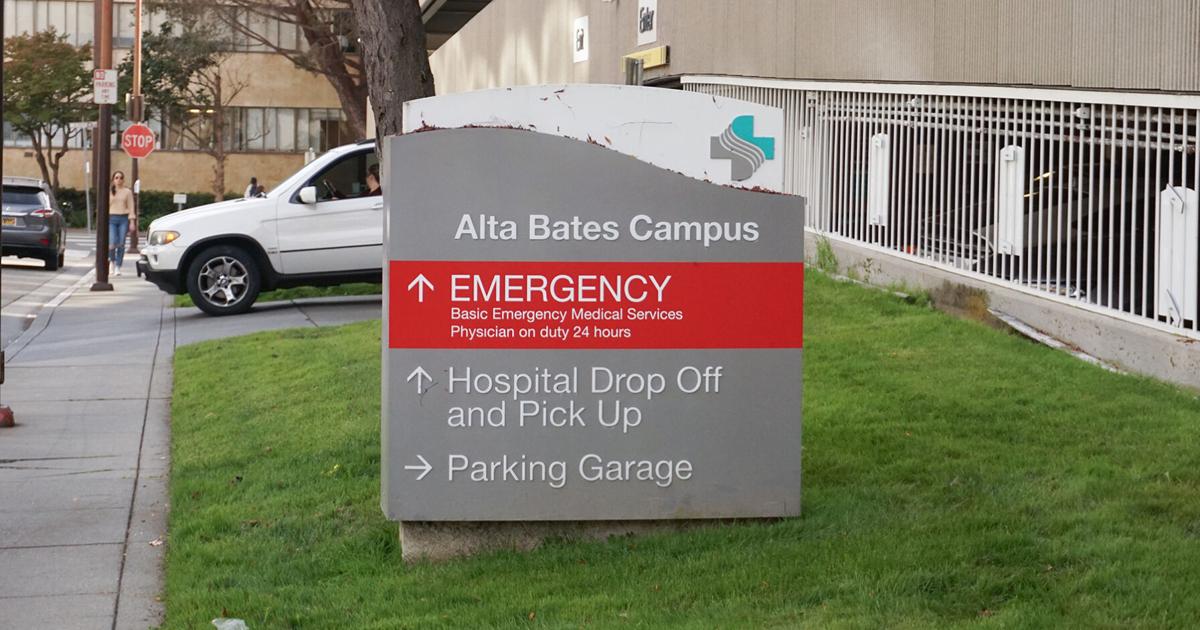
New research led by a UC Berkeley professor found that Alameda County could lose up to 80% of hospital bed capacity in the event of a major earthquake.
Assistant professor of civil and environmental engineering Luis Ceferinoworked with co-authors from several universities to investigate how health care could be affected if a major earthquake hits the Bay Area by simulating transportation and hospital damage.
Alameda County is in close proximity to the Hayward Fault,which may produce an earthquake of a 6.7 magnitude or greater within the next 30 years.
In 1973, the Alfred E. Alquist Hospital Seismic Safety Act, or the Hospital Act, was enacted in response to a 6.6 magnitude earthquake in California that killed 50 people after two hospital buildings collapsed and one nearly collapsed.
This act was later expanded by Senate Bill 1953, mandating that all hospitals be able to withstand earthquakes without collapsing by 2008and that all hospitals must be retrofitted in order to provide service following an earthquake by 2030.
“There are many hospitals that struggle with finances, so there is a worry that they might not be retrofitted on time,”Ceferino said. “However, it is very important that we meet those deadlines. It’s very important for all communities in the Bay Area.”
The California Health Care Foundation estimated that to meet the requirements, hospitals could face total costs as high as $41.7 billion. No public funding was allocated to help hospitals shoulder the costs in the original legislation or the later Senate bill.
The state has since opened applications to provide grants to help with the costs for approved rural hospitals under the Small and Rural Hospital Relief Program. $55 million is currently available in grants for applicants.
Aside from hospital functioning, the study also delves into the reliance on bridges and infrastructure to reach critical care during an earthquake. Travel time to the nearest functioning hospital could increase by 407% in Alameda County if a disaster were to take place.
“Transportation infrastructure also has some vulnerabilities as we have bridges that were built a long time ago, before we had modern standards for seismic design,” Ceferino said. “All infrastructure is important for emergency response.”
Alameda County would face the most “severe” transport and hospital impacts due to its proximity to the Hayward Fault. In the event of an earthquake, it would lose more than 50% of functional bridges.
The study revealed how some hospitals and communities become isolated during a disaster due to destruction of infrastructure, citing a specific neighborhood near Fremont that could become fully isolated from hospitals, grocery stores and pharmacies due to bridge collapses.
Ceferino said the 2030 deadline for hospitals is a step in the right direction. He also noted that hospitals are not the only infrastructure that need to be retrofitted, emphasizing the need for stronger power lines and water systems.
“Upgrading infrastructure is expensive, but in universities, like in UC Berkeley, we’re developing techniques to strategize the decision making,” Ceferino said.